The Way We Were: Hank Bonar

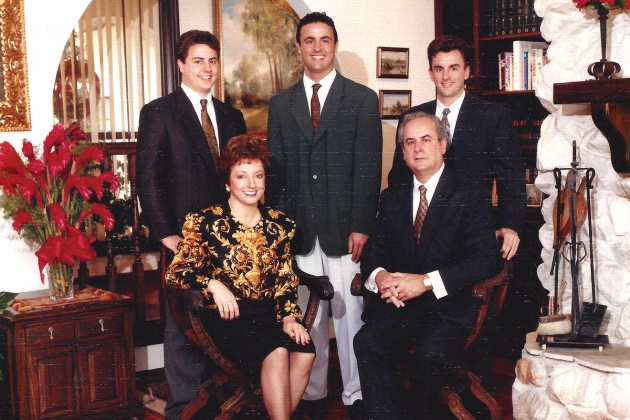
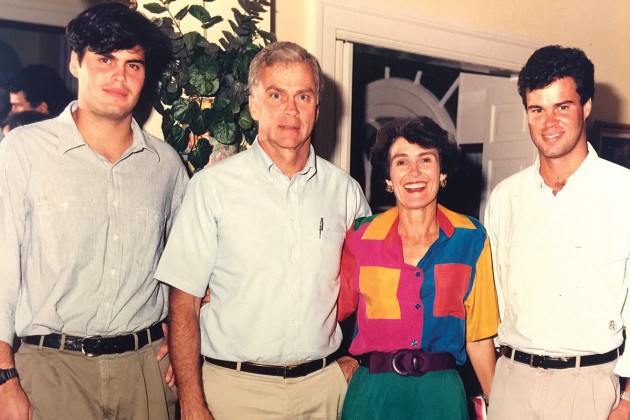
Bonar family photo of son Robert Gregory, Hank II, wife of 43 years, Barbara, and son Henry III
KAREN RIELEY
PUBLISHED IN MARCH 2018 ISSUE OF THE RESIDENT NEWS –https://residentnews.net/2018/03/07/the-way-we-were-hank-bonar/

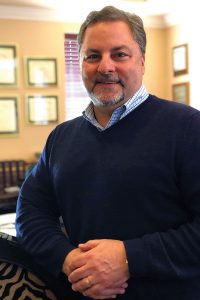
Henry Bascom (Hank) Bonar II grew up on a lake in Tampa and loved all that the water had to offer – boating, fishing, skiing and even duck hunting – so the opportunity to buy a house on the St. Johns River was one he couldn’t pass up. When his friend, Francis Langel, who worked at the time for the now defunct Stockton, Whatley, Davin & Company, urged him to buy Langel’s mother’s home on Morven Road, Hank examined his finances, worked up a budget and decided to buy it.
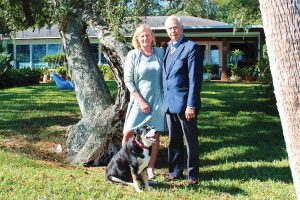
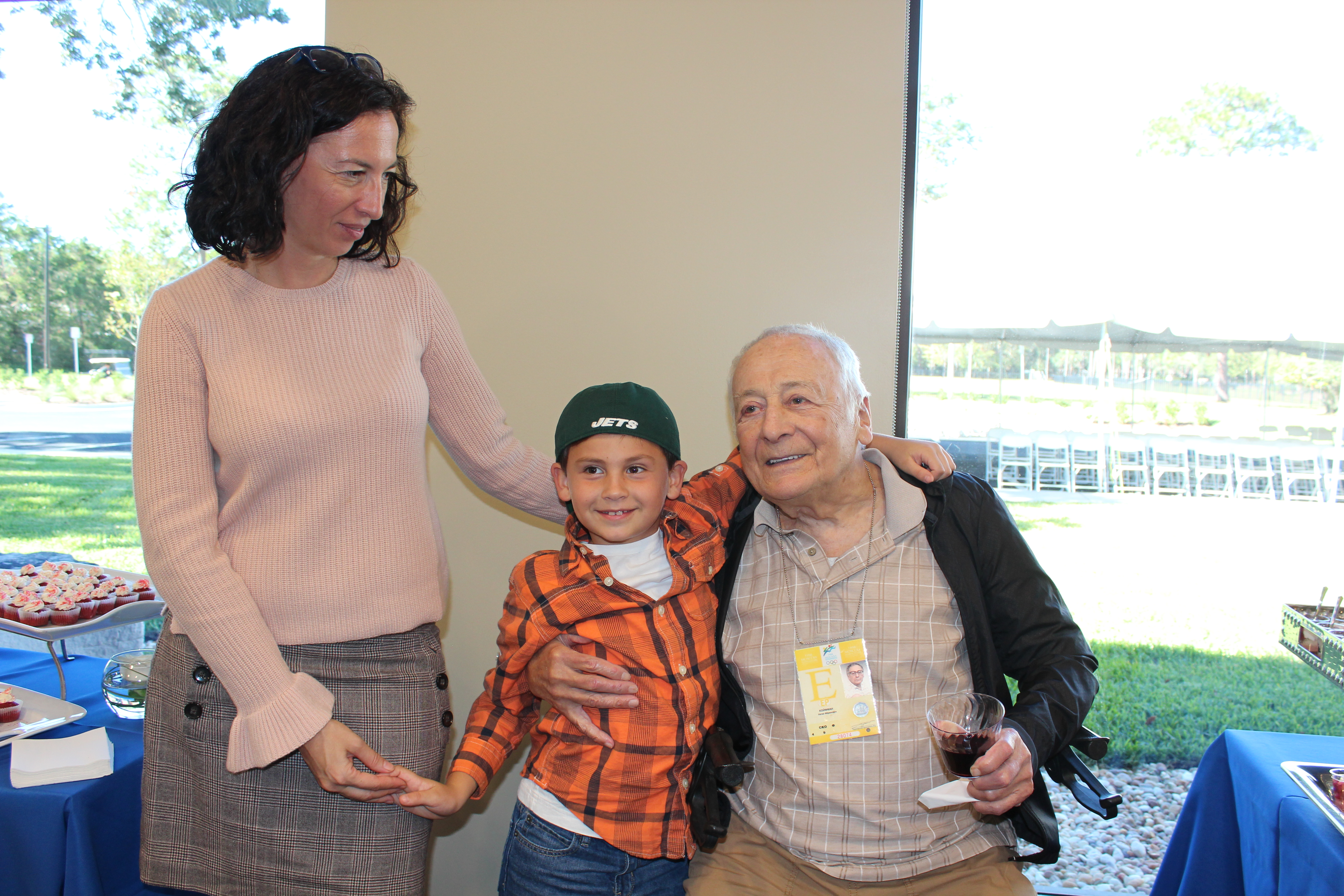
Nancy and Hank
Nancy Soderberg and Hank Bonar at his Morven Road home

That was in 1975, the same year he opened his own business. “My first wife, Barbara, thought I was crazy,” Hank said. Hank himself thought he might be able to afford the house for maybe a year. Hank acknowledges that his timing was a little suspect, given that the country was still feeling the negative effects of the 1973-75 Recession.

“I guess I’m kind of the dean of Morven Road at this point,” said Hank, who, at age 77, has lived in the house for 42 years, well past original predictions.That was in 1975, the same year he opened his own business. “My first wife, Barbara, thought I was crazy,” Hank said. Hank himself thought he might be able to afford the house for maybe a year. Hank acknowledges that his timing was a little suspect, given that the country was still feeling the negative effects of the 1973-75 Recession.

The home, built in 1941, sits on nearly one and three-quarters acres with amazing views of the Jacksonville skyline along the St. Johns River. It is the second largest home site on the road and has a huge rear yard lined with oak trees.

The house is unique among others on Morven Road as it is a one-story home. Hank renovated the house, most notably so that it would have no steps, a design feature that, while more common now, was unusual at the time. That turned out to be a help because Barbara was in a wheelchair before she died from pancreatic cancer in 2002.

The most unusual room in the house is the bar between the family room and living room. It features the original cypress wood from the Ponte Vedra Inn and Club bar. The house was designed by a New York architect in the Prairie School style that Frank Lloyd Wright and Henry Klutho made famous.

“This was a perfect environment for our two sons to grow up in,” Hank said. “They had woods for adventures, bonfires, dock parties, easy access to water so that they could enjoy our boat.” They named their boat “Skiduckfish,” because they used it to waterski, hunt ducks and fish.

Barbara also grew up in Tampa and met Hank in high school. Hank attended the University of the South for two years on full scholarship. “I wouldn’t give anything for that experience,” he said. Then, he went to the University of Florida for his engineering degree. Barbara and he moved to Jacksonville in 1967, and Hank spent a few years working for a construction company until he opened his own business, Bonar Engineering and Construction on Edgewood Avenue in 1975. Hank’s company provides engineering, general construction, refrigeration and training courses.
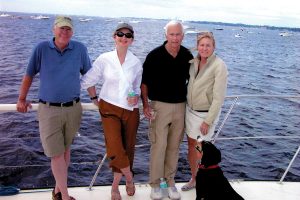
 

Nancy, Hank and Heads
The late Robert Head, his wife Elizabeth Head, Hank Bonar II and Nancy Soderberg enjoying time on the St. Johns River. Elizabeth is responsible for Hank’s and Nancy’s first date, according to Hank.

They have two sons, Henry III and Robert Gregory Bonar. Henry attended The Bolles School, and both sons graduated from The Episcopal School of Jacksonville. They inherited their father’s love of sports, playing soccer, tennis and especially football.

After college, Henry III spent a lot of time in Honduras and eventually married Jessica, a native of Honduras. They have two children, Henry IV and Valerie. Robert lives in California with wife Heather, from Connecticut. They have three children, Robert Gregory Bonar, Jr., Anna Barbara and Nick.

Like many admiring sons, Hank wanted to follow in his father’s footsteps in the refrigeration industry. But, just following Henry B. Bonar Sr. wasn’t enough. Hank want to take refrigeration further, and he has accomplished his goal.

Hank’s relationship with freezing goes all the way back to his grandfather, however. Hank’s grandfather moved the family from the home place in Kentucky to New Mexico then to Okeechobee, Florida, in the early 1900s, when Hank’s father, Hank Sr., was a boy. Now deceased, Hank Sr. used to tell stories about his father bringing home chunks of ice from the Okeechobee ice plant.

Hank included a quote by his father in his book that hints at his own philosophy of industrial refrigeration: “The biggest breakthrough in refrigeration really came when God made water freeze at 32 degrees Fahrenheit and turn to steam at 212 degrees Fahrenheit. These are the cornerstones of our knowledge. Then God related the growth of bacteria to these temperatures. These are the facts we live – or die – with. It’s up to man to take it from there.”

Today, his six employees, including son Henry, and he design and oversee construction of some of the largest, most complex, cutting-edge freezer and refrigeration facilities all over the world, including India, Russia, Ukraine, Trinidad, the Cayman Islands, St. Kitts (an island in the West Indies), and more. They primarily work with ammonia refrigerant to cool public refrigerated processing facilities as well as warehouses that serve just one company, such as Publix.

Hank has worked closely with the International Association of Refrigerated Warehouses. He is often asked to advise professionals in other countries who want to learn more about the niche industry of big refrigeration. “They seek out our company because the local A & E’s (architects and engineers) don’t know how to build big refrigeration buildings correctly, and we have the reputation of being trustworthy and capable of doing the job right,” Hank said.

With his son, Henry, Hank has reached out to help the citizens of Puerto Rico. When one of their good clients said that they needed a generator, Henry found a $115,000 industrial generator and sent it to the country in faith that he would eventually be paid. To meet the need for home generators, Hank bought 30 and sent them to Puerto Rico, too. The company sent a repair person to Puerto Rico, as well, to help repair generator buildings, refrigeration systems for food and roofs. Henry and the repair person have been making regular trips to continue the work.
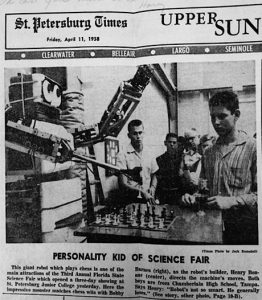
 

newspaper
Clipping from St. Petersburg Times, April 11, 1958, about Hank Bonar’s participation in one of the main attractions of the Third Annual Florida State Science Fair. Hank (center) directed the robot’s moves that another student and he had built.

Hank has accomplished so much in the fields of engineering, construction and refrigeration facilities one could easily define the man by his work. What really drives Hank, however, is sharing his knowledge.

“Education is my thing,” he said. “It is the hallmark of good living standards.”

Bonar’s book, Florida Comes of Age, tells the history of Florida’s refrigeration and frozen food distribution. He wrote the book partly as a way to help developing countries envision how they might handle perishable food more effectively.

“If the insights presented here help save or improve the quality of life of one individual, I have received my reward,” he wrote in the acknowledgments in his book. Maybe that is why he dedicated the second edition to “The Hungry Children of the World.”

“The evolution of refrigeration and the changing face of Florida are inextricably bound,” he wrote. Likewise, he believes, it is for developing countries. “Some of these places don’t even know what refrigeration is all about,” Hank said.

His belief in the importance of education led Hank to establish The Casey Carter Bonar Leadership Award in 2010 for Vanderbilt University to honor the memory of his late wife, Casey Carter Bonar, who Hank married after first wife Barbara died in 2007.

The university’s description of the award speaks to the many positive qualities of Casey, who died in 2010: “Based on the legacy of extraordinary leadership she left behind, this award is presented annually to a Vanderbilt undergraduate student who embodies the unique qualities that Casey brought to the university – leadership, broad collaboration, enthusiasm, passion for campus involvement, selfless service to Vanderbilt, and, always, dedication to positive change.”

Hank is engaged to Nancy Soderberg, a foreign policy expert who moved to Jacksonville 12 years ago and has taught at the University of North Florida for 10 years as Distinguished Visiting Scholar and Director of Public Policy Initiatives. Currently, she is running for Ron DeSantis’ seat in Congress in Florida’s sixth congressional district.

“Nancy’s thing is negotiating,” Hank said. “She gets things done.”

She founded the Public Service Leadership Program at UNF when she arrived and uses her extensive contacts in government and the nonprofit world to build a network of opportunities for UNF students to gain first-hand experience in the field, building their resume and contacts —keys to future employment.

Nancy and Hank say they are amazed at how many of the same countries they have visited throughout their lives but not at the same time. Elizabeth Head, who is the former associate vice president of development at University of North Florida, introduced Nancy and Hank seven years ago. Hank had been given tickets to the Florida Forum Speaker Series when Bill Clinton was scheduled to speak. He wanted someone to go with him, and Elizabeth suggested Nancy.

“Do you think she’d want to go with me?” Hank asked Elizabeth. She did.


“Hank later asked me to go to a boat show with him,” Nancy recalled. “I thought it was going to be a small boat. Well, a small boat did pick me up, but it took me to Hank’s 67-foot yacht that he calls ‘The Magic Castle,’ because, before Hank bought it, the boat belonged to a family relative who was a magician.”

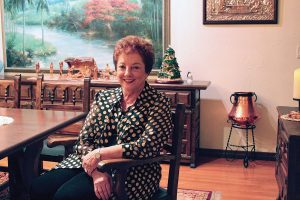
With Hank, there is always something more to learn. Hank’s hobbies are quite a departure from big refrigeration systems. He loves woodworking and made all the continuous-bow Windsor armchairs in his dining room. He won first place in the Florida State Fair for one of the other chairs he made. He likes to paint as well, and his works are hung around the house.

Also on shelves and tables throughout the house are examples of agatized coral, which his father got the State of Florida to officially declare in 1979 as the state stone. The coral is cut open and the exposed interior surface is polished until it is smooth and shiny to show its beautiful colors.

“I have tons of these pieces of coral stored in boxes that I hope will be displayed somewhere someday,” Hank said.

Hank is fond of motivational sayings, too. One of his favorite is “You’re only as old as you think you are.” A favorite toast of his is “May the best in your past be your worst in your future.” And, “Remember this is not a dress rehearsal.”

With Hank, there is always something more to learn.

Therapy dog in training draws attention wherever she goes

KAREN RIELEY
PUBLISHED IN APRIL 2018 ISSUE OF THE RESIDENT NEWS –https://residentnews.net/2018/04/05/therapy-dog-in-training-draws-attention-wherever-she-goes/
Rachel and Flora
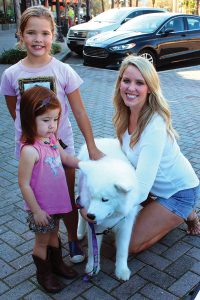
Rachel Murphy and Flora

For a self-described homebody like Rachel Murphy, having a dog like Flora might be considered a burden. Quite simply, Flora is beautiful and attracts a lot of attention. A medium-sized, snow white, fluffy ball of fur with intelligent eyes, perky ears and an engaging attitude, Flora is irresistible – a real people-magnet. When Murphy takes Flora out, she knows that all ages and kinds of people will ask if they can pet her.

Despite her own introverted tendencies, however, Murphy wants people to interact with Flora, because Flora is in training to become a therapy dog. Murphy got Flora, a Samoyed, when she was eight weeks old, and has been training her personally for six months. She takes Flora on walks and to public spaces like San Marco Square to help Flora acclimate to people, other animals and various sounds.

“I got interested in pet therapy because a dog I had when in college was instrumental in helping me get through some stressful issues I faced,” Murphy said. “I grew up with a great family and had a ton of support, but it’s not the same as the easy companionship, unconditional love and the unique support system a pet can give you.

Murphy grew up in Jacksonville. She graduated from Providence School of Jacksonville and the University of North Florida. She’s a behavioral therapist at Little Star Center and Behavioral Clinic. Her husband, Rad Murphy, graduated from The Bolles School and now teaches marine science at his alma mater. The couple bought a home in San Jose a year and a half ago.

“I walk Flora up and down San Jose Boulevard all the time, because it helps her get used to sound of traffic and horns,” Murphy said.

Flora is a purebred Samoyed, a breed of large herding dogs, from the Spitz group, with a thick, white, double-layer coat. Its name comes from the Samoyedic peoples of Siberia. Samoyeds are known to be playful, lively, alert, friendly and sociable.

“Flora is completely different at home than she is when I take her out,” Murphy said. “At home she likes to play, but when I tell her ‘Let’s go to work,’ her mindset completely changes, and she becomes very calm and sweet in public.”

Rachel and Flora with girls
Sisters Campbell (front) and Cate Taylor with Rachel Murphy and Flora

Therapy dogs are trained differently than service dogs. While service dogs are trained to work with one person, therapy dogs are socialized dogs trained to work with many people in a variety of situations. Murphy will soon have Flora attend the Canine Obedience Club of Jacksonville, which has a course for therapy dogs. When Flora turns one year old, she can take the certification test to be a therapy dog. Flora has an Instragram page – florathesamoyed – and already has 500 followers after only a few months.

“At first I was upset because I thought my recovery would slow down my ability to work with Flora, but she was wonderful and caring and has helped me with my therapy by letting me pet her to gradually gain sensation and strength in my thumb,” Murphy said. “It was a learning experience for both of us and proof that everything happens for a reason.”“I hope to take her into hospitals first to visit patients,” said Murphy, who already knows how helpful Flora can be for patients. She cut her thumb seriously this past November when she opened a metal can and has been recovering ever since.

Flora is a quiet dog; in fact, Murphy has trained her to not bark unless she says “speak” to her. She does have one other special talent, however. When Murphy says “sing,” Flora does just that. She’s a remarkable dog that Murphy hopes will bring comfort to many people as a pet therapy dog.

Increasing number, length of trains spoil neighborhood ambiance

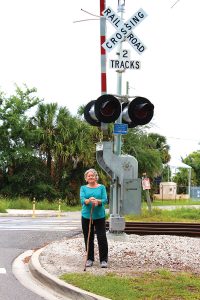
A motorist waits for one of many daily trains to complete the crossing at River Oaks Road.
KAREN RIELEY
PUBLISHED IN MAY 2018 ISSUE OF THE RESIDENT NEWS –https://residentnews.net/2018/05/01/increasing-number-length-of-trains-spoil-neighborhood-ambiance/

Whether you find train horns nostalgic and soothing versus annoying and disruptive seems to be a function of distance. Those who grew up in more rural areas or who remember a time when Jacksonville’s population was much less dense and trains were shorter and ran less frequently recall the melancholy and yet reassuring sound of whistles as steam engines chugged along through distant fields and mountains.

Others, like Lilla Ross, who lives three houses from the railroad crossing on River Oaks Road in San Marco, find the train horns increasingly aggravating, and she is taking steps to do something about the issue.

The Florida East Coast track is part of the history of historic San Marco, and people who live in the neighborhood or who frequent the shopping district are accustomed to the blasts of the horns of passing trains. Train engineers are required by federal regulation to blow the horn four times to alert traffic of their approach at the 10 train crossings between the trestle bridge across the St. Johns River to Emerson Street.

Lilla Ross
Lilla Ross at the train crossing on River Oaks Road near her home.

In recent years, the number of trains coming through the neighborhood has increased. The trains are getting longer and louder. Some trains can be as long as a mile and require a larger locomotive to pull them. The larger locomotives have a bass note in their whistle so, while they may stay within the decibel level required by federal regulations, they sound louder. The Federal Railroad Administration regulations require engineers to sound two long, one short and one long horn at each crossing.

“With 24-32 trains traveling through 10 crossings in San Marco every day, that’s as many as 1,500 train horns blown each day,” Ross said. “I’ve lived in San Marco for 40 years and in my current home for 32 years. In the beginning I got used to the horns. But there is a lot more train traffic now.”In recent years, the number of trains coming through the neighborhood has increased. The trains are getting longer and louder. Some trains can be as long as a mile and require a larger locomotive to pull them. The larger locomotives have a bass note in their whistle so, while they may stay within the decibel level required by federal regulations, they sound louder. The Federal Railroad Administration regulations require engineers to sound two long, one short and one long horn at each crossing.

Ross is leading an initiative to solve this noise pollution that she and others say interrupts sleep and affects home values. They want to create the San Marco Quiet Zone, like those that are already established all over the country, including Miami, Broward County and Orlando, in our own state.

“I decided to create a website and petition to help spread the word and establish that there is a need for a Quiet Zone. It is affecting the quality of life in the neighborhood,” Ross said. By the end of April, 160 people had signed her http://www.quietzone.com petition.

Quiet zones are regulated by the Federal Railroad Administration. They require that other safety measures be put in place to make it unnecessary for train engineers to blow the horns, except in the case of an emergency. The options are to install lights and four-quadrant gates (four long arms, two each on both sides of the crossing), traffic barriers to stop drivers from going around lowered gates or into opposing lanes of traffic, or close the crossing to vehicular traffic altogether.

The crossings that are included in the San Marco Quiet Zone proposal are Prudential Drive (at Baptist Health), San Marco Boulevard, Nira Street, Naldo Avenue, Hendricks Avenue, Atlantic Boulevard, River Oaks Road, St. Augustine Road, Emerson Street and Reba Avenue (south of Walmart).

Homeowners near the tracks and crossings aren’t the only people interested in the creation of a San Marco Quiet Zone. Developers and people visiting parks and other outdoor public spaces have weighed in on the issue, too.

Chance Partners has started construction on the San Marco Promenade that will open in Summer 2019. The apartments will be on Philips Highway just south of I-95 beside the railroad tracks near the River Oaks Road crossing.

Jeff Rosen, a principal with the firm, said, “Chance Partners is very supportive of the quiet zone efforts and believe it will have a positive impact on all residents throughout San Marco and nearby neighborhoods.”

The firm also has plans for a proposed San Marco Crossing apartment development near their San Marco Promenade location and a second phase of San Marco Promenade in the future.

While The Resident was unable to reach District 5 Councilwoman Lori Boyer for comment, “Ms. Boyer has indicated that she is supportive of a San Marco Quiet Zone,” Ross said.

Funds needed to create Quiet Zone

This is not the first time in recent San Marco history that the idea of a Quiet Zone has been brought to Boyer’s attention. In October 2013, Donald C. Jones, then CEO of the American Association of Clinical Endocrinologists and the American College of Endocrinology, wrote to Boyer to express his frustration about “ear-piercing sounds” that went on 24 hours a day, seven days a week. Like Ross, he had lived on River Oaks Road for more than 40 years and hoped to find a solution because he didn’t want to move.

In a later letter to Boyer, Jones questioned why City Ordinance 2013-676-E, which sets restrictions on noise decibel levels, could not be applied to limit train noise levels in San Marco. He wrote, “This is becoming a health and public safety issue, not to mention an ongoing source of irritation and frustration. The noise levels can cause hearing damage if you are outside.”

Unfortunately, Jones died in July 2017, so he is not part of these new efforts. The biggest impediment to creating a San Marco Quiet Zone seemed to him then, as it does for those currently wanting to pursue this route, to be funding to add the safety measures required by the FRA to make it unnecessary for train engineers to blow the horns.

Earl H
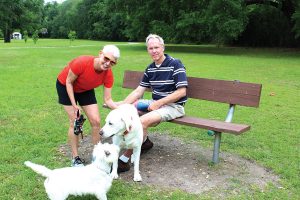
Park visitors Pam Sorenson and Piper and Earl Higginbotham and Jack in Alexandria Oaks Park near the train track.

All 10 crossings in the current San Marco Quiet Zone proposal have lights and two-quadrant gates (long arm and short arm). River Oaks and Emerson already have traffic barriers. A San Marco Quiet Zone would require new traffic islands and/or upgraded gates at these crossings. The level of upgrade needed at each crossing would determine the cost.

“We hope to develop a public-private partnership, like what was accomplished in south Florida, for funds that will be needed. Public money from city, state and federal governments and perhaps private developers would help,” Ross said.

San Marco resident Earl Higginbotham wonders why train engineers are still required to blow horns at all. “Trains blowing horns is anachronistic,” he said. “They were for remote, rural communities that didn’t have lights and gates at crossings.”

“With all of the warning devices – signs, flashing lights, road impediments and gates – trains shouldn’t need horns,” Higginbotham said. “We drive our cars through many intersections every day and aren’t required to blow our horns to warn pedestrians, because it is their responsibility to obey the walk/don’t walk signs and signal lights.”

Higginbotham is a retired locomotive engineer, attorney and breeder of Dilute (Silver) Chocolate Labrador Retrievers. He lives in Lakewood, but walks his dog, Jack, in Alexander Oaks Park twice a day on most days.

He worked a total of 25 years as an attorney specializing in Federal Employers Liability Act (FELA) practice and all other areas of personal injury and wrongful death. Prior to that he was an associate attorney/manager of labor relations for CSX and general chairman of United Transportation Union. And, he was a locomotive fireman and engineer for Seaboard Coast Line Railroad Company for 10 years.

“A San Marco Quiet Zone would be a great improvement for everyone – businesses, the neighborhood and individuals and visitors to the area,” he said.

When Higginbotham and Jack walk in Alexander Oaks Park, which parallels the train tracks, he said, “Even in the field, the decibel levels are sufficiently high as to almost automatically encourage one to cover one’s ears as the trains approach and transverse River Oaks Road.”

Pam Sorenson lives in The Peninsula condos on the Southbank. “The train horns are particularly aggravating at night,” she said. “The sound ricochets off the water and the high-rise buildings.”

Joe Honeycutt, who signed Ross’ online petition, said, “Our home is about one mile from the railroad crossing at Emerson and the same distance from the St. Augustine Road crossing. We can hear the train horn but it is barely noticeable. I primarily signed the petition because I believe [the sound of train horns] has some effect on property values of the people that live much closer to the crossings.”

Not everyone agrees with the need for a Quiet Zone, however. “Some residents have pointed out to me that I knew I was buying a home next to a railroad track and crossing, so I should just put up with it or move,” Ross said. “That’s easier said than done after living 32 years in one place.”

“I’m aware that some neighbors have actually expressed no concern with the horn noise,” Earl Higginbotham said. “No one can reasonably state a preference for hearing damaging levels of horn exposure to that of peace and quiet.”

Local filmmaker, attorney team up for new reality show

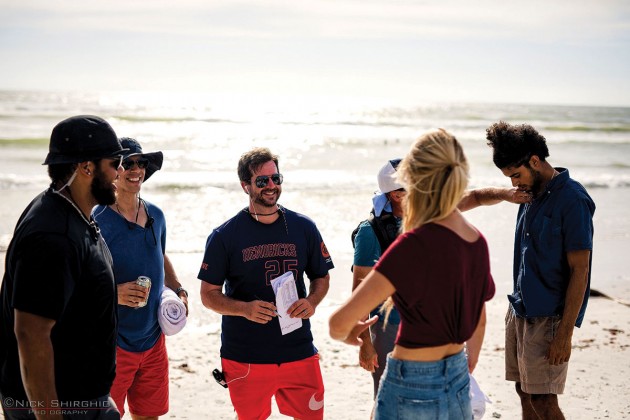
Warren Skeels (center) talking with Siesta Key stars Brandon and Madisson. Notice Skeels is proudly wearing his Hendricks Avenue baseball coach’s jersey. (Photo credit: Nick Shirghio)
KAREN RIELEY
PUBLISHED IN MAY 2018 ISSUE OF THE RESIDENT NEWS – https://residentnews.net/2018/05/01/local-filmmaker-attorney-team-up-for-new-reality-show/

Little did Jacksonville natives Warren Skeels, a filmmaker, and Lawrence Najem, an attorney, know that serving as members on the Mayor of Jacksonville’s Advisory Council for Film and Television would lead them to produce MTV’s hit reality show, “Siesta Key.” Perhaps it was kismet.

After all, both had produced and sold a number of full-length motion pictures. Both appreciated what each other had been able to achieve in the industry. They became friends and, as the saying goes, the rest is history,.

Skeels, 42, was born and raised in Neptune Beach. Filmmaking is part of his heritage. “My uncle, Arledge Armenaki, is a cinematography and film educator,” Skeels said.

Skeels attended Douglas Anderson School of the Arts and continued his theater and film education at University of Southern California. He worked in Los Angeles and New York City after college. When he and his wife, Cristi, decided it was time to start a family, he brought her back to the place where he grew up – Jacksonville. They chose to live in the San Marco area.

“We love the quaint feeling of the area, while being so close to everything,” Skeels said. Cristi and he have two children, ages 9 and 11.

Najem photo
Lawrence Najem in his Prudential Drive office at Ossi & Najem, PA.

Najem, 54, was also born in Jacksonville. He grew up in San Jose and attended Bishop Kenny High School. He remains rooted in the neighborhood, living with his wife in the old Oriental Gardens area of San Marco, where they have raised three children, ages 16, 18 and 20. His law firm, Ossi and Najem, is also in the neighborhood, on the Southbank.

After learning about Skeels’ background in filmmaking, Najem decided to approach him about an idea he had for a reality show.

“Having served as general counsel for John Travolta, I am attracted to the production, finance and business side of film and entertainment,” Najem said. “In 2015, I met with a client in Sarasota who told me that he thought his kid and friends might make good material for a reality show.

“Warren and I decided that we really had something here,” Skeels said. He directed a pilot, which included framing the most important relationships and showcasing the personalities. They chose to partner with Entertainment One Television to pitch the project, and MTV became a natural fit for the young adult show. Skeels is both the show’s creator and executive producer. Najem also has a dual role as attorney and producing partner.

“We knew from the inception that we wanted to not only capture the natural beauty of Siesta Key, but also showcase a narrative style that isn’t represented in the reality TV category,” said Skeels. To achieve his goal, Skeels tapped several North Florida artists for the project, among them Flagler alumnus and cinematographer Gareth Paul Cox.

While “Siesta Key” is the first reality foray for Skeels, he’s an award-winning filmmaker known for his work on documentaries “Chops” and “Thespians,” and the features “Who’s Your Monkey” with Jason London and Kevin Durand, and “Surfacing” with Joy Thomas and Lin Shaye.

“Siesta Key” follows a group of young adults confronting issues of love, heartbreak, betrayal, class, and looming adulthood as they spend the summer together in their beautiful hometown. Nothing is off limits while these friends come of age, figuring out who they are and who they want to become – LGBTQ issues, interracial relationships and mental health. The show has consistently been No.1 on Mondays at 10 p.m.

“We’re really proud of our work,” said Najem. “It meant a lot for us to represent North Florida on this show, and it was important for us to showcase local crew with us on the shoot.”

The Way We Were: Dr. Maria Acosta-Rua

BY KAREN RIELEY
PUBLISHED IN JANUARY 2018 ISSUE OF THE RESIDENT NEWS – http://residentnews.net/2017/12/05/youth-learns-lessons-homelessness-7th-annual-cardboard-city/

Dr. Maria Acosta-Rua and her late husband, Dr. Gaston Acosta-Rua, have never forgotten their past even as they contributed so much to their Jacksonville community. Theirs is truly an international tale, in which they have intertwined their Spanish and American lives to the benefit of both.

AcostaRua_01-200x300
Acosta-Rua wedding in front of “The Marriage of the Virgin Mary and St. Joseph” in the Monastery of Guadeloupe

As soon as they graduated, he moved to Miami to work hard, save money and take his Educational Council for Foreign Medical Graduates (ECFMG) exam, but he promised he would come back for her in Madrid in a year. He kept his promise, and they were married two weeks later in the Monastery of Guadeloupe, because he had to start an internship in Cleveland very soon.Gaston Acosta-Rua and Maria Victoria Pol Gimenez met in Madrid in their last year of medical school. Gaston was a counter-revolutionary who escaped from Cuba, and Maria was from Madrid.

Maria found herself in a new country, with a new husband who worked rotation in the hospital every other night, in what seemed to her to be gloomy Cleveland compared to Madrid, where she remembers people always out in the streets visiting with each other. She became pregnant almost immediately so that meant she would soon be a new mother in addition to being a young wife.

“It was a real cultural shock for me, and I felt very lonely and depressed,” Maria said. But, once Gaston Jr. was born, she had someone to care for and occupy her time. She began to meet people in the neighborhood when she took baby Gaston out for walks.

As she gradually adjusted to her new life, she started thinking about her own career and studying to take ECFMG exam herself.

“It was not an easy task,” Maria said. “The exam was in English and included subjects from all of the medical school courses, which I had studied in Spanish.” But she persevered and became a “real” doctor.

In 1967, Gaston moved to Iowa City to start his neurosurgical residency. Maria and Gaston Jr. stayed in Cleveland until she completed her internship the following June.

AcostaRua_04-200x300
Maria Acosta-Rua with her grandchildren: Somerset (seated), Alex and Daría (in the front), Andrew (standing), Mills and Fernando Jr. (back), circa 2005

Gaston Jr. now lives in Connecticut with his wife, Lianne. Fernando was born soon after they moved to Iowa and right before Maria began her child psychiatry training. He lives in Jacksonville and is the CEO of Pet Paradise. Tony, who was born when Maria was mid-way through child psychiatry training, lives in Costa Rica with his wife, Adriana. Maria now has six grandchildren – three each by Gaston Jr. and Fernando.

After completing their training, they wanted to move to Florida. Like most Cubans, Gaston hoped he could return to Cuba someday and Florida was as close as he could get us to Cuba,” Maria said.

They thought they would move to Miami, but Gaston’s chief resident in Iowa, Dr. Tom Boulter, who was by then practicing in Jacksonville, found him a position with Lyerly Neurosurgery in Riverside.

The doctor rented a house for them on Ortega Boulevard, and they ended up liking the neighborhood so much that after two years they bought a house on Long Bow Road, where they lived from 1975 to 1981. Next, they moved to Ortega Forest, where Maria still lives.

After moving to Jacksonville, Maria was determined to put her education to work. In 1973, she started her child psychiatry practice on Oak Street in Riverside.

She was a pioneer as the very first child psychiatrist in Jacksonville. She worked the longest with children at Daniel Kids and has also worked with many other nonprofits that provide services to children, for example, Youth Crisis Center, Florida Baptist Children’s Homes, Child Guidance Center, Children’s Home Society, the Florida School for the Deaf & Blind, Jacksonville Youth Sanctuary, Northeast Florida State Hospital and Boys Home Association of Jacksonville, in addition to her own private practice. For the last 15 years of her career, Maria worked with foster children.

“I started the first day treatment facility for emotionally disturbed children with St. Vincent’s and the school system, and then I started a children’s psychiatric ward with Baptist,” said Maria, who retired three years ago.

AcostaRua_02-300x200
Gaston Acosta-Rua relaxing on the porch of his Costa Rican farm

Maria shares Gaston’s story of escaping from Cuba. “He was 21 years old and working underground against Castro,” she said. “The government was looking for him to put him in prison.”Maria is very proud of the work her husband did, not only in Jacksonville, but in Mexico, Costa Rica and Africa as well. “Gaston was an excellent neurosurgeon and worked in every hospital in Jacksonville,” she said. “He did missionary work for more than 20 years. Going with a Mercy Ship to Africa in 1995 was the highlight of his life.”

He was introduced by his mother to Fidel Castro’s sister, who was anti-Communist. She arranged for Gaston to get on a plane out of Cuba, rather than having to escape by boat. After a brief stay in Costa Rica, Gaston eventually traveled to Miami.

Gaston returned to Cuba only once in 1998. He traveled with a Catholic organization called the Order of Malta to bring wheelchairs to Daughters of Charity for the home they were running for severely handicapped children and adults.

The Acosta-Ruas have contributed much to Jacksonville’s medical sector. “Even now, when I sign something people often recognize the last name and remember that one of us helped them,” Maria said.

Gaston kept feeling drawn to help people in Costa Rica, so much so that he bought a farm there. He helped with medical and social contributions.

In 2002, Gaston was diagnosed with pancreatic cancer. As physicians, Maria and he both knew that this meant the end. “He was never in hospice,” Maria said. “Gaston knew what was coming and was determined to live each day to the fullest.”

He went back to work, played tennis and decided to write about his childhood and his experiences in Cuba, his escape and his memories of life for his children and grandchildren. He also established the Acosta-Rua Family Foundation, with the mission to relive the burden of the poor and the sick, both locally and in Latin America.

AcostaRua_05-300x200
Maria Acosta-Rua relaxes at home in Ortega Forest.

Gaston passed away seven months after he was diagnosed. After his death, their son, Fernando, became involved with Community Hospice & Palliative Care. He is presently the chairman of organization’s Board of Directors and a member of its foundation. The Acosta-Rua family made a naming gift for a new 16-bed center called “The Dr. Gaston J. Acosta-Rua Center for Caring” in Gaston’s memory.

Fernando and his wife, Brooke, have held seven fundraising events called “A Sunset in Costa Rica” to benefit both the Children’s Hospice in Costa Rica, and Community PedsCare (pediatric hospice and palliative care) in Jacksonville. When a second hospice was built recently in Costa Rica, it was named “Doctor Gaston Acosta-Rua Center.”

At the time of this interview, Maria and various other friends and workers were busily preparing for the Acosta-Rua family’s annual celebration of Gaston’s escape from Cuba. They used to hold the event on the actual date of his escape, Dec. 28, but now they hold it earlier in the month when it is most convenient. Fernando and Tony roast a whole pig outside. Maria prepares black beans, rice and salad for more than 100 people.

When Maria and Gaston first moved to Ortega Forest, mostly Cuban friends attended, but now friends of their children and their families are the majority of those attending. Many of them are Bolles alumni because all three sons played football for and graduated from the private school in the San Jose area on the St. Johns River. Tony also played Bolles baseball. Fernando is currently a member of Bolles’ Board of Trustees.

The Acosta-Ruas Spanish-style home built in 1981 and Spanish furnishings that they collected from their many trips are the perfect backdrop to the event and reflect their commitment to giving back to help people from the communities of their past and present.

The epigraph in Acosta-Rua … Las Memorias, written by Gaston and Maria Acosta-Rua with Susan D. Brandenburg, exemplifies the Acosta-Ruas’ lives: “To be ignorant of what occurred before you were born is to remain always a child for what is the worth of human life unless it is woven into the lives of our ancestors by the record of history.” (Cicero 106 BC)

Youth learn lessons in homelessness at 7th Annual Cardboard City

BY KAREN RIELEY
PUBLISHED IN DECEMBER 2017 ISSUE OF THE RESIDENT NEWS – http://residentnews.net/2017/12/05/youth-learns-lessons-homelessness-7th-annual-cardboard-city/
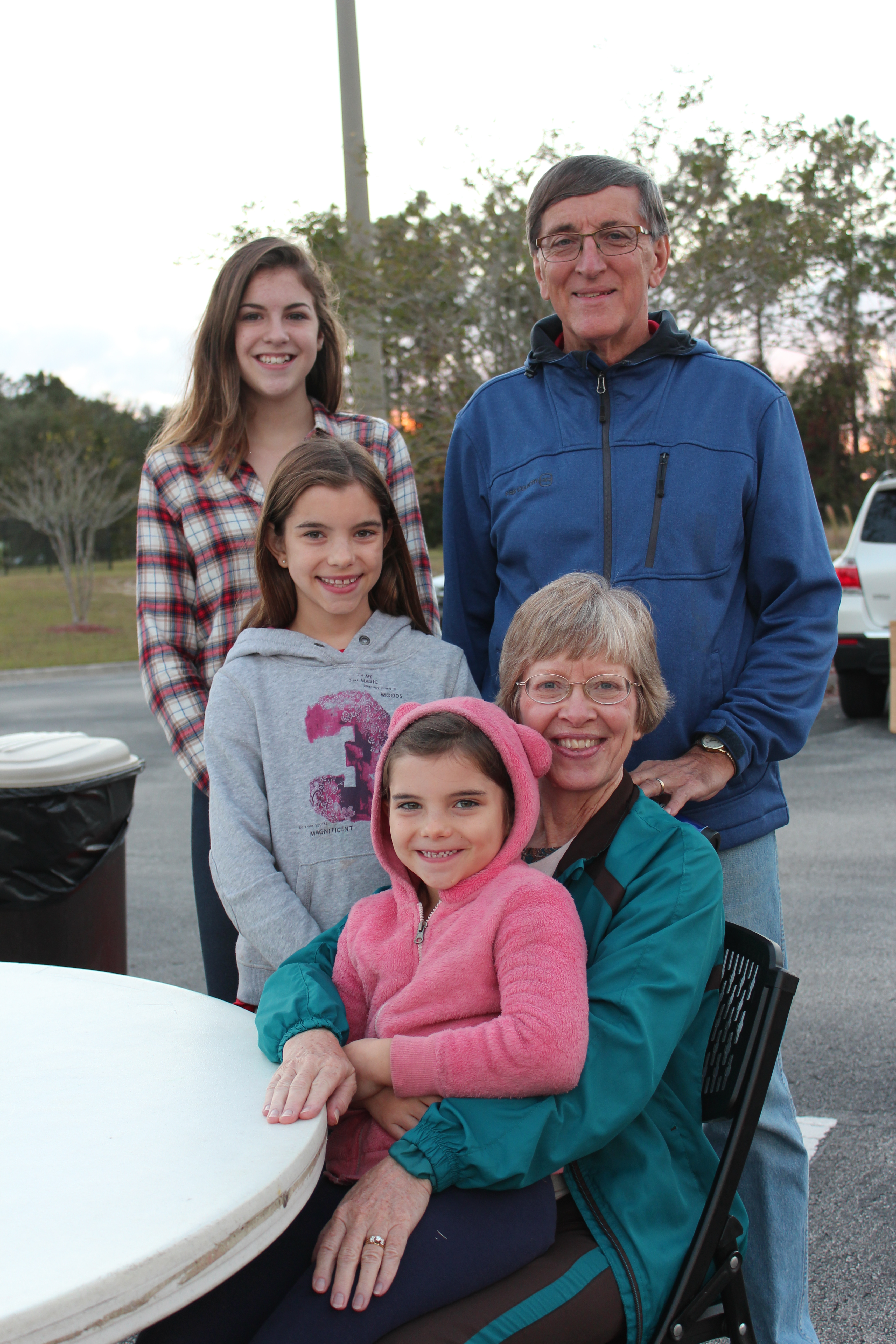
St. Mark’s Lutheran Church members, Olivia Lapinski and Abigail Lapinski on Lynette Weber’s lap, and (back) Jody Harkrider and Mark Weber have participated all seven years. While they weren’t building a house this year, they planned to participating in all of the event’s other activities.

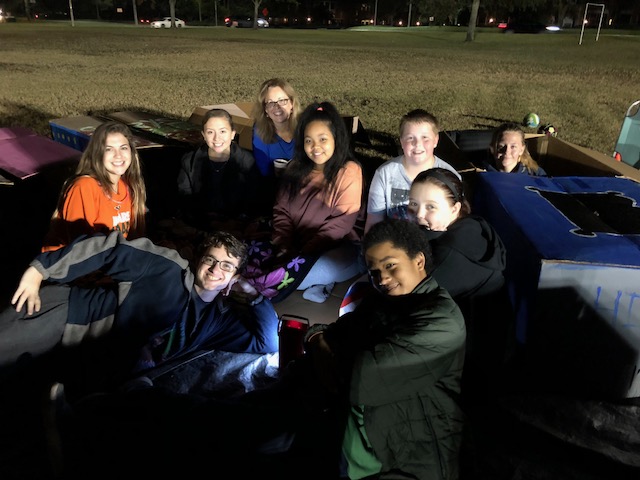
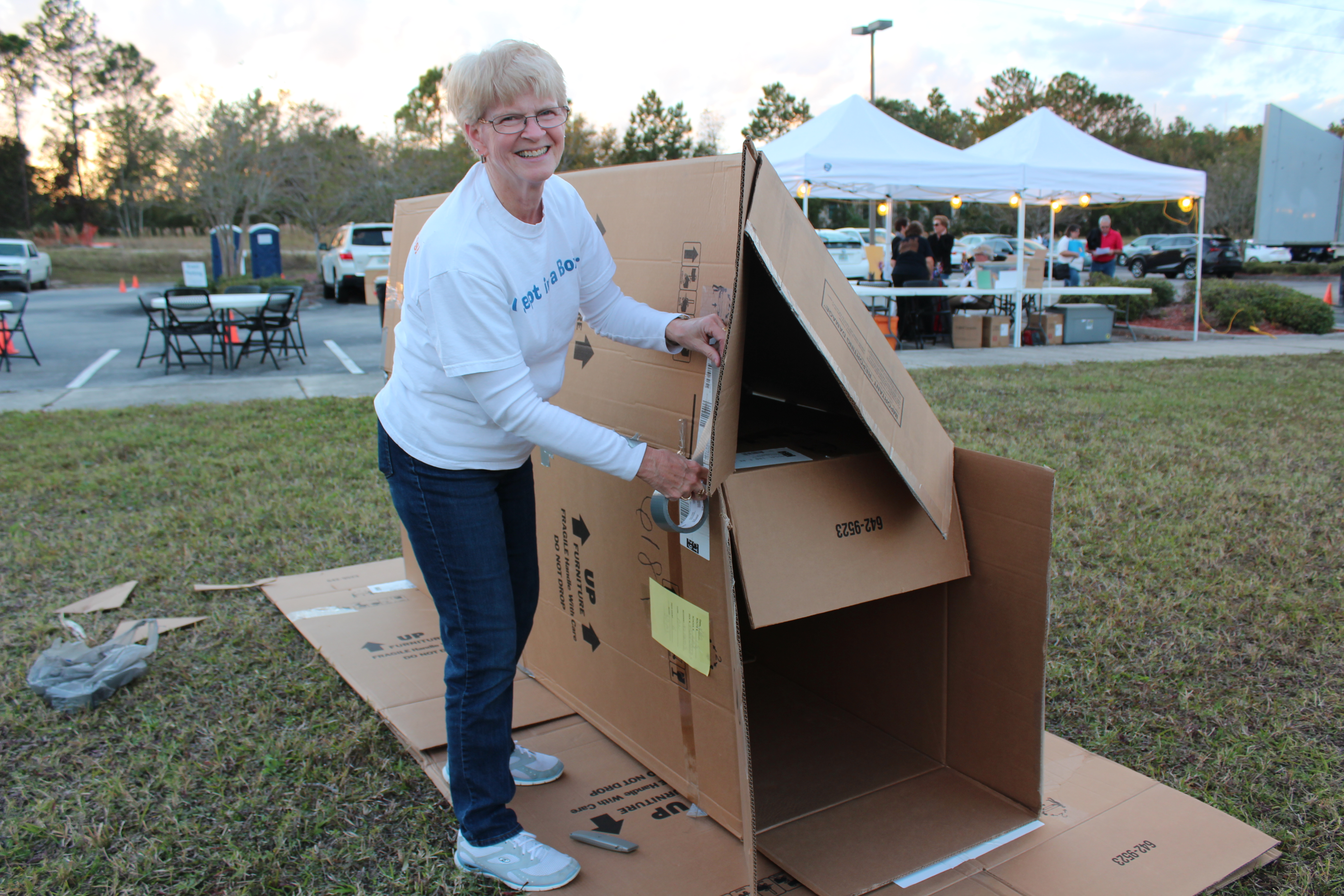
For seven years, faith youth groups, families and individuals have gathered to create Cardboard City, held on Nov. 17 this year at CrossRoad United Methodist Church, Southside. The event raised more than $25,000 to benefit Family Promise of Jacksonville, which helps return homeless families to self-sufficiency.

The agency reports that every Duval County public school has at least one homeless student, many with more than one. Lynn Doiron, a kindergarten teacher at Merrill Road Elementary School, has firsthand experience with that statistic.

“I was surprised and sad to discover that one of the children I taught in my school of mostly middle-class families was being helped by Family Promise,” she said. Doiron set up her cardboard box by herself and raises money to support the agency.

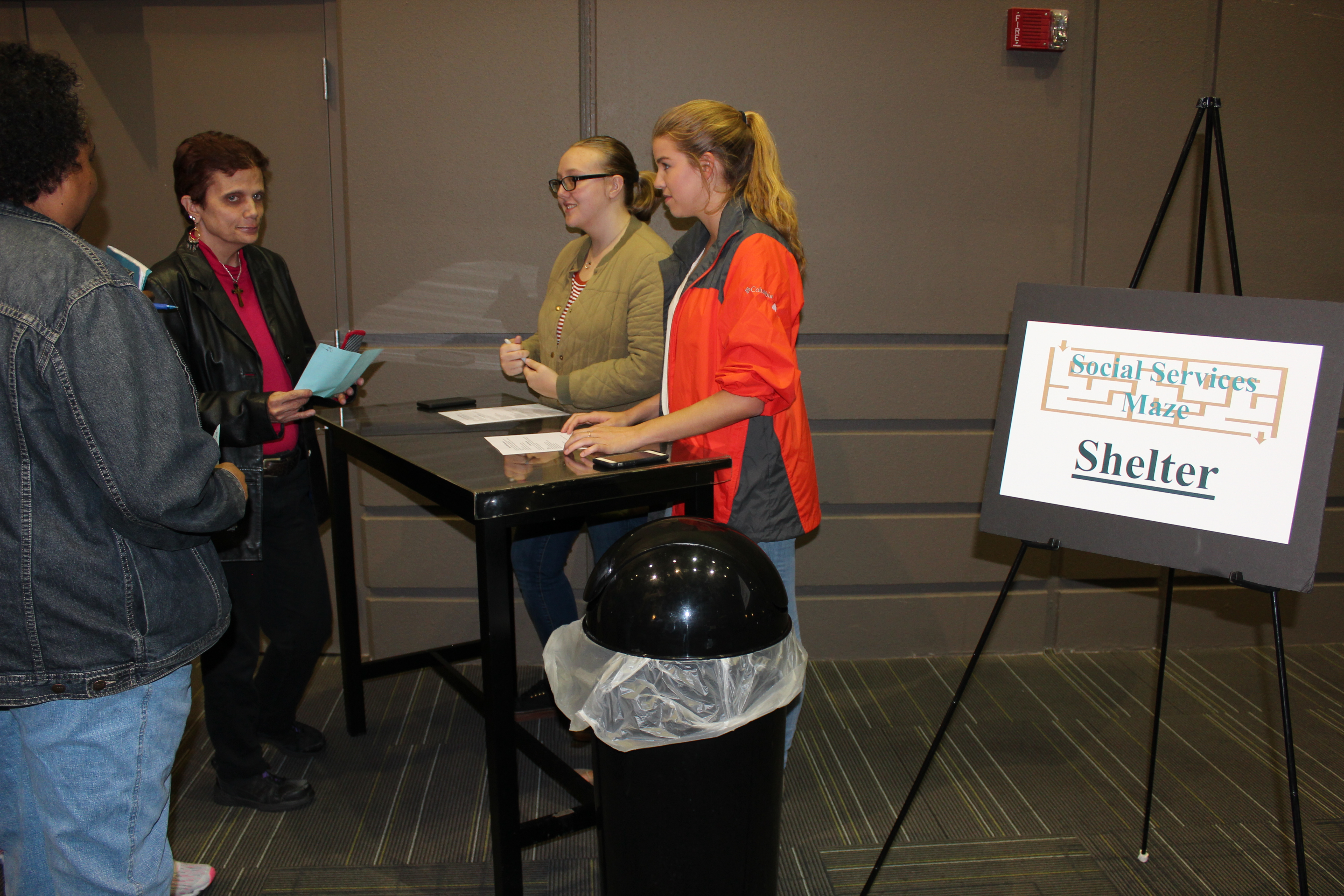
In the Social Service Maze, people were given a “your family” scenario and then attempted to navigate a series of stations (social service agencies) to get resources their family needed (shelter, food, a job and more). The first-time program was developed with Florida State Collage at Jacksonville’s Honors program through the Center of Civic Engagement. Students, who manned stations, learned about the challenges faced by the homeless and the agencies that try to help them.

Seventeen local congregations and 800 volunteers help Family Promise by providing homeless families with meals and a place to sleep.

New basketball club positive addition to neighborhood

BY KAREN RIELEY
PUBLISHED IN DECEMBER 2017 ISSUE OF THE RESIDENT NEWS – http://residentnews.net/2017/12/04/new-basketball-club-positive-addition-neighborhood/

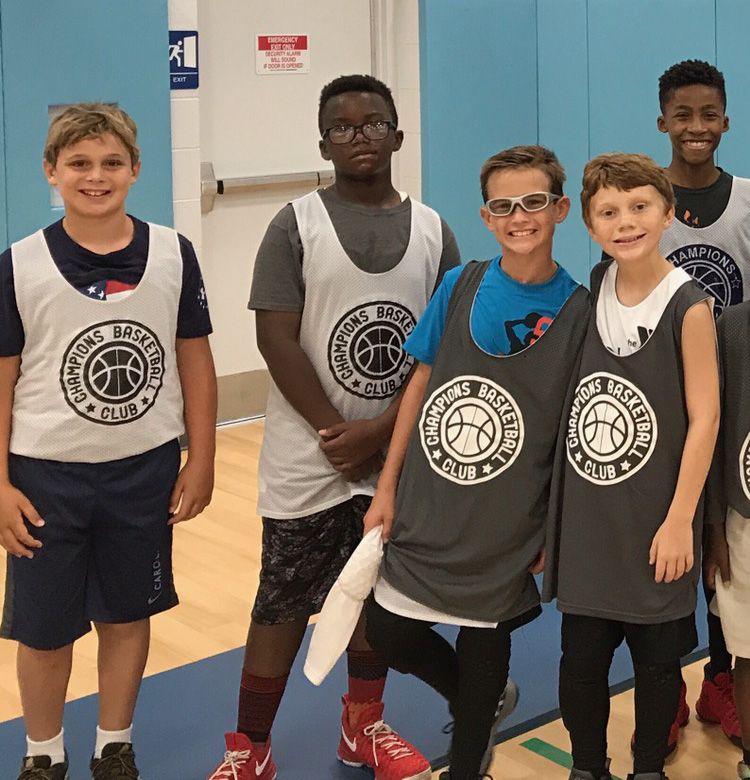
Champions Basketball Club’s newest location at Hendricks Avenue Baptist Church in San Marco is a very positive addition to the community, according to parents whose children are enrolled in the club.

Led by Coach Phillip Hobbs, founder of Champions Basketball Club and head boys basketball coach for St. Johns Country Day School, the club focuses on helping girl and boy athletes of all ages who want to develop into more complete players.

“Phillip is full of energy, positivity and enthusiasm,” said Emery Noles, a Miramar resident. Her son, Grady, 9, started last summer in the club’s Ortega location. “It is great to have the club in our own neighborhood instead of having to drive back and forth to Ortega.”

For Noles, the club’s newest location brings back memories. Her dad, James Abercrombie, coached Hendricks Avenue Baptist Church’s basketball program for 10 years. While her father passed away three years ago, Noles’ mother, Mildred Bishop Abercrombie, still lives in San Marco.

Noles’ brother, Trey Abercrombie, a San Jose resident, played on the HAB team in the 1970s. She remembers her brother had friends from all socioeconomic levels, and they often came to her house to hang out. “I love it when people from all walks of life can come together and enjoy each other,” Noles said. “The kids in the program were not just from San Marco.”

And, while the gym at HAB and the Champions Basketball Club are new, that tradition of engaging all kids who are interested in the program continues on.

“We had gotten requests to open a club in the San Marco area,” Hobbs said. “We chose HAB because it is centrally located.”

Hobbs recalls that the church’s pastor, Rev. Dr. Kyle Reese responded enthusiastically when he approached him about using the church’s gym for the club. Reese’s three children, Peyton, Hannah and Wyatt, attended St. Johns Country Day School. Hannah trained under Hobbs while she was there, and Peyton currently plays for Hobbs.

“I think Champions Basketball builds on the foundation laid by Jim Abercrombie and others,” Reese said. “We are a place for all children to learn and appreciate the game of basketball. The more we open our doors the more faithful we are to our founders.”

Hobbs develops an individualized game plan for each club participant. “My goal is to have kids achieve success on and off court, with basketball as the conduit to becoming successful as adults,” Hobbs said.

Mandarin resident Brian Pargman, director of admissions for St. Johns Country Day School, said his 9-year-old son, Brady, has continued to improve his basketball skills under Coach Hobbs’ direction.

“Coach not only reinforces the fundamentals of basketball, but he also delves deeper into every aspect of the game,” said Pargman.

Former Beauclerc resident Rob Lambert, a realtor with Keller Williams, was referred to Hobbs by another coach who was moving out of town. His 14-year-old son, Gabriel, had a couple of injuries in middle school, and Lambert was looking for someone to help Gabriel get back in shape, build confidence and improve skills.

“Phil did a fantastic job of developing an individualized training program for Gabriel right after Labor Day,” Lambert said. Gabriel just made the JV team at Bishop Kenny High School.

“We plan to have Gabriel continue with Coach Hobbs throughout high school, even though we now live in Mandarin,” said Lambert.

Noles believes her father would be very pleased that a basketball program continues at HAB. In a video filmed about the church’s history, Abercrombie shared his philosophy as coach.

“My hope is that the church will continue to take care of its youth and the youth in the community and send them on their way,” he said in the video. His described his style of coaching as “low pressure” because he wanted “to teach the kids how to enjoy sports.”

Hobbs wants to provide the “D-1 experience,” the best academic and athletic support possible to create Division 1 players. To date, about 12 girls and 24 boys participate in the club. While most are from the San Marco/San Jose area, some travel from other communities throughout the city.

He plans to open additional clubs on the Southside off Baymeadows and near the St. Johns Town Center, depending on parent interest.

“I hope these locations will be a reality by the first of the year,” Hobbs said.

The club offers executive training, in addition to training kids of all ages, at all skill levels. Parents can sign their child up throughout the year by visiting championsbasketball.website.siplay.com/ or contacting CoachPhobbs@championsBC.com, (904) 479-6620.

Jacksonville sixth Florida city to establish Holocaust museum

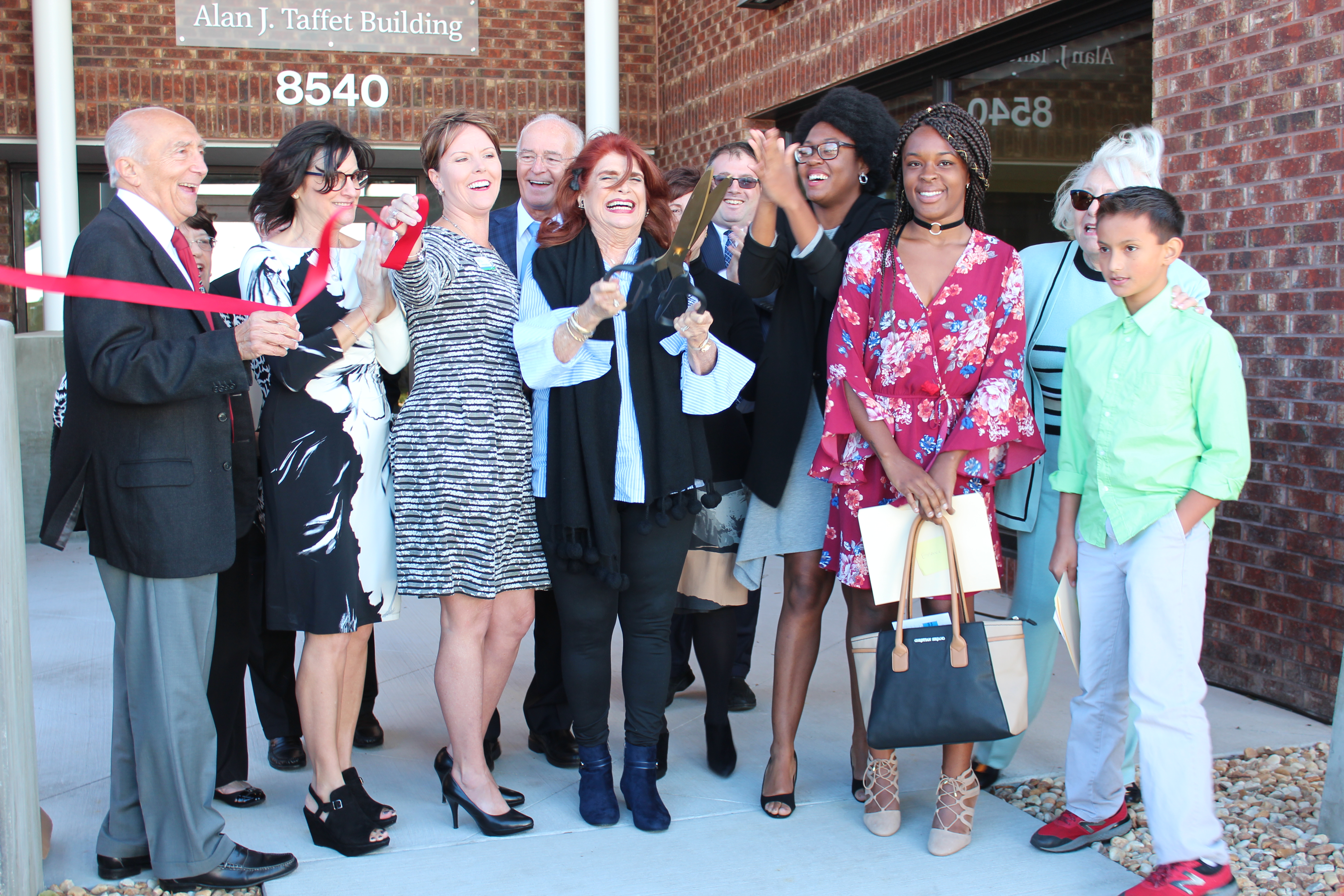
The official ribbon-cutting was done by Laurie DuBow, Lori Leach, Colleen Rodriquez, Ben Frisch, Ina Taffet, Rabbi Yaakov Fisch, Kalilah Jamall, staff assistant, Office of U.S. Senator Bill Nelson, Essence McKinney, a child in JFCS’s foster care services, JFCS volunteer Eunice Zisser, and Matthew Villeareal, a student in JFCS’s Achievers for Life program.
BY KAREN RIELEY
PUBLISHED IN DECEMBER 2017 ISSUE OF THE RESIDENT NEWS – http://residentnews.net/2017/12/05/jacksonville-sixth-florida-city-establish-holocaust-museum/

In spite of blustery winds, more than 150 gathered under a large tent Oct. 29 to celebrate the grand opening of the 30,000-square-foot Alan J. Taffet Building and the centennial of Jewish Family & Community Services.

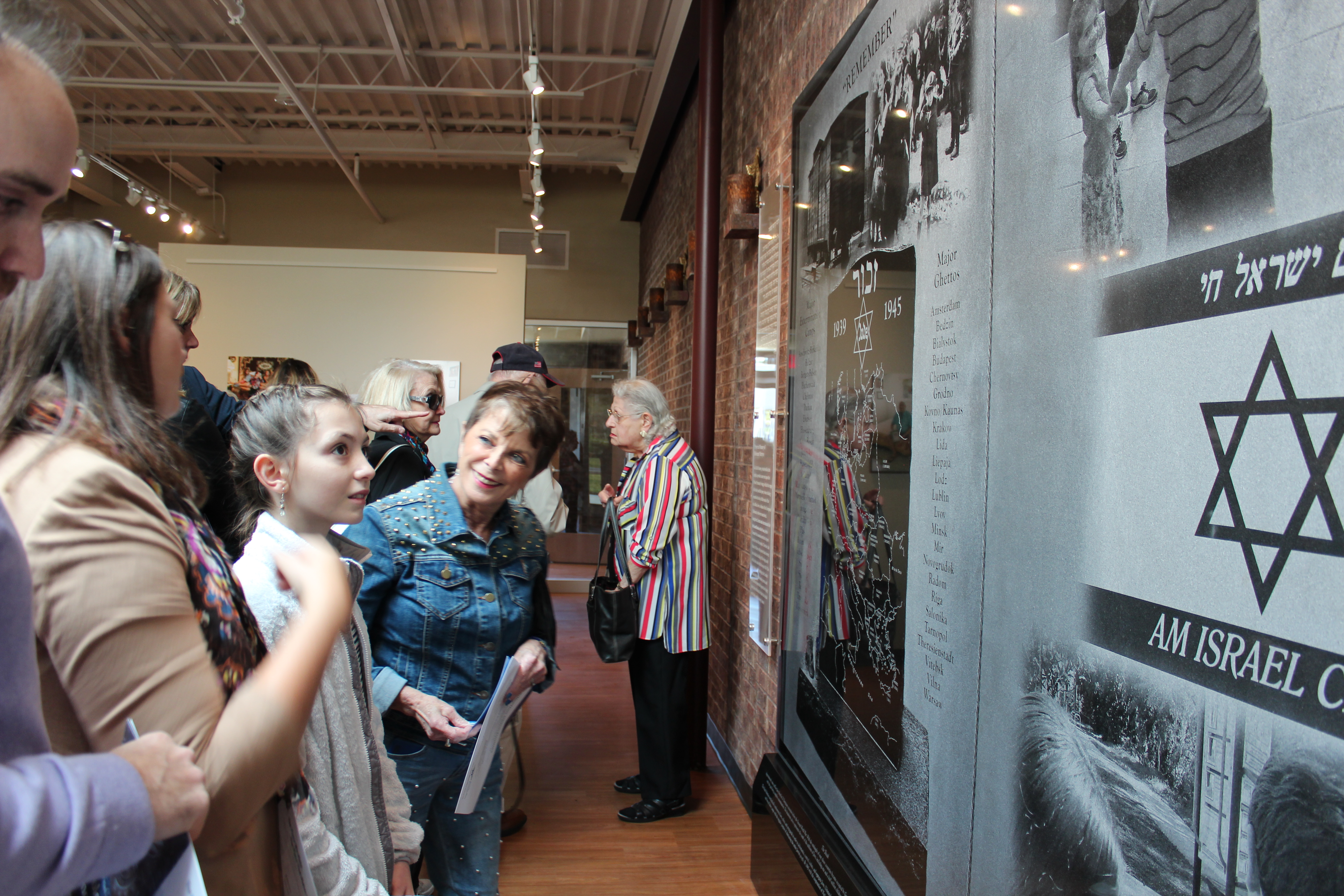
The ceremony included a ribbon cutting and tours of the new building, which houses the Frisch Family Holocaust Memorial Gallery, the only Holocaust memorial between Atlanta and Miami. After speeches, a diverse group of community members, from a foster care child to a Holocaust survivor, added mementos to a time capsule to represent the nonprofit’s main areas of service.

Speaking during the dedication, Alan Taffet’s widow, Ina, shared how proud she is with every caring deed in his life. “He is not dead but he is alive in this building,” she said.

Ben Frisch followed her words by noting the importance of including the Frisch Family Holocaust Memorial Gallery in the new headquarters.

“The [Holocaust] should never have happened and never be forgotten,” he said. “We will continue to give our support for many years to come as our family’s remembrance of Lilo and Harry Frisch, both of whom were Holocaust survivors.”

Irina Spinella, with her father, Holocaust survivor Nathan Koifman and her son, Ken. Koifman was born in Odessa, Ukraine in 1931. His family moved to Moscow, Russia. Then the war broke out and, in 1941, Koifman and his mother became one of the many families who evacuated to Uzbekistan by train. In 1943, they moved back to Moscow where his family worked in the military factories until the end of the war. “The Holocaust memorial will be a way to make sure future generations understand what we went through,” daughter Irina translated his Russian to English.

Laurie DuBow, lead volunteer and donor for JFCS’s “The Place We Make … The Place That Makes Us” capital campaign, challenged guests to remember what event, conversation or person first stimulated them to give back.

“I distinctly remember my mother saying that there is always something you can give to those in need, and when you do, it benefits you as well as them,” he said.

Mary Edwards, vice president of fund development on the JFCS board of directors, reported the campaign has nearly raised more than $5.3 million towards the $6 million goal. Funds raised will also renovate JFCS’s old offices on DuPont Station Court, which will be renamed the Allison Stein Robbin Building and  house the new Max Block Food Pantry.

“I am committed to raising the funds necessary to construct and furnish this building and renovate the original offices so that they are mortgage- and debt-free,” DuBow said.

JFCS, founded in 1917, has expanded beyond assisting people in need with food and emergency shelter to a wide variety of community services including adoption services, child welfare, counseling, emergency financial assistance, senior support and dropout prevention.

“People always say, ‘I had no idea that your agency did all this,’” said Colleen Rodriguez, JFCS executive director.

Although JFCS is guided by Jewish values, the agency serves the entire First Coast community. “What most people don’t know is that 80 percent of the people we serve are not Jewish,” she said.

Rodriguez noted that efficiency and wrap-around support were most important as they designed their new building, with the help of Tom Duke Architect, PA, and Matt Taylor, executive vice president, and Jon Witty, senior field supervisor, The Angelo Group general contractor.

The Alan J. Taffet Building, 8540 Baycenter Road, will serve as JFCS’s new headquarters. Other Florida cities which have museums, memorials or education centers about the Holocaust include St. Petersburg, Miami, Dania Beach, Maitland and Naples.

Coffee shop zoning creates concern, appeal filed by neighbors

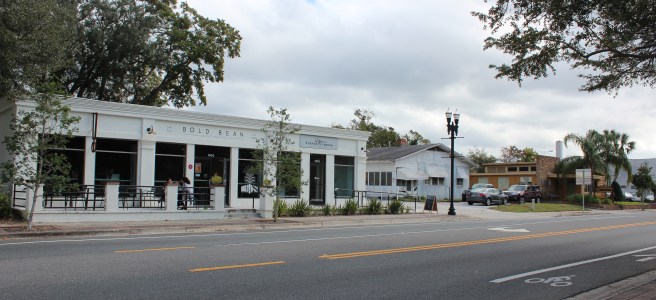
An abandoned house to the right of Bold Bean and Turner Plumbing could be razed for parking if LC Turner LLC would agree to do so.
By Karen Rieley
Published in December 2017 issue of The Resident Newshttp://residentnews.net/2017/12/04/coffee-shop-zoning-creates-concern-appeal-filed-neighbors/

Concerns about adequate and safe parking for Bold Bean Coffee Roasters’ customers have prompted a nearby San Marco law firm and a church to file an appeal against a Planning Commission decision.

Robert Harris Trust, located at 1837 Hendricks to the left of Bold Bean, and Southside Baptist Church, located across Hendricks Avenue from Bold Bean, both have safety concerns now that Bold Bean has applied for and received an exception to offer outdoor sales and service, which includes beer and wine.

Despite the recommendation from the City’s Planning and Development Department to approve Bold Bean’s application as long as certain conditions were met, including adding two more parking spaces, bicycle parking, and bringing landscaping up to code, the Planning Commission approved the application during its Sept. 27 meeting with no conditions required.

The approval allows Bold Bean to add outdoor seating for patrons to purchase food and beverages and take them outside to consume.

In response, Robert Harris Trust and Southside Baptist Church have appealed the approval, and a de novo (new) hearing before the Land Use and Zoning Committee in the City Council Chambers is scheduled for Tuesday, Feb. 6, 2018, at 5 p.m.

The restaurant is across the street from Southside Baptist Church and, although within the minimum distance requirement of 500 feet from Julia Landon College Preparatory and Leadership Development School, a license to sell and serve beer and wine at a restaurant does not need a waiver of minimum distance from a church or school, according to Tia Ford, City spokesperson.

While the church originally agreed to an informal arrangement allowing Bold Bean customers to use its parking lot, it retracted that agreement as concerns for the safety of pedestrians increased with the growth of Bold Bean’s business and the addition of alcohol sales, in particular. Currently, Bold Bean patrons are not allowed to use either the church or Harris’ parking lots.

“I have personally seen several close calls as people attempted to cross in the middle of the block as they leave Bold Bean to return to their cars in our parking lot,” Gary Lee Webber, pastor of Southside Baptist Church, said.

Harris is concerned about the restaurant’s lack of adequate parking, especially without the availability of the church’s parking lot. Bold Bean’s patrons already use his parking lot, which displaces his own staff and clients. He has had to put up signs on each of his parking spaces, warning they are for clients and staff of his building only and all others’ vehicles will be immediately towed. Harris sees other safety issues related to lack of adequate parking as well.

When Jay Burnett, co-owner of Bold Bean with his son, Zack Burnett, met with Robert Harris a year and a half ago to let Harris know that he planned to open a coffee shop in the building beside him, Harris expressed concern about spillover parking by Bold Bean patrons into his own parking lot.

Harris is also concerned about the parking areas that Bold Bean created to meet the number of spaces that restaurants are required to offer based on number of tabletops and staff.

“To get the amount of parking required, Bold Bean created tight, angled park behind its building that is so close to the back of the building patrons can’t turn around easily. They often back out onto Hendricks Avenue, which is a safety issue,” Harris said.

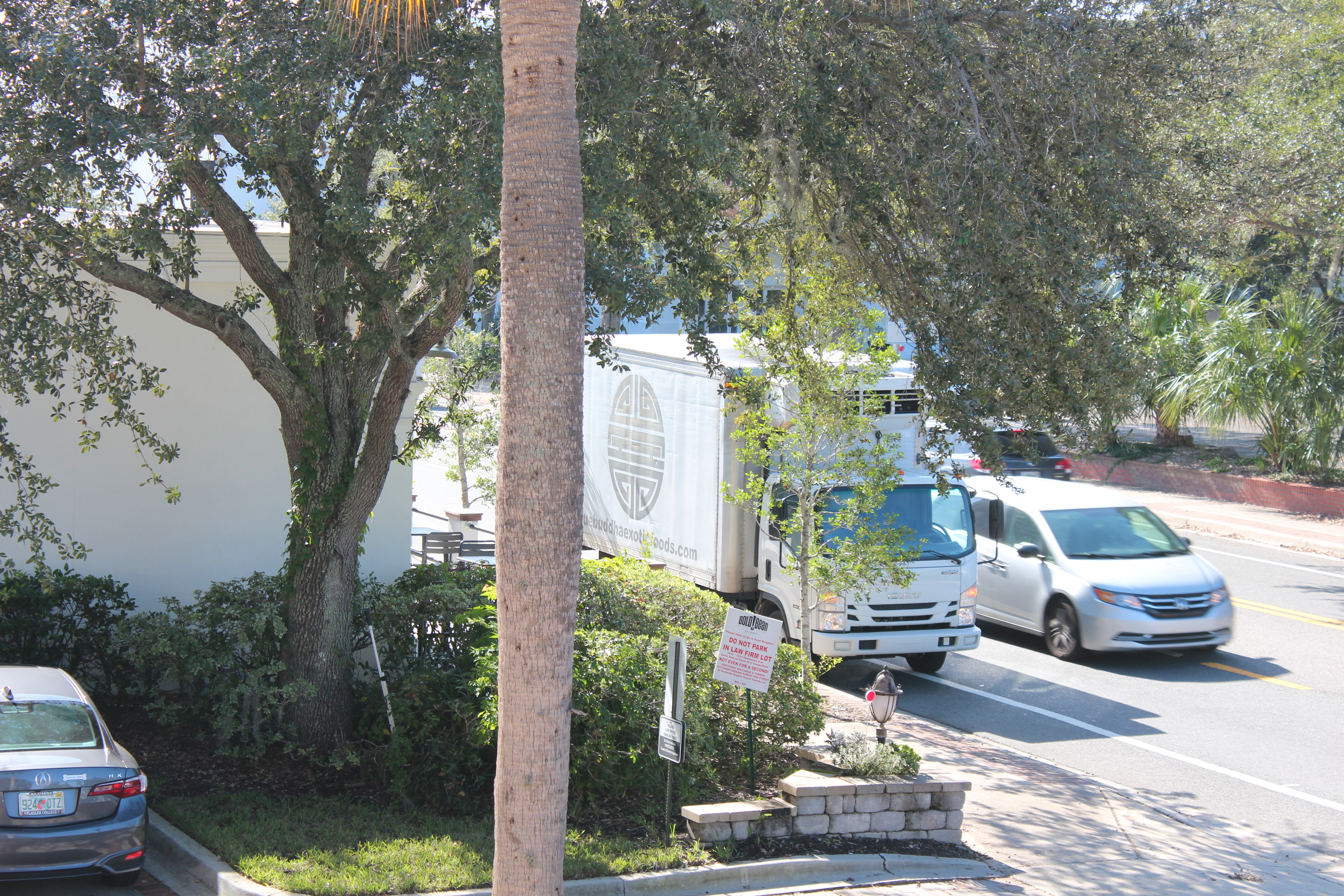
He is also worried tight parking means delivery trucks park in front of the building, blocking the bike lane and part of the driving lane closest to the building or blocking the turn lane.

“Sometimes they even park in the middle of my parking lot blocking access to our parking spaces so they can unload and deliver products around my fence to Bold Bean,” Harris said.

Zack Burnett disagrees with Harris on all points.

“Legally, we do not have a lack of adequate parking,” he said. “The city was actively involved in the planning and development prior to our opening, and we received our certificate of occupancy in accordance with all code requirements.”

Burnett said Southside Baptist has long been a great neighbor to many businesses in San Marco.

“We would bend over backwards to ensure [the church] is confident and secure that we are an equally good neighbor,” he said.

“We continue to believe…the safest and best solution is for the property owners to remove the abandoned house next to the property and replace it with a parking lot on the east side of Hendricks Avenue,” Webber said. Harris agrees, but Carla Turner, property owner where Bold Bean and Turner Plumbing are located, has another viewpoint.

“Turner Plumbing is a fourth generation family business and has been a San Marco business owner since 1942,” said Turner. “Because of our history, the integrity of San Marco is a high priority for us. As [the abandoned house] is one of the last remaining historic homes dating back to the 1920s on the Hendricks commercial corridor, we are carefully considering all of our options.”

Burnett, however, has another idea. “At our request, the Florida Department of Transportation is currently conducting a study on the need for a mid-block pedestrian crosswalk,” he said.

When asked about such a survey in her district, Councilwoman Lori Boyer said, “I have no personal knowledge of any attempt to install a crosswalk across Hendricks at San Marco Place.

“There was no crosswalk at this location in the City budget we passed in September, but I have no objection to a crosswalk in this location,” she said.

Harris, who is also president of the San Marco Merchants Association, finds himself in an awkward position. “I feel like I’m being made out to be the bad guy,” he said. “All I want is for Bold Bean to be held to the same approval process and codes other merchants in San Marco are.”

“There have been discussions for years at the San Marco Merchants Association meetings about parking solutions, such as the use of joint valet services and the concept of a jointly funded lot,” Boyer said. “There was a plan to conduct a parking study and also a design to stripe alley spaces and resurface alleys, but for one reason or another, each approach has encountered obstacles that seem to stop progress.”

Boyer acknowledged the lot owned by the Southside Baptist church behind the fire station has provided adequate parking for many years, but as retail uses shift toward restaurants the demand for parking has also shifted.

She will be sitting in a “quasi-judicial” capacity on the Land Use and Zoning Committee that will decide Harris Trust’s and Southside Baptist Church’s appeals.

“I cannot offer an opinion on the subject of the appeal. I will wait to hear the evidence before I offer an opinion,” Boyer said. “I would be happy to discuss options and solution upon the conclusion of the appeal.”

Five Tips for Handling Negative Social Media Comments

Infographic vector created by Freepik

When an implication arises that your company may have done something wrong, you can assume that at least for the foreseeable future, the news media will produce stories about the situation. Dealing with traditional media – TV and newspapers primarily – is an important function of public relations. Equally important, however, is dealing with social media. Access to social media gives individuals the opportunity to easily and broadly express opinions to what they hear in the media.

As PR practitioners, we should expect that some of these comments will not be positive. Competitors and disgruntled customers, vendors and former employees may use social media as their opportunity to get back at our company or further their own interests.

Your company needs to have a united response to comments, whether the responses are positive or negative, right or wrong. The company’s ability to come out of this critical time strong and capable of continuing to provide its products or services will be affected by its leaders’ and, in fact, all levels of employees’ ability to come to common agreement about how negative comments will be handled. Consider these five ways to handle negative social media comments:

  1. Deciding whether to respond to a negative comment about our business depends greatly on where the comment appeared and how many of our current and potential customers are likely to be influenced by the comment. For example, negative comments on a news medium’s Facebook page generally fade away quickly, because most people don’t read them to begin with and because current news stories are quickly replaced by more and more news. Monitoring whether any of those negative comments are shared out is important, however, because once they appear on a personal Facebook page, friends of that page will read the comment and respond to it and/or share it out to their friends. People do have a tendency to distrust or question what appears in the media; on the other hand, they tend to trust and are influenced heavily by their friends’ opinions.
  2. Often, it is best to simply keep our cool and not respond to negative comments. Responding just keeps the comment string alive and, in reality, if someone is still disgruntled even after our business has tried to rectify the situation, there is little we can do to change the person’s mind. If we feel we need to respond, we should state the facts of the case without placing any blame on the other person (even if it was their fault).
  3. If we read a negative comment that we feel may be justified, we should respond by giving the person an opportunity to communicate offline with us, to see if we can rectify the situation. If we are able to come to a positive resolution, we may ask the person to post a positive comment about how the company worked to resolve the issue.
  4. We do need to respond – politely and has succinctly as possible – to correct misinformation in a comment; for example, a misconception that we no longer offer a service that, in fact, we still do. If the incorrect information about how bad our company is continues to be spread, we may need to consider lawsuit for slander, libel or defamation of character.
  5. Any response we make should come from one person in the company to ensure that we have a unified message. Make sure all employees know that if they read a negative comment anywhere, they should email this designated person with a link to where to find the comment. The designated person will need to make the decision whether and how to respond.

The strength of a company never shows stronger than during a crisis. Be very careful , in asking employees to support the company by monitoring but not engaging in social media comments, that you are telling them the truth about the situation that has caused the crisis as you best know it at the time. This is a watershed moment when your company can either emerge stronger by working together or in chaos if your employees feel they have been kept in the dark or told lies. Continue to give them reasons to be proud of the company for which they work, even in the face of negativity.