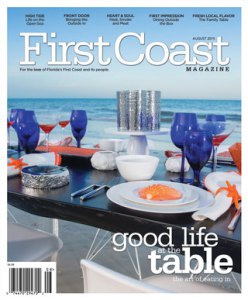
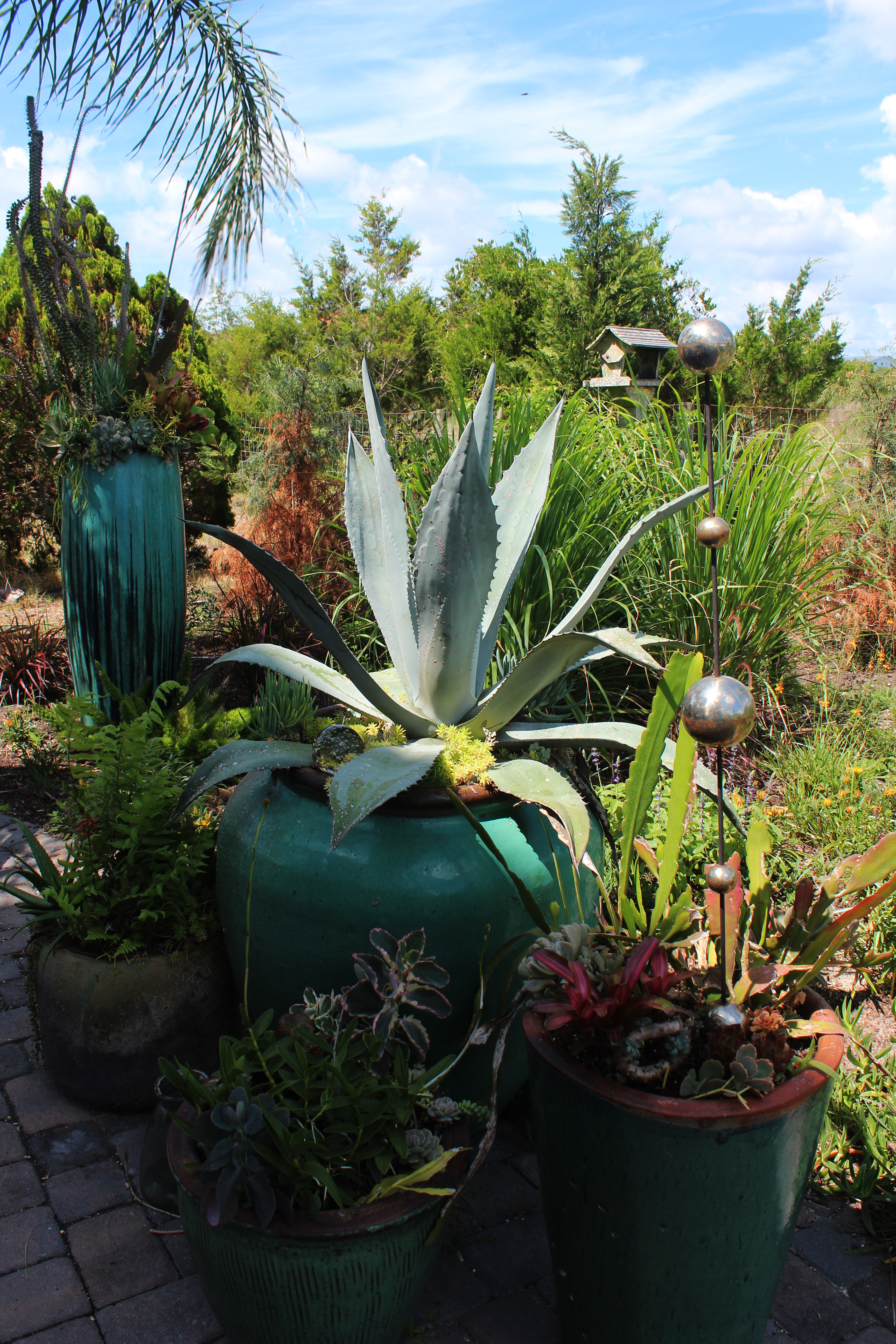
My second article for First Coast Magazine is in the Front Door section of its August issue! Read about “Living Centerpieces.”
I may try making my own for our next dinner party. Philip and Chris were fun to interview, and their work is creative and exciting. I enjoyed watching Philip spontaneously gather native plants from the backyard and experiment with shapes, colors, textures and sizes. He used jars and vases he had around the house and grouped them together with plants in them and around them. Chris is about to graduate from the University of North Florida, my most recent alma mater, with a degree in finance. He plans to continue working with Philip in Rockstar Gardens.
You can read my original version of the story here.
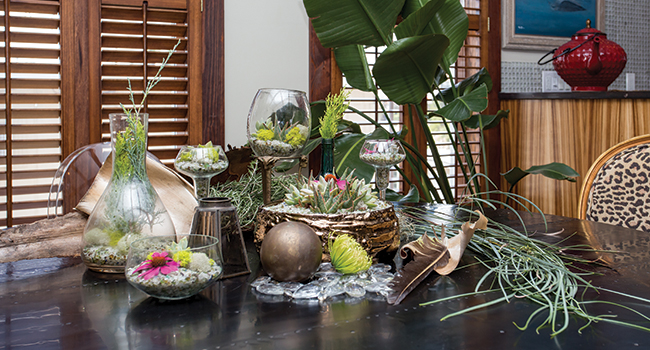
Create a succulent centerpiece for your dining room table. Sounds more interesting and natural than the usual vase of cut greenhouse flowers, but where to begin? Philip Standifer, owner of Rockstar Gardens, makes the whole experience a freeing process, and you feel better about your connection with the plant world, to boot.
There are only a couple of rules to remember. Placement, space and scale are important. Use natural, native and arid plants that don’t need or want water because they’ll last longer.
Beyond that, anything goes. Throw a handful or two of crushed, recycled glass pieces into some interesting glassware or vases, start placing a variety of native plants in the bottom paying attention to varying heights and complementary colors (Standifer prefers a palette of greens, gold, purples and reds), add some interesting plants – shoestring acacia with long, willowy leaves, bamboo cuffs and palm boots – around the glassware and voila! You have created a conversation-starting centerpiece.
Where do you find the materials? You may find them at some local garden shops, and Rockstar Gardens can recommend other shops. You can go roaming and try to find the native plants you want, what Standifer calls “wild harvesting” or “foraging.” Just make sure you aren’t doing so on protected land or private land without permission.
Preferably, you have thought ahead about your love of entertaining by incorporating native landscaping into your yard – good for the environment and always available, free of charge, once you’ve paid the initial cost of planting.
Supplies
Setting the stage:
- Crushed, recycled glass pieces
- Various sizes of glassware, pitchers and vases
- A small tool (knife or tweezer, perhaps) to manipulate the plants in the glassware
The props:
- Reindeer moss – not actually a moss, but instead a light-colored, fruticose lichen
- Chartreuse moss – a type of reindeer moss with a beautiful golden green color
- Echeveria – rosettes ranging in size with colors from white to orange to pink to red
- Retro succulent – rosettes of pale green foliage stippled in creamy white, with coral-fringed leaf edges.
- Purple coneflower – showy, easily grown garden plant
- Shoestring acacia – evergreen with weepy branches
- Agave
- Lavender
- Palm boots and bamboo cuffs – remnant wooden bases
- Bamboo cuffs
- Spanish moss
- Pelican feather – Standifer promises that no bird was hurt in the design of this centerpiece!
About Philip L. Standifer:
Philip L. Standifer exudes free spirit, creativity and passion for all things in nature. He is a freelance horticulturist and garden designer, combining “aesthetic manipulation,” as he calls it, with his knowledge of plant behavior, the result of a bachelor’s degree in ornamental landscape horticulture from Auburn University, Alabama. Rockstar Gardens is his growing business.
Standifer moved to Fernandina Beach 11 summers ago after working in landscape and garden shops in Atlanta and then Savannah. A network of friends helps him reach his horticulture goals. Chris Igou, a University of North Florida finance major, handles Rockstar Gardens’ finances and is a co-designer. Carolyn Carr, who was a marketer and is now a consultant for Coca-Cola helps Standifer with the marketing of his business. And Gogo Ferguson, with her unique nature jewelry inspired by Cumberland Island flora and fauna that she transforms into wearable art, is his muse.
“Cumberland Island is a true virgin study – no pollution, largely unspoiled and some of it private property in which I can forage,” Standifer said.
Standifer plans to open a shop that will include native plants and a clothing line, offer tours and launch a lecture series. For now, you can view some of his designs and ask questions by visiting http://www.rockstargardens.com.


Gorgeous ☺️
LikeLike
Thanks! It was an interesting story. I love the idea of creating arrangements with native plants.
LikeLike