Winter Fun in the High Country

Karen Rieley

Published in the Winter 2021 issue of Carolina Mountain Life – pp. 31-35

Think of the High Country in the winter and, no doubt, you think of snowboarding and snow skiing. After all, the area boasts three great ski mountains along 42 miles from Beech Mountain Resort to Sugar Mountain Resort to Appalachian Ski Mountain.

But make no mistake, the High Country is no one-trick pony in the winter. There’s lots to do for all ages, whether there’s snow or not. If standing at the edge of a mountaintop with nothing between you and the bottom but two skis and a couple of poles or one lone snowboard isn’t your cup of tea (or hot cocoa), or if you’re ready for a change of pace from snow skiing/snowboarding, check out these other fun winter activities!

Visit the websites for these to check out times, days of the week, costs, age restrictions, advance reservation requirements and other specifics.

Snow Tubing & Ziplining

If snow tubing and ziplining are more your speed and comfort level, you have three great choices in the High Country. All three offer sweeping views of the Blue Ridge Mountains, plenty of lanes, snowmaking, plus moving carpet lifts to quickly transport you back to the top. Check out Beech Mountain Resort, Hawksnest in Seven Devils, and Sugar Mountain Resort, all in the northwest mountains of North Carolina.

Ice Skating

While others are skiing or snowboarding on the slopes, you and your children may enjoy ice skating. Two resorts, Beech Mountain Resort and Sugar Mountain Ski Resort, have the added advantage of ice skating located next door to restaurants, retail stores and other amenities. Appalachian Ski Mountain in Blowing Rock is the only ski area in North Carolina with a Zamboni to cut the ice floor on its skating rink.

Kids’ Camps & Lessons

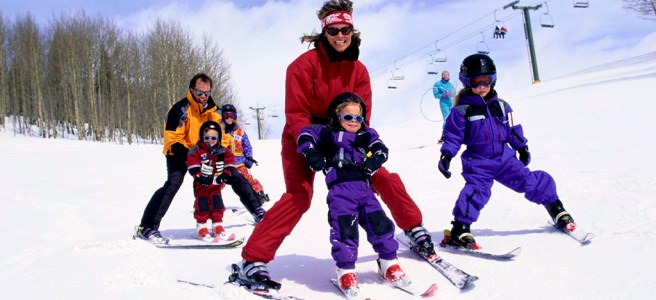
Downhill skiing is a lifelong sport. While you can learn at any age, kids have the advantage of being flexible, nimble and relatively fearless. Enrolling your child in one of the region’s ski or snowboarding camps is a great way to introduce them to a positive and fun first-time experience. Plus, while they’re in camp, you’re freed up to enjoy some adults-only time! Appalachian Ski Mountain, Blowing Rock, N.C., has SKIwee and Cruiser Camp programs designed to teach beginning skiers, ages 4-10, and snowboarders, ages 7-12. Beech Mountain Resort offers several kids’ camps: Burton Learn to Ride Center for ages 6-12 to learn the basics of snowboarding; Snow Kamp for ages 3-5 to provide a positive and fun first-time experience; and Traxx ski instruction for ages 6-12. Also, Ski & Ride School offers hourly lessons for ages 4 and older and Snowflakes Childcare watches kids, ages 1-5, while adults hit the slope. Sugar Mountain Ski Resort’s Children’s Snowsports School includes Sugar Bear Ski and Polar Bear Snowboard schools to teach skiing to children, ages 5-10, and snowboarding to children, ages 7-14.

Sledding

Sledding is the easiest and most accessible winter activity for all ages. It can be done almost anywhere there is a hill and public property, an inexpensive plastic sled will do, and snow in the High Country is almost certain throughout the season!

Beech Mountain has a new sledding hill across the street from the Visitor Center and behind the Brick Oven Pizzeria. It can be accessed from Bark Park Way, the paved road that runs beside the pizzeria. Parking is either in the public gravel lot just before the restaurant off the Beech Mountain Parkway, or the new, paved pay-to-park lot on Bark Park Way. Two state-of-the-art snow guns ensure a good base and quick coverage when the weather is optimal for snowmaking. Weather permitting, the hill will be open for the winter season beginning Nov. 27. Only plastic sleds may be used, no tubes or sleds with metal runners.

Cross-Country Skiing/Snowshoeing

If you’re looking for fun, easy, and safe new ways to stay active and energized over the winter months, cross country skiing and snowshoeing offer great alternatives for active outdoor enthusiasts of every age and skill-level to get out and explore winter.  They are a fantastic way to stay active, are much faster to learn, and are also more affordable as a sport. Eight options, in particular, in the region offer a variety of options. Beech Mountain has an extensive trail system available for snowshoeing with all levels of difficulty. Experienced snowshoers might consider the Emerald Outback trails at the top of the mountain. An easier snowshoeing option is the 1/3-mile walking track surrounding the Buckeye Recreation Center. Sugar Mountain Resort offers a snowshoe guided tour that can be a casual walk or an intense workout in a wonderful winter wonderland. Boone Greenway Trail, Boone, N.C., is a nice flat trail that meanders through the woods and mountains and along creek beds.  The trail is maintained by the Town of Boone, but it is “last on the list” to be scraped for snow after all town sidewalks and roads are clear, so there is a good chance you can get in some skiing if you arrive right after a good snow!When the Blue Ridge Parkway is closed to vehicles due to ice or snow, it is open to hiking, cross-country skiing and snowshoeing. Visit the National Park Service website for Blue Ridge Parkway road closures. Two good starting points are the gate on U.S. 221 near Beacon Heights to travel to the Linn Cover Viaduct and off U.S. 221, just outside Blowing Rock and south of the Cone estate on the parkway. In both cases, make sure to park without blocking the gates in case a park ranger needs to enter the area. Elk Knob State Park in Todd is the only North Carolina State Park to offer cross-country skiing. Moses H. Cone Memorial Park near Blowing Rock offers some fine cross-country skiing in an attractive and historic venue. Roan Mountain State Park in Tennessee sits at the foot of the soaring ridgetop for which it is named. Roan Mountain gets more snow than other local areas. It offers a variety of terrain — from scenic routes for novices to thrilling downhills for experts (though none of the trails are groomed). Valle Crucis Park has a nice and flat ¾-mile paved loop that is great for cross-country skiing. (The park also offers great trout fishing locations that are accessible on snowing days.)

Hiking

If there isn’t enough snow for cross country skiing or snowshoeing, a winter hike is in order! Winter hiking offers crystal clear views, less people on the trails and peace and quiet. And it’s worth braving the chill to make your way to one of the area’s waterfalls that transform into wondrous works of icy art during the winter season.

In Blowing Rock, Glen Burney Falls Trail is less than two miles long and offers several mini falls along the way that make for good photographs.

Blue Ridge Parkway has many trails to explore:

Moses H. Cone Memorial Park Trails, Milepost 294, near Blowing Rock are 25 miles of historic carriage roads that are now wide, gravel trails. Three top hiking picks are: Flat Top Road Trail, about a six-mile hike from Flat Top Manor; Bass Lake Trail, an easy eight-tenths of a mile loop that takes you around the lake that is accessed from the Bass Lake entrance on U.S. 221 just outside downtown Blowing Rock; and Rich Mountain, about a five-mile roundtrip hike from Shulls Mill Road.

Julian Price Memorial Park, Milepost 296.7, is a majestic 4,200 acres at the foot of Grandfather Mountain. The park lies directly adjacent to Moses H. Cone Memorial Park. Price Lake Trail, Milepost 297, is a 2.5-mile loop trail that is mostly flat with plenty of lake vistas. Green Knob/Sims Pond Trail, inside Julian Price Memorial Park is a 2.4-mile loop trail by a pond and cascades and through a highland pasture. Boone Fork Trail, another loop trail in Julian Price Memorial Park is five miles, taking you by many small waterfalls and through rhododendron tunnels.

Tanawha Trail stretches 13.5 miles from Julian Price Memorial Park to Beacon Heights and parallels the Blue Ridge Parkway on Grandfather Mountain in North Carolina. The many accesses from the parkway let hikers choose as long a section as they like. Marked with white blazes, the Mountains-to-Sea Trail (MST) runs jointly with Tanawha Trail. The MST stretches from Clingmans Dome in Great Smoky Mountains National Park to Jockeys Ridge State Park on the North Carolina coast. Rough Ridge, Milepost 302.8, is actually a part of the larger 13.5-mile Tanawha Trail, but it is also a popular trail in its own right.

Beacon Heights Overlook Trail, Blue Ridge Parkway, Milepost 305.2, near Linville, N.C., is a short hike along the Blue Ridge Parkway to a stone summit with big views, especially nice for picnics.

Flat Rock Nature Trail, Milepost 308.3, is a mostly flat, ¾-mile loop nature that takes offers panoramic views from a “stone mountain” as you walk across the smooth rock summit.             Linville Falls, Milepost 316, is the most popular waterfall in the Blue Ridge Mountains. It is a spectacular, three-tiered waterfall plunging into Linville Gorge, the “Grand Canyon of the Southern Appalachians.” The Falls Trail distance is 1.6 miles round trip and easy. The Gorge Trail distance is 1.4 miles round trip and strenuous. The Plunge Basin Trail is a one-mile round trip and moderate.

Grandfather Mountain, the privately owned nonprofit nature park near Linville, offers access to 12 miles of premier hiking trails, some of which venture into the adjacent Grandfather Mountain State Park. The nature park offers access to 11 trails varying in difficulty from a gentle walk in the woods to a rigorous trek across rugged peaks. In-park trails include the Woods Walk, Black Rock Nature Trail and Bridge Trail. The nature park also provides access to backcountry trails in the adjacent Grandfather Mountain State Park. Along the Grandfather Trail, a very strenuous trail that runs from the mountain’s Hiker Parking Lot out 2.4 miles to Calloway Peak, hikers use in-place cables and ladders for extra steep sections and at times are traversing the ridgeline of the mountain. If guests plan on hiking the backcountry trails, they’re asked to fill out hiking permits before setting out. These permits also give the hiker contact information to utilize if needed. Profile Trail is a 3.6-mile strenuous trail inside Grandfather Mountain State Park that takes you up the side of Grandfather Mountain to Calloway Gap.

Williams Park in Sugar Mountain is a wooded 14-acre boulderfield forest with three short hiking trails that follow a cascading stream.

Beech Mountain Trails offer hikers of all ages and skill levels a number of options:

Emerald Outback Trails features more than eight miles of outstanding trails near the mountain’s summit.

Upper Pond Creek Trail is Beech Mountain’s favorite trail with an easy one-mile hike and 15 different educational stations.

Wild Iris Trail is an easy 2.5-mile woodland trail with only a moderate elevation change. A trail for all seasons, Wild Iris is perfect for hiking and biking as well as skiing and snowshoeing.

Lower Pond Creek Trail is a one-mile moderate to strenuous trail that offers some of Beech Mountain’s greatest natural beauty.

Hi-Lo Trail starts at Beech Mountain and offers you three choices of trails – the Tasters Loop, Lakeside Loop and Mountain to Mountain Loop.

Elk Knob Summit Trail in Todd, in one of North Carolina’s newest state parks, is 1.9 miles to one of the highest peaks of the Appalachians.

Otter Falls Trail in Seven Devils is a short 6/10th mile trail to a 25-foot waterfall.

Crab Orchard Falls Trail in Valle Crucis is a 1.5-mile roundtrip hike that takes you to the beautiful Crab Orchard Falls waterfall. Access to the trail is behind the Valle Crucis Conference Center.

Elk River Falls Trail in Elk Park is a short half-mile hike that leads you to a 50-foot waterfall cascading over a cliff.

Waterfalls Park in Newland is a small roadside park on NC Highway 194 across from Ingle’s grocery store with a 50-foot multi-tier waterfall for easy enjoyment for all, including picnic tables and a short trail.

Big & Little Lost Cove Cliff Trails near Newland are two sections of Lost Cove Cliffs in Pisgah National Forest and in the Wilson Creek Wild and Scenic River Area. You can hike to both Big Lost Cove Cliffs and Little Lost Cove Cliffs with this 5.5-mile trail combo.

Hawksbill Mountain Trail in Burke County is a 1.5-mile roundtrip hike to the summit of Hawksbill Mountain offering panoramic views of the canyon of Linville Gorge Wilderness Area with the valley floor and Linville River 2,000 ft. below you.

Indoor Climbing

When being outside is less than appealing, indoor climbing offers a great alternative. With indoor climbing you will get both aerobic and anaerobic exercise engaging and working all muscle groups simultaneously, while using and improving balance and coordination. You will burn 500 to 700 calories per hour and work both strength and endurance simultaneously. To facilities in Boone offer great options. Center 45 Climbing & Fitness has 2,000 square feet of indoor climbing (bouldering) terrain. The walls are all 14 feet at the apex with varied terrain. Every week talented and creative route setters craft new and exciting climbs. The facility also offers additional weightlifting and general fitness opportunities, along with a climbing-specific training area. Rock Dimensions Tower stands about 40 feet tall and has more than 4000 square feet of varying climbing terrain to accommodate both beginners and seasoned veterans. The “Tower to Rock” program combines a tower experience with climbing out on real rock all in a day! Staff belays as well as belay classes and certification opportunities for belaying at the tower are also offered.

Attractions

Wilderness Run Alpine Coaster, Banner Elk, N.C., is the first alpine coaster in the North Carolina Mountains. Each cart accommodates one or two people. Once the cart is pulled by a cable to the top, the remainder of the ride is downhill — fed by gravity — on multiple 360-degree loops with riders using hand brakes to control the speeds, which reach up to 27 miles per hour.

Mountain Warriors UTV, Elk Park, N.C. is a recreational UTV touring business that offers scenery, fun and adventure started by mother and son Regina and Carson Gordon. It has more than 80 acres of land and trails, with top-of-the-line Polaris Rzr 1000 XP 4-seater vehicles. This is a guided UTV tour that offers views of the Appalachian Mountains, beautiful trail riding and intense hill climbing.

Sugar Creek Mining Company, Banner Elk, N.C., lets you experience the thrill of prospecting for your very own North Carolina authentic gemstones. You’re guaranteed to find precious and semi-precious gemstones in every bucket. The expert staff will set you up on the heated flume line and then help you pan for gems and identify them. If desired, expert gem cutters can cut your rough gemstones and set it into a piece of jewelry.

Apple Hill Farm, Banner Elk, NC, features llamas, alpaca, donkey, goats, horses, pigs and dogs. Take the 60-minute tour and get back to nature! Public tours are Wednesdays, Fridays, and Saturdays during the winter months, with private tours offered seven days a week. Tours by advanced reservation only. 

Tweetsie Christmas, Blowing Rock, N.C., celebrates the holiday season, Nov. 19 – Dec. 30, 5 p.m., with a winter wonderland and a nighttime train ride among thousands of dazzling lights! Enjoy the rides, shops, Santa, and much more.

The Blowing Rock, Blowing Rock, N.C., is North Carolina’s oldest tourist attraction.  Enjoy the endless winter views and read the legend. Call ahead for hours, especially during inclement weather.

Mystery Hill, Blowing Rock, N.C., is a unique blend of indoor and outdoor adventure. Explore the mysterious Natural Gravitational Anomaly, watch a ball roll upwards and water flow uphill! Have fun with weird science in the hands-on science attraction, the Hall of Mystery, or encase your friends in a giant bubble at Bubblerama. Try your hand at axe or knife throwing and brave the Bull Riding Challenge at Tomahawk Hill. This winter experience Crazy Christmas at Mystery Hill with daily elf hunts, Christmas Crafts, Christmas-themed photos, gem mining for Christmas jewels and snowball fights and weekend activities, including a YETI encounter, roaming carolers, Christmas light walk, Santa’s landing and more!

The Children’s Playhouse, Boone, N.C., provides children from birth to age eight with an enriching, educational play environment while at the same time offering their parents and caregivers friendly support in the important job of raising children.

Ellwood’s Hatchet House, Boone, N.C., is the town’s Boone’s first & only indoor axe throwing tavern. Enjoy eight axe throwing targets, two corn hole lanes, a giant connect four, pool table, air hockey, pinball, cold craft and domestic beer and great food.

Let’s Be Artsy!, Boone, N.C., unleashes your creative side. The talented team of instructors guides you step by step through the session’s featured painting. All painting supplies and artist instructions are provided. No art experience is needed. You can even take a fun, introductory belly dancing class, too!

Grandfather Mountain, Linville NC, features the Mile-High Swinging Bridge. Weather permitting, the swinging bridge is the perfect spot to take in the endless winter vistas and capture the snowcapped mountains. Afterwards, head down to the animal habitats and see how otter, bear and eagles stay busy during the winter months!

Linville Caverns, Marion, NC, are the only show caverns in North Carolina and have a constant year-round temperature of 52 degrees. This is a perfect place to visit on a cold and windy winter day! See the winter hibernation of granddaddy long-legs and unique limestone formations. The caverns are only open on weekends in winter. Bring a raincoat or a coat with a hood. The cave tends to drip!

YMCA of Avery County has something for everyone! Visitors can get a day pass and access everything the YMCA has to offer including access to the indoor swimming pool with water slides and aerobics classes, a wide variety of group exercise classes, the Wellness Center with cardio and strength machines, basketball courts, indoor batting cages, golf simulators, drop-in childcare and more! If you’re staying longer, ask about YMCA membership opportunities. You can also see upcoming holiday programs and events on the YMCA website and social media accounts. 

The Fred and Margie Pfohl Buckeye Recreation Center, Beech Mountain, N.C., offers nonmembers day passes for full access to the facility, including a weight room, regulation-sized gym, indoor tennis courts and a soft playroom for kids, eight and under. The lobby provides wi-fi, cozy seating and an extensive lending library, when a quiet day indoors is preferred. Fitness classes are offered as well. The recreation center also manages the free canoe and kayak rentals on Buckeye Lake.

NC High Country Fresco Trail throughout the High Country includes more than a dozen frescoes painted in small mountain churches in the 1970s by artist Ben Long, a native of North Carolina. Follow the trail to see the following: 1849 St. Paul’s Episcopal Church Fresco, downtown Wilkesboro; Holy Trinity Church Fresco, Glendale Springs; St Mary’s Church Fresco, West Jefferson; and Sloop Chapel, Crossnore.

Museums

BRAHM (Blowing Rock Art and History Museum), Blowing Rock, N.C., promotes the arts and Southern Appalachian heritage and history, through educational programs, exhibitions, activities and permanent collections. Current exhibitions include “Wildflowers: Glass Sculptures” by Ronnie Hughes, Sept. 14, 2021 – May 3, 2022; “Emergent Landscapes: Mountains, Music, & Improvisation in the Paintings of Abie Harris,” Aug. 24, 2021 – Jan. 15, 2022; “Potters & Patrons: The Gorelick Collection at BRAHM,” Sept. 7, 2021 – April 16, 2022; “Storyland: A Trip Through Childhood Favorites,” Oct. 1, 2021 – Jan. 22, 2022; The Janet H. Wilson Collection, ongoing; Philip Moose, permanent collection; and “The Village of Blowing Rock: Exploring Our History,” permanent exhibit.

Appalachian State University’s Turchin Center for the Visual Arts, Boone, N.C., offers free admission to the following permanent collections and rotating exhibitions: “Matters of the Heart (and Other Abnormalities)” by Shawn Morin, Sept. 3, 2021 – Feb. 5, 2022; “98.6 – A Creative Commonality,” July 2, 2021 – Feb. 5, 2022; “35th Rosen Sculpture Competition and Exhibition,” May 15, 2021 – April 16, 2022; “In the Garden of Healing” by Dara Mark, Dec 3, 2021 – May 7, 2022; “To Remain Connected,” Dec. 3, 2021 – May 7, 2022; and “19th Annual Appalachian Mountain Photography Competition” March 4, 2022 – June 5, 2022.

Mystery Hill Museums include the 1903 Dougherty House: Appalachian Heritage Museum and Appalachian Fossil Museum, Blowing Rock, N.C. The Dougherty House was the first home in the area to have electricity and running water. The home is being restored to its original 1903 condition. Guests can tour the home, which is filled with turn-of-the-century furniture, antiques and memorabilia. Appalachian Fossil Museum displays North Carolina’s largest private collection of fossils.

Festivals

24th Blowing Rock Winterfest, Blowing Rock, N.C., returns Jan. 27 – 30, 2022. Jump into winter with the Polar Bear Plunge and Beer Garden. Keep warm with restaurant specials, Chili Challenge and family activities at area attractions. Shop till you drop on Main Street while enjoying the Ice Sculptures outside various retailers. Whether you’re looking for a couple getaway or family friendly weekend, WinterFest has something for everyone!

Chetola Resort at Blowing Rock’s Festival of Lights, Blowing Rock, N.C., becomes a Winter Wonderland, Nov. 26, 2021 – January 2022, with over 50,000 dazzling lights around Chetola Lake. Make the drive around the resort and Chetola Lake for a stunning winter lights experience – the warm colors against a cool mountain background makes for a view like no other and highlights the natural beauty of the High Country. The displays illuminate at dusk each evening. The festival is a High Country tradition that culminates in Blowing Rock’s Winterfest, a four-day festival at the end of January packed with family friendly events such as a polar plunge, ice carvings, dog shows and auctions.

Sugarfest 2021, Sugar Mountain, N.C., is a weekend of winter fun, December 10-12, 2021, at Sugar Mountain Ski Resort. Participate in a preseason ski clinic and then try out the latest ski and snowboard equipment; celebrate the ceremonial opening of Sugar’s new Big Birch quad chairlift; kick off the winter right with the first Girls Go Shred Ride Day of the season; and enjoy food, drinks and dancing to live music by Glen Harlow & North Fork band, followed by fireworks.

Horseback Riding

Riding a horse or taking a carriage ride through snow-covered woods can be a one-of-a-kind experience. Two services offer 2.5-hour guided tours with trustworthy horses on easy carriage trails throughout Moses H. Cone Memorial Park, Milepost 294 on Blue Ridge Parkway.  VX3 Trail Rides offers custom rides for individual riders with experienced trail guide Tim Vines. Rides are limited to a maximum of five to give you the best experience possible. If you are a party of only two people and don’t see any availability for when you want to ride, contact Brad. Carriage Run Carriage Service offers carriage rides on the 32 miles of carriage trails in the Cone Estate.

Fishing

If your passion is fishing, winter is an ideal season to stalk wily mountain trout. The crowds are gone, leaving you with solitude, spectacular scenery, and brook, brown and rainbow trout. There are guide services around the High Country offering outings.

Holiday Festivities

Holiday decorations and twinkling lights are especially magical against a background of snow in the High Country. Check out the parades and Christmas tree and art exhibits offered in each town.

Live Theatre

When the weather turns blustery and cold, a matinee or night at the theater may be in order. Check out the offerings around the region, such as the Appalachian Theatre of the High Country, several groups at Appalachian State University (Department of Department and Dance, Hayes School of Music, and the Schaefer Center for the Performing Arts), BeanStalk Community Theatre and Blue Ridge Community Theatre in Boone; Ensemble Stage and Lees-McRae College performances in Banner Elk; and Ashe County Little Theatre in West Jefferson, among many others. See the CML Cultural Calendar for a complete listing of upcoming productions and contact information for each theatre.

Breweries & Wineries

The High Country is home to several great breweries, including Appalachian Mountain Brewery, Beech Mountain Brewing Company, Blowing Rock Brewery, Boondocks Brewing Tap Room & Restaurant, Booneshine Brewers, KETTELL BEERWORKS and Lost Province Brewing Company.

If wine is your preference, check out the wineries on the High Country Wine Trail including Banner Elk Winery & Villa, Eagles Nest Winery, Grandfather Vineyard & Winery, Linville Falls Winery, Thistle Meadow Winery, and Watauga Lake Winery.

Live Indoor Music

Check out the restaurants, breweries and wineries throughout this issue to find live music from jazz to traditional mountain jams all season long.
Ray Christian: A Resilient Storyteller

Karen Rieley

Published in the Autumn 2021 issue of Carolina Mountain Life – pp. 80-81

Risk and Resilience: Being Black in Appalachia

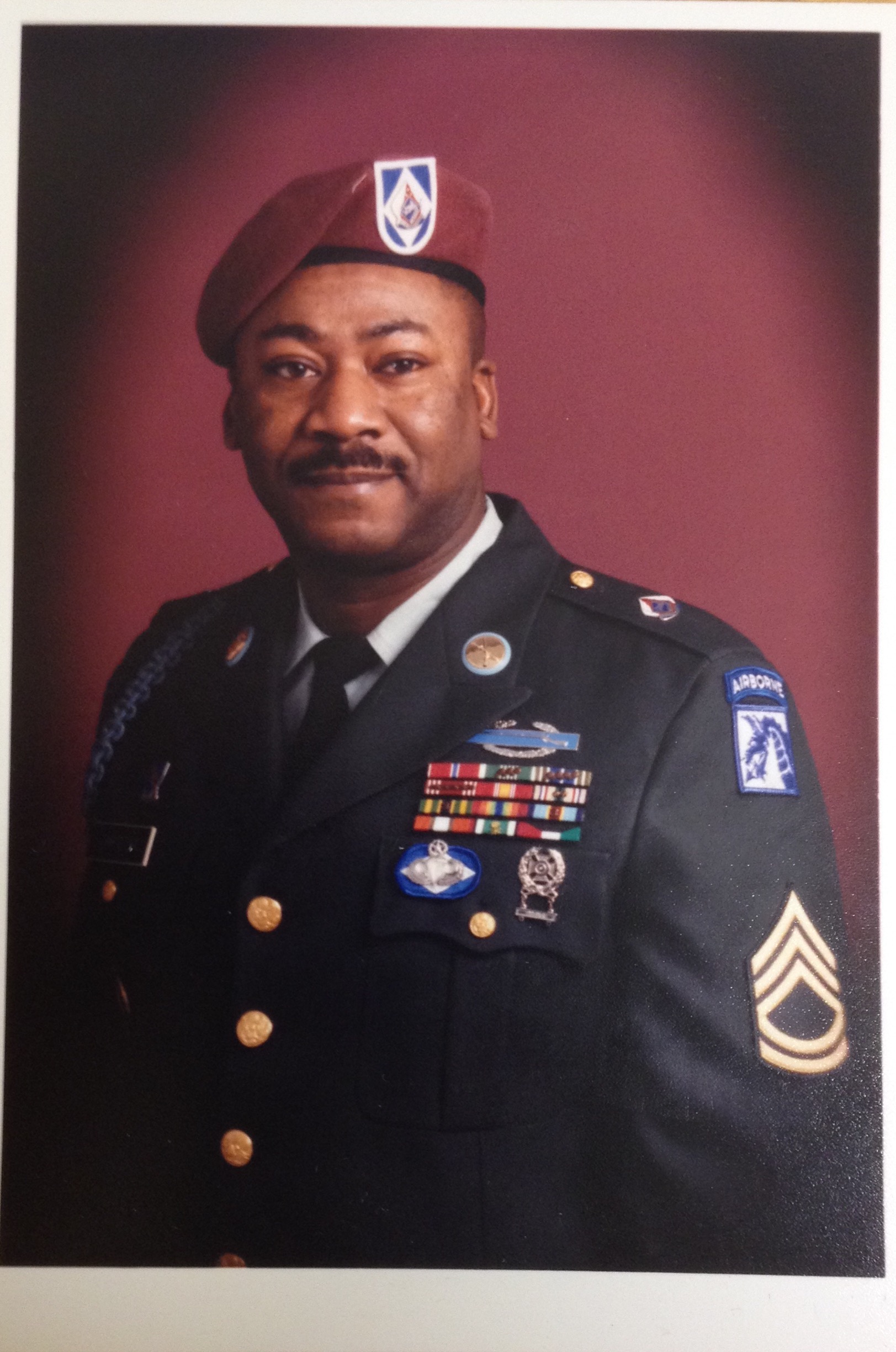
Dr. Ray Christian didn’t grow up in Appalachia; in fact, he spent the first third of his life in Richmond, Va., living in a ghetto with his illiterate mother, who he credits with driving his thirst for education, his two older sisters and an “emotionally inaccessible stepfather,” as he describes it. Then, there were 20 years in the U.S. Army as an infantryman and paratrooper awarded The Bronze Star and Combat Infantryman’s Badge.

He learned a lot about life while he was in the service where he was forced to grow up fast. He also credits that experience for convincing him that he needed a college education. He wanted options after his 20 years of service ended, and education was a steppingstone.

It’s these last 20 years in education in the Appalachian mountains that have defined Christian and given him a spotlight in the world, however. With a bachelor’s degree in liberal studies from Excelsior College, a master’s degree in public history from N.C. State University, an Education Specialist (EdS) from Liberty University, he became an adjunct professor at Appalachian State University, after moving to Boone, North Carolina when his wife was hired by the university. While there, he earned a doctorate in doctorate in education leadership (EdD) also from Liberty University.

“I taught at Appalachian State for about 15 years, but I’ve taken a little pause right now to take care of my health and focus on reaching a broader audience with my storytelling,” said Christian.

“Education is a great equalizer in terms of giving you more options. But people have to believe they can work around whatever disadvantages may exist in their life to achieve education. Often people who have come up hard have the least amount of empathy. They think that if they succeeded in getting an education everyone else ought to be able to as well.”

He wrote his dissertation on risk and resilience in African American children, exploring why some children do well in spite of their environmental and social disadvantages. He talks about risks as factors that create negative social outcomes and low academic achievement, such as limited education opportunities, racial discrimination and parental conflict. Resilience, on the other hand, contributes to children’s academic success and is composed of elements that serve as protective factors that can create positive academic outcomes, such as parental involvement, parental education, and religious.”

“A lot of people don’t have the factors that let them get over that last hump. One day may be the last straw. ‘I failed one more class. One more person told me I’m a bad person, and there’s no way I can do this.’ You can never have enough people tell you that you can do it.”

Christian sees the achievement gap as wider for Blacks in Appalachia than for Blacks living in urban areas, with the number one reason being the lack of community. According to the U.S. Census Bureau, Watauga County’s Black population is less than two percent.

“The absence of a Black community is magnified in rural areas where family and church mean a lot,” Christian said. “Small, tight-knit groups form and are very exclusive.”

Christian notes that Boone Mennonite Brethren Church, the largest Mennonite congregation in North Carolina, is the only church in Watauga County with Black origins. In 1911, Rev. Tschetter started Mennonite services in Watauga County in what became known as the Junaluska community of Boone. In 1918, the congregation built the church that still stands today.

As an adjunct professor, Christian taught two courses, “The Souls of Black Folk,” and “Storytelling: Life in the Narrative.” He loved the classes and hopes to get back to teaching them soon.

“At first, they are careful, especially the white students, because they don’t want to say anything offensive,” he said. But near the end of the class, they’re throwing everything out.”

“Some stories are universal. We’re not so different after all – we have the same problems, same concerns, same fears. I encourage students to go beneath the surface and explore what about you the person, not you the color of your skin. White students often say, ‘I didn’t know you felt that way. I didn’t know it happened all the time.’”

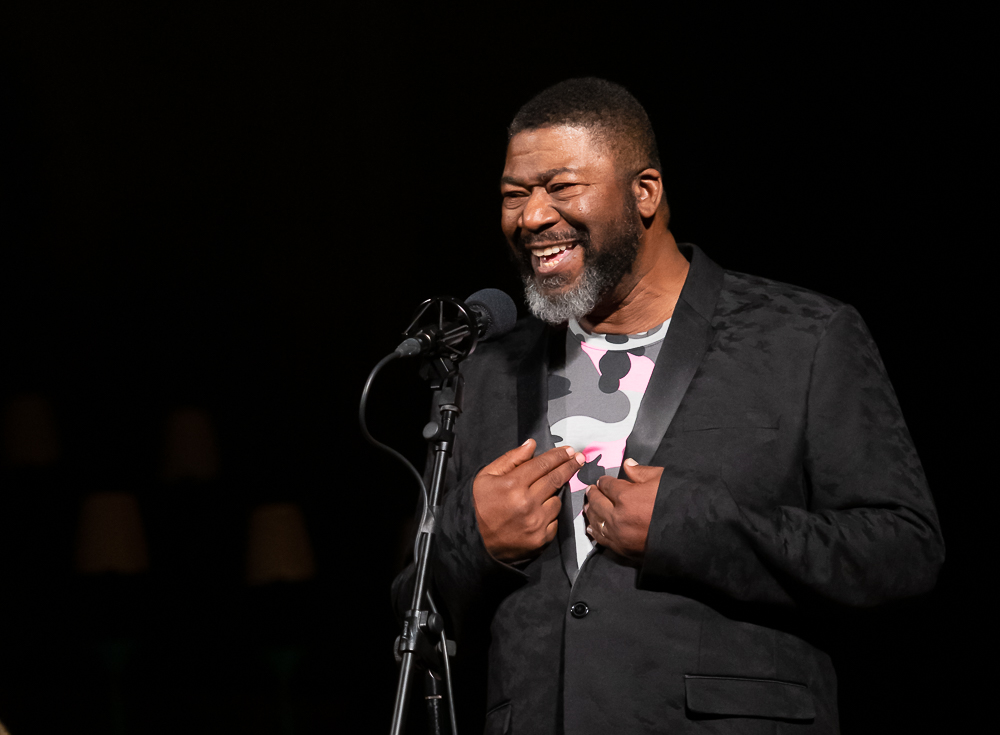
Christian has become one of the best and most famous Southern storytellers in the world. His stories have appeared in Reader’s Digest’s “Best Stories in America” (2016 and 2017) editions. He was selected as the 2017 Serenbe France Focus Storytelling Fellow (Atlanta, GA), and his stories have been featured on NPR radio shows such as “The Moth Radio Hour”, “Snap Judgment”, and “Backstory”, as well as the “Risk” podcast. 

Christian is a 12-time Moth Story Slam Champion and winner of the 2016 National Storytelling Festival Story Slam. He has appeared on Moth Mainstage, The National Storytelling Festival Exchange Place (2019) and was part of the 2018 tour of “Snap Judgment Live!” In 2018, he was named as the best-known storyteller in the south by Bitter Southerner magazine.

Christian is currently the producer and host of “What’s Ray Saying”, a podcast that utilizes history, storytelling and commentary to provide a unique perspective on the African American cultural experience. He is a member of the Academy of Certified Archivists and has been selected by the Department of State as a Fulbright Specialist scholar in education and storytelling narrative and will teach faculty and graduate students abroad about storytelling and narratives.

Christian and his wife, Tiffany, live in remotely about eight miles outside of Boone, N.C., where they’ve raised six children. Four are still in the area and two are out-of-state. Twins are still living at home.

“We’re the only Black family in our area,” he said. “Even though we’ve lived here for 17 years, some people still get weirded out when they see me out and about. They don’t expect to see a Black person living there.”

He admits that he still fights battles as a Black person living in the South.

“People want to tell you about all the Black people they’ve met in their life. They assume I’m like every other Black person,” said Christian. “I’m still stopped often by police when I’m out driving. For a while it was once a month. I always have to think about what I want to do versus what I need to do if I want to stay safe.”

“Despite the challenges of raising Black children in Appalachia, we find the school system here in the Boone area outstanding,” Christian said. “Teachers colleges in the state and Appalachian State University have produced lots of good teachers.”

At the heart of everything for Dr. Christian is storytelling. In his podcasts, he explores issues such as the legacy of Black children in slavery, plantation life and current trends; Black leadership; Black hair issues; Black Americans and the police; the origins of a false narrative of Black American history; the nature of Black American assimilation into white culture; Blacks and whites in education; and dying while Black.

“You can’t deny a person’s individual story. Their perception is absolutely true. Factual stuff you can debate. But we’re not going to debate what you feel.”

“History isn’t a series of starts and stops; it’s one long continuum,” he said. “It’s important to remember so we don’t repeat mistakes. Stories serve to inspire and connect us to another time.”

Winter Fun in the High Country

Karen Rieley

Published in the Winter 2021 issue of Carolina Mountain Life – pp. 31-35

Think of the High Country in the winter and, no doubt, you think of snowboarding and snow skiing. After all, the area boasts three great ski mountains along 42 miles from Beech Mountain Resort to Sugar Mountain Resort to Appalachian Ski Mountain.

But make no mistake, the High Country is no one-trick pony in the winter. There’s lots to do for all ages, whether there’s snow or not. If standing at the edge of a mountaintop with nothing between you and the bottom but two skis and a couple of poles or one lone snowboard isn’t your cup of tea (or hot cocoa), or if you’re ready for a change of pace from snow skiing/snowboarding, check out these other fun winter activities!

Visit the websites for these to check out times, days of the week, costs, age restrictions, advance reservation requirements and other specifics.

Snow Tubing & Ziplining

If snow tubing and ziplining are more your speed and comfort level, you have three great choices in the High Country. All three offer sweeping views of the Blue Ridge Mountains, plenty of lanes, snowmaking, plus moving carpet lifts to quickly transport you back to the top. Check out Beech Mountain Resort, Hawksnest in Seven Devils, and Sugar Mountain Resort, all in the northwest mountains of North Carolina.

Ice Skating

While others are skiing or snowboarding on the slopes, you and your children may enjoy ice skating. Two resorts, Beech Mountain Resort and Sugar Mountain Ski Resort, have the added advantage of ice skating located next door to restaurants, retail stores and other amenities. Appalachian Ski Mountain in Blowing Rock is the only ski area in North Carolina with a Zamboni to cut the ice floor on its skating rink.

Kids’ Camps & Lessons

Downhill skiing is a lifelong sport. While you can learn at any age, kids have the advantage of being flexible, nimble and relatively fearless. Enrolling your child in one of the region’s ski or snowboarding camps is a great way to introduce them to a positive and fun first-time experience. Plus, while they’re in camp, you’re freed up to enjoy some adults-only time! Appalachian Ski Mountain, Blowing Rock, N.C., has SKIwee and Cruiser Camp programs designed to teach beginning skiers, ages 4-10, and snowboarders, ages 7-12. Beech Mountain Resort offers several kids’ camps: Burton Learn to Ride Center for ages 6-12 to learn the basics of snowboarding; Snow Kamp for ages 3-5 to provide a positive and fun first-time experience; and Traxx ski instruction for ages 6-12. Also, Ski & Ride School offers hourly lessons for ages 4 and older and Snowflakes Childcare watches kids, ages 1-5, while adults hit the slope. Sugar Mountain Ski Resort’s Children’s Snowsports School includes Sugar Bear Ski and Polar Bear Snowboard schools to teach skiing to children, ages 5-10, and snowboarding to children, ages 7-14.

Sledding

Sledding is the easiest and most accessible winter activity for all ages. It can be done almost anywhere there is a hill and public property, an inexpensive plastic sled will do, and snow in the High Country is almost certain throughout the season!

Beech Mountain has a new sledding hill across the street from the Visitor Center and behind the Brick Oven Pizzeria. It can be accessed from Bark Park Way, the paved road that runs beside the pizzeria. Parking is either in the public gravel lot just before the restaurant off the Beech Mountain Parkway, or the new, paved pay-to-park lot on Bark Park Way. Two state-of-the-art snow guns ensure a good base and quick coverage when the weather is optimal for snowmaking. Weather permitting, the hill will be open for the winter season beginning Nov. 27. Only plastic sleds may be used, no tubes or sleds with metal runners.

Cross-Country Skiing/Snowshoeing

If you’re looking for fun, easy, and safe new ways to stay active and energized over the winter months, cross country skiing and snowshoeing offer great alternatives for active outdoor enthusiasts of every age and skill-level to get out and explore winter.  They are a fantastic way to stay active, are much faster to learn, and are also more affordable as a sport. Eight options, in particular, in the region offer a variety of options. Beech Mountain has an extensive trail system available for snowshoeing with all levels of difficulty. Experienced snowshoers might consider the Emerald Outback trails at the top of the mountain. An easier snowshoeing option is the 1/3-mile walking track surrounding the Buckeye Recreation Center. Sugar Mountain Resort offers a snowshoe guided tour that can be a casual walk or an intense workout in a wonderful winter wonderland. Boone Greenway Trail, Boone, N.C., is a nice flat trail that meanders through the woods and mountains and along creek beds.  The trail is maintained by the Town of Boone, but it is “last on the list” to be scraped for snow after all town sidewalks and roads are clear, so there is a good chance you can get in some skiing if you arrive right after a good snow!When the Blue Ridge Parkway is closed to vehicles due to ice or snow, it is open to hiking, cross-country skiing and snowshoeing. Visit the National Park Service website for Blue Ridge Parkway road closures. Two good starting points are the gate on U.S. 221 near Beacon Heights to travel to the Linn Cover Viaduct and off U.S. 221, just outside Blowing Rock and south of the Cone estate on the parkway. In both cases, make sure to park without blocking the gates in case a park ranger needs to enter the area. Elk Knob State Park in Todd is the only North Carolina State Park to offer cross-country skiing. Moses H. Cone Memorial Park near Blowing Rock offers some fine cross-country skiing in an attractive and historic venue. Roan Mountain State Park in Tennessee sits at the foot of the soaring ridgetop for which it is named. Roan Mountain gets more snow than other local areas. It offers a variety of terrain — from scenic routes for novices to thrilling downhills for experts (though none of the trails are groomed). Valle Crucis Park has a nice and flat ¾-mile paved loop that is great for cross-country skiing. (The park also offers great trout fishing locations that are accessible on snowing days.)

Hiking

If there isn’t enough snow for cross country skiing or snowshoeing, a winter hike is in order! Winter hiking offers crystal clear views, less people on the trails and peace and quiet. And it’s worth braving the chill to make your way to one of the area’s waterfalls that transform into wondrous works of icy art during the winter season.

In Blowing Rock, Glen Burney Falls Trail is less than two miles long and offers several mini falls along the way that make for good photographs.

Blue Ridge Parkway has many trails to explore:

Moses H. Cone Memorial Park Trails, Milepost 294, near Blowing Rock are 25 miles of historic carriage roads that are now wide, gravel trails. Three top hiking picks are: Flat Top Road Trail, about a six-mile hike from Flat Top Manor; Bass Lake Trail, an easy eight-tenths of a mile loop that takes you around the lake that is accessed from the Bass Lake entrance on U.S. 221 just outside downtown Blowing Rock; and Rich Mountain, about a five-mile roundtrip hike from Shulls Mill Road.

Julian Price Memorial Park, Milepost 296.7, is a majestic 4,200 acres at the foot of Grandfather Mountain. The park lies directly adjacent to Moses H. Cone Memorial Park. Price Lake Trail, Milepost 297, is a 2.5-mile loop trail that is mostly flat with plenty of lake vistas. Green Knob/Sims Pond Trail, inside Julian Price Memorial Park is a 2.4-mile loop trail by a pond and cascades and through a highland pasture. Boone Fork Trail, another loop trail in Julian Price Memorial Park is five miles, taking you by many small waterfalls and through rhododendron tunnels.

Tanawha Trail stretches 13.5 miles from Julian Price Memorial Park to Beacon Heights and parallels the Blue Ridge Parkway on Grandfather Mountain in North Carolina. The many accesses from the parkway let hikers choose as long a section as they like. Marked with white blazes, the Mountains-to-Sea Trail (MST) runs jointly with Tanawha Trail. The MST stretches from Clingmans Dome in Great Smoky Mountains National Park to Jockeys Ridge State Park on the North Carolina coast. Rough Ridge, Milepost 302.8, is actually a part of the larger 13.5-mile Tanawha Trail, but it is also a popular trail in its own right.

Beacon Heights Overlook Trail, Blue Ridge Parkway, Milepost 305.2, near Linville, N.C., is a short hike along the Blue Ridge Parkway to a stone summit with big views, especially nice for picnics.

Flat Rock Nature Trail, Milepost 308.3, is a mostly flat, ¾-mile loop nature that takes offers panoramic views from a “stone mountain” as you walk across the smooth rock summit.             Linville Falls, Milepost 316, is the most popular waterfall in the Blue Ridge Mountains. It is a spectacular, three-tiered waterfall plunging into Linville Gorge, the “Grand Canyon of the Southern Appalachians.” The Falls Trail distance is 1.6 miles round trip and easy. The Gorge Trail distance is 1.4 miles round trip and strenuous. The Plunge Basin Trail is a one-mile round trip and moderate.

Grandfather Mountain, the privately owned nonprofit nature park near Linville, offers access to 12 miles of premier hiking trails, some of which venture into the adjacent Grandfather Mountain State Park. The nature park offers access to 11 trails varying in difficulty from a gentle walk in the woods to a rigorous trek across rugged peaks. In-park trails include the Woods Walk, Black Rock Nature Trail and Bridge Trail. The nature park also provides access to backcountry trails in the adjacent Grandfather Mountain State Park. Along the Grandfather Trail, a very strenuous trail that runs from the mountain’s Hiker Parking Lot out 2.4 miles to Calloway Peak, hikers use in-place cables and ladders for extra steep sections and at times are traversing the ridgeline of the mountain. If guests plan on hiking the backcountry trails, they’re asked to fill out hiking permits before setting out. These permits also give the hiker contact information to utilize if needed. Profile Trail is a 3.6-mile strenuous trail inside Grandfather Mountain State Park that takes you up the side of Grandfather Mountain to Calloway Gap.

Williams Park in Sugar Mountain is a wooded 14-acre boulderfield forest with three short hiking trails that follow a cascading stream.

Beech Mountain Trails offer hikers of all ages and skill levels a number of options:

Emerald Outback Trails features more than eight miles of outstanding trails near the mountain’s summit.

Upper Pond Creek Trail is Beech Mountain’s favorite trail with an easy one-mile hike and 15 different educational stations.

Wild Iris Trail is an easy 2.5-mile woodland trail with only a moderate elevation change. A trail for all seasons, Wild Iris is perfect for hiking and biking as well as skiing and snowshoeing.

Lower Pond Creek Trail is a one-mile moderate to strenuous trail that offers some of Beech Mountain’s greatest natural beauty.

Hi-Lo Trail starts at Beech Mountain and offers you three choices of trails – the Tasters Loop, Lakeside Loop and Mountain to Mountain Loop.

Elk Knob Summit Trail in Todd, in one of North Carolina’s newest state parks, is 1.9 miles to one of the highest peaks of the Appalachians.

Otter Falls Trail in Seven Devils is a short 6/10th mile trail to a 25-foot waterfall.

Crab Orchard Falls Trail in Valle Crucis is a 1.5-mile roundtrip hike that takes you to the beautiful Crab Orchard Falls waterfall. Access to the trail is behind the Valle Crucis Conference Center.

Elk River Falls Trail in Elk Park is a short half-mile hike that leads you to a 50-foot waterfall cascading over a cliff.

Waterfalls Park in Newland is a small roadside park on NC Highway 194 across from Ingle’s grocery store with a 50-foot multi-tier waterfall for easy enjoyment for all, including picnic tables and a short trail.

Big & Little Lost Cove Cliff Trails near Newland are two sections of Lost Cove Cliffs in Pisgah National Forest and in the Wilson Creek Wild and Scenic River Area. You can hike to both Big Lost Cove Cliffs and Little Lost Cove Cliffs with this 5.5-mile trail combo.

Hawksbill Mountain Trail in Burke County is a 1.5-mile roundtrip hike to the summit of Hawksbill Mountain offering panoramic views of the canyon of Linville Gorge Wilderness Area with the valley floor and Linville River 2,000 ft. below you.

Indoor Climbing

When being outside is less than appealing, indoor climbing offers a great alternative. With indoor climbing you will get both aerobic and anaerobic exercise engaging and working all muscle groups simultaneously, while using and improving balance and coordination. You will burn 500 to 700 calories per hour and work both strength and endurance simultaneously. To facilities in Boone offer great options. Center 45 Climbing & Fitness has 2,000 square feet of indoor climbing (bouldering) terrain. The walls are all 14 feet at the apex with varied terrain. Every week talented and creative route setters craft new and exciting climbs. The facility also offers additional weightlifting and general fitness opportunities, along with a climbing-specific training area. Rock Dimensions Tower stands about 40 feet tall and has more than 4000 square feet of varying climbing terrain to accommodate both beginners and seasoned veterans. The “Tower to Rock” program combines a tower experience with climbing out on real rock all in a day! Staff belays as well as belay classes and certification opportunities for belaying at the tower are also offered.

Attractions

Wilderness Run Alpine Coaster, Banner Elk, N.C., is the first alpine coaster in the North Carolina Mountains. Each cart accommodates one or two people. Once the cart is pulled by a cable to the top, the remainder of the ride is downhill — fed by gravity — on multiple 360-degree loops with riders using hand brakes to control the speeds, which reach up to 27 miles per hour.

Mountain Warriors UTV, Elk Park, N.C. is a recreational UTV touring business that offers scenery, fun and adventure started by mother and son Regina and Carson Gordon. It has more than 80 acres of land and trails, with top-of-the-line Polaris Rzr 1000 XP 4-seater vehicles. This is a guided UTV tour that offers views of the Appalachian Mountains, beautiful trail riding and intense hill climbing.

Sugar Creek Mining Company, Banner Elk, N.C., lets you experience the thrill of prospecting for your very own North Carolina authentic gemstones. You’re guaranteed to find precious and semi-precious gemstones in every bucket. The expert staff will set you up on the heated flume line and then help you pan for gems and identify them. If desired, expert gem cutters can cut your rough gemstones and set it into a piece of jewelry.

Apple Hill Farm, Banner Elk, NC, features llamas, alpaca, donkey, goats, horses, pigs and dogs. Take the 60-minute tour and get back to nature! Public tours are Wednesdays, Fridays, and Saturdays during the winter months, with private tours offered seven days a week. Tours by advanced reservation only. 

Tweetsie Christmas, Blowing Rock, N.C., celebrates the holiday season, Nov. 19 – Dec. 30, 5 p.m., with a winter wonderland and a nighttime train ride among thousands of dazzling lights! Enjoy the rides, shops, Santa, and much more.

The Blowing Rock, Blowing Rock, N.C., is North Carolina’s oldest tourist attraction.  Enjoy the endless winter views and read the legend. Call ahead for hours, especially during inclement weather.

Mystery Hill, Blowing Rock, N.C., is a unique blend of indoor and outdoor adventure. Explore the mysterious Natural Gravitational Anomaly, watch a ball roll upwards and water flow uphill! Have fun with weird science in the hands-on science attraction, the Hall of Mystery, or encase your friends in a giant bubble at Bubblerama. Try your hand at axe or knife throwing and brave the Bull Riding Challenge at Tomahawk Hill. This winter experience Crazy Christmas at Mystery Hill with daily elf hunts, Christmas Crafts, Christmas-themed photos, gem mining for Christmas jewels and snowball fights and weekend activities, including a YETI encounter, roaming carolers, Christmas light walk, Santa’s landing and more!

The Children’s Playhouse, Boone, N.C., provides children from birth to age eight with an enriching, educational play environment while at the same time offering their parents and caregivers friendly support in the important job of raising children.

Ellwood’s Hatchet House, Boone, N.C., is the town’s Boone’s first & only indoor axe throwing tavern. Enjoy eight axe throwing targets, two corn hole lanes, a giant connect four, pool table, air hockey, pinball, cold craft and domestic beer and great food.

Let’s Be Artsy!, Boone, N.C., unleashes your creative side. The talented team of instructors guides you step by step through the session’s featured painting. All painting supplies and artist instructions are provided. No art experience is needed. You can even take a fun, introductory belly dancing class, too!

Grandfather Mountain, Linville NC, features the Mile-High Swinging Bridge. Weather permitting, the swinging bridge is the perfect spot to take in the endless winter vistas and capture the snowcapped mountains. Afterwards, head down to the animal habitats and see how otter, bear and eagles stay busy during the winter months!

Linville Caverns, Marion, NC, are the only show caverns in North Carolina and have a constant year-round temperature of 52 degrees. This is a perfect place to visit on a cold and windy winter day! See the winter hibernation of granddaddy long-legs and unique limestone formations. The caverns are only open on weekends in winter. Bring a raincoat or a coat with a hood. The cave tends to drip!

YMCA of Avery County has something for everyone! Visitors can get a day pass and access everything the YMCA has to offer including access to the indoor swimming pool with water slides and aerobics classes, a wide variety of group exercise classes, the Wellness Center with cardio and strength machines, basketball courts, indoor batting cages, golf simulators, drop-in childcare and more! If you’re staying longer, ask about YMCA membership opportunities. You can also see upcoming holiday programs and events on the YMCA website and social media accounts. 

The Fred and Margie Pfohl Buckeye Recreation Center, Beech Mountain, N.C., offers nonmembers day passes for full access to the facility, including a weight room, regulation-sized gym, indoor tennis courts and a soft playroom for kids, eight and under. The lobby provides wi-fi, cozy seating and an extensive lending library, when a quiet day indoors is preferred. Fitness classes are offered as well. The recreation center also manages the free canoe and kayak rentals on Buckeye Lake.

NC High Country Fresco Trail throughout the High Country includes more than a dozen frescoes painted in small mountain churches in the 1970s by artist Ben Long, a native of North Carolina. Follow the trail to see the following: 1849 St. Paul’s Episcopal Church Fresco, downtown Wilkesboro; Holy Trinity Church Fresco, Glendale Springs; St Mary’s Church Fresco, West Jefferson; and Sloop Chapel, Crossnore.

Museums

BRAHM (Blowing Rock Art and History Museum), Blowing Rock, N.C., promotes the arts and Southern Appalachian heritage and history, through educational programs, exhibitions, activities and permanent collections. Current exhibitions include “Wildflowers: Glass Sculptures” by Ronnie Hughes, Sept. 14, 2021 – May 3, 2022; “Emergent Landscapes: Mountains, Music, & Improvisation in the Paintings of Abie Harris,” Aug. 24, 2021 – Jan. 15, 2022; “Potters & Patrons: The Gorelick Collection at BRAHM,” Sept. 7, 2021 – April 16, 2022; “Storyland: A Trip Through Childhood Favorites,” Oct. 1, 2021 – Jan. 22, 2022; The Janet H. Wilson Collection, ongoing; Philip Moose, permanent collection; and “The Village of Blowing Rock: Exploring Our History,” permanent exhibit.

Appalachian State University’s Turchin Center for the Visual Arts, Boone, N.C., offers free admission to the following permanent collections and rotating exhibitions: “Matters of the Heart (and Other Abnormalities)” by Shawn Morin, Sept. 3, 2021 – Feb. 5, 2022; “98.6 – A Creative Commonality,” July 2, 2021 – Feb. 5, 2022; “35th Rosen Sculpture Competition and Exhibition,” May 15, 2021 – April 16, 2022; “In the Garden of Healing” by Dara Mark, Dec 3, 2021 – May 7, 2022; “To Remain Connected,” Dec. 3, 2021 – May 7, 2022; and “19th Annual Appalachian Mountain Photography Competition” March 4, 2022 – June 5, 2022.

Mystery Hill Museums include the 1903 Dougherty House: Appalachian Heritage Museum and Appalachian Fossil Museum, Blowing Rock, N.C. The Dougherty House was the first home in the area to have electricity and running water. The home is being restored to its original 1903 condition. Guests can tour the home, which is filled with turn-of-the-century furniture, antiques and memorabilia. Appalachian Fossil Museum displays North Carolina’s largest private collection of fossils.

Festivals

24th Blowing Rock Winterfest, Blowing Rock, N.C., returns Jan. 27 – 30, 2022. Jump into winter with the Polar Bear Plunge and Beer Garden. Keep warm with restaurant specials, Chili Challenge and family activities at area attractions. Shop till you drop on Main Street while enjoying the Ice Sculptures outside various retailers. Whether you’re looking for a couple getaway or family friendly weekend, WinterFest has something for everyone!

Chetola Resort at Blowing Rock’s Festival of Lights, Blowing Rock, N.C., becomes a Winter Wonderland, Nov. 26, 2021 – January 2022, with over 50,000 dazzling lights around Chetola Lake. Make the drive around the resort and Chetola Lake for a stunning winter lights experience – the warm colors against a cool mountain background makes for a view like no other and highlights the natural beauty of the High Country. The displays illuminate at dusk each evening. The festival is a High Country tradition that culminates in Blowing Rock’s Winterfest, a four-day festival at the end of January packed with family friendly events such as a polar plunge, ice carvings, dog shows and auctions.

Sugarfest 2021, Sugar Mountain, N.C., is a weekend of winter fun, December 10-12, 2021, at Sugar Mountain Ski Resort. Participate in a preseason ski clinic and then try out the latest ski and snowboard equipment; celebrate the ceremonial opening of Sugar’s new Big Birch quad chairlift; kick off the winter right with the first Girls Go Shred Ride Day of the season; and enjoy food, drinks and dancing to live music by Glen Harlow & North Fork band, followed by fireworks.

Horseback Riding

Riding a horse or taking a carriage ride through snow-covered woods can be a one-of-a-kind experience. Two services offer 2.5-hour guided tours with trustworthy horses on easy carriage trails throughout Moses H. Cone Memorial Park, Milepost 294 on Blue Ridge Parkway.  VX3 Trail Rides offers custom rides for individual riders with experienced trail guide Tim Vines. Rides are limited to a maximum of five to give you the best experience possible. If you are a party of only two people and don’t see any availability for when you want to ride, contact Brad. Carriage Run Carriage Service offers carriage rides on the 32 miles of carriage trails in the Cone Estate.

Fishing

If your passion is fishing, winter is an ideal season to stalk wily mountain trout. The crowds are gone, leaving you with solitude, spectacular scenery, and brook, brown and rainbow trout. There are guide services around the High Country offering outings.

Holiday Festivities

Holiday decorations and twinkling lights are especially magical against a background of snow in the High Country. Check out the parades and Christmas tree and art exhibits offered in each town.

Live Theatre

When the weather turns blustery and cold, a matinee or night at the theater may be in order. Check out the offerings around the region, such as the Appalachian Theatre of the High Country, several groups at Appalachian State University (Department of Department and Dance, Hayes School of Music, and the Schaefer Center for the Performing Arts), BeanStalk Community Theatre and Blue Ridge Community Theatre in Boone; Ensemble Stage and Lees-McRae College performances in Banner Elk; and Ashe County Little Theatre in West Jefferson, among many others. See the CML Cultural Calendar for a complete listing of upcoming productions and contact information for each theatre.

Breweries & Wineries

The High Country is home to several great breweries, including Appalachian Mountain Brewery, Beech Mountain Brewing Company, Blowing Rock Brewery, Boondocks Brewing Tap Room & Restaurant, Booneshine Brewers, KETTELL BEERWORKS and Lost Province Brewing Company.

If wine is your preference, check out the wineries on the High Country Wine Trail including Banner Elk Winery & Villa, Eagles Nest Winery, Grandfather Vineyard & Winery, Linville Falls Winery, Thistle Meadow Winery, and Watauga Lake Winery.

Live Indoor Music

Check out the restaurants, breweries and wineries throughout this issue to find live music from jazz to traditional mountain jams all season long.
Former App State Chancellor John Thomas: In the Right Place at the Right Time

KAREN RIELEY

Published in the Autumn 2020 issue of Carolina Mountain Life – pp. 78-79

John Edwin Thomas, Ph.D.

UPDATE: John Edwin Thomas passed away on Sept. 2, 2021 – https://www.wataugademocrat.com/news/asu_news/former-app-state-chancellor-john-e-thomas-dies/article_8df7bd58-6a72-52a7-888e-1fd1e9dce804.html

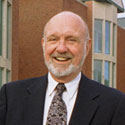
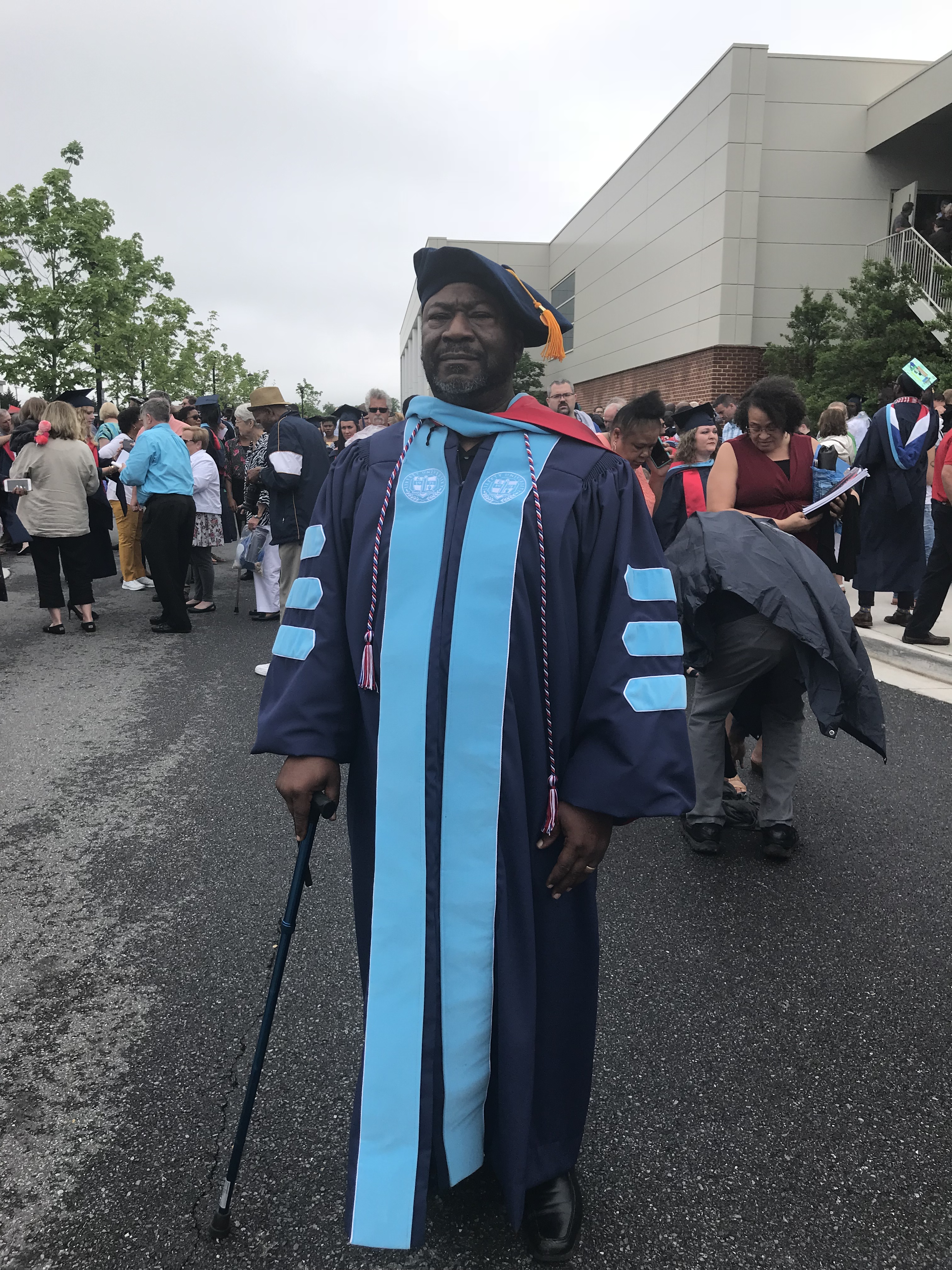
John Edwin Thomas, Ph.D., the fourth of eight chancellors for Appalachian State University (1979 – 1993), epitomizes the famous quote: “The two most important requirements for major success are: first, being in the right place at the right time, and second, doing something about it.” Now retired and living in Valle Crucis with his wife, Janice, John, 88, reflects on passions pursued, risks taken and legacies achieved.

“It’s been a damn good ride,” he said.

John and Janice have lived in the High Country since 1974, when he was asked to join the administration of Appalachian State University as vice chancellor for academic affairs. The move to academia was a major shift in John’s career focus. John’s varied career path actually made him uniquely qualified to lead APP STATE at a pivotal time in its history. The university recognizes John as a leader in technology and international education by contributing innovative ways for the university to achieve the expansions it sought.

John’s life story begins in Ft. Worth, Texas. He was born in 1933 into a middle-class family, two years after the Stock Crash of 1929. His father, mother, sister and he moved from Texas to Kansas City, Mo., where he attended grade school and high school. He attended Central Missouri State College for a year, taking pre-engineering courses.

“I chose engineering because I like math, so I thought I’d be good at it,” John said.

As soon as he turned 18, he enlisted in the Navy at the urging of his best buddy, who convinced him that life in San Diego, where he was based, was a lot more fun than in Missouri. After boot camp, the Navy sent him to electronics school for a year as a Seaman First Class. Then his reserve service was transferred to the Naval ROTC at the University of Kansas. He graduated in 1953 at 22 years old with a bachelor’s degree in electrical engineering. After graduation, because he was a member of the ROTC, he was called up as a Second Lieutenant reserve officer and went to boot camp again in the Marine Corps, this time in Washington, D.C.

In 1953 John was hired as an electrical engineer for Wagner Electric Corporation in St. Louis, Mo. “I wanted to be a design engineer of power transformers and work at the blackboard doing the mathematics for that,” John said. Instead, Wagner made him start out in the factory where he could see the products being made and talk with the workers.

Wagner gave John his first life lesson: Hands-on experience helped him more effectively lead others.

In 1955, John was called to active duty and sent to Camp LeJuene in Jacksonville, N.C. He was put in command of a radio relay platoon teaching electronics and supervising troops in stripping down equipment.

At one of these dances held at the camp, John met a very attractive young woman, Ellen, who had a six-year-old daughter named Laura. Ellen and John married, and in 1956 the couple decided that John should return to Wagner Electric where he could make $400 instead $250 per month as a design engineer. In a true case of being in the right place at the right time, John attended a company picnic where he met Wagner’s sales manager who offered him a job in sales.

“I decided on the spot to make a career change from design engineer to selling things.” He was moved to Kansas City.

When John decided he needed to polish up his lack of liberal arts, he enrolled in law school at the University of Missouri at Kansas City in 1957. While working in sales full-time, he took classes at night, graduated in 1961 and passed the bar exam.

Law school was the beginning of John’s second life lesson: A well-rounded education and commitment to lifelong learning helped John stay current and presented him with new career opportunities.

By then, Ellen and John had two children together, Johnny and Christa, along with Ellen’s daughter. John was promoted to district manager, and the family moved to Atlanta where he managed a sales force and worked with large customers such as Georgia Power Company.

“I was really happy. We had built a nice home near Atlanta,” John said.

Once again fate stepped in and took John’s life in a new direction, when John watched on television as Alan Shepard became the first American in space.

That was a sign for John. He decided to go into the aerospace industry. He moved his family to Cape Canaveral, where he wanted to work in the launch area.

“They said they were interested in hiring me because I had both an engineering and law degree,” John said. He joined an impressive team of experts whose one goal was to get a man on the moon and back to Earth safely by the end of the decade.

Dr. Kurt H. Debus, the first director of NASA’s John F. Kennedy Space Center, wanted to start a a master’s degree program for NASA employees in research and development management. John was asked to negotiate a contract with the State of Florida. Florida State University was very interested.

“They not only said yes, but also sent their top two professors to Cape Canaveral to work out the curriculum for a master’s degree,” John said. He was asked to be a guinea pig and enroll in the class. Of the 26 students who started in the program’s first year, John was one of about 22 who finished.

John began teaching R&D management to undergraduates at a new satellite campus for Rollins College at the Kennedy Space Center. Then, he created a satellite campus for Florida Institute of Technology at Melbourne.

In 1965, John found himself single again, this time with two children, ages 6 and 10, and one 16-year-old. Laura, who graduated from high school that year, went to live with her biological father. In 1967, he talked his “present and final wife,” Janice, into marrying him.

They eventually had two children of their own. Scott has an engineering degree from UNC at Charlotte, a master’s degree from App State and a doctorate from UNC at Charlotte. He lectures at App State in the Department of Physics and Astronomy and lives in Boone. Younger brother Brandon, a 1992 App State grad, lives in Hillsborough, N.C., where is a marketing writer with PRA Health Sciences.

“Janice and I have been married for 52 years and have had a marvelous life,” said John. “She has been a lifesaver. She took on a man who is seven years older than she is and two young children.”

In 1969, NASA gave him unpaid leave to go to Tallahassee to get a master’s degree at FSU. He graduated in 1970 with a doctorate in business administration. He knew that NASA’s Apollo program was winding down to be followed by the shuttle program. Because his real passion had been the moon landing, the challenge of working for NASA was gone for him. He decided to pursue academia.

East Texas State University needed a chairman of the General Business Department and offered the position to John. In the two years he spent there, he was promoted to dean of the College of Sciences & Technology.

Moving to academia was John’s third life lesson: To find success and fulfillment in his career, John was willing to be open to change and take risks.

When Dr. Herbert W. Wey, App State’s third chancellor approached John about becoming his vice chancellor, John responded enthusiastically.

“We just jived. He got me a lot of elbow room. When you had an idea, Herb encouraged you to take the risk.”

John remembers five projects, in particular. As vice chancellor, he created The Loft program which allowed student artists to live in a New York City loft rented by the university for at least a week. They met face-to-face with a range of practicing artists. The program is now called The Appalachian Loft.

He also helped William C. Hubbard develop a faculty development program now called the Hubbard Center for Faculty Development. The center provides funding to faculty members who have creative ideas for improving instruction.

John also spearheaded two projects focused on interconnectivity. He integrated computers throughout the university with wideband distribution. And, it was his idea to create a transportation system to help students move around the campus and community easier, especially during Boone’s inclement winters, now called AppalCART.

John is quick to broaden the conversation about his accomplishments to include those with whom he has worked. ““Good ideas come from the bowels of the ship,” he said.

“I just love App State and the High Country. I spent the better part of my career at the university.”

After John took the App State position, Janice went back to school and became a nurse. “She had a very successful career as a senior operating room nurse at Watauga Medical Center,” John said. “Our social life expanded because of all the people she came to know, and I became known as Jan’s husband. I loved it.”

John has continued to take on projects after retiring from App State. Jim Hunt, North Carolina’s governor when John retired, asked him to serve as chairman of the North Carolina Utilities Commission. He also continues to be actively involved in North Carolina’s Military Officers Association.

“Janice and I sit down on the deck of our house now and thank God for the blessings we’ve had. Even the tough years we would never change.”

Big Heart, New Hope

KAREN RIELEY
Published in the Summer 2019 issue of Carolina Mountain Life – p. 107

When twin brothers Mark and Will Adkins, 51, first saw High Valley, 160 acres in the mountains of North Carolina on the New River in 2006, they thought it would be a perfect place to build, develop or sell. After all, as owners of Waterfront Group, which they established in 1994 and which has become one of the Southeast’s most successful land development and second-home marketing companies, they know a good business deal when they see one, such as their purchase of The Lodges at Eagles Nest and development of its second phase.

But the Adkinses also believe that land is more than just real estate. “It’s where you lay down roots and build your dreams,” Mark Adkins said. “Our mission is to turn your dreams into realities.”

That mission and the brothers’ strong commitment to helping others led them to put High Valley to special use as a place for families with children who have life-threatening diseases, rather than develop or sell it. They renovated the hunting lodge built in the early 1950s on the property into a place where these special families could come for a week of much-needed relaxation. The Adkinses committed to provide the lodge and food for the week at no cost to the families, so that more could participate.

They began work immediately, with the help of many volunteers, funding the costs themselves. Camp New Hope opened to its first family in just 14 weeks. During the short season of the first year, the lodge provided nine families with a week’s vacation.

Renovations continued in 2007 including glassing in the 30-foot long front porch, adding a 20’x50’ stone patio and grill, picnic areas and a waterwheel with a swing. Camp New Hope is now hosting an average of 42 families each year. Families are able to enjoy canoes, kayaks, tubes, volleyball, baseball, soccer, fishing and a “swimming hole.” A play set caters to the smaller children.

The Adkins brothers want to meet the growing need for no-charge facilities like Camp New Hope. They are actively searching to find another special piece of property that can one day become the second Camp New Hope.

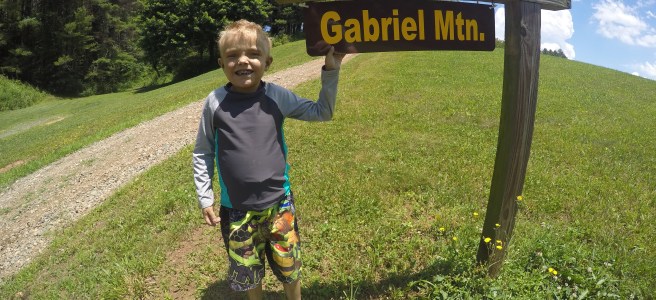
Their mission is to provide campers with a life-changing moment and renewed hope for the future, knowing miracles happen every day. The children who come to the camp have a range of diseases, such as Spinal Muscular Atrophy (SMA), Trisomy 18, mitochondrial disorders and Batten disease which is always fatal. Randy Brown, camp director, remembers one child in particular, Gabriel, who had liver cancer.

“When he arrived at camp, he looked very sick, didn’t smile and was withdrawn for the first couple days,” Brown said. “We tried to interact with him, but weren’t successful until we told him he was going to be visited by Santa Claus.”

Sam “Santa” Simmons, a retired dentist from Sparta, N.C., comes to the camp every week. After he retired, Simmons decided to go to school to become a professional Santa. He loves to tell the campers the story about the best gift of all given at Christmas, Jesus Christ. And the children love him.

“When I told Gabriel that Santa was coming, his face lit up,” Brown said. “He said, ‘Here, he’s coming here?’ I told him, ‘Yes, just to see you.’”

The next day, when Santa arrived, Gabriel went running out to him as fast as he could given he used a crutch. “Santa asked Gabriel what his biggest wish would be if Santa could grant it,” Brown said. “Gabriel told him that it would be a hug from Santa.”

Gabriel ended up having such a great experience that he made “Miss Randy” promise him that he could come back next year. But in December Gabriel’s father emailed the camp to let them know that Gabriel had died.

“Gabriel’s parents said that all he ever talked about was coming back to camp and seeing Santa,” Brown said. “I still cry when I think that I wasn’t able to fulfill my promise to him.”

Brown admits the work is hard, but she finds it very rewarding. “We are so heartened when we see campers enjoying themselves, like turning a caterpillar into a butterfly,” she said. “It keeps your life in perspective. Your back and legs may hurt and you may be tired, but then you remind yourself that’s not that big a deal compared to what the kids put up with every day.”

Mary Sue Street, broker-in-charge for Eagles Nest Real Estate Office, is mother to the Adkins brothers. She shared a special story about a time when Will took one little girl staying at the camp up in his helicopter. “After the ride, her parents told Will that it was the first time she had smiled or laughed in years,” Street said.

“Just look at the smiles on the children’s faces and you will know why this camp is so important to my brother and me,” Will Adkins said.

“Camp New Hope has become an important part of the West Jefferson community, which is next door to the camp,” Street said. “Many of its citizens volunteer regularly to help the campers and their families.

“Eagles Nest occasionally does fundraisers to benefit Camp New Hope as well,” Street said. Proceeds from this year’s Open House & Builder Showcase, May 4-5, which Eagles Nest hosted were donated to Camp New Hope, Spirit Ride, Feeding Avery Families Inc. and Hospitality House.

The lodge was renovated last year to sleep up to 18 people for big family vacations. “Right now, we’re tweaking what we have, buying some new equipment and improving the roads,” Brown said.

Camp New Hope depends on donations and volunteers. Visit http://campnewhopenc.com/ to learn more.

The Story of Crossnore

Karen Rieley

Published in the Autumn 2019 issue of Carolina Mountain Life – pp. 98-99

Eat, shop, explore—opportunities to indulge abound here for residents and tourists in the High Country. While touring around, be sure to stop in the town of Crossnore to experience a special coffee shop and café, second-hand store, weaving room, fine arts gallery and fresco by a world-famous artist. Crossnore is in Avery County, about halfway between Linville Falls and the town of Linville on US-221.

The town developed around a boarding school established by Dr. Mary Martin Sloop, who, with her husband, Dr. Eustace Sloop, came to Crossnore in 1911 and began providing healthcare. In 1923, she set up two looms to teach native mountain weaving to women and girls living in the area to support themselves. The Weaving Room at Crossnore School & Children’s Home now employs women and students working on 30 looms and in a finishing room.

Crossnore School & Children’s Home is a nonprofit 501(c)3 organization providing residential foster care for children in crisis from North Carolina. With 90 children living on the 86-acre Avery Campus in Crossnore, 40 living on the 212-acre Winston-Salem Campus at the edge of downtown Winston-Salem, and a satellite office in the historic district of downtown Hendersonville, Crossnore is a sanctuary of hope and healing for children.

Since its opening, Crossnore School & Children’s Home has operated a second-hand store and fine arts gallery, in addition to the Weaving Room. In 2006, Crossnore School & Children’s Home acquired Miracle Grounds Coffee Shop and Café. The businesses are all located in Crossnore and are self-supporting with net revenue going to help fund the nonprofit’s mission.

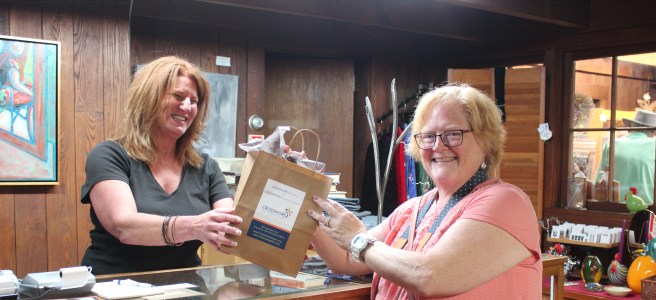
Shop from an array of treasures in the Blair Fraley Sales Store, select from beautiful hand-woven goods made on looms by Crossnore weavers and purchase works of art by regional painters, sculptors and fine craft persons in the Crossnore Fine Arts Gallery. A beautiful fresco awaits your viewing in the E.H. Sloop Chapel. When you need a respite from all that shopping and cultural enrichment, stop in the Miracle Grounds Coffee Shop & Café to enjoy specially selected coffees from all over the world, specialty drinks, teas and breakfast and lunch specials.

The Weaving Room is a working museum for Appalachian history. The weavers are always willing to explain their craft and answer questions. Whenever you decide to visit, you are likely to find Ellie Hjemmet and Shirley Gragg at their looms. The women of the Weaving Room are paid by the completed piece and by the hour for some other tasks.

Hjemmet was the manager of the Weaving Room for 12 years, 1986-1998. Now she works part-time four hours a day weaving.

“Weaving not only helps me make some money, but it also eases my mind and makes me feel good,” Hjemmet said. She also teaches in the week-long classes that are offered to the community and plays music at Crossnore events.

Gragg, who has been weaving for 42 years, said, “It’s a lot of fun. You can sit here and meditate. I come here about four days a week for seven to seven and a half hours a day. I’ve made hundreds of pieces over the years and thousands of passes through the loom a day.”

In the Weaving Room store, you can shop for woven goods including wearables, tartans, kitchen and table linens, home décor, baby apparel and more. For those who find the actual act of weaving intriguing, classes are offered to the public three times per year on the Avery Campus. At the end of the session you will have completed handwoven placemats and a table runner. You can come back later to volunteer as a weaver and donate the goods you make.

Crossnore Fine Arts Gallery, open year-round, specifically supports the school’s Stepping Stones program that transitions students from foster care to successful independent living. Gallery shows are held throughout the summer. Local and regional professional artists donate a portion or all of the sales price for Stepping Stones.

The Blair Fraley Sales Store is the largest resale shop in the High Country and offers treasures to locals and visitors alike. Generous friends donate quality new and used goods. The store is immaculate and well-organized with products that are displayed well.

What began as a weekly sale to provide clothing for the children at Dr. Mary Martin Sloop’s school is now an ongoing second-hand store that is a busy emporium and important source of income for the nonprofit. The store is named after Blair Fraley, the young daughter of John Fraley, a former trustee for the nonprofit, and wife Guyann; Blair died in a bicycle accident.

Miracle Grounds is the nonprofit’s newest business. It is open Monday through Saturday, from 7:30 a.m. – 5 p.m. The coffees are selected from all over the world and roasted in nearby Boone, N.C. Many varieties grow on organic farms and are purchased in fair-trade business agreements.

Children ages 14 and up who are part of Crossnore School & Children’s Home may work in the nonprofit’s businesses. During the school day their work is part of a class. They are paid for work done outside of class and in the summer. They go through an application process and interview before being hired.

“We try to teach them all the skills they will need when they go into the real world,” said Sherry Nixon, who is the Blair Fraley Sales Store manager. “We can help the students overcome behaviors that might keep them from being successful. That’s part of loving them, just like we do with our own children.”

The children receive more than job training from the experience. Working with staff gives them the opportunity to interact with someone other than their cottage parents, case manager and teachers and helps them build positive relationships with adults.

The E.H. Sloop Chapel, open daily from 8:30 a.m. to 5 p.m., at no charge, houses world-famous fresco artist Benjamin F. Long IV’s powerful rendering of Mark 10:14, “Suffer the little children to come unto me and forbid them not; for such is the kingdom of God.” The art fills the back wall of the sanctuary and is part of the Benjamin F. Long IV Fresco Trail that includes nine frescoes at six locations in the Blue Ridge National Heritage Area (https://www.blueridgeheritage.com/destinations/blue-ridge-frescoes/).

Crossnore School & Children’s Home provides love and assistance 24 hours a day on its Avery and Winston-Salem campuses to children in foster care. The children live under the close supervision of two cottage parents, who model a healthy, family relationship in a homelike setting. It is licensed to serve children from the ages of one to 21. The nonprofit also provides clinical services to children and families at all three of its locations. Its community-based services include single-family foster care and therapeutic foster care across western North Carolina.

The Youth in Transition program is designed to support youth who have experienced foster care during their critical transition into young adulthood. It offers financial literacy and peer counseling services, as well as education, housing, transportation, and career support for young adults up to the age of 26.

Visit www.crossnore.org to learn more about the nonprofit’s mission, the businesses that support its work and ways you can be a part.

The Way We Were: Elizabeth “Libby” Lee

Libby’s good friend from Miami, Betty Picot, Libby, Barbara, and Betty’s friend board a cruise ship on a trip to Nassau in 1962, one of several cruises that Barbara was able to take while working for the Jacksonville Shipyards.

KAREN RIELEY
PUBLISHED IN june 2019 ISSUE OF THE RESIDENT NEWS2019/06/10/the-way-we-were-elizabeth-libby-lee/

Her knees may prevent her from walking these days, and her memory isn’t what it used to be, but at nearly 100 years old, Elizabeth “Libby” Battle Lee still has an engaging personality and tells great stories. She is full of many good memories of living, worshiping and clubbing in San Marco. When all is said and done, however, memories of friendships and family are clearly what matter the most to Libby.

Barbara, Libby and Randy

Born August 17, 1919, Libby grew up in Camilla, Georgia, from where all her family came. She went to business college in nearby Albany after high school. “Seven of us would ride the bus from Camilla to go to school,” she said. After finishing business college, her first job was secretary to the vice president and general manager of Greyhound bus company.

“I made $7.50 a week and had to work on Saturday mornings,” Libby said. “But given that the Great Depression was happening then, I felt lucky to have a job.” The man who would become her husband, Randolph “Randy” Edward Lee, also worked for Greyhound. His family were all from Albany.

They married in 1939 and lived in Chattanooga, Tenn. for eight years. Her daughter, Barbara Lee Myrick Jernigan, was born in 1941, and her son, Randolph “Randy” Edward Lee Jr., was born in 1943.

Libby wanted to live closer to her family who lived in Camilla, so the family moved to Jacksonville in 1947 when Greyhound transferred Randy.

Libby, her mother, Mamie Battle, Randy and Barbara

Their start in Jacksonville was rough, however. “Honey, nobody wanted to rent a house to anybody with children,” Libby said. “I had a first cousin who worked for Buckman, Ulmer & Mitchell real estate firm. She found a place way north of downtown on Laura Street that would take children. It was horrible,” Libby said.

When her mother-in-law came to visit, she announced they were going to find Randy and Libby a better place to live or she would take her grandchildren back home with her to Albany. They found a place in San Marco at 1570 Alford Place and lived there for 20 years. “The children had lots of others to play with. We had three grocery stores – A&P, Lovett’s and Setzer’s near the theater in San Marco – and a wonderful bakery. We had everything we needed.”

Barbara and her brother, Randy, went to Southside Grammar School. The school building, which was built in 1916, is now home to The Lofts of San Marco. They both then attended Landon Junior/Senior High School, which is now Julia Landon College Preparatory School.

Randy and Libby Lee, circa 1980

“We had a movie theater we could walk to, a drug store with a soda fountain, a five-and-dime – Kress and then Peterson’s, Geisenhoff Gift Shop right next to the fire station and eventually Underwoods,” Barbara recalled.

Nancy Scott’s Dress Shop sold capezio pants. “Barbara must have had 20 pairs; she loved them,” Libby said. She also remembers Reynold’s Piano Shop beside Kress.

Madeline Geisenhoff, one of Libby’s many “dear friends,” also lived in the neighborhood. Paul Geisenhoff ran the Little Theatre, home for Theatre Jacksonville. Their son, Jay, was the same age as Randy, and they played together at the River Oaks Park.

Their house on Alford Place has been torn down. Libby remembers that there used to be a bank across the street from their house. Then the bank moved to Hendricks across from the vacant lot at Hendricks Avenue and Atlantic Boulevard.

Barbara remembers there used to be a drive-in restaurant, but it was torn down in the early 1950s to build the bank. “It had smooth concrete painted green in the front. All the other sidewalks were rough,” she said. “We loved to skate on the smooth concrete.”

Barbara also remembers that there were gas stations on all four corners at Alford and Hendricks – Harry’s Texaco service station, Pure Oil station that the Earlys owned, and two other gas stations of which she can’t recall the names.

“We walked to Southside Baptist Church and Landon School or rode our bikes everywhere,” she said.

Barbara and her friends played in Fletcher Park where Preservation Hall is now. “Back then it had beautiful rose bushes.” Libby remembers that she would “borrow” some roses to decorate her house when her friends were coming to play bridge.

“The park had sidewalks that led to a big circular sidewalk in the middle of it,” Barbara said. “Kids used the park a lot then. The park had a football field and every afternoon the boys played football there. And, of course, where the boys were, so were the girls.”

The Landon football players used to practice in what is now called the FEC Park. There were houses built right behind Landon School so they had to go somewhere to practice. Libby’s son, Randy, played football. Libby would make a cake once in a while to serve the football players after practice, as they walked back to Landon.

Libby and her two sisters, Lois Middleton and Hazel Rogers. After their mother died in 1984, the sisters decided that they wanted their families to get together once a year to stay in touch. They spent long weekends together for many years at places such as Hilton Head, Savannah, Jacksonville Beach, Ponte Vedra, Sawgrass and St. Augustine.

Barbara went to Florida State College in 1959 to major in business. Having played more than studied, as she willingly confessed, she returned to Jacksonville. She worked for William Lovett, who owned the Jacksonville Shipyards, until she began having babies and then later became a paralegal for CSX for 30 years. “It was a wonderful place to work,” she said. She retired from CSX in 2005.

Randy graduated from high school in 1961 and then went to the University of Florida where he received a bachelor’s degree in aerospace engineering and a master’s degree in engineering on a Ford Foundation Scholarship.

With both kids out of the house, after 20 years on Alford Place, Libby and Randy moved to 1902 San Marco Place in 1995. “We bought from a friend of mine, Nona Jones, who was the first person I met when we moved to Jacksonville,” Libby said. Randy and Libby lived together in the house until Randy died of lung cancer in 1995. Libby continued to live there until April 2018 when, after 50 years total in the house and at 98 years old, she moved in with Barbara and her husband, Virgil Jernigan.

Randy Jr., Libby and Randy Sr.

Barbara has lived at 1455 Riverbirch Lane in Miramar since 1990, but has owned it since 1976, when following a divorce, she and her children moved in. Then she married Virgil in 1979, and they put two families together. With the need for more bedrooms, they moved to Gadsden Court and rented out the Riverbirch house. After all the kids left, they sold the Gadsden house and moved back to Riverbirch.

Barbara and Virgil have a total of five children, eight grandchildren and two great-grandchildren. Two of their children live in Jacksonville. Paula Jeter lives in Fruit Cove and has two children; Myra Johnson lives in Beauclerc and has two children and two grandchildren. Betsy Bullard lives in Winter Park, Chuck Myrick lives in Lakeland and Mark Jernigan lives in Atlanta.

Randy and his wife, Sue, lived in Key Biscayne. He was a fighter pilot in the USAF during the Vietnam War. He was a partner with the Enrichment Group at Kathleen Day & Associates until his retirement in November 2008. Randy lost his fight with pancreatic cancer on Feb. 15, 2009.

Randy and Libby board the bus for one of the senior trips she organized. This one was to Tallahassee. They ate in the cafeteria where the legislators ate. It was a bus full of 50 people from her church and the Methodist church downtown.

The next big phase of Libby’s life started when she was 40. She took on a temporary assignment to create a membership directory for Southside United Methodist Church. When the eight weeks were over, the pastor asked her to take the job of church secretary. “I was supposed to be there six to eight weeks but ended up working there for 51 years,” Libby said.

“I did a bit of everything at the church, except sweep the floors,” said Libby. She directed weddings almost every weekend for 47 years. She worked for the senior minister and ran the office. Including senior and associate pastors, she worked for 26 pastors.

Libby started a ministry with volunteers delivering the flowers after church services to people in the hospital or home sick and to shut-ins. She also took seniors to different places for lunch each month and to the Cherry Blossom Festival in Washington.

Libby has been a member of San Jose Country Club since 1994. She loves the Sunday buffet and still goes to the club to see friends. She had hoped to have her 100th birthday party there in August 2019, but the club begins major renovations in June and won’t be available to host the party.

Regardless of the location of the birthday party, Libby is looking forward to enjoying 100 years’ worth of memories and friends and family wishing her yet another happy year, 72 of them in San Marco, “the sweetest, safest neighborhood where you have everything you need,” as Libby says.

The Way We Were: Dorsey-Ann Holz Rhames

Cohen’s Department Store Soda Fountain (Courtesy Jacksonville Historical Society)

KAREN RIELEY
PUBLISHED IN june 2019 ISSUE OF THE RESIDENT NEWS –2019/06/10/the-way-we-were-dorsey-ann-holz-rhames/

Dorsey-Ann Rhames is proof that you can come home again. After growing up in Murray Hill and moving to Ft. Lauderdale, she eventually moved back into the house in which she grew up. Like the neighborhood itself, however, with her husband’s and her efforts, the house has changed somewhat.

“My father’s name was Gunther Schlichtholz, but he shortened it to Holz when he went into the Navy,” Dorsey-Ann said. Her father was born in Germany. Her grandfather came to Ellis Island first, and then her grandmother brought her father to America in 1924 to settle in Chicago.

“My parents met at a USO dance when my father was in the Navy and stationed here in Jacksonville,” said Dorsey-Ann, who was born in 1944.

Dorsey-Ann, in front of the cake at her 6th birthday party

After she was born, Dorsey-Ann and her mother, Bebe Holz, lived in an apartment on Market Street in Springfield. Her grandparents lived at 7th and Liberty in Springfield, too. After her father left the Navy, he worked odd jobs. Eventually he went back into the Navy and then her parents divorced.

In 1950 when Dorsey-Ann was 6 years old, her mother moved them to Murray Hill into 1022 Antisdale Street, where she now lives again. The house was built the year before in 1949.

“Murray Hill was a nice place to grow up,” Dorsey-Ann said. “It had a post office, department store, Edgewood Theater, other retail stores, a meat market and Woods Pharmacy.” She walked to the downtown Murray Hill shopping area which was only about two blocks from her house. “I could go to Murray Hill Theatre for a dime.

Edgewood Movie Theater (Courtesy Jacksonville Historical Society)

“The grocery store used to run a tab for shoppers,” she continued. She remembers an A&P grocery store opening up on Post Street.

Edgewood Avenue Christian Church Disciples of Christ owned a large brick building across the street from the church that was known then as the “Old Folks Home.” At the time, the church owned all the property. “It had a beautiful garden,” she said. “Now there are condos and the Florida Christian Home, which are not part of the church anymore. The gardens were removed.”

On the corner of Post and Cypress Streets was a soft ice cream store. “When we first moved into our house, it was called the Creamette,” Dorsey-Ann said. About five years later, however, someone complained when the store stopped using cream because it was too expensive. “A lawsuit made them change the name to Dreamette,” she laughed.

She remembers roller skating was the big past-time. “They were the kind of skates that you clamped onto your shoes with a key. All of us girls skated. We had to wear shoes with thicker soles like saddle oxfords for the skates to have something to grab onto,” Dorsey-Ann said. “We regularly lost our keys and would go to the five-and-dime store where we could get a new skate key for a nickel.”

Dorsey-Ann did a lot of walking back in her growing-up days, of necessity because her mother couldn’t drive, and they didn’t have a car. Her mother worked for Admiral Distributor on Edison Street, and another employee picked her up each morning to take her to work and bring her back home.

Dorsey-Ann Holz yearbook photo

“To see my grandmother after school, I had to take a bus downtown, catch another bus to Springfield and then walk from Main Street to Liberty Street. Either that or I had to pay 20 cents to take a cab.

“We put on our Sunday dresses and high heels to go downtown on Saturday mornings to high-end department stores like Furchgott’s and Cohen’s and tried to look like we could afford to buy things there. I remember going to see “Gone with the Wind” at the Florida Theatre.

“Walgreen’s drugstore had a soda fountain. My mom would take me there for a special treat. I always wanted a tuna fish sandwich. My grandmother would take my mother and me to Morrison’s Cafeteria.”

Her grandmother’s house at 1642 Liberty Street was a big, two-story house. “After both of my grandparents died in the late 1950s, the house sat empty for five years because the heirs couldn’t decide whether to sell it,” she said. “My mother finally sold the house for $5,000 because it was going to need major repairs.”

Her best friend lived across Post Street on College Place. “We rode bikes and went to sock hops at Good Shepherd Church when we were in high school.”

They collected soda bottles to turn in at A&P for a nickel each and then rode their bikes to Lackawanna Pool about a mile from her house, where it cost a quarter to get in. Sometimes she would go with her friend’s family to Jacksonville Beach.

When her cousin from Chicago came to visit, they would get a wagon and go door-to-door asking if they had ceramic figurines they no longer wanted. Dorsey-Ann and her cousin would clean them up and sell them to people living on another street. They would also collect empty cream soda bottles because they were worth five cents each.

Dorsey-Ann has generational history with the Red Cross. During the war, her grandmother went to the train station to hand out coffee, doughnuts and cigarettes to servicemen passing through. When Dorsey-Ann was a teenager, her mother and she served sandwiches during dances at the Naval Air Station and at beach parties for the servicemen.

“We took the bus on a two-lane road to the Naval Air Station,” she said. “I’m not sure it was even paved.”

John Gorrie Junior High School (Courtesy Whiteway Realty)

Dorsey-Ann attended Ruth N. Upson Elementary School from first through sixth grade, John Gorrie Junior High School in seventh through ninth grade and then graduated from Robert E. Lee High School in 1962. “I walked to and from school because our house was just inside the two-mile limit for being able to ride the bus,” she said.

After high school, Dorsey-Ann married and divorced, then moved to Ft. Lauderdale in 1975 where she raised her daughter, Donna Marie Hitch, and worked for a heavy construction equipment dealer. When Donna was 17, she was killed in an auto accident, so Dorsey-Ann decided to come back to Jacksonville.

Her mother had married Herb Kuebler and was still living in the same house at 1022 Antisdale. Her stepfather wanted Dorsey-Ann to buy the house across the street from them, 1035 Antisdale. “He bought it for me in 1983 and let me pay him back,” she said. In 1984, Dorsey-Ann met her husband, Vernon Rhames, a veteran of the U.S. Air Force, who had two daughters.

Dorsey-Ann and Vernon lived in the house for 32 years until 2015. When Bebe died in 2013, she left her house to Dorsey-Ann, and she and Vernon decided to totally renovate the house so that they could move into it and rent out 1035 Antisdale.

1035 Antisdale, built in 1926, before renovation

Just as they were nearing completion, however, one of the stepdaughters moved back to Jacksonville and her family needed a place to stay, so they moved into the same house with Dorsey-Ann and Vernon in January 2014. By March, Dorsey-Ann knew that they needed more room, and she and Vernon moved into her nearly-
renovated home so that her stepdaughter and family could have 1035 Antisdale to themselves.

Dorsey-Ann thinks it is great that millennials are moving into the neighborhood. “When I was growing up you could lay down in the middle of the road on a Sunday afternoon and not worry about any cars driving through.”

Dorsey-Ann retired in 2009 after 33 years working for the same heavy construction equipment dealer. Vernon retired in 2014 from more than 20 years’ work with the United States Postal Service. He died in 2017.

Dorsey-Ann Rhames and Vernon Rhames

Dorsey-Ann serves as membership secretary for Riverside Park United Methodist Church, where she has worshiped and worked with Vernon for 22 years. They started Sunday breakfast and Dorsey-Ann continues to serve at the breakfast.

You can almost always find Dorsey-Ann at the church on Mondays and sometimes one to two other days each week. The church has recognized the Rhames’ commitment by dedicating its fellowship hall to them, one sign of how woven into the community Dorsey-Ann remains.

The Way We Were: Joyce and Malcolm Hanson

1968 wedding photo: Bob Ashley, Joyce and Malcolm Hanson, Betty Ashley

KAREN RIELEY
PUBLISHED IN April 2019 ISSUE OF THE RESIDENT NEWS –2019/04/04/the-way-we-were-joyce-malcolm-hanson/

Her most treasured wall hangings in the charming 1942 painted brick home on Dunsford Road help weave the story of Joyce and Malcolm Hanson’s lives individually and together in the San Marco and Lakewood areas. For Joyce, the drawing that hangs just to the right when you walk in the front door captures the beginning of the story. It is of her father’s parents’ home, which was located between Emerson Street and University Boulevard. Joyce’s husband, Malcolm, drew it from an old photo in 1979.

“My dad’s life started in that house,” Joyce said. “I suppose my grandparents would have been considered ‘Florida crackers.’ They lived off the land on a family piece of property with a small garden, and I don’t remember hearing that my grandfather ever worked anywhere else.”

Joyce Hanson’s grandparents’ house
After their four sons were born, including her father, Bob, who was born in 1920, Hanson’s grandparents found the original Ashley home place was too small, and her grandfather, Allen Ashley, moved one section of the house to the side so that he could add a middle section to it in 1926.
Her grandfather deeded part of the land to her father, who built a one-room house, a drawing of which also hangs in the house. “It didn’t even have a bathroom,” Joyce said. “My parents had to use the bathroom in my grandparents’ house at first.”

When Joyce was born in 1945, her parents added a kitchen, bedroom and bathroom. The house was behind the now-closed Palmer Hall Floors, where Affordable Plumbing is now located. “Our property backed up to a black community with whom we got along,” Joyce said.

Joyce Hanson lived in a one-room house until she was eight years old.

Joyce, her brother, Bob Jr., and her parents lived in the small house until she was eight. Then they moved to Rainbow Road into a house her father built in a neighborhood called Fleetwood then, now known as the Lakewood area. Joyce remembers that houses were just beginning to be built in that area.

“We had to go to San Marco to shop at the A&P grocery store in the Square,” Joyce said.

Bob Ashley owned a filling station, aptly named Ashley’s Texaco Gas Station, at the corner of University and St. Augustine where Walgreens is now. “When my dad couldn’t enlist for World War II because of a slight disability, he quit Landon High School before his senior year and went to work in the shipyards,” said Joyce. After the war, Bob installed gas tanks in gas stations for different oil companies and built concrete backyard barbecue pits.

“Because of his dealings with Texaco in helping to build the company’s gas stations, when they wanted to open one in San Marco, they asked him to run it,” Joyce recalled.

“It was a true family-run business. I was in the 10th grade when the station opened and did some of the bookkeeping and ran the cash register,” said Joyce. “But I never pumped gas because women weren’t supposed to! I do now, though.” Her brother, Bob, worked at the station, too, and her mother, Betty, also worked in the office.

Joyce Hanson holds the Resurrection Plaque, depicting stained-glass windows donated in her father’s memory in 1972, resurrected from the Hendricks Avenue Baptist church fire in 2007.

“My father became a legend. He loved people and people loved him. He took the time to talk to people. He helped anybody that needed help. He dealt with the least people the same as business executives. He ran charge accounts for a lot of big companies. He was always totally honest in his repairs.”

Joyce remembers the ad slogan, “You can trust your car to the man who wears the star. The big bright Texaco star.” “Every car had the windshield cleaned, the floor swept, the oil checked. People would bring their babies up for him to hold. The station was the hub of the community,” she said.

Joyce went to duPont for first grade and half of second until San Jose Elementary was built and opened. Then she attended San Jose through fifth grade and found herself back at duPont for sixth through twelfth grades. When she eventually taught for a year and a half at San Jose, she was surprised to find that some of the teachers she had were still teaching.

Her parents were married in the little church at the end of Kingsley Road, however, almost all of Joyce’s life is intertwined with the life of Hendricks Avenue Baptist Church, known in the community as HAB. Her parents brought her there when she was three, soon after the church opened. She remembers a little hut in the back to the right side of the gym, the Scout Hut, which was the church nursery. HAB built its first building as a gymnasium, where Joyce was baptized.

“I remember carrying a little flag as we marched to the hymn, ‘Onward Christian Soldiers,’” Joyce said.

Her dad became a deacon at HAB. Both of her parents taught Sunday School classes, and Joyce participated in children’s choir and youth activities.

Bob ran the station from 1960 until he died unexpectedly in 1971, after which Betty and Bob, Jr., ran the station briefly before selling it.

After Bob’s death, Betty donated stain glass windows to Hendricks Avenue Baptist Church in remembrance of her husband. When the sanctuary was destroyed by fire in 2007, the only plaque that could be salvaged was the Resurrection Plaque for her father’s window. A wall hanging of that window and the rescued Resurrection Plaque hang in Joyce’s and Malcolm’s living room.

“Through all of the things that have happened – good or bad – our church has stood with us,” Joyce said. “When my dad died, it was unexpected. My mom fell apart. I was just 24 years old and didn’t know what you did for a funeral. Rev. Lipscomb [Clyde B. Lipscomb, HAB’s pastor then], helped us make the arrangements; without him it would have never gotten done. Everything in our lives happens surrounded by church. That’s why HAB has become our family and support group.”

Betty, Joyce and Bob Ashley with Bertha Hartley, Joyce’s only grandparent not born in Jacksonville

Joyce remembers that kids from school came to their house for parties. Her brother had a hootenanny band. “Drive-in theaters were wonderful memories. We went until we were teenagers,” she said. “We could wear our pajamas and Momma would bring fried chicken. We did a lot of things as a family and were very close.”

As a teenager, Joyce went to the bowling alley in San Marco, where the AT&T building is now across from Theatre Jacksonville. Malcolm set pins there as a child. “There was a Texas barbecue on San Marco Boulevard,” she said.

I loved the football games at duPont, not so much for the game as for the marching band,” Joyce said. “At one point it was the best in the nation.”

After Joyce graduated from duPont High in 1963, she went to Stetson University and got a degree in education. At the beginning of her first year of teaching at San Jose Elementary, she met Malcolm.

Malcolm was born in New York, but his parents moved to Jacksonville when he was a year old. He lived in apartments in the San Marco area and a garage apartment on River Road while he attended Southside Grammar School. Then his family moved to Belmont Terrace and he attended Landon High School. After high school, his family moved to Arlington and he went to Jacksonville University.

On the day he graduated from JU, a good friend of Joyce’s introduced Malcolm to Joyce at HAB. “We were good friends first, and then we started dating,” Joyce said.

Joyce and Malcolm were married in Rev. Lipscomb’s house in front of the fireplace on Aug. 21, 1967. They didn’t want to have a big wedding because Malcolm was on leave from the military.

While Malcolm went on a military cruise, Joyce continued teaching until Malcolm was transferred to Norfolk, Virginia, for 2-1/2 years, where Joyce taught for half of a year in a public military school until she got pregnant in 1971 and wasn’t allowed to teach any more.

After they returned to Jacksonville, Joyce and Malcolm returned to HAB. Malcolm became a deacon first, and Joyce eventually did as well. “HAB is a moderate Baptist church that didn’t see any reason why women shouldn’t be deacons, too,” Joyce said. Malcolm and she were in the church’s first couples’ class.

When their daughter, Jennifer, was in second grade, Joyce went back to teaching full-time, teaching “hospital homebound” in Jacksonville until 2010, when she retired. “I loved home-schooling because it wasn’t like teaching third grade a hundred times. I taught special needs kids. The sad part was that a lot didn’t survive, but you knew you were providing normalcy. I felt that was my calling,” Joyce said.

Also in 1980, Joyce and Malcolm bought the “Balfour House,” as it is known in the neighborhood, from Betty Balfour Marks, artist, dancer, choreographer and director of her own dance school, the Ballet Arts Centre, and performing company, the Florida Dance Theatre, in Jacksonville. Her husband, Lewis Marks, developed the neighborhood.

When they first saw the house on Dunsford Road, off Hendricks Avenue, it was painted with white trim and a red roof. “I hated it,” Joyce admitted. But then they went inside and saw the hardwood floors and the dining room chandelier, and she had second thoughts. It was more than they could afford so they started negotiating.

“Betty told us that maybe she could help us out on the price if we’d promise to stay in the house and love it and if we’d have our two girls attend her daughter’s Ballet Arts Centre,” Joyce said. “Well we have stayed in the house and our girls did take ballet, and, in fact, our granddaughters take ballet now, too.”

Joyce thinks they live in the best neighborhood in the world. “We walk everywhere. There’s lots of variety. It is a community within a community. We walk just four miles to San Marco Square and know and talk to everybody. We walk to the library, Theatre Jacksonville and the movies.”

Joyce does not have fond memories of the year 2008. “HAB’s sanctuary burned on Dec. 23, 2007, and then I was diagnosed with cancer in 2008 and my mom died as I started treatments.”

Malcolm and Joyce Hanson 2018

The next day, Christmas Eve, the members had worship in the gym, which didn’t burn in the fire. “At the end of worship, All Saints came in and announced they had lunch for us,” Joyce recalled tearfully.

Other churches helped as well, by loaning them music and choir robes. “I remember that a Jewish young lady and her family bought the church pew bibles. The fire pulled the community into HAB and HAB even further into the community,” Joyce said.

During that time, “our grandson, Hunter Closson, was ready to be baptized so we used Rev. Kyle Reese’s swimming pool,” said Joyce, making his baptism unique among the four grandchildren, Rhianna Casey and Hunter, Shelby and Brooke Closson.

Joyce’s daughters, Elisa Casey and Jennifer Closson, used part of the money they had inherited from their grandmother, Betty, to donate new stained-glass windows in memory of their grandfather, Bob. Malcolm helped design the Fire and Dove windows.

The Hansons love that their friends and they have, in some cases, grown up together and have raised children together. And, they count their blessings that they have grown up with Hendricks Avenue Baptist Church and that the church has enmeshed itself in their community.

If the walls could talk: Details vague about house swap deal

Early photo of 1880 Shadowlawn

KAREN RIELEY
PUBLISHED IN june 2019 ISSUE OF THE RESIDENT NEWS –2019/06/10/if-the-walls-could-talk-details-vague-about-house-swap-deal/

If ever a house needed walls that could talk, it could well be the one at 1880 Shadowlawn Street in Avondale. The house is hiding a mystery that only the walls themselves might be able to solve for sure.

The house’s origin is clear enough. Built in 1924 for real estate and insurance salesman Addison Palmer, it is one of three Jacksonville buildings by Hentz, Reid & Adler Architects in Atlanta. Wayne Wood, Jacksonville’s architectural history expert, describes the house in “Jacksonville’s Architectural Heritage: Landmarks for the Future” as “not very fancy” and having a “subdued eclectic facade … [and] striking formality with Georgia overtones.”

Second owners of 1880 Shadowlawn, the Reinhold family: Paul and Klare, with daughters June and Anne.

Palmer sold the house to Paul Reinhold, a dairy-business executive who was president of Foremost Dairies, which became the Reinhold Corporation. Both gentlemen are listed in a 1934 event program for Ye Mystic Revellers. Reinhold and his wife, Klare, raised two girls – June, who graduated from Robert E. Lee High School in 1937 and married Jack Myers, and Anne, who married Paul “Cotton” Wellington.

At this point in the house’s history of ownership a mystery comes in. It all has to do with a friendly house swap.

According to current owner Pattie Houlihan, the Reinhold family sold the house to a Mr. Livingston, who eventually decided to swap 1880 Shadowlawn with Bob “Squirrel” Read, who lived at 1820 Shadowlawn. As the story goes, the Livingston children had moved out and the house seemed too large for Livingston and his wife, while Martha and Bob Read had four daughters, making their smaller house too cramped. For the whopping sales price of one dollar, the Reads moved in and lived at 1880 Shadowlawn for 18 years, 1965-1983.

That’s one version of the story. In another version, which Peggy Bryan remembers being passed down through her family, three men – Paul Reinhold, A. Y. Milam and another man whose name has been lost in this telling – decided to swap houses. The Reinholds, living at 1880 Shadowlawn, moved to the Milam home on Yacht Club Road. The other home traded was presumably on Edgewood Avenue in this version of the story. The three couples not only survived the house swap but eventually all three celebrated their 50th wedding anniversaries.

Marketing plat map shows 1880 Shadowlawn as lot #8, near where Richmond Street meets Shadowlawn Street.

Coincidentally, Randie Read, one of Martha and Bob Read’s daughters, married Brightman Skinner, second cousin to Houlihan’s husband, Richard Skinner. Bryan is the daughter of Anne and Cotton Wellington and granddaughter of Klare and Paul Reinhold.

After the house-swap years, Kim and James Toliver Lane lived there for a short time, adding a pool, and then Lisa and Jim Borger owned 1880 Shadowlawn for 14 years.

In 2003, Houlihan and Skinner decided to move from their home on Pine Street to accommodate their two daughters’ need for more room as they approached their teenage years. Greta is now 28 and Claire is 25.

“Shadowlawn reminded me of the houses I grew up with,” said Houlihan, an architect. “I loved the house on Pine Street, and we had planned a large addition for it, but it seemed too much for what the house was originally meant to be.”

Pattie Houlihan and Richard Skinner, current owners of 1880 Shadowlawn, added more pillars to the front porch overhang and a decorative balustrade was installed on top.

Her husband was skeptical about Shadow-lawn at first. “My first reaction when I toured the house was it had giant dining and living rooms we’d never use,” said Skinner, who is also an architect. Then, his wife showed him a room in the back that could be a music room and took him to see how large the backyard was. He was beginning to be hooked.

“Then I saw how large the bedrooms on the second floor were and I could see how wonderful it would be for the girls,” Skinner said. “They could have their friends over in their own space.”

Not a lot has changed about the house except an addition off the back made by the Lanes to enlarge the kitchen. “When something is beautifully designed there’s no reason to mess with it much,” Houlihan said, “but Richard and I did make changes to the front entry portico about six years ago. It seemed there were a few alterations made to the house exterior that were incongruous and not in keeping with a Neel Reid design. After looking at many of the homes designed by his firm in the Atlanta area, Richard felt strongly that the proportion of a double column and detail of the balustrade were much more in keeping with something that would’ve come out of their office back in 1923.”

The couple also had to do some structural work. “We shored up the center beam to level things,” said Skinner. They also needed to install an updated air conditioning system without impacting the house’s layout. The solution was to install it in the attic and put the ducts in built-out chase walls. “You would never know there is ductwork in the house,” he said.

The only other changes upstairs are that the master bedroom now has its own en suite and opens into a room that used to be sectioned off as a morning room/sewing room.

Downstairs the couple updated the kitchen with new finishes and lots of counterspace and cabinets and added a laundry room.

They love best the room off the living room because the sun comes up outside the windows. “We have coffee in here every morning and read the newspaper,” Skinner said.

The couple also did some extensive landscaping. “The house is on a sand ridge that makes it the highest point in the neighborhood,” Houlihan said. “Because it is such a walking neighborhood, we did a garden wall and whole new planting plan.”

They also planted fruit trees and created a parking court.

As the house on Shadowlawn approaches its centennial birthday in 2024, the home’s classic lines have stood the test of time. “This house was really well-designed,” said Skinner.