The Way We Were: Elizabeth “Libby” Lee

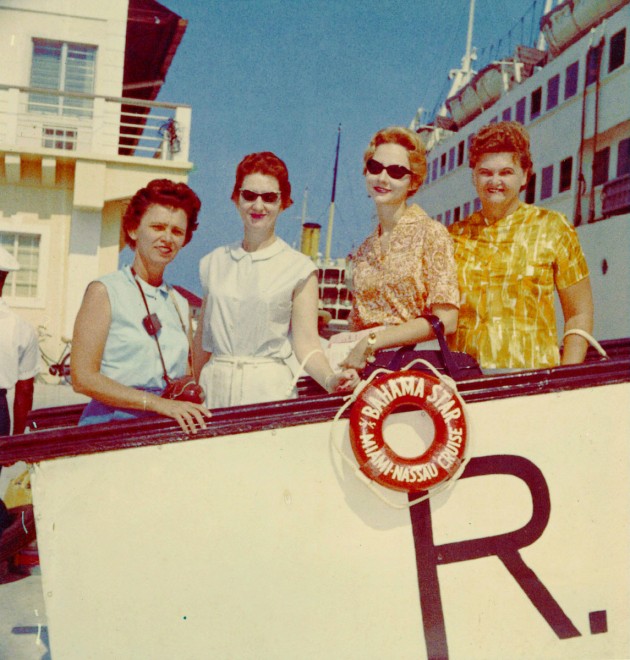
Libby’s good friend from Miami, Betty Picot, Libby, Barbara, and Betty’s friend board a cruise ship on a trip to Nassau in 1962, one of several cruises that Barbara was able to take while working for the Jacksonville Shipyards.
KAREN RIELEY
PUBLISHED IN june 2019 ISSUE OF THE RESIDENT NEWS2019/06/10/the-way-we-were-elizabeth-libby-lee/

Her knees may prevent her from walking these days, and her memory isn’t what it used to be, but at nearly 100 years old, Elizabeth “Libby” Battle Lee still has an engaging personality and tells great stories. She is full of many good memories of living, worshiping and clubbing in San Marco. When all is said and done, however, memories of friendships and family are clearly what matter the most to Libby.
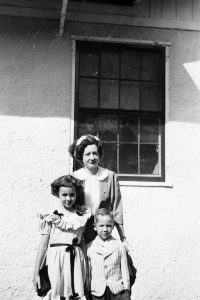
Barbara, Libby and Randy

Born August 17, 1919, Libby grew up in Camilla, Georgia, from where all her family came. She went to business college in nearby Albany after high school. “Seven of us would ride the bus from Camilla to go to school,” she said. After finishing business college, her first job was secretary to the vice president and general manager of Greyhound bus company.

“I made $7.50 a week and had to work on Saturday mornings,” Libby said. “But given that the Great Depression was happening then, I felt lucky to have a job.” The man who would become her husband, Randolph “Randy” Edward Lee, also worked for Greyhound. His family were all from Albany.

They married in 1939 and lived in Chattanooga, Tenn. for eight years. Her daughter, Barbara Lee Myrick Jernigan, was born in 1941, and her son, Randolph “Randy” Edward Lee Jr., was born in 1943.

Libby wanted to live closer to her family who lived in Camilla, so the family moved to Jacksonville in 1947 when Greyhound transferred Randy.
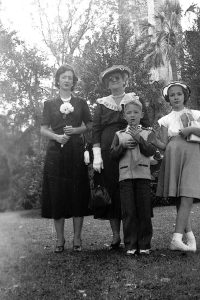
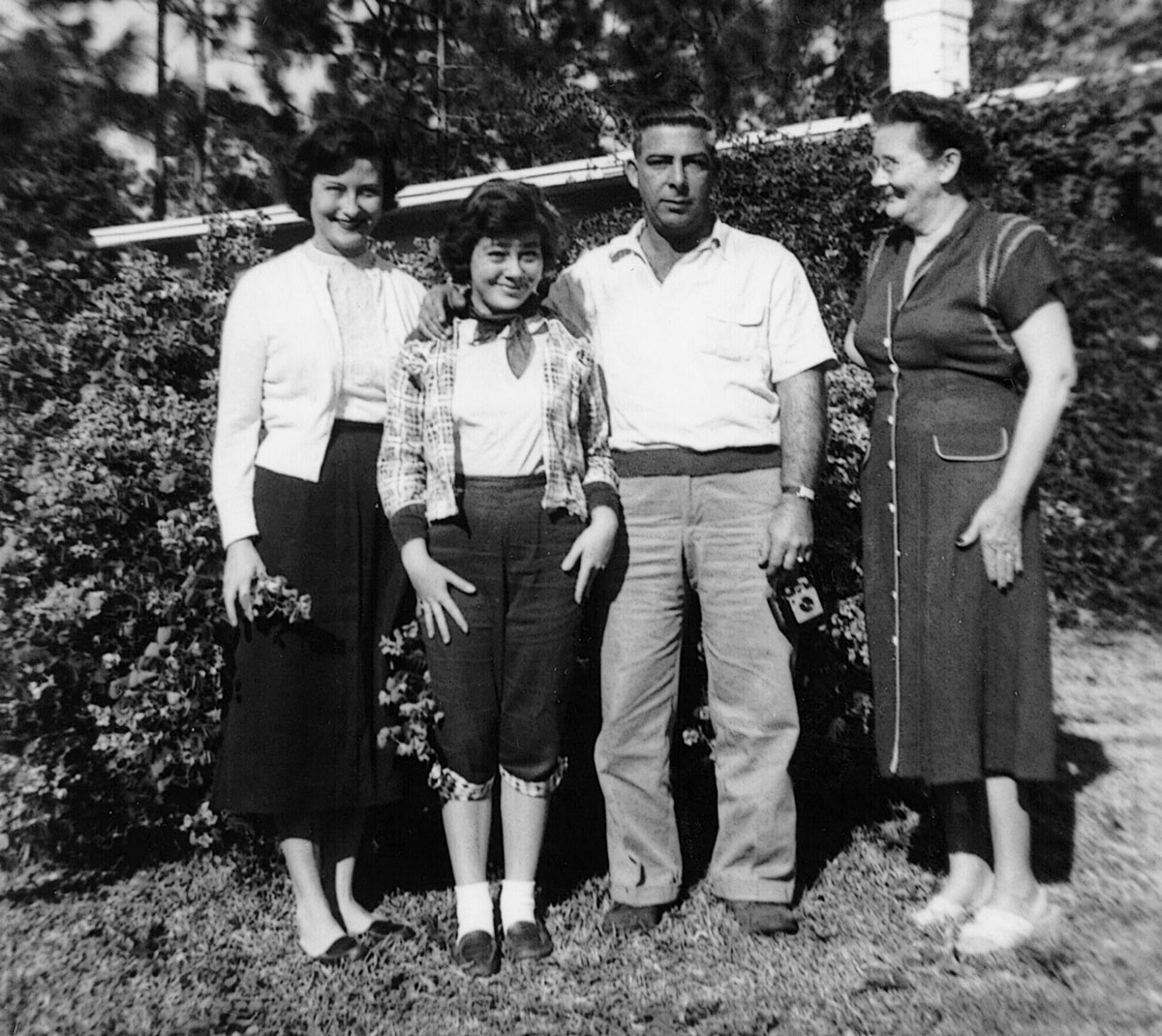
Libby, her mother, Mamie Battle, Randy and Barbara

Their start in Jacksonville was rough, however. “Honey, nobody wanted to rent a house to anybody with children,” Libby said. “I had a first cousin who worked for Buckman, Ulmer & Mitchell real estate firm. She found a place way north of downtown on Laura Street that would take children. It was horrible,” Libby said.

When her mother-in-law came to visit, she announced they were going to find Randy and Libby a better place to live or she would take her grandchildren back home with her to Albany. They found a place in San Marco at 1570 Alford Place and lived there for 20 years. “The children had lots of others to play with. We had three grocery stores – A&P, Lovett’s and Setzer’s near the theater in San Marco – and a wonderful bakery. We had everything we needed.”

Barbara and her brother, Randy, went to Southside Grammar School. The school building, which was built in 1916, is now home to The Lofts of San Marco. They both then attended Landon Junior/Senior High School, which is now Julia Landon College Preparatory School.
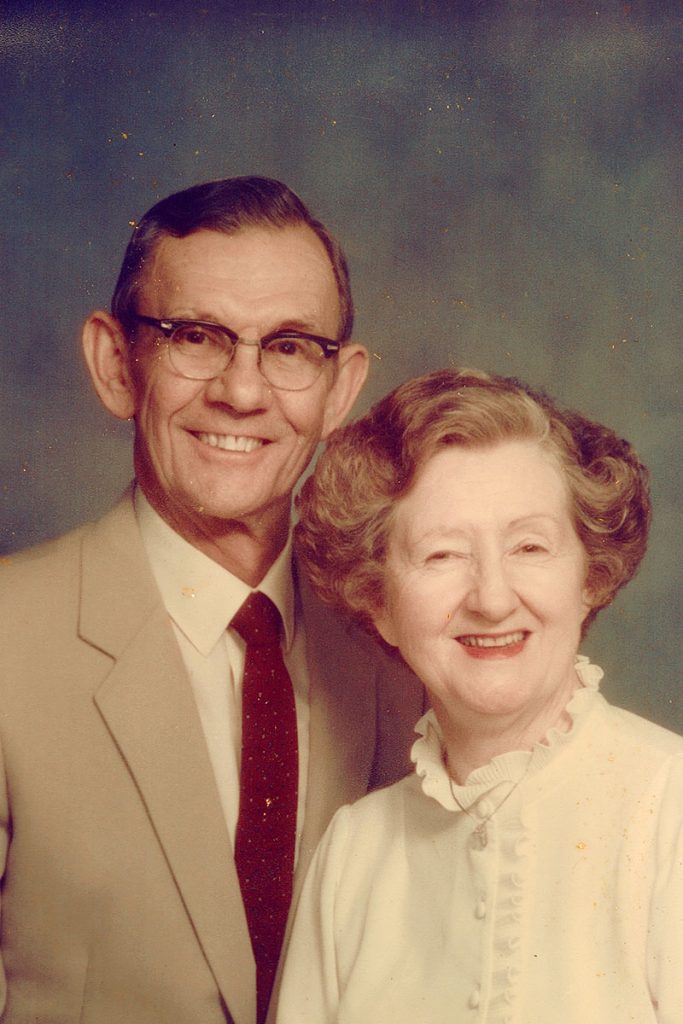
Randy and Libby Lee, circa 1980

“We had a movie theater we could walk to, a drug store with a soda fountain, a five-and-dime – Kress and then Peterson’s, Geisenhoff Gift Shop right next to the fire station and eventually Underwoods,” Barbara recalled.

Nancy Scott’s Dress Shop sold capezio pants. “Barbara must have had 20 pairs; she loved them,” Libby said. She also remembers Reynold’s Piano Shop beside Kress.

Madeline Geisenhoff, one of Libby’s many “dear friends,” also lived in the neighborhood. Paul Geisenhoff ran the Little Theatre, home for Theatre Jacksonville. Their son, Jay, was the same age as Randy, and they played together at the River Oaks Park.

Their house on Alford Place has been torn down. Libby remembers that there used to be a bank across the street from their house. Then the bank moved to Hendricks across from the vacant lot at Hendricks Avenue and Atlantic Boulevard.

Barbara remembers there used to be a drive-in restaurant, but it was torn down in the early 1950s to build the bank. “It had smooth concrete painted green in the front. All the other sidewalks were rough,” she said. “We loved to skate on the smooth concrete.”

Barbara also remembers that there were gas stations on all four corners at Alford and Hendricks – Harry’s Texaco service station, Pure Oil station that the Earlys owned, and two other gas stations of which she can’t recall the names.

“We walked to Southside Baptist Church and Landon School or rode our bikes everywhere,” she said.

Barbara and her friends played in Fletcher Park where Preservation Hall is now. “Back then it had beautiful rose bushes.” Libby remembers that she would “borrow” some roses to decorate her house when her friends were coming to play bridge.

“The park had sidewalks that led to a big circular sidewalk in the middle of it,” Barbara said. “Kids used the park a lot then. The park had a football field and every afternoon the boys played football there. And, of course, where the boys were, so were the girls.”

The Landon football players used to practice in what is now called the FEC Park. There were houses built right behind Landon School so they had to go somewhere to practice. Libby’s son, Randy, played football. Libby would make a cake once in a while to serve the football players after practice, as they walked back to Landon.
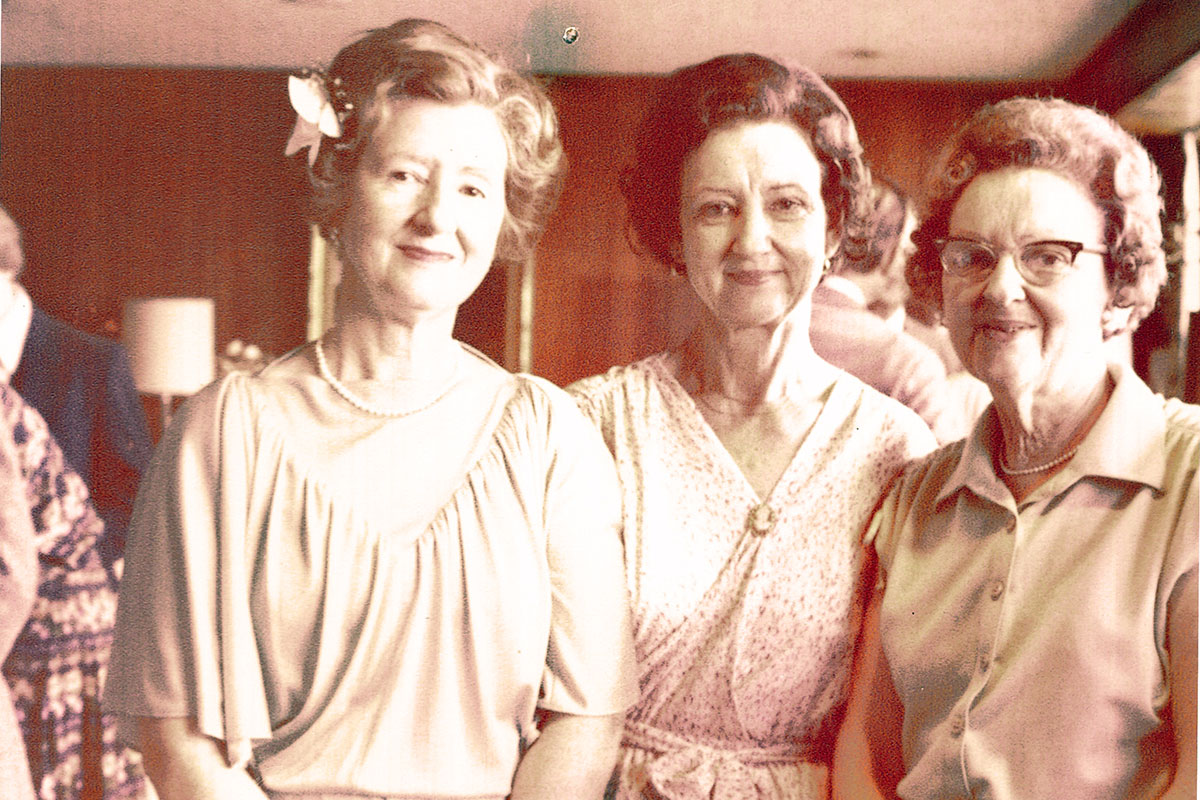
Libby and her two sisters, Lois Middleton and Hazel Rogers. After their mother died in 1984, the sisters decided that they wanted their families to get together once a year to stay in touch. They spent long weekends together for many years at places such as Hilton Head, Savannah, Jacksonville Beach, Ponte Vedra, Sawgrass and St. Augustine.

Barbara went to Florida State College in 1959 to major in business. Having played more than studied, as she willingly confessed, she returned to Jacksonville. She worked for William Lovett, who owned the Jacksonville Shipyards, until she began having babies and then later became a paralegal for CSX for 30 years. “It was a wonderful place to work,” she said. She retired from CSX in 2005.

Randy graduated from high school in 1961 and then went to the University of Florida where he received a bachelor’s degree in aerospace engineering and a master’s degree in engineering on a Ford Foundation Scholarship.

With both kids out of the house, after 20 years on Alford Place, Libby and Randy moved to 1902 San Marco Place in 1995. “We bought from a friend of mine, Nona Jones, who was the first person I met when we moved to Jacksonville,” Libby said. Randy and Libby lived together in the house until Randy died of lung cancer in 1995. Libby continued to live there until April 2018 when, after 50 years total in the house and at 98 years old, she moved in with Barbara and her husband, Virgil Jernigan.
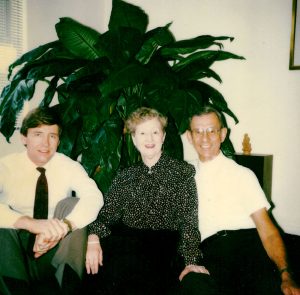
Randy Jr., Libby and Randy Sr.

Barbara has lived at 1455 Riverbirch Lane in Miramar since 1990, but has owned it since 1976, when following a divorce, she and her children moved in. Then she married Virgil in 1979, and they put two families together. With the need for more bedrooms, they moved to Gadsden Court and rented out the Riverbirch house. After all the kids left, they sold the Gadsden house and moved back to Riverbirch.

Barbara and Virgil have a total of five children, eight grandchildren and two great-grandchildren. Two of their children live in Jacksonville. Paula Jeter lives in Fruit Cove and has two children; Myra Johnson lives in Beauclerc and has two children and two grandchildren. Betsy Bullard lives in Winter Park, Chuck Myrick lives in Lakeland and Mark Jernigan lives in Atlanta.

Randy and his wife, Sue, lived in Key Biscayne. He was a fighter pilot in the USAF during the Vietnam War. He was a partner with the Enrichment Group at Kathleen Day & Associates until his retirement in November 2008. Randy lost his fight with pancreatic cancer on Feb. 15, 2009.
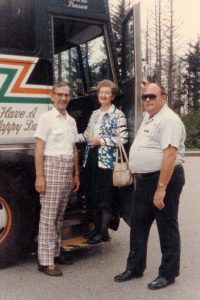
Randy and Libby board the bus for one of the senior trips she organized. This one was to Tallahassee. They ate in the cafeteria where the legislators ate. It was a bus full of 50 people from her church and the Methodist church downtown.

The next big phase of Libby’s life started when she was 40. She took on a temporary assignment to create a membership directory for Southside United Methodist Church. When the eight weeks were over, the pastor asked her to take the job of church secretary. “I was supposed to be there six to eight weeks but ended up working there for 51 years,” Libby said.

“I did a bit of everything at the church, except sweep the floors,” said Libby. She directed weddings almost every weekend for 47 years. She worked for the senior minister and ran the office. Including senior and associate pastors, she worked for 26 pastors.

Libby started a ministry with volunteers delivering the flowers after church services to people in the hospital or home sick and to shut-ins. She also took seniors to different places for lunch each month and to the Cherry Blossom Festival in Washington.

Libby has been a member of San Jose Country Club since 1994. She loves the Sunday buffet and still goes to the club to see friends. She had hoped to have her 100th birthday party there in August 2019, but the club begins major renovations in June and won’t be available to host the party.

Regardless of the location of the birthday party, Libby is looking forward to enjoying 100 years’ worth of memories and friends and family wishing her yet another happy year, 72 of them in San Marco, “the sweetest, safest neighborhood where you have everything you need,” as Libby says.
The Way We Were: Dorsey-Ann Holz Rhames

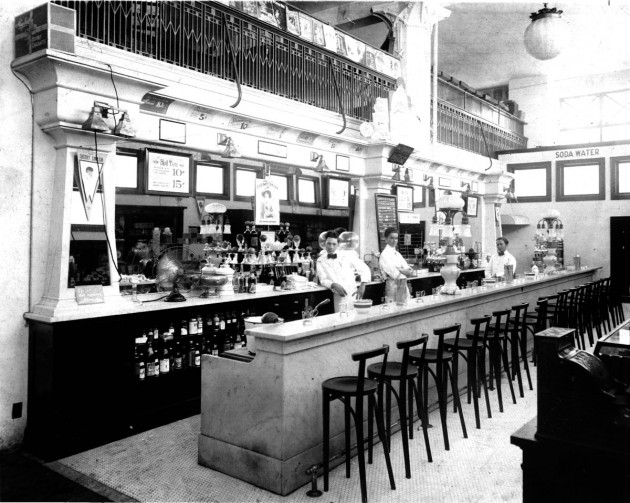
Cohen’s Department Store Soda Fountain (Courtesy Jacksonville Historical Society)
KAREN RIELEY
PUBLISHED IN june 2019 ISSUE OF THE RESIDENT NEWS –2019/06/10/the-way-we-were-dorsey-ann-holz-rhames/

Dorsey-Ann Rhames is proof that you can come home again. After growing up in Murray Hill and moving to Ft. Lauderdale, she eventually moved back into the house in which she grew up. Like the neighborhood itself, however, with her husband’s and her efforts, the house has changed somewhat.

“My father’s name was Gunther Schlichtholz, but he shortened it to Holz when he went into the Navy,” Dorsey-Ann said. Her father was born in Germany. Her grandfather came to Ellis Island first, and then her grandmother brought her father to America in 1924 to settle in Chicago.

“My parents met at a USO dance when my father was in the Navy and stationed here in Jacksonville,” said Dorsey-Ann, who was born in 1944.

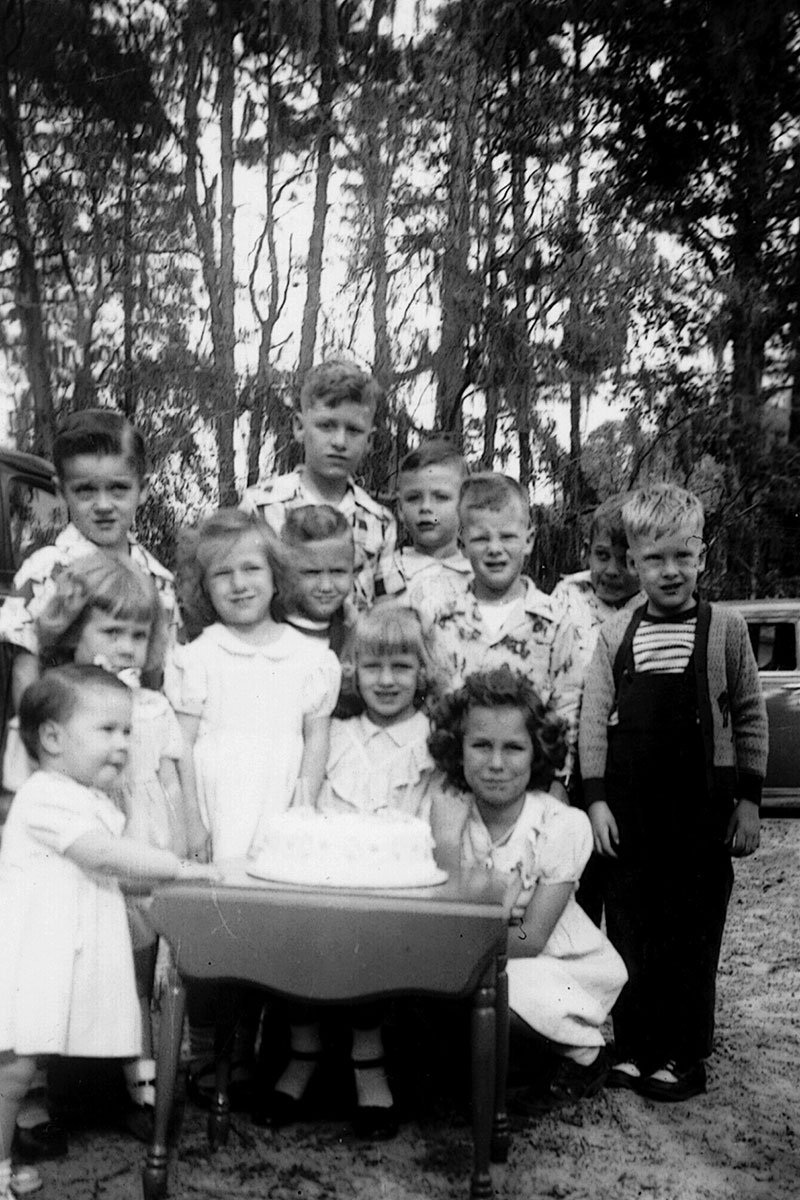
Dorsey-Ann, in front of the cake at her 6th birthday party

After she was born, Dorsey-Ann and her mother, Bebe Holz, lived in an apartment on Market Street in Springfield. Her grandparents lived at 7th and Liberty in Springfield, too. After her father left the Navy, he worked odd jobs. Eventually he went back into the Navy and then her parents divorced.

In 1950 when Dorsey-Ann was 6 years old, her mother moved them to Murray Hill into 1022 Antisdale Street, where she now lives again. The house was built the year before in 1949.

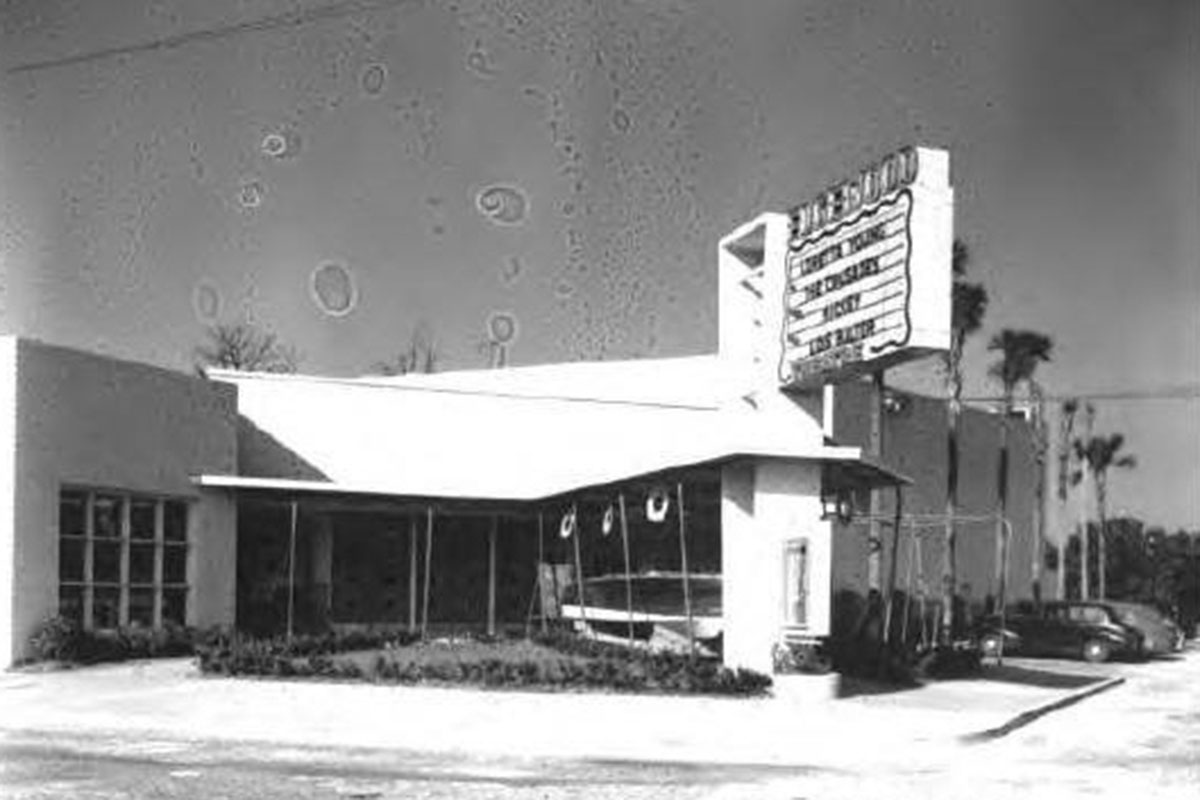
“Murray Hill was a nice place to grow up,” Dorsey-Ann said. “It had a post office, department store, Edgewood Theater, other retail stores, a meat market and Woods Pharmacy.” She walked to the downtown Murray Hill shopping area which was only about two blocks from her house. “I could go to Murray Hill Theatre for a dime.

Edgewood Movie Theater (Courtesy Jacksonville Historical Society)

“The grocery store used to run a tab for shoppers,” she continued. She remembers an A&P grocery store opening up on Post Street.

Edgewood Avenue Christian Church Disciples of Christ owned a large brick building across the street from the church that was known then as the “Old Folks Home.” At the time, the church owned all the property. “It had a beautiful garden,” she said. “Now there are condos and the Florida Christian Home, which are not part of the church anymore. The gardens were removed.”

On the corner of Post and Cypress Streets was a soft ice cream store. “When we first moved into our house, it was called the Creamette,” Dorsey-Ann said. About five years later, however, someone complained when the store stopped using cream because it was too expensive. “A lawsuit made them change the name to Dreamette,” she laughed.

She remembers roller skating was the big past-time. “They were the kind of skates that you clamped onto your shoes with a key. All of us girls skated. We had to wear shoes with thicker soles like saddle oxfords for the skates to have something to grab onto,” Dorsey-Ann said. “We regularly lost our keys and would go to the five-and-dime store where we could get a new skate key for a nickel.”

Dorsey-Ann did a lot of walking back in her growing-up days, of necessity because her mother couldn’t drive, and they didn’t have a car. Her mother worked for Admiral Distributor on Edison Street, and another employee picked her up each morning to take her to work and bring her back home.

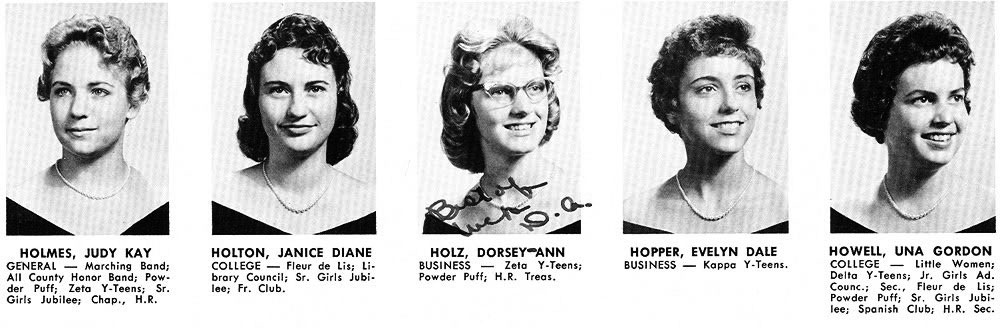
Dorsey-Ann Holz yearbook photo

“To see my grandmother after school, I had to take a bus downtown, catch another bus to Springfield and then walk from Main Street to Liberty Street. Either that or I had to pay 20 cents to take a cab.

“We put on our Sunday dresses and high heels to go downtown on Saturday mornings to high-end department stores like Furchgott’s and Cohen’s and tried to look like we could afford to buy things there. I remember going to see “Gone with the Wind” at the Florida Theatre.

“Walgreen’s drugstore had a soda fountain. My mom would take me there for a special treat. I always wanted a tuna fish sandwich. My grandmother would take my mother and me to Morrison’s Cafeteria.”

Her grandmother’s house at 1642 Liberty Street was a big, two-story house. “After both of my grandparents died in the late 1950s, the house sat empty for five years because the heirs couldn’t decide whether to sell it,” she said. “My mother finally sold the house for $5,000 because it was going to need major repairs.”

Her best friend lived across Post Street on College Place. “We rode bikes and went to sock hops at Good Shepherd Church when we were in high school.”

They collected soda bottles to turn in at A&P for a nickel each and then rode their bikes to Lackawanna Pool about a mile from her house, where it cost a quarter to get in. Sometimes she would go with her friend’s family to Jacksonville Beach.

When her cousin from Chicago came to visit, they would get a wagon and go door-to-door asking if they had ceramic figurines they no longer wanted. Dorsey-Ann and her cousin would clean them up and sell them to people living on another street. They would also collect empty cream soda bottles because they were worth five cents each.

Dorsey-Ann has generational history with the Red Cross. During the war, her grandmother went to the train station to hand out coffee, doughnuts and cigarettes to servicemen passing through. When Dorsey-Ann was a teenager, her mother and she served sandwiches during dances at the Naval Air Station and at beach parties for the servicemen.

“We took the bus on a two-lane road to the Naval Air Station,” she said. “I’m not sure it was even paved.”

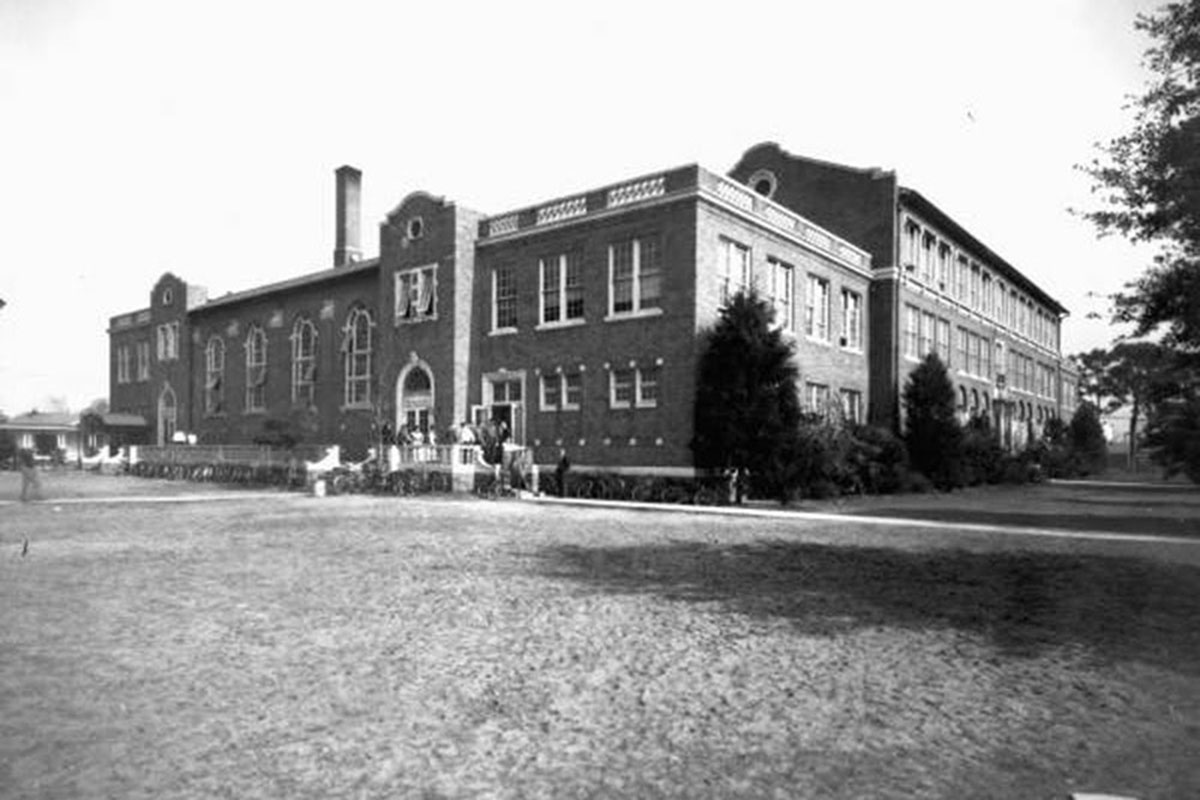
John Gorrie Junior High School (Courtesy Whiteway Realty)

Dorsey-Ann attended Ruth N. Upson Elementary School from first through sixth grade, John Gorrie Junior High School in seventh through ninth grade and then graduated from Robert E. Lee High School in 1962. “I walked to and from school because our house was just inside the two-mile limit for being able to ride the bus,” she said.

After high school, Dorsey-Ann married and divorced, then moved to Ft. Lauderdale in 1975 where she raised her daughter, Donna Marie Hitch, and worked for a heavy construction equipment dealer. When Donna was 17, she was killed in an auto accident, so Dorsey-Ann decided to come back to Jacksonville.

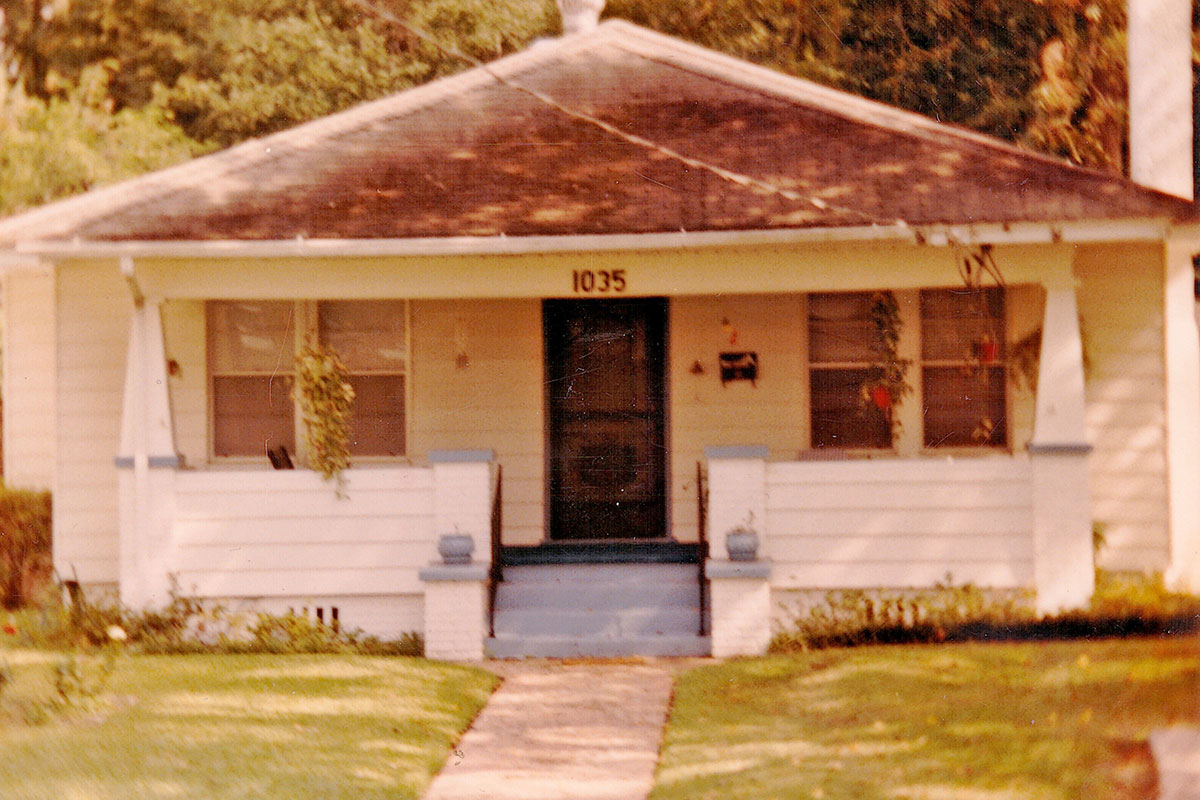
Her mother had married Herb Kuebler and was still living in the same house at 1022 Antisdale. Her stepfather wanted Dorsey-Ann to buy the house across the street from them, 1035 Antisdale. “He bought it for me in 1983 and let me pay him back,” she said. In 1984, Dorsey-Ann met her husband, Vernon Rhames, a veteran of the U.S. Air Force, who had two daughters.

Dorsey-Ann and Vernon lived in the house for 32 years until 2015. When Bebe died in 2013, she left her house to Dorsey-Ann, and she and Vernon decided to totally renovate the house so that they could move into it and rent out 1035 Antisdale.

1035 Antisdale, built in 1926, before renovation

Just as they were nearing completion, however, one of the stepdaughters moved back to Jacksonville and her family needed a place to stay, so they moved into the same house with Dorsey-Ann and Vernon in January 2014. By March, Dorsey-Ann knew that they needed more room, and she and Vernon moved into her nearly-
renovated home so that her stepdaughter and family could have 1035 Antisdale to themselves.

Dorsey-Ann thinks it is great that millennials are moving into the neighborhood. “When I was growing up you could lay down in the middle of the road on a Sunday afternoon and not worry about any cars driving through.”

Dorsey-Ann retired in 2009 after 33 years working for the same heavy construction equipment dealer. Vernon retired in 2014 from more than 20 years’ work with the United States Postal Service. He died in 2017.

Dorsey-Ann Rhames and Vernon Rhames

Dorsey-Ann serves as membership secretary for Riverside Park United Methodist Church, where she has worshiped and worked with Vernon for 22 years. They started Sunday breakfast and Dorsey-Ann continues to serve at the breakfast.

You can almost always find Dorsey-Ann at the church on Mondays and sometimes one to two other days each week. The church has recognized the Rhames’ commitment by dedicating its fellowship hall to them, one sign of how woven into the community Dorsey-Ann remains.

The Way We Were: Joyce and Malcolm Hanson

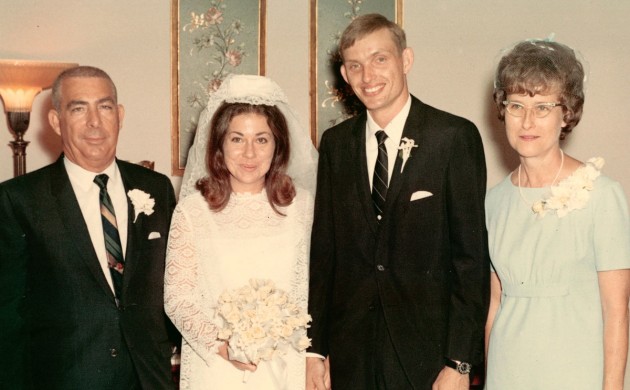
1968 wedding photo: Bob Ashley, Joyce and Malcolm Hanson, Betty Ashley
KAREN RIELEY
PUBLISHED IN April 2019 ISSUE OF THE RESIDENT NEWS –2019/04/04/the-way-we-were-joyce-malcolm-hanson/

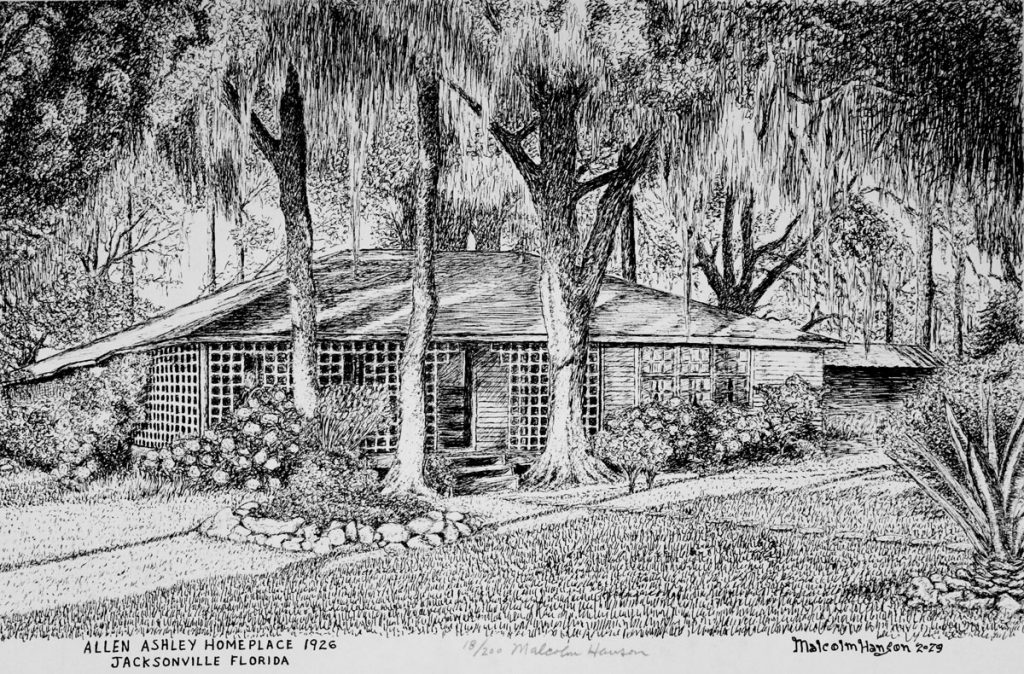
Her most treasured wall hangings in the charming 1942 painted brick home on Dunsford Road help weave the story of Joyce and Malcolm Hanson’s lives individually and together in the San Marco and Lakewood areas. For Joyce, the drawing that hangs just to the right when you walk in the front door captures the beginning of the story. It is of her father’s parents’ home, which was located between Emerson Street and University Boulevard. Joyce’s husband, Malcolm, drew it from an old photo in 1979.

“My dad’s life started in that house,” Joyce said. “I suppose my grandparents would have been considered ‘Florida crackers.’ They lived off the land on a family piece of property with a small garden, and I don’t remember hearing that my grandfather ever worked anywhere else.”

Joyce Hanson’s grandparents’ house
After their four sons were born, including her father, Bob, who was born in 1920, Hanson’s grandparents found the original Ashley home place was too small, and her grandfather, Allen Ashley, moved one section of the house to the side so that he could add a middle section to it in 1926.
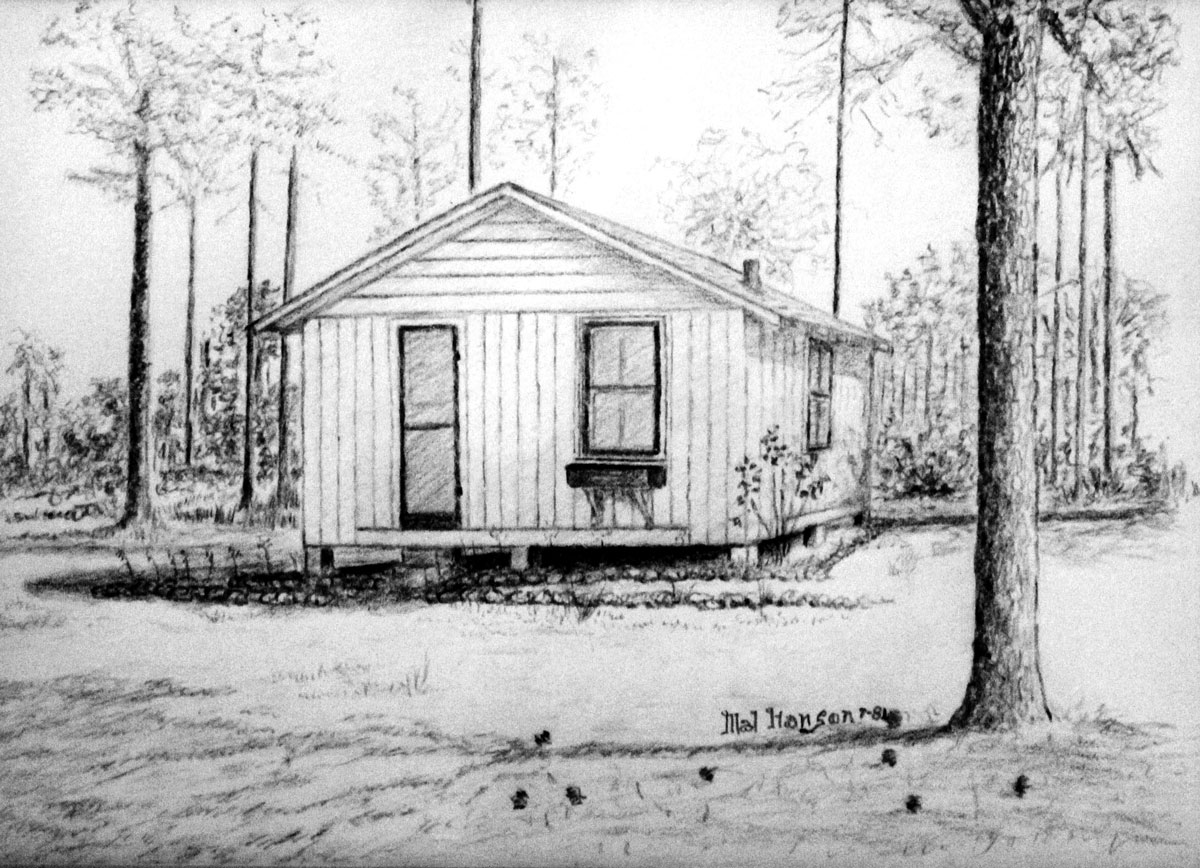
Her grandfather deeded part of the land to her father, who built a one-room house, a drawing of which also hangs in the house. “It didn’t even have a bathroom,” Joyce said. “My parents had to use the bathroom in my grandparents’ house at first.”

When Joyce was born in 1945, her parents added a kitchen, bedroom and bathroom. The house was behind the now-closed Palmer Hall Floors, where Affordable Plumbing is now located. “Our property backed up to a black community with whom we got along,” Joyce said.

Joyce Hanson lived in a one-room house until she was eight years old.

Joyce, her brother, Bob Jr., and her parents lived in the small house until she was eight. Then they moved to Rainbow Road into a house her father built in a neighborhood called Fleetwood then, now known as the Lakewood area. Joyce remembers that houses were just beginning to be built in that area.

“We had to go to San Marco to shop at the A&P grocery store in the Square,” Joyce said.

Bob Ashley owned a filling station, aptly named Ashley’s Texaco Gas Station, at the corner of University and St. Augustine where Walgreens is now. “When my dad couldn’t enlist for World War II because of a slight disability, he quit Landon High School before his senior year and went to work in the shipyards,” said Joyce. After the war, Bob installed gas tanks in gas stations for different oil companies and built concrete backyard barbecue pits.

“Because of his dealings with Texaco in helping to build the company’s gas stations, when they wanted to open one in San Marco, they asked him to run it,” Joyce recalled.

“It was a true family-run business. I was in the 10th grade when the station opened and did some of the bookkeeping and ran the cash register,” said Joyce. “But I never pumped gas because women weren’t supposed to! I do now, though.” Her brother, Bob, worked at the station, too, and her mother, Betty, also worked in the office.

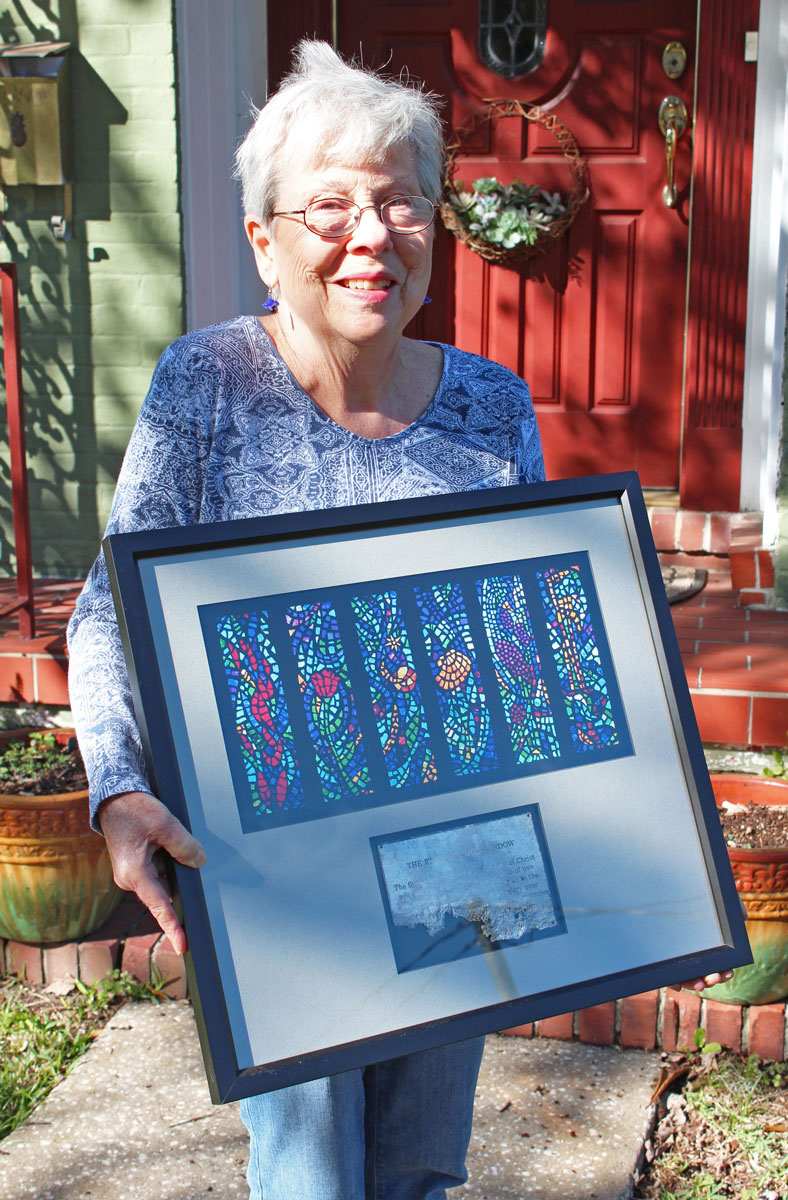
Joyce Hanson holds the Resurrection Plaque, depicting stained-glass windows donated in her father’s memory in 1972, resurrected from the Hendricks Avenue Baptist church fire in 2007.

“My father became a legend. He loved people and people loved him. He took the time to talk to people. He helped anybody that needed help. He dealt with the least people the same as business executives. He ran charge accounts for a lot of big companies. He was always totally honest in his repairs.”

Joyce remembers the ad slogan, “You can trust your car to the man who wears the star. The big bright Texaco star.” “Every car had the windshield cleaned, the floor swept, the oil checked. People would bring their babies up for him to hold. The station was the hub of the community,” she said.

Joyce went to duPont for first grade and half of second until San Jose Elementary was built and opened. Then she attended San Jose through fifth grade and found herself back at duPont for sixth through twelfth grades. When she eventually taught for a year and a half at San Jose, she was surprised to find that some of the teachers she had were still teaching.

Her parents were married in the little church at the end of Kingsley Road, however, almost all of Joyce’s life is intertwined with the life of Hendricks Avenue Baptist Church, known in the community as HAB. Her parents brought her there when she was three, soon after the church opened. She remembers a little hut in the back to the right side of the gym, the Scout Hut, which was the church nursery. HAB built its first building as a gymnasium, where Joyce was baptized.

“I remember carrying a little flag as we marched to the hymn, ‘Onward Christian Soldiers,’” Joyce said.

Her dad became a deacon at HAB. Both of her parents taught Sunday School classes, and Joyce participated in children’s choir and youth activities.

Bob ran the station from 1960 until he died unexpectedly in 1971, after which Betty and Bob, Jr., ran the station briefly before selling it.

After Bob’s death, Betty donated stain glass windows to Hendricks Avenue Baptist Church in remembrance of her husband. When the sanctuary was destroyed by fire in 2007, the only plaque that could be salvaged was the Resurrection Plaque for her father’s window. A wall hanging of that window and the rescued Resurrection Plaque hang in Joyce’s and Malcolm’s living room.

“Through all of the things that have happened – good or bad – our church has stood with us,” Joyce said. “When my dad died, it was unexpected. My mom fell apart. I was just 24 years old and didn’t know what you did for a funeral. Rev. Lipscomb [Clyde B. Lipscomb, HAB’s pastor then], helped us make the arrangements; without him it would have never gotten done. Everything in our lives happens surrounded by church. That’s why HAB has become our family and support group.”

Betty, Joyce and Bob Ashley with Bertha Hartley, Joyce’s only grandparent not born in Jacksonville

Joyce remembers that kids from school came to their house for parties. Her brother had a hootenanny band. “Drive-in theaters were wonderful memories. We went until we were teenagers,” she said. “We could wear our pajamas and Momma would bring fried chicken. We did a lot of things as a family and were very close.”

As a teenager, Joyce went to the bowling alley in San Marco, where the AT&T building is now across from Theatre Jacksonville. Malcolm set pins there as a child. “There was a Texas barbecue on San Marco Boulevard,” she said.

I loved the football games at duPont, not so much for the game as for the marching band,” Joyce said. “At one point it was the best in the nation.”

After Joyce graduated from duPont High in 1963, she went to Stetson University and got a degree in education. At the beginning of her first year of teaching at San Jose Elementary, she met Malcolm.

Malcolm was born in New York, but his parents moved to Jacksonville when he was a year old. He lived in apartments in the San Marco area and a garage apartment on River Road while he attended Southside Grammar School. Then his family moved to Belmont Terrace and he attended Landon High School. After high school, his family moved to Arlington and he went to Jacksonville University.

On the day he graduated from JU, a good friend of Joyce’s introduced Malcolm to Joyce at HAB. “We were good friends first, and then we started dating,” Joyce said.

Joyce and Malcolm were married in Rev. Lipscomb’s house in front of the fireplace on Aug. 21, 1967. They didn’t want to have a big wedding because Malcolm was on leave from the military.

While Malcolm went on a military cruise, Joyce continued teaching until Malcolm was transferred to Norfolk, Virginia, for 2-1/2 years, where Joyce taught for half of a year in a public military school until she got pregnant in 1971 and wasn’t allowed to teach any more.

After they returned to Jacksonville, Joyce and Malcolm returned to HAB. Malcolm became a deacon first, and Joyce eventually did as well. “HAB is a moderate Baptist church that didn’t see any reason why women shouldn’t be deacons, too,” Joyce said. Malcolm and she were in the church’s first couples’ class.

When their daughter, Jennifer, was in second grade, Joyce went back to teaching full-time, teaching “hospital homebound” in Jacksonville until 2010, when she retired. “I loved home-schooling because it wasn’t like teaching third grade a hundred times. I taught special needs kids. The sad part was that a lot didn’t survive, but you knew you were providing normalcy. I felt that was my calling,” Joyce said.

Also in 1980, Joyce and Malcolm bought the “Balfour House,” as it is known in the neighborhood, from Betty Balfour Marks, artist, dancer, choreographer and director of her own dance school, the Ballet Arts Centre, and performing company, the Florida Dance Theatre, in Jacksonville. Her husband, Lewis Marks, developed the neighborhood.

When they first saw the house on Dunsford Road, off Hendricks Avenue, it was painted with white trim and a red roof. “I hated it,” Joyce admitted. But then they went inside and saw the hardwood floors and the dining room chandelier, and she had second thoughts. It was more than they could afford so they started negotiating.

“Betty told us that maybe she could help us out on the price if we’d promise to stay in the house and love it and if we’d have our two girls attend her daughter’s Ballet Arts Centre,” Joyce said. “Well we have stayed in the house and our girls did take ballet, and, in fact, our granddaughters take ballet now, too.”

Joyce thinks they live in the best neighborhood in the world. “We walk everywhere. There’s lots of variety. It is a community within a community. We walk just four miles to San Marco Square and know and talk to everybody. We walk to the library, Theatre Jacksonville and the movies.”

Joyce does not have fond memories of the year 2008. “HAB’s sanctuary burned on Dec. 23, 2007, and then I was diagnosed with cancer in 2008 and my mom died as I started treatments.”

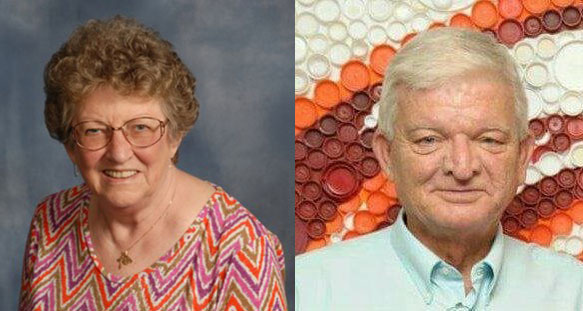
Malcolm and Joyce Hanson 2018

The next day, Christmas Eve, the members had worship in the gym, which didn’t burn in the fire. “At the end of worship, All Saints came in and announced they had lunch for us,” Joyce recalled tearfully.

Other churches helped as well, by loaning them music and choir robes. “I remember that a Jewish young lady and her family bought the church pew bibles. The fire pulled the community into HAB and HAB even further into the community,” Joyce said.

During that time, “our grandson, Hunter Closson, was ready to be baptized so we used Rev. Kyle Reese’s swimming pool,” said Joyce, making his baptism unique among the four grandchildren, Rhianna Casey and Hunter, Shelby and Brooke Closson.

Joyce’s daughters, Elisa Casey and Jennifer Closson, used part of the money they had inherited from their grandmother, Betty, to donate new stained-glass windows in memory of their grandfather, Bob. Malcolm helped design the Fire and Dove windows.

The Hansons love that their friends and they have, in some cases, grown up together and have raised children together. And, they count their blessings that they have grown up with Hendricks Avenue Baptist Church and that the church has enmeshed itself in their community.

If the walls could talk: Details vague about house swap deal

Early photo of 1880 Shadowlawn
KAREN RIELEY
PUBLISHED IN june 2019 ISSUE OF THE RESIDENT NEWS –2019/06/10/if-the-walls-could-talk-details-vague-about-house-swap-deal/

If ever a house needed walls that could talk, it could well be the one at 1880 Shadowlawn Street in Avondale. The house is hiding a mystery that only the walls themselves might be able to solve for sure.

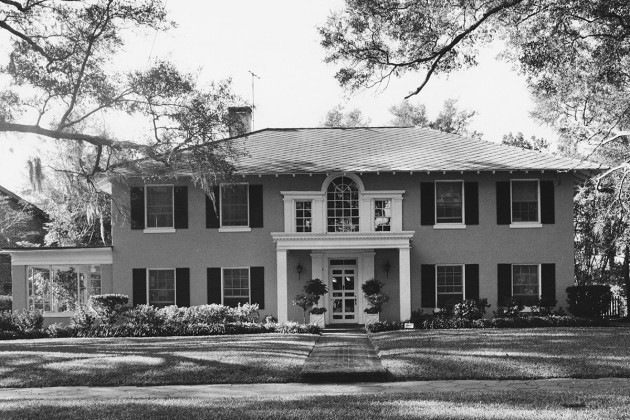
The house’s origin is clear enough. Built in 1924 for real estate and insurance salesman Addison Palmer, it is one of three Jacksonville buildings by Hentz, Reid & Adler Architects in Atlanta. Wayne Wood, Jacksonville’s architectural history expert, describes the house in “Jacksonville’s Architectural Heritage: Landmarks for the Future” as “not very fancy” and having a “subdued eclectic facade … [and] striking formality with Georgia overtones.”

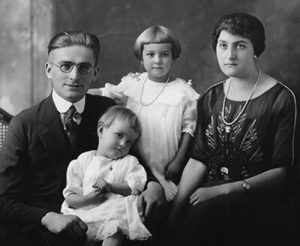
Second owners of 1880 Shadowlawn, the Reinhold family: Paul and Klare, with daughters June and Anne.

Palmer sold the house to Paul Reinhold, a dairy-business executive who was president of Foremost Dairies, which became the Reinhold Corporation. Both gentlemen are listed in a 1934 event program for Ye Mystic Revellers. Reinhold and his wife, Klare, raised two girls – June, who graduated from Robert E. Lee High School in 1937 and married Jack Myers, and Anne, who married Paul “Cotton” Wellington.

At this point in the house’s history of ownership a mystery comes in. It all has to do with a friendly house swap.

According to current owner Pattie Houlihan, the Reinhold family sold the house to a Mr. Livingston, who eventually decided to swap 1880 Shadowlawn with Bob “Squirrel” Read, who lived at 1820 Shadowlawn. As the story goes, the Livingston children had moved out and the house seemed too large for Livingston and his wife, while Martha and Bob Read had four daughters, making their smaller house too cramped. For the whopping sales price of one dollar, the Reads moved in and lived at 1880 Shadowlawn for 18 years, 1965-1983.

That’s one version of the story. In another version, which Peggy Bryan remembers being passed down through her family, three men – Paul Reinhold, A. Y. Milam and another man whose name has been lost in this telling – decided to swap houses. The Reinholds, living at 1880 Shadowlawn, moved to the Milam home on Yacht Club Road. The other home traded was presumably on Edgewood Avenue in this version of the story. The three couples not only survived the house swap but eventually all three celebrated their 50th wedding anniversaries.

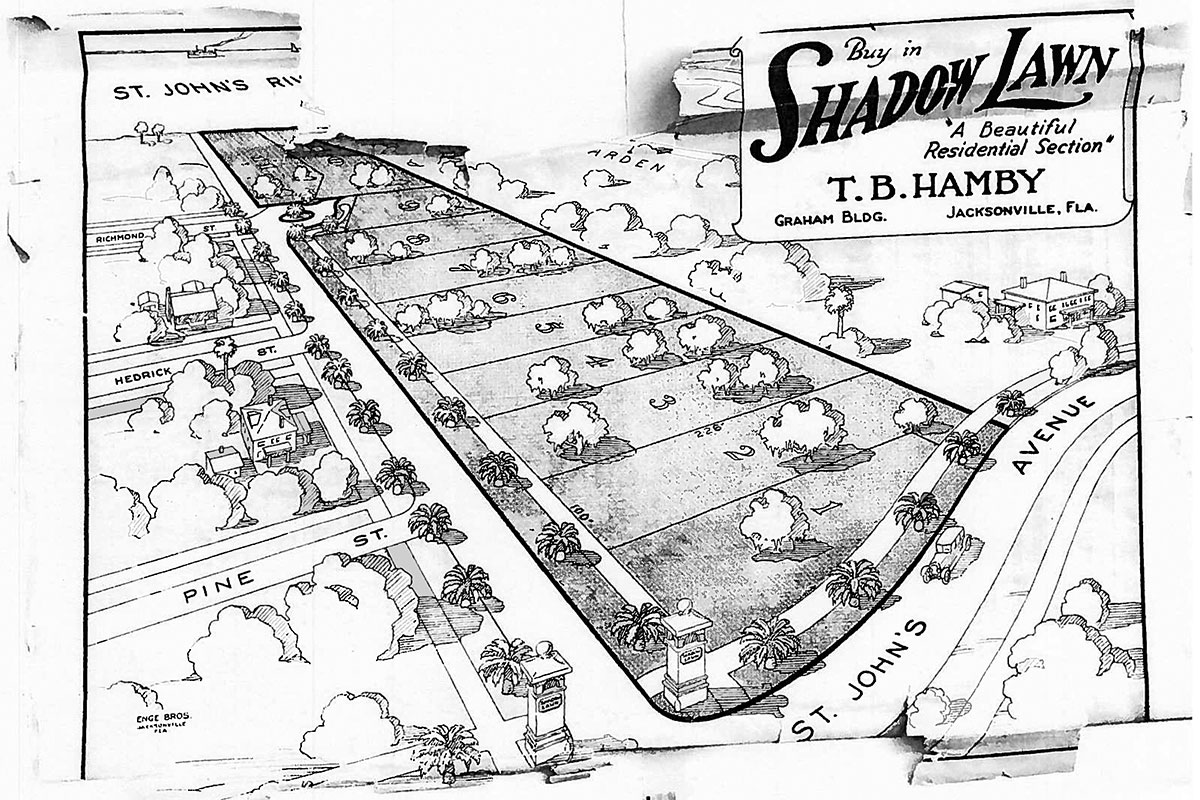
Marketing plat map shows 1880 Shadowlawn as lot #8, near where Richmond Street meets Shadowlawn Street.

Coincidentally, Randie Read, one of Martha and Bob Read’s daughters, married Brightman Skinner, second cousin to Houlihan’s husband, Richard Skinner. Bryan is the daughter of Anne and Cotton Wellington and granddaughter of Klare and Paul Reinhold.

After the house-swap years, Kim and James Toliver Lane lived there for a short time, adding a pool, and then Lisa and Jim Borger owned 1880 Shadowlawn for 14 years.

In 2003, Houlihan and Skinner decided to move from their home on Pine Street to accommodate their two daughters’ need for more room as they approached their teenage years. Greta is now 28 and Claire is 25.

“Shadowlawn reminded me of the houses I grew up with,” said Houlihan, an architect. “I loved the house on Pine Street, and we had planned a large addition for it, but it seemed too much for what the house was originally meant to be.”

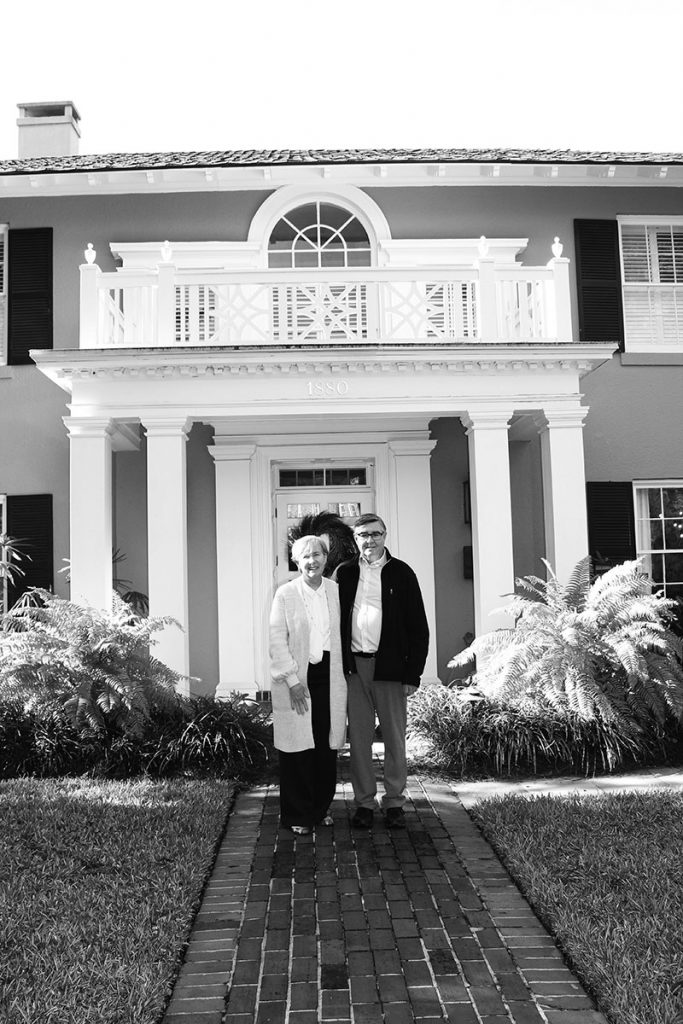
Pattie Houlihan and Richard Skinner, current owners of 1880 Shadowlawn, added more pillars to the front porch overhang and a decorative balustrade was installed on top.

Her husband was skeptical about Shadow-lawn at first. “My first reaction when I toured the house was it had giant dining and living rooms we’d never use,” said Skinner, who is also an architect. Then, his wife showed him a room in the back that could be a music room and took him to see how large the backyard was. He was beginning to be hooked.

“Then I saw how large the bedrooms on the second floor were and I could see how wonderful it would be for the girls,” Skinner said. “They could have their friends over in their own space.”

Not a lot has changed about the house except an addition off the back made by the Lanes to enlarge the kitchen. “When something is beautifully designed there’s no reason to mess with it much,” Houlihan said, “but Richard and I did make changes to the front entry portico about six years ago. It seemed there were a few alterations made to the house exterior that were incongruous and not in keeping with a Neel Reid design. After looking at many of the homes designed by his firm in the Atlanta area, Richard felt strongly that the proportion of a double column and detail of the balustrade were much more in keeping with something that would’ve come out of their office back in 1923.”

The couple also had to do some structural work. “We shored up the center beam to level things,” said Skinner. They also needed to install an updated air conditioning system without impacting the house’s layout. The solution was to install it in the attic and put the ducts in built-out chase walls. “You would never know there is ductwork in the house,” he said.

The only other changes upstairs are that the master bedroom now has its own en suite and opens into a room that used to be sectioned off as a morning room/sewing room.

Downstairs the couple updated the kitchen with new finishes and lots of counterspace and cabinets and added a laundry room.

They love best the room off the living room because the sun comes up outside the windows. “We have coffee in here every morning and read the newspaper,” Skinner said.

The couple also did some extensive landscaping. “The house is on a sand ridge that makes it the highest point in the neighborhood,” Houlihan said. “Because it is such a walking neighborhood, we did a garden wall and whole new planting plan.”

They also planted fruit trees and created a parking court.

As the house on Shadowlawn approaches its centennial birthday in 2024, the home’s classic lines have stood the test of time. “This house was really well-designed,” said Skinner.