Beech Mountain’s 40th Anniversary: There’s no place like home

Karen Rieley

Published in the Spring 2021 issue of Carolina Mountain Life – pp. 67-68

What do 40,000 yellow bricks, Debbie Reynolds, Carrie Fisher, seven elephants, Jean-Claude Killy, Lance Armstrong, pole cats, bobcats and salamanders have in common? They are all part of the story of Beech Mountain, “the highest ski area in eastern America,” which is celebrating its 40th Anniversary throughout 2021.

Each month of 2021, residents and visitors will have opportunities to help Beech Mountain celebrate its 40th Anniversary. May is set aside as the official monthlong celebration, in recognition that The North Carolina General Assembly incorporated the Town of Beech Mountain in May 1981. Visitors and residents can submit comments, photos and other memorabilia to Beech Mountain’s digital time capsule via Instagram @beechmountainnc, by email to beechmountainvisitorcenter@gmail.com, or in person at the town’s birthday party, when the Time Capsule will be buried.

The Town Birthday Party will honor veterans and highlight new recreation programs that the town is offering. In celebration of Arbor Day, guests will be given 40 seedlings to help plant around Beech Mountain. Visit https://beechmtn.com/40th/ for details about all 40th Anniversary events and the town’s 40 Days of Family Fun.

May also highlights the opening of the town’s camping area at Shane Outpost Park, the town’s newest recreation facility. The park is located beside Buckeye Lake and within walking distance to Buckeye Recreation Center. It hosts 10 tent campsites, a natural play area, a low ropes course, bathroom/shower facilities, picnic tables and shelters, trail access and eventually an ADA-compliant amphitheater.

The Beech Mountain History Museum will open a Civil War Exhibit in May about the Battle on Beech, which was fought in 1864. It will also offer an audio exhibit featuring Ray Hicks, who was best known for telling of a group of stories known as the Jack Tales in which he wove fairy tale elements with realistic trappings of Southern Appalachian culture.

In August, the Hi-Lo Adventure Trail, which begins and ends on Beech Mountain, will open with a free High-Lo Merchant Expo at the Buckeye Recreation Center. Visit the Town of Beech Mountain Visitor Center to pick up Hi-Lo maps that highlight fun activities and stops along the trail, including hiking, fishing, water sports, out-of-the-way stops like the Dry Run Grocery Store in Butler, TN, and the old Neva Community Center’s farmers market, as well as better known stops like Doe Mountain, the Watauga Lake Winery and Mast General Store.

“The Hi-Lo Adventure Trail is designed to let people get to know what’s on the ‘Other Side of the Mountain’,” said Kate Gavenus, the town’s director of tourism and economic development.
Dr. Thomas Brigham, a Birmingham, Ala., dentist and avid skier, in his search for a Southeast mountain that could support skiing, found Beech Mountain in the late 1960s. At more than 5,000 feet, Beech Mountain’s cold winter climate makes skiing possible from November through early April most years. He approached local businessmen Harry and Grover Robbins who were interested in building a golf course. They attracted 40 investors of $20,000 each to enable them to purchase more than seven square miles. They divided it into lots and subdivisions and formed the Carolina Caribbean Corporation (CCC).

The CCC created a ski resort, golf course, pool and tennis facilities. It built houses based on an alpine Bavarian village theme and laid out roads and water and sewer services.

Charlotte-based designer Jack Pentes, who had helped Grover Robbins design Tweetsie Railroad, designed the Land of Oz theme park. The Land of Oz’s Yellow Brick Road was made of 40,000 glazed bricks. Debbie Reynolds and Carrie Fisher, along with other stars, attended the Land of Oz opening day ceremony in 1970.

The Beech Mountain Property Owner’s Association (POA) was formed in 1970 to collect assessments for the maintenance of roads and recreation areas. That was also the year that well-known and much-beloved resident Fred Pfohl first started working at Beech Mountain’s ski resort. His next working gig was with the Land of Oz.

Jean-Claude Killy and other famous skiers put Beech Mountain’s ski slopes on the map in the 70s by competing in the North Carolina Ski Cup professional ski races. 

The POA took over ownership and operation of community services in 1974. Pfohl was the first elected and longtime mayor of Beech Mountain, spearheading countless town projects. His late wife, Margie, and he opened Fred’s General Mercantile in 1979, and the store has been open every day since.

After the town was incorporated in 1981, the POA reorganized as Beech Mountain Club to take over management of the golf course and recreational facilities. Today, the club’s recreation campus features an interactive family pool surrounded by a fitness center, pickleball and tennis courts, pavilion, playground, day camp and a wide range of social events, classes, group excursions, presentations, interest clubs and groups.

In September 1984, the Clyde Beatty Circus was coming to Beech Mountain. When the trucks could not haul the elephants up to mountain, they walked up. Phfol and other town leaders got a ride on them.

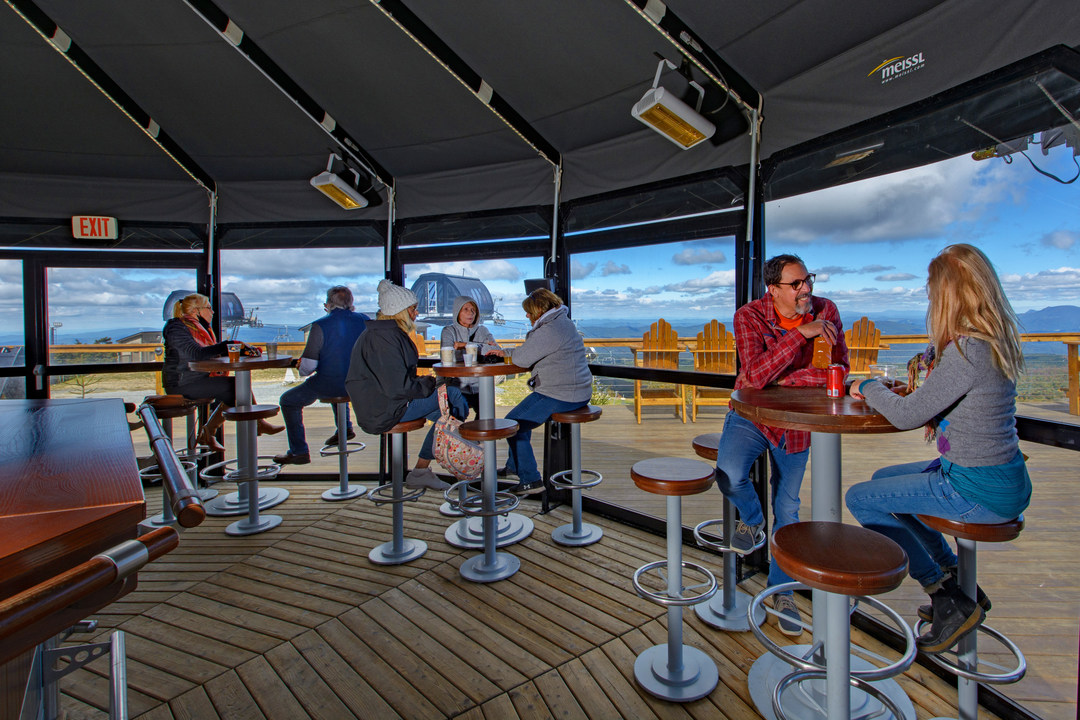
Ski Beech was purchased by the Costin family in 1986. Now known as Beech Mountain Resort, it offers snowmaking capabilities that cover 100 percent of the ski slopes, a one-of-a-kind bar at the top of the mountain called 5506’, and an onsite brewery. Non skiers can enjoy onsite tubing with over 700 feet of runs in the winter and mountain biking, disc golf, scenic lift rides and Mile High Yoga in the summer, making the resort a year-round destination.

Beech Mountain and its N.C. Highway 184, which gains 1,450 feet in altitude in three miles, has a long history in the biking world. The mountain has hosted four national bike championships, such as the Tour DuPont, which Lance Armstrong famously won in 1995 and finished first or second each year from 1993 to 1996.

Lees-McRae College’s mountain biking team, which uses the mountain to train, has the nation’s only collegiate Cycling Studies. The team has produced 10 Team National Championships and 59 Individual National Champions since 2001.

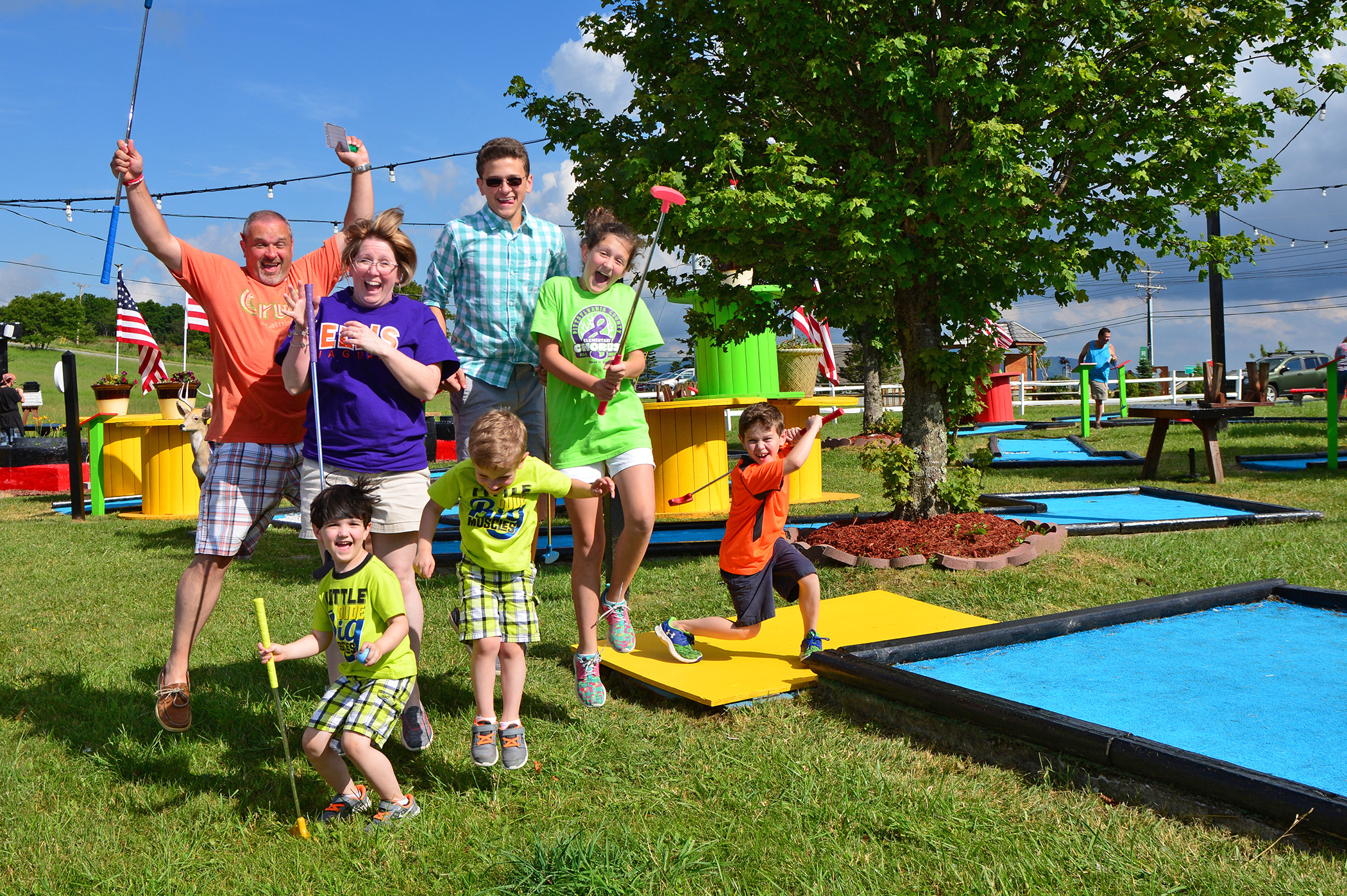
The Land of Oz is now family-owned as well. Although COVID-19 has restricted operation, normally the theme park runs “Journey with Dorothy Tours” on select days in June and July as part of Beech Mountain’s Family Fun Month. It also hosts “Autumn at Oz Festival,” one of the world’s largest Wizard of Oz festivals, on two consecutive weekends (Friday through Sunday) in early September. Private tours are available in June through early October.

At an elevation of 5,506 feet, the town draws tourists year-round, many seeking adventure on the winter ski slopes, as well as more seeking cool mountain air, lush trails and country club amenities in the summer.

“The town has 66 miles of street with about 2,500 homes and condos and 3,000 vacant lots ready to be someone’s next home for year-round living or as a second home that tourists may rent,” said Jim Brooks, owner of Beechwood Realty.

The Town of Beech Mountain today is home to at least 53 businesses employing more than 700 people. It is part of a thriving economic corridor created between Beech Mountain and the surrounding areas of western North Carolina and eastern Tennessee.

Town Manager Bob Pudney reports that Beech Mountain’s short-term rental business has grown quickly. “Our goal is to continue building a vibrant resort destination that offers year-round activities with controlled growth in keeping with the charm and history of the town.”

“It’s exciting to see so many new people buying property here on Beech Mountain,” said Pfohl. “I hope they are able to appreciate the wonderful atmosphere and peace of life that the town offers, just as my family and I have, even as we continue to grow and plan for Beech’s future.”

Beech Mountain’s 40th Anniversary: There’s no place like home

Karen Rieley

Published in the Spring 2021 issue of Carolina Mountain Life – pp. 67-68

What do 40,000 yellow bricks, Debbie Reynolds, Carrie Fisher, seven elephants, Jean-Claude Killy, Lance Armstrong, pole cats, bobcats and salamanders have in common? They are all part of the story of Beech Mountain, “the highest ski area in eastern America,” which is celebrating its 40th Anniversary throughout 2021.

Each month of 2021, residents and visitors will have opportunities to help Beech Mountain celebrate its 40th Anniversary. May is set aside as the official monthlong celebration, in recognition that The North Carolina General Assembly incorporated the Town of Beech Mountain in May 1981. Visitors and residents can submit comments, photos and other memorabilia to Beech Mountain’s digital time capsule via Instagram @beechmountainnc, by email to beechmountainvisitorcenter@gmail.com, or in person at the town’s birthday party, when the Time Capsule will be buried.

The Town Birthday Party will honor veterans and highlight new recreation programs that the town is offering. In celebration of Arbor Day, guests will be given 40 seedlings to help plant around Beech Mountain. Visit https://beechmtn.com/40th/ for details about all 40th Anniversary events and the town’s 40 Days of Family Fun.

May also highlights the opening of the town’s camping area at Shane Outpost Park, the town’s newest recreation facility. The park is located beside Buckeye Lake and within walking distance to Buckeye Recreation Center. It hosts 10 tent campsites, a natural play area, a low ropes course, bathroom/shower facilities, picnic tables and shelters, trail access and eventually an ADA-compliant amphitheater.

The Beech Mountain History Museum will open a Civil War Exhibit in May about the Battle on Beech, which was fought in 1864. It will also offer an audio exhibit featuring Ray Hicks, who was best known for telling of a group of stories known as the Jack Tales in which he wove fairy tale elements with realistic trappings of Southern Appalachian culture.

In August, the Hi-Lo Adventure Trail, which begins and ends on Beech Mountain, will open with a free High-Lo Merchant Expo at the Buckeye Recreation Center. Visit the Town of Beech Mountain Visitor Center to pick up Hi-Lo maps that highlight fun activities and stops along the trail, including hiking, fishing, water sports, out-of-the-way stops like the Dry Run Grocery Store in Butler, TN, and the old Neva Community Center’s farmers market, as well as better known stops like Doe Mountain, the Watauga Lake Winery and Mast General Store.

“The Hi-Lo Adventure Trail is designed to let people get to know what’s on the ‘Other Side of the Mountain’,” said Kate Gavenus, the town’s director of tourism and economic development.
Dr. Thomas Brigham, a Birmingham, Ala., dentist and avid skier, in his search for a Southeast mountain that could support skiing, found Beech Mountain in the late 1960s. At more than 5,000 feet, Beech Mountain’s cold winter climate makes skiing possible from November through early April most years. He approached local businessmen Harry and Grover Robbins who were interested in building a golf course. They attracted 40 investors of $20,000 each to enable them to purchase more than seven square miles. They divided it into lots and subdivisions and formed the Carolina Caribbean Corporation (CCC).

The CCC created a ski resort, golf course, pool and tennis facilities. It built houses based on an alpine Bavarian village theme and laid out roads and water and sewer services.

Charlotte-based designer Jack Pentes, who had helped Grover Robbins design Tweetsie Railroad, designed the Land of Oz theme park. The Land of Oz’s Yellow Brick Road was made of 40,000 glazed bricks. Debbie Reynolds and Carrie Fisher, along with other stars, attended the Land of Oz opening day ceremony in 1970.

The Beech Mountain Property Owner’s Association (POA) was formed in 1970 to collect assessments for the maintenance of roads and recreation areas. That was also the year that well-known and much-beloved resident Fred Pfohl first started working at Beech Mountain’s ski resort. His next working gig was with the Land of Oz.

Jean-Claude Killy and other famous skiers put Beech Mountain’s ski slopes on the map in the 70s by competing in the North Carolina Ski Cup professional ski races. 

The POA took over ownership and operation of community services in 1974. Pfohl was the first elected and longtime mayor of Beech Mountain, spearheading countless town projects. His late wife, Margie, and he opened Fred’s General Mercantile in 1979, and the store has been open every day since.

After the town was incorporated in 1981, the POA reorganized as Beech Mountain Club to take over management of the golf course and recreational facilities. Today, the club’s recreation campus features an interactive family pool surrounded by a fitness center, pickleball and tennis courts, pavilion, playground, day camp and a wide range of social events, classes, group excursions, presentations, interest clubs and groups.

In September 1984, the Clyde Beatty Circus was coming to Beech Mountain. When the trucks could not haul the elephants up to mountain, they walked up. Phfol and other town leaders got a ride on them.

Ski Beech was purchased by the Costin family in 1986. Now known as Beech Mountain Resort, it offers snowmaking capabilities that cover 100 percent of the ski slopes, a one-of-a-kind bar at the top of the mountain called 5506’, and an onsite brewery. Non skiers can enjoy onsite tubing with over 700 feet of runs in the winter and mountain biking, disc golf, scenic lift rides and Mile High Yoga in the summer, making the resort a year-round destination.

Beech Mountain and its N.C. Highway 184, which gains 1,450 feet in altitude in three miles, has a long history in the biking world. The mountain has hosted four national bike championships, such as the Tour DuPont, which Lance Armstrong famously won in 1995 and finished first or second each year from 1993 to 1996.

Lees-McRae College’s mountain biking team, which uses the mountain to train, has the nation’s only collegiate Cycling Studies. The team has produced 10 Team National Championships and 59 Individual National Champions since 2001.

The Land of Oz is now family-owned as well. Although COVID-19 has restricted operation, normally the theme park runs “Journey with Dorothy Tours” on select days in June and July as part of Beech Mountain’s Family Fun Month. It also hosts “Autumn at Oz Festival,” one of the world’s largest Wizard of Oz festivals, on two consecutive weekends (Friday through Sunday) in early September. Private tours are available in June through early October.

At an elevation of 5,506 feet, the town draws tourists year-round, many seeking adventure on the winter ski slopes, as well as more seeking cool mountain air, lush trails and country club amenities in the summer.

“The town has 66 miles of street with about 2,500 homes and condos and 3,000 vacant lots ready to be someone’s next home for year-round living or as a second home that tourists may rent,” said Jim Brooks, owner of Beechwood Realty.

The Town of Beech Mountain today is home to at least 53 businesses employing more than 700 people. It is part of a thriving economic corridor created between Beech Mountain and the surrounding areas of western North Carolina and eastern Tennessee.

Town Manager Bob Pudney reports that Beech Mountain’s short-term rental business has grown quickly. “Our goal is to continue building a vibrant resort destination that offers year-round activities with controlled growth in keeping with the charm and history of the town.”

“It’s exciting to see so many new people buying property here on Beech Mountain,” said Pfohl. “I hope they are able to appreciate the wonderful atmosphere and peace of life that the town offers, just as my family and I have, even as we continue to grow and plan for Beech’s future.”

Symphony transports listeners to another world

Yesterday, my husband and I had the pleasure of attending the matinee performance of Jacksonville Symphony’s “Mozart’s Jupiter” concert, part of its 2019 Masterworks Series. What an inspiring way to spend a Sunday afternoon!

Mozart’s Symphony No. 41 in C major, K. 551 was his last symphony. According to the concert’s program notes, it was given the sobriquet (which I had to look up to learn means “nickname”) of “Jupiter” by Mary and Vincent Novello, a 19th-century English couple who said that the nickname was bestowed by Johann Peter Salomon, the entrepreneur responsible for Haydn’s two visits to London in the 1790s.

JSO Associate Conductor Nathan Aspinall led the orchestra through the complex piece that takes the listener through a range of emotions, truly an apotheosis (another word to look up meaning “culmination or climax” of Mozart’s musical talents. The piece is full of syncopations and unexpected accents and harmony. The finale features a double fugue and a sonata and climaxes in a magnificent coda which interweaves all five principal themes in the symphony.

“Jupiter” was the central piece bookended by Maurice Ravel’s Le Tombeau de Couperin and Sir Edward Elgar’s Enigma Variations, Op. 36. Le Tombeau originally appeared in 1918 as a six-movement suite for solo piano. The next year Ravel orchestrated four movements. It is a lilting but melancholy piece, appropriate because Ravel dedicated it to a friend who died in combat during World War I.

My favorite piece of the concert was by a composer with whom I was not familiar, Sir Edward Elgar. I learned in the program notes that the score bears the inscription “Dedicated to my friends pictured within.” Each of the 14 variations in the piece is titled with with a monogram or a nickname referring t o members of Elgar’s circle. “C.A.E.” of the first variation is his wife, Caroline Alice Elgar; Variation II’s “H.D.S.-P.” is Hew David Steuart-Powell, pianist in Elgar’s trio (along with “B.G.N.,” Basil Gevinson, the cellist and subject of Variation XII), and so on.

The piece thus becomes a series of character sketches, which appeals to my writer side. In general, Enigma soared and flourishes and literally gave me chills. I felt my soul rise at times. It may have been for Elgar a series of variations, but for me it gave the impression of animals in nature beginning their day of roaming in the forest during morning twilight.

Speaking of morning twilight, did you know that astronomers describe it as having three stages? Astronomical dawn is when a very small portion of the Sun’s rays begin to rise above the horizon. It is so faint that you generally can’t distinguish it form night. Next is nautical dawn, the point at which the horizon becomes faintly visible, enough so that seafarers can use it as a reference point when navigating by the stars. Last is civil dawn when the sky is full of bright orange and yellow colors. Civil twilight is the period of daybreak just before sunrise, which is when the upper edge of the Sun touches the horizon.

I realize I am taking license in describing Elgar’s score differently than he may have imagined it, in the same manner that French literary critic and theorist Roland Barthes described interpreting a text in The Death of the Author. He argues against traditional literary criticism’s practice of incorporating the intentions and biographical context of an author in interpreting text. He argued instead that writing and creator are unrelated. And reader response theory goes even further by contending that, while the author creates the text, readers are the ones who create meaning by interpreting the text.

Likewise, the Jacksonville Symphony Orchestra is grooming future symphony audiences by including information about how to experience the symphony in its program. As the printed program encourages, the best way to enjoy the music is to just listen and see where it takes you. Close your eyes and imagine the memories, colors, movie scenes, images or moods the music brings to mind. Listen for patterns in rhythm, sound or melody and notice how they change.

I was very encouraged to see family’s with preteen and teenage children and young adults attending Sunday’s matinee. By encouraging them to make the music their own, the symphony is ensuring its future.

Sunday was the last performance of “Jupiter,” but you can hear some of it at https://www.jaxsymphony.org/event/mozart-jupiter/. Explore the website while you’re there and decide which future concerts you’d like to experience!

Day Tripping in Palatka – The Gem of the St. Johns

Back in our early days living in Florida, my husband and I took a few big trips but, more often, enjoyed spontaneously leaving town for the weekend – even just a two-day weekend. We tried out a number of bed-and-breakfast inns in St. Augustine, Cedar Key and Micanopy, Florida, and Americus and Brunswick, Georgia, for example. We enjoyed exploring these towns specifically because they held true to their origins, the real land and people, rather than the illusions of opulence, sensory experiences and never ending excitement that developers have created – the elite, exclusive coastal resorts; the sights, sounds and libations of nightclubs; and the illusions of the many entertainment parks. Admittedly, we have partaken of all those experiences, too, but my best memories of Florida are the authentic ones.

We let this Fourth of July sneak up on us. I turned my focus from crazy-busy work stuff long enough to ask for July 3 off, but never got around to planning anything for us to do. This past Wednesday, I looked up from my computer and realized that I needed to come up with something or else we would just sit around wasting four perfectly good days better spent enjoying being with each other and experiencing something other than the stress of work obligations.

It was probably too late to try to make overnight plans, plus I wasn’t sure that I wanted to go to the trouble of packing, driving many miles and then adjusting to a hotel room (all activities that become less and less appealing the older I get, I confess). So, I recalled our fun, spontaneous weekend trips and googled “places to visit in northeast Florida.” The Northeast Florida Backroads Travel Guide website came up near the top of the list and sounded intriguing, so I decided to check it for day trips. Of the nine northeast Florida towns listed, Crescent City and Palatka were the two of which I was the least familiar. I don’t think I’ve ever visited Crescent City, so that’s a trip for another day perhaps.

Palatka is one of those small Florida cities that I’ve driven through many times without stopping and barely even noticed except for the speed limit signs which are notoriously important to observe, as small-town cops use ticketing to acquire much-needed town revenue. It is nestled in a bend on the St. Johns  River and was a major port for many years because initially it was the southernmost port for transporting trade items and eventually people, as well, until Henry Flagler expanded railroad tracks further south. Once known as “The Gem of the St. Johns River” with hotel accommodations for 6,000, a devastating fire and hard freeze caused a major decline in the area’s visitation and industry.

According to the Putnam Historical Society website, “Palatka” is a contraction of an Indian word meaning “cow crossing” or “cow ford.” The original was some variation of “Pilaklikaha” or “Pilotaikita.” Originally spelled “PIlatka,” the City Charter, approved on January 8, 1853, had the name spelled “PAlatka,” sparking a debate as to the “correct” spelling which would last another twenty-two years until the U.S. Post Office officially changed the spelling to “Palatka” on May 24, 1875, to avoid confusing its name with the town of “Picolata.”

Turns out that the first Sunday each month is a special day in Palatka. Every historical place is open to the public. Among the top 10 places to visit, the Bronson-Mulholland House caught my eye because I love history stories and restoration. I checked out the house’s official website and learned that, while you can drive up to the house and explore the grounds, you can only tour the house on Saturdays, 10 a.m. – 4 p.m., and Sundays, 1-4 p.m. Tours need to be scheduled 72 hours in advance, so that a tour guide can be arranged to take you through the house. I came in just under the wire in making a reservation for 1 p.m., today, Sunday.

We had time to eat brunch before the tour, so I researched good places to eat in Palatka and discovered several. Most feature seafood and fish, which makes perfect sense given Palatka’s location along the St. Johns River – Corky Bell’s Seafood and Musselwhite’s Seafood & Grill received good reviews when I goggled “best places to eat in Palatka, Florida.” Angel’s Diner got good reviews for its hamburgers. But, Magnolia Cafe intrigued me the most, because it seemed to feature a creative brunch menu and had great review comments.

We arrived shortly after the cafe opened at 11 a.m. Located in the middle of downtown Palatka at 705 St. Johns Avenue, the cafe is modestly decorated and has the aura of a comfortable, small-town eatery that everyone knows about, frequents and loves. It is brightly lit mostly by sunlight from the large front windows and the waiters are friendly and attentive. I decided to order the Steak and Egg Benedict with a side salad and my husband ordered the Eggs Florentine Benedict and Cheese Grits. Our eggs benedict were delightful – perfectly puffy poached eggs with beautiful yellow yolks that ran, but didn’t gush, when cut. My husband said his cheese grits were well seasoned and I enjoyed my steak.

I started with a hot cup of coffee and, while my meal was very good, the coffee might have been the star of the meal. Magnolia Cafe is committed to serving organic food, including organic coffee. It serves and sells Sweetwater organic coffee, ground and whole beans, and it is delicious. I was served a tall, narrow mug of steaming coffee with real cream and enjoyed not one, but two, cups. And, I bought one bag each of Dark French Roast from Honduras, Sumatra and Ethiopia and Full City Roast from Peru and Colombia. The coffe is artisan roasted and fairly traded, as a member of the Fair Trade Federation.

After brunch, we had about 45 minutes before our tour started at the Bronson-Mulholland House, so we drove around Palatka checking out the sights. Palatka bills itself as the City of Murals, so the drive was an artistic experience. The Conlee-Snyder Mural Committee is in charge of the larger-than-life murals painted onto the walls of buildings downtown to accurately depict the historical, cultural, and natural riches of Palatka and Putnam County. You can learn about the murals and get a map of their locations on the Conley-Snyder Mural Committee website.

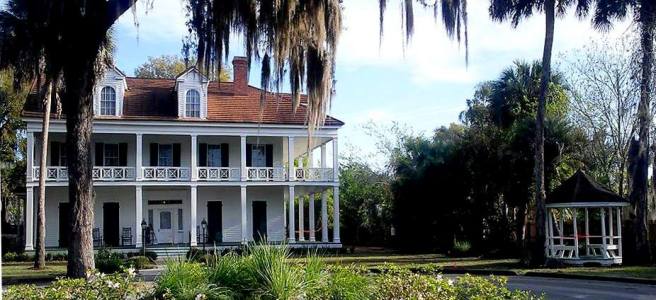
The tour of the Bronson-Mulholland House was free (although donations are much appreciated). Our tour guide was very knowledgeable, interesting, thorough and obviously passionate about sharing history. He took us through the house giving us a history tour of the home’s six eras: Bronson Era, 1854-60; Civil War Era, 1861-65; White Era, 1865-1904; Mulholland Era, 1904-45; Post War Era, 1945-1977; and Restoration Era, 1977-Present. In its early years, the home was the largest in northeast Florida, perhaps even north Florida. It was continuously owned until 1977, when the town government took it over to prevent its further decline and restore it. A government restoration grant helped make the restoration possible. The home has not been restored further since then, and Palatka is seeking another grant to do necessary repairs.

As we prepared to leave Palatka in mid-afternoon, we decided to find Ravine State Gardens and see what was there with the idea that we might want to bookmark it for a return trip in cooler weather. We both grew up in the cool, high mountains of Virginia and the hot, humid Florida summers don’t entice us to take the long walks and hikes that we generally love.

We paid the $5/car admission fee and discovered that a 1.8 mile scenic driveway borders the 70-120 feet deep ravine for which the park is named. In 1933, the ravine was transformed into a dramatic garden by the federal Works Progress Administration. Some of the original landscaping still exists as formal gardens and a unique system of trails. A 64 foot tall obelisk, dedicated to Franklin D Roosevelt, is located near the park entrance. We noted fieldstone terraces, rock gardens, picnic tables including grills, an amphitheater and a suspension bridge, all worthwhile reasons to return again sometime between January and April, peak time for all of the blooming plants and temperate weather, for a picnic and some hiking. Visit http://www.floridastatepark.org for more information.

All in all, it was a perfect Florida day. As we drove back home to Jacksonville, I found myself recalling three of my favorite female Florida authors whose works have captured the real Florida that I love – Marjorie Kinnan Rawlings, Zora Neale Hurston and Connie May Fowler. Another good way to tamp down work stress – read or re-read more by these authors!

Later this evening, my husband and I reflected on how nice the day had been, and he announced that he’d like our next day trip to be a return visit to Micanopy and Cross Creek. We had stayed in the Herlong Mansion many years ago and explored Micanopy but didn’t spend much time in Cross Creek, where Kinnan Rawlings had a homestead in which she lived and wrote. His comment was a perfect ending to the day, as it reminded us that rediscovering places, people and memories can be as exciting as new adventures.