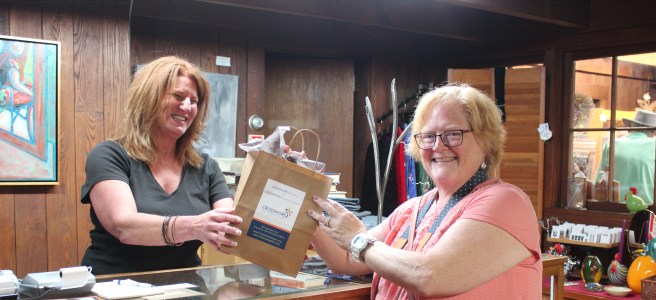
Beech Mountain’s 40th Anniversary: There’s no place like home

Karen Rieley

Published in the Spring 2021 issue of Carolina Mountain Life – pp. 67-68

What do 40,000 yellow bricks, Debbie Reynolds, Carrie Fisher, seven elephants, Jean-Claude Killy, Lance Armstrong, pole cats, bobcats and salamanders have in common? They are all part of the story of Beech Mountain, “the highest ski area in eastern America,” which is celebrating its 40th Anniversary throughout 2021.

Each month of 2021, residents and visitors will have opportunities to help Beech Mountain celebrate its 40th Anniversary. May is set aside as the official monthlong celebration, in recognition that The North Carolina General Assembly incorporated the Town of Beech Mountain in May 1981. Visitors and residents can submit comments, photos and other memorabilia to Beech Mountain’s digital time capsule via Instagram @beechmountainnc, by email to beechmountainvisitorcenter@gmail.com, or in person at the town’s birthday party, when the Time Capsule will be buried.

The Town Birthday Party will honor veterans and highlight new recreation programs that the town is offering. In celebration of Arbor Day, guests will be given 40 seedlings to help plant around Beech Mountain. Visit https://beechmtn.com/40th/ for details about all 40th Anniversary events and the town’s 40 Days of Family Fun.

May also highlights the opening of the town’s camping area at Shane Outpost Park, the town’s newest recreation facility. The park is located beside Buckeye Lake and within walking distance to Buckeye Recreation Center. It hosts 10 tent campsites, a natural play area, a low ropes course, bathroom/shower facilities, picnic tables and shelters, trail access and eventually an ADA-compliant amphitheater.

The Beech Mountain History Museum will open a Civil War Exhibit in May about the Battle on Beech, which was fought in 1864. It will also offer an audio exhibit featuring Ray Hicks, who was best known for telling of a group of stories known as the Jack Tales in which he wove fairy tale elements with realistic trappings of Southern Appalachian culture.

In August, the Hi-Lo Adventure Trail, which begins and ends on Beech Mountain, will open with a free High-Lo Merchant Expo at the Buckeye Recreation Center. Visit the Town of Beech Mountain Visitor Center to pick up Hi-Lo maps that highlight fun activities and stops along the trail, including hiking, fishing, water sports, out-of-the-way stops like the Dry Run Grocery Store in Butler, TN, and the old Neva Community Center’s farmers market, as well as better known stops like Doe Mountain, the Watauga Lake Winery and Mast General Store.

“The Hi-Lo Adventure Trail is designed to let people get to know what’s on the ‘Other Side of the Mountain’,” said Kate Gavenus, the town’s director of tourism and economic development.

Dr. Thomas Brigham, a Birmingham, Ala., dentist and avid skier, in his search for a Southeast mountain that could support skiing, found Beech Mountain in the late 1960s. At more than 5,000 feet, Beech Mountain’s cold winter climate makes skiing possible from November through early April most years. He approached local businessmen Harry and Grover Robbins who were interested in building a golf course. They attracted 40 investors of $20,000 each to enable them to purchase more than seven square miles. They divided it into lots and subdivisions and formed the Carolina Caribbean Corporation (CCC).

The CCC created a ski resort, golf course, pool and tennis facilities. It built houses based on an alpine Bavarian village theme and laid out roads and water and sewer services.

Charlotte-based designer Jack Pentes, who had helped Grover Robbins design Tweetsie Railroad, designed the Land of Oz theme park. The Land of Oz’s Yellow Brick Road was made of 40,000 glazed bricks. Debbie Reynolds and Carrie Fisher, along with other stars, attended the Land of Oz opening day ceremony in 1970.

The Beech Mountain Property Owner’s Association (POA) was formed in 1970 to collect assessments for the maintenance of roads and recreation areas. That was also the year that well-known and much-beloved resident Fred Pfohl first started working at Beech Mountain’s ski resort. His next working gig was with the Land of Oz.

Jean-Claude Killy and other famous skiers put Beech Mountain’s ski slopes on the map in the 70s by competing in the North Carolina Ski Cup professional ski races. 

The POA took over ownership and operation of community services in 1974. Pfohl was the first elected and longtime mayor of Beech Mountain, spearheading countless town projects. His late wife, Margie, and he opened Fred’s General Mercantile in 1979, and the store has been open every day since.

After the town was incorporated in 1981, the POA reorganized as Beech Mountain Club to take over management of the golf course and recreational facilities. Today, the club’s recreation campus features an interactive family pool surrounded by a fitness center, pickleball and tennis courts, pavilion, playground, day camp and a wide range of social events, classes, group excursions, presentations, interest clubs and groups.

In September 1984, the Clyde Beatty Circus was coming to Beech Mountain. When the trucks could not haul the elephants up to mountain, they walked up. Phfol and other town leaders got a ride on them.

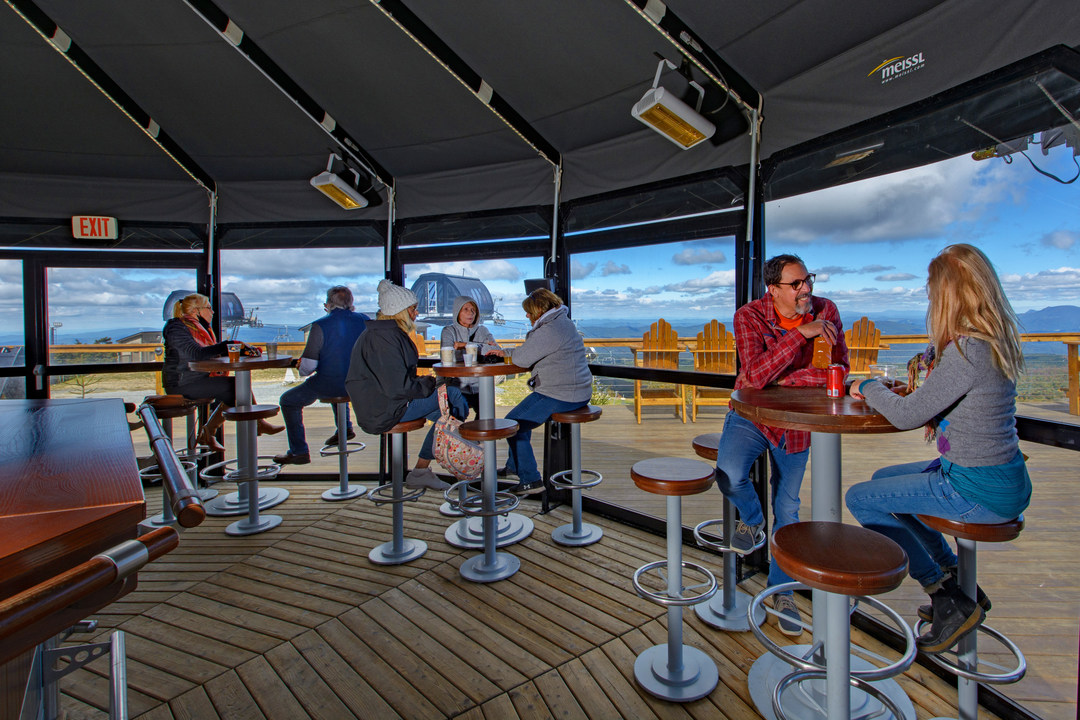
Ski Beech was purchased by the Costin family in 1986. Now known as Beech Mountain Resort, it offers snowmaking capabilities that cover 100 percent of the ski slopes, a one-of-a-kind bar at the top of the mountain called 5506’, and an onsite brewery. Non skiers can enjoy onsite tubing with over 700 feet of runs in the winter and mountain biking, disc golf, scenic lift rides and Mile High Yoga in the summer, making the resort a year-round destination.

Beech Mountain and its N.C. Highway 184, which gains 1,450 feet in altitude in three miles, has a long history in the biking world. The mountain has hosted four national bike championships, such as the Tour DuPont, which Lance Armstrong famously won in 1995 and finished first or second each year from 1993 to 1996.

Lees-McRae College’s mountain biking team, which uses the mountain to train, has the nation’s only collegiate Cycling Studies. The team has produced 10 Team National Championships and 59 Individual National Champions since 2001.

The Land of Oz is now family-owned as well. Although COVID-19 has restricted operation, normally the theme park runs “Journey with Dorothy Tours” on select days in June and July as part of Beech Mountain’s Family Fun Month. It also hosts “Autumn at Oz Festival,” one of the world’s largest Wizard of Oz festivals, on two consecutive weekends (Friday through Sunday) in early September. Private tours are available in June through early October.

At an elevation of 5,506 feet, the town draws tourists year-round, many seeking adventure on the winter ski slopes, as well as more seeking cool mountain air, lush trails and country club amenities in the summer.

“The town has 66 miles of street with about 2,500 homes and condos and 3,000 vacant lots ready to be someone’s next home for year-round living or as a second home that tourists may rent,” said Jim Brooks, owner of Beechwood Realty.

The Town of Beech Mountain today is home to at least 53 businesses employing more than 700 people. It is part of a thriving economic corridor created between Beech Mountain and the surrounding areas of western North Carolina and eastern Tennessee.

Town Manager Bob Pudney reports that Beech Mountain’s short-term rental business has grown quickly. “Our goal is to continue building a vibrant resort destination that offers year-round activities with controlled growth in keeping with the charm and history of the town.”

“It’s exciting to see so many new people buying property here on Beech Mountain,” said Pfohl. “I hope they are able to appreciate the wonderful atmosphere and peace of life that the town offers, just as my family and I have, even as we continue to grow and plan for Beech’s future.”

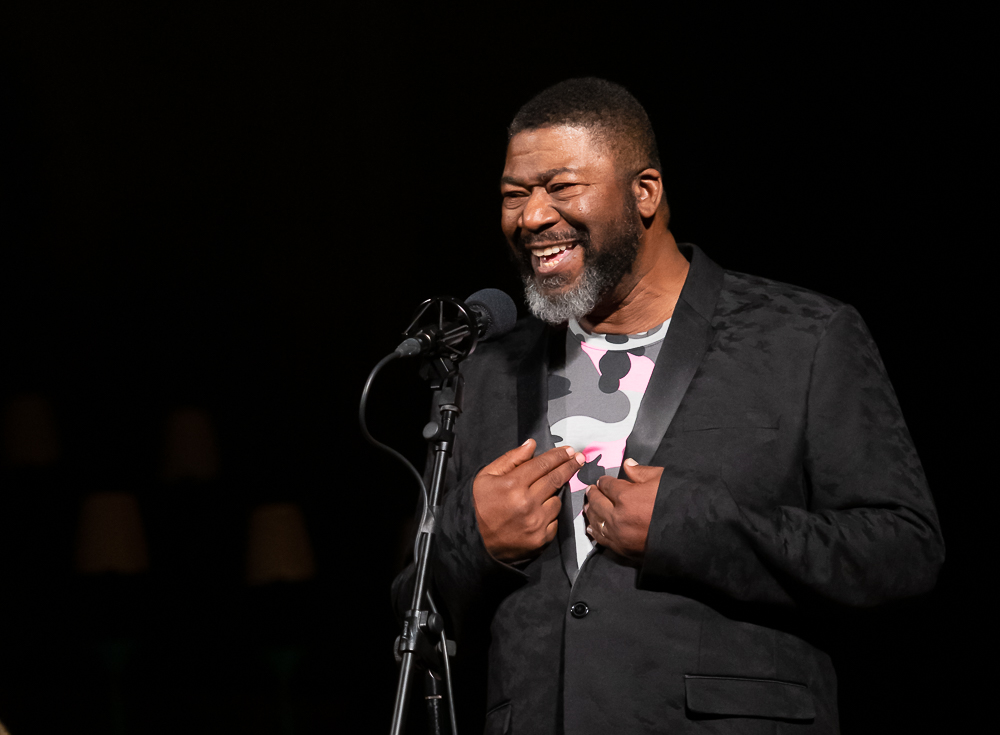
Ray Christian: A Resilient Storyteller

Karen Rieley

Published in the Autumn 2021 issue of Carolina Mountain Life – pp. 80-81

Risk and Resilience: Being Black in Appalachia

Dr. Ray Christian didn’t grow up in Appalachia; in fact, he spent the first third of his life in Richmond, Va., living in a ghetto with his illiterate mother, who he credits with driving his thirst for education, his two older sisters and an “emotionally inaccessible stepfather,” as he describes it. Then, there were 20 years in the U.S. Army as an infantryman and paratrooper awarded The Bronze Star and Combat Infantryman’s Badge.

He learned a lot about life while he was in the service where he was forced to grow up fast. He also credits that experience for convincing him that he needed a college education. He wanted options after his 20 years of service ended, and education was a steppingstone.

It’s these last 20 years in education in the Appalachian mountains that have defined Christian and given him a spotlight in the world, however. With a bachelor’s degree in liberal studies from Excelsior College, a master’s degree in public history from N.C. State University, an Education Specialist (EdS) from Liberty University, he became an adjunct professor at Appalachian State University, after moving to Boone, North Carolina when his wife was hired by the university. While there, he earned a doctorate in doctorate in education leadership (EdD) also from Liberty University.

“I taught at Appalachian State for about 15 years, but I’ve taken a little pause right now to take care of my health and focus on reaching a broader audience with my storytelling,” said Christian.

“Education is a great equalizer in terms of giving you more options. But people have to believe they can work around whatever disadvantages may exist in their life to achieve education. Often people who have come up hard have the least amount of empathy. They think that if they succeeded in getting an education everyone else ought to be able to as well.”

He wrote his dissertation on risk and resilience in African American children, exploring why some children do well in spite of their environmental and social disadvantages. He talks about risks as factors that create negative social outcomes and low academic achievement, such as limited education opportunities, racial discrimination and parental conflict. Resilience, on the other hand, contributes to children’s academic success and is composed of elements that serve as protective factors that can create positive academic outcomes, such as parental involvement, parental education, and religious.”

“A lot of people don’t have the factors that let them get over that last hump. One day may be the last straw. ‘I failed one more class. One more person told me I’m a bad person, and there’s no way I can do this.’ You can never have enough people tell you that you can do it.”

Christian sees the achievement gap as wider for Blacks in Appalachia than for Blacks living in urban areas, with the number one reason being the lack of community. According to the U.S. Census Bureau, Watauga County’s Black population is less than two percent.

“The absence of a Black community is magnified in rural areas where family and church mean a lot,” Christian said. “Small, tight-knit groups form and are very exclusive.”

Christian notes that Boone Mennonite Brethren Church, the largest Mennonite congregation in North Carolina, is the only church in Watauga County with Black origins. In 1911, Rev. Tschetter started Mennonite services in Watauga County in what became known as the Junaluska community of Boone. In 1918, the congregation built the church that still stands today.

As an adjunct professor, Christian taught two courses, “The Souls of Black Folk,” and “Storytelling: Life in the Narrative.” He loved the classes and hopes to get back to teaching them soon.

“At first, they are careful, especially the white students, because they don’t want to say anything offensive,” he said. But near the end of the class, they’re throwing everything out.”

“Some stories are universal. We’re not so different after all – we have the same problems, same concerns, same fears. I encourage students to go beneath the surface and explore what about you the person, not you the color of your skin. White students often say, ‘I didn’t know you felt that way. I didn’t know it happened all the time.’”

Christian has become one of the best and most famous Southern storytellers in the world. His stories have appeared in Reader’s Digest’s “Best Stories in America” (2016 and 2017) editions. He was selected as the 2017 Serenbe France Focus Storytelling Fellow (Atlanta, GA), and his stories have been featured on NPR radio shows such as “The Moth Radio Hour”, “Snap Judgment”, and “Backstory”, as well as the “Risk” podcast. 

Christian is a 12-time Moth Story Slam Champion and winner of the 2016 National Storytelling Festival Story Slam. He has appeared on Moth Mainstage, The National Storytelling Festival Exchange Place (2019) and was part of the 2018 tour of “Snap Judgment Live!” In 2018, he was named as the best-known storyteller in the south by Bitter Southerner magazine.

Christian is currently the producer and host of “What’s Ray Saying”, a podcast that utilizes history, storytelling and commentary to provide a unique perspective on the African American cultural experience. He is a member of the Academy of Certified Archivists and has been selected by the Department of State as a Fulbright Specialist scholar in education and storytelling narrative and will teach faculty and graduate students abroad about storytelling and narratives.

Christian and his wife, Tiffany, live in remotely about eight miles outside of Boone, N.C., where they’ve raised six children. Four are still in the area and two are out-of-state. Twins are still living at home.

“We’re the only Black family in our area,” he said. “Even though we’ve lived here for 17 years, some people still get weirded out when they see me out and about. They don’t expect to see a Black person living there.”

He admits that he still fights battles as a Black person living in the South.

“People want to tell you about all the Black people they’ve met in their life. They assume I’m like every other Black person,” said Christian. “I’m still stopped often by police when I’m out driving. For a while it was once a month. I always have to think about what I want to do versus what I need to do if I want to stay safe.”

“Despite the challenges of raising Black children in Appalachia, we find the school system here in the Boone area outstanding,” Christian said. “Teachers colleges in the state and Appalachian State University have produced lots of good teachers.”

At the heart of everything for Dr. Christian is storytelling. In his podcasts, he explores issues such as the legacy of Black children in slavery, plantation life and current trends; Black leadership; Black hair issues; Black Americans and the police; the origins of a false narrative of Black American history; the nature of Black American assimilation into white culture; Blacks and whites in education; and dying while Black.

“You can’t deny a person’s individual story. Their perception is absolutely true. Factual stuff you can debate. But we’re not going to debate what you feel.”

“History isn’t a series of starts and stops; it’s one long continuum,” he said. “It’s important to remember so we don’t repeat mistakes. Stories serve to inspire and connect us to another time.”

Beech Mountain’s 40th Anniversary: There’s no place like home

Karen Rieley

Published in the Spring 2021 issue of Carolina Mountain Life – pp. 67-68

What do 40,000 yellow bricks, Debbie Reynolds, Carrie Fisher, seven elephants, Jean-Claude Killy, Lance Armstrong, pole cats, bobcats and salamanders have in common? They are all part of the story of Beech Mountain, “the highest ski area in eastern America,” which is celebrating its 40th Anniversary throughout 2021.

Each month of 2021, residents and visitors will have opportunities to help Beech Mountain celebrate its 40th Anniversary. May is set aside as the official monthlong celebration, in recognition that The North Carolina General Assembly incorporated the Town of Beech Mountain in May 1981. Visitors and residents can submit comments, photos and other memorabilia to Beech Mountain’s digital time capsule via Instagram @beechmountainnc, by email to beechmountainvisitorcenter@gmail.com, or in person at the town’s birthday party, when the Time Capsule will be buried.

The Town Birthday Party will honor veterans and highlight new recreation programs that the town is offering. In celebration of Arbor Day, guests will be given 40 seedlings to help plant around Beech Mountain. Visit https://beechmtn.com/40th/ for details about all 40th Anniversary events and the town’s 40 Days of Family Fun.

May also highlights the opening of the town’s camping area at Shane Outpost Park, the town’s newest recreation facility. The park is located beside Buckeye Lake and within walking distance to Buckeye Recreation Center. It hosts 10 tent campsites, a natural play area, a low ropes course, bathroom/shower facilities, picnic tables and shelters, trail access and eventually an ADA-compliant amphitheater.

The Beech Mountain History Museum will open a Civil War Exhibit in May about the Battle on Beech, which was fought in 1864. It will also offer an audio exhibit featuring Ray Hicks, who was best known for telling of a group of stories known as the Jack Tales in which he wove fairy tale elements with realistic trappings of Southern Appalachian culture.

In August, the Hi-Lo Adventure Trail, which begins and ends on Beech Mountain, will open with a free High-Lo Merchant Expo at the Buckeye Recreation Center. Visit the Town of Beech Mountain Visitor Center to pick up Hi-Lo maps that highlight fun activities and stops along the trail, including hiking, fishing, water sports, out-of-the-way stops like the Dry Run Grocery Store in Butler, TN, and the old Neva Community Center’s farmers market, as well as better known stops like Doe Mountain, the Watauga Lake Winery and Mast General Store.

“The Hi-Lo Adventure Trail is designed to let people get to know what’s on the ‘Other Side of the Mountain’,” said Kate Gavenus, the town’s director of tourism and economic development.

Dr. Thomas Brigham, a Birmingham, Ala., dentist and avid skier, in his search for a Southeast mountain that could support skiing, found Beech Mountain in the late 1960s. At more than 5,000 feet, Beech Mountain’s cold winter climate makes skiing possible from November through early April most years. He approached local businessmen Harry and Grover Robbins who were interested in building a golf course. They attracted 40 investors of $20,000 each to enable them to purchase more than seven square miles. They divided it into lots and subdivisions and formed the Carolina Caribbean Corporation (CCC).

The CCC created a ski resort, golf course, pool and tennis facilities. It built houses based on an alpine Bavarian village theme and laid out roads and water and sewer services.

Charlotte-based designer Jack Pentes, who had helped Grover Robbins design Tweetsie Railroad, designed the Land of Oz theme park. The Land of Oz’s Yellow Brick Road was made of 40,000 glazed bricks. Debbie Reynolds and Carrie Fisher, along with other stars, attended the Land of Oz opening day ceremony in 1970.

The Beech Mountain Property Owner’s Association (POA) was formed in 1970 to collect assessments for the maintenance of roads and recreation areas. That was also the year that well-known and much-beloved resident Fred Pfohl first started working at Beech Mountain’s ski resort. His next working gig was with the Land of Oz.

Jean-Claude Killy and other famous skiers put Beech Mountain’s ski slopes on the map in the 70s by competing in the North Carolina Ski Cup professional ski races. 

The POA took over ownership and operation of community services in 1974. Pfohl was the first elected and longtime mayor of Beech Mountain, spearheading countless town projects. His late wife, Margie, and he opened Fred’s General Mercantile in 1979, and the store has been open every day since.

After the town was incorporated in 1981, the POA reorganized as Beech Mountain Club to take over management of the golf course and recreational facilities. Today, the club’s recreation campus features an interactive family pool surrounded by a fitness center, pickleball and tennis courts, pavilion, playground, day camp and a wide range of social events, classes, group excursions, presentations, interest clubs and groups.

In September 1984, the Clyde Beatty Circus was coming to Beech Mountain. When the trucks could not haul the elephants up to mountain, they walked up. Phfol and other town leaders got a ride on them.

Ski Beech was purchased by the Costin family in 1986. Now known as Beech Mountain Resort, it offers snowmaking capabilities that cover 100 percent of the ski slopes, a one-of-a-kind bar at the top of the mountain called 5506’, and an onsite brewery. Non skiers can enjoy onsite tubing with over 700 feet of runs in the winter and mountain biking, disc golf, scenic lift rides and Mile High Yoga in the summer, making the resort a year-round destination.

Beech Mountain and its N.C. Highway 184, which gains 1,450 feet in altitude in three miles, has a long history in the biking world. The mountain has hosted four national bike championships, such as the Tour DuPont, which Lance Armstrong famously won in 1995 and finished first or second each year from 1993 to 1996.

Lees-McRae College’s mountain biking team, which uses the mountain to train, has the nation’s only collegiate Cycling Studies. The team has produced 10 Team National Championships and 59 Individual National Champions since 2001.

The Land of Oz is now family-owned as well. Although COVID-19 has restricted operation, normally the theme park runs “Journey with Dorothy Tours” on select days in June and July as part of Beech Mountain’s Family Fun Month. It also hosts “Autumn at Oz Festival,” one of the world’s largest Wizard of Oz festivals, on two consecutive weekends (Friday through Sunday) in early September. Private tours are available in June through early October.

At an elevation of 5,506 feet, the town draws tourists year-round, many seeking adventure on the winter ski slopes, as well as more seeking cool mountain air, lush trails and country club amenities in the summer.

“The town has 66 miles of street with about 2,500 homes and condos and 3,000 vacant lots ready to be someone’s next home for year-round living or as a second home that tourists may rent,” said Jim Brooks, owner of Beechwood Realty.

The Town of Beech Mountain today is home to at least 53 businesses employing more than 700 people. It is part of a thriving economic corridor created between Beech Mountain and the surrounding areas of western North Carolina and eastern Tennessee.

Town Manager Bob Pudney reports that Beech Mountain’s short-term rental business has grown quickly. “Our goal is to continue building a vibrant resort destination that offers year-round activities with controlled growth in keeping with the charm and history of the town.”

“It’s exciting to see so many new people buying property here on Beech Mountain,” said Pfohl. “I hope they are able to appreciate the wonderful atmosphere and peace of life that the town offers, just as my family and I have, even as we continue to grow and plan for Beech’s future.”

The Story of Crossnore

Karen Rieley

Published in the Autumn 2019 issue of Carolina Mountain Life – pp. 98-99

Eat, shop, explore—opportunities to indulge abound here for residents and tourists in the High Country. While touring around, be sure to stop in the town of Crossnore to experience a special coffee shop and café, second-hand store, weaving room, fine arts gallery and fresco by a world-famous artist. Crossnore is in Avery County, about halfway between Linville Falls and the town of Linville on US-221.

The town developed around a boarding school established by Dr. Mary Martin Sloop, who, with her husband, Dr. Eustace Sloop, came to Crossnore in 1911 and began providing healthcare. In 1923, she set up two looms to teach native mountain weaving to women and girls living in the area to support themselves. The Weaving Room at Crossnore School & Children’s Home now employs women and students working on 30 looms and in a finishing room.

Crossnore School & Children’s Home is a nonprofit 501(c)3 organization providing residential foster care for children in crisis from North Carolina. With 90 children living on the 86-acre Avery Campus in Crossnore, 40 living on the 212-acre Winston-Salem Campus at the edge of downtown Winston-Salem, and a satellite office in the historic district of downtown Hendersonville, Crossnore is a sanctuary of hope and healing for children.

Since its opening, Crossnore School & Children’s Home has operated a second-hand store and fine arts gallery, in addition to the Weaving Room. In 2006, Crossnore School & Children’s Home acquired Miracle Grounds Coffee Shop and Café. The businesses are all located in Crossnore and are self-supporting with net revenue going to help fund the nonprofit’s mission.

Shop from an array of treasures in the Blair Fraley Sales Store, select from beautiful hand-woven goods made on looms by Crossnore weavers and purchase works of art by regional painters, sculptors and fine craft persons in the Crossnore Fine Arts Gallery. A beautiful fresco awaits your viewing in the E.H. Sloop Chapel. When you need a respite from all that shopping and cultural enrichment, stop in the Miracle Grounds Coffee Shop & Café to enjoy specially selected coffees from all over the world, specialty drinks, teas and breakfast and lunch specials.

The Weaving Room is a working museum for Appalachian history. The weavers are always willing to explain their craft and answer questions. Whenever you decide to visit, you are likely to find Ellie Hjemmet and Shirley Gragg at their looms. The women of the Weaving Room are paid by the completed piece and by the hour for some other tasks.

Hjemmet was the manager of the Weaving Room for 12 years, 1986-1998. Now she works part-time four hours a day weaving.

“Weaving not only helps me make some money, but it also eases my mind and makes me feel good,” Hjemmet said. She also teaches in the week-long classes that are offered to the community and plays music at Crossnore events.

Gragg, who has been weaving for 42 years, said, “It’s a lot of fun. You can sit here and meditate. I come here about four days a week for seven to seven and a half hours a day. I’ve made hundreds of pieces over the years and thousands of passes through the loom a day.”

In the Weaving Room store, you can shop for woven goods including wearables, tartans, kitchen and table linens, home décor, baby apparel and more. For those who find the actual act of weaving intriguing, classes are offered to the public three times per year on the Avery Campus. At the end of the session you will have completed handwoven placemats and a table runner. You can come back later to volunteer as a weaver and donate the goods you make.

Crossnore Fine Arts Gallery, open year-round, specifically supports the school’s Stepping Stones program that transitions students from foster care to successful independent living. Gallery shows are held throughout the summer. Local and regional professional artists donate a portion or all of the sales price for Stepping Stones.

The Blair Fraley Sales Store is the largest resale shop in the High Country and offers treasures to locals and visitors alike. Generous friends donate quality new and used goods. The store is immaculate and well-organized with products that are displayed well.

What began as a weekly sale to provide clothing for the children at Dr. Mary Martin Sloop’s school is now an ongoing second-hand store that is a busy emporium and important source of income for the nonprofit. The store is named after Blair Fraley, the young daughter of John Fraley, a former trustee for the nonprofit, and wife Guyann; Blair died in a bicycle accident.

Miracle Grounds is the nonprofit’s newest business. It is open Monday through Saturday, from 7:30 a.m. – 5 p.m. The coffees are selected from all over the world and roasted in nearby Boone, N.C. Many varieties grow on organic farms and are purchased in fair-trade business agreements.

Children ages 14 and up who are part of Crossnore School & Children’s Home may work in the nonprofit’s businesses. During the school day their work is part of a class. They are paid for work done outside of class and in the summer. They go through an application process and interview before being hired.

“We try to teach them all the skills they will need when they go into the real world,” said Sherry Nixon, who is the Blair Fraley Sales Store manager. “We can help the students overcome behaviors that might keep them from being successful. That’s part of loving them, just like we do with our own children.”

The children receive more than job training from the experience. Working with staff gives them the opportunity to interact with someone other than their cottage parents, case manager and teachers and helps them build positive relationships with adults.

The E.H. Sloop Chapel, open daily from 8:30 a.m. to 5 p.m., at no charge, houses world-famous fresco artist Benjamin F. Long IV’s powerful rendering of Mark 10:14, “Suffer the little children to come unto me and forbid them not; for such is the kingdom of God.” The art fills the back wall of the sanctuary and is part of the Benjamin F. Long IV Fresco Trail that includes nine frescoes at six locations in the Blue Ridge National Heritage Area (https://www.blueridgeheritage.com/destinations/blue-ridge-frescoes/).

Crossnore School & Children’s Home provides love and assistance 24 hours a day on its Avery and Winston-Salem campuses to children in foster care. The children live under the close supervision of two cottage parents, who model a healthy, family relationship in a homelike setting. It is licensed to serve children from the ages of one to 21. The nonprofit also provides clinical services to children and families at all three of its locations. Its community-based services include single-family foster care and therapeutic foster care across western North Carolina.

The Youth in Transition program is designed to support youth who have experienced foster care during their critical transition into young adulthood. It offers financial literacy and peer counseling services, as well as education, housing, transportation, and career support for young adults up to the age of 26.

Visit www.crossnore.org to learn more about the nonprofit’s mission, the businesses that support its work and ways you can be a part.