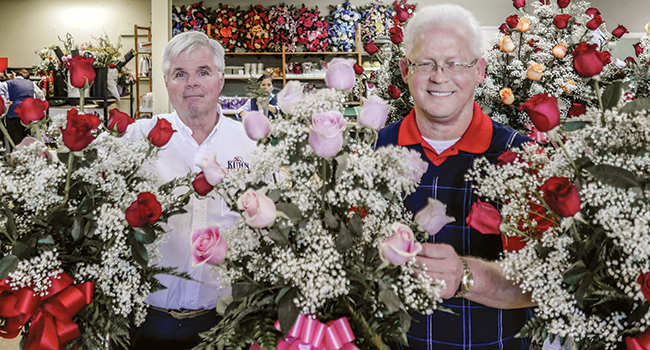
 My article #4 for First Coast Magazine appeared in its February 2016 issue. I was asked to write about a Jacksonville institution – Kuhn Flowers. The floral shop was long-established before I moved to Jacksonville in 1978, and its history is one of a true love story, most fitting for the month of roses, sweet nothings and romance. Read more here.
Valentine’s Day is Kuhn’s largest volume day, with more than 2,000 deliveries out of the Beach store alone. That requires 150 delivery people and 150 delivery vehicles. The store’s large volume allows it to buy flowers directly from growers, not via wholesalers, from around the world.
Kuhn Flowers was built with love. Nancy was the floral designer, and Bob Kuhn marketed and managed the business. Bob had worked in greenhouses as a kid, so opening Kuhn Flowers was a natural next set for him. Nancy and Bob married, and Kuhn Flowers became their life. It was the only business they ever owned. Bob bought up a number of smaller floral shops and rolled them into Kuhn Flowers after he relocated to Beach Boulevard in 1958. The Ponte Vedra Beach store is Kuhn’s only branch. “They both worked every day until they were about 70,” Howard says. They retired in 1984.
While no Kuhn family member is still a part of the business, traditions started by Nancy and Bob Kuhn 68 years ago, in the store’s first location in downtown Jacksonville, are still kept alive today. The seasonal celebration in Kuhn Flowers’ two-story storefront window is a Jacksonville destination, not just for locals, but regionally as well. Christmas decorations are up by Nov. 1 and stay up for 60 days.
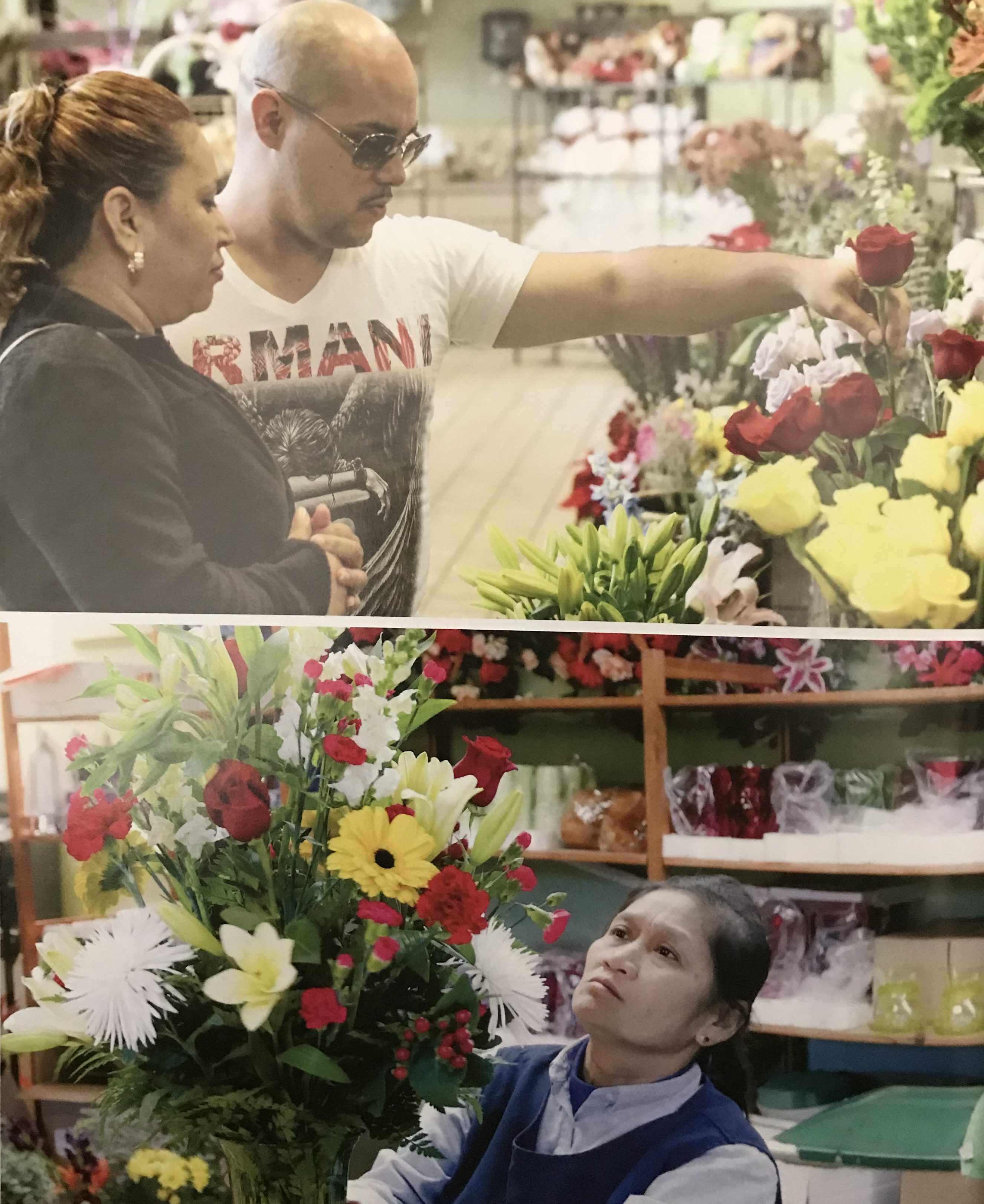
“It used to be a tradition for many families to have Thanksgiving dinner and then pile everyone in the car to come see our Christmas window,” Howard says. McCall has revived the Kuhn window tradition for holidays. Santa has visited the store for the past seven years for children to have photos taken. “We hope to have the Easter Bunny visit as well,” McCall says. And, at Halloween, the employees dress up in costumes. And of course, there is a rose in every arrangement that leaves the store on Valentine’s Day. Both McCall and Howard buy their daughters flowers every Valentine’s Day. They do this to set an example for them, illustrating how women should be celebrated by the men in their lives.
“My best advice to a guy is to start now developing a personal relationship with a floral shop that delivers,” McCall says. “Then, the week before Valentine’s Day, he can call the store to have flowers delivered to his girl on Wednesday or Thursday before Sunday’s Valentine’s Day. This gives her plenty of time to show off to her girlfriends how much she is loved.”