Back in our early days living in Florida, my husband and I took a few big trips but, more often, enjoyed spontaneously leaving town for the weekend – even just a two-day weekend. We tried out a number of bed-and-breakfast inns in St. Augustine, Cedar Key and Micanopy, Florida, and Americus and Brunswick, Georgia, for example. We enjoyed exploring these towns specifically because they held true to their origins, the real land and people, rather than the illusions of opulence, sensory experiences and never ending excitement that developers have created – the elite, exclusive coastal resorts; the sights, sounds and libations of nightclubs; and the illusions of the many entertainment parks. Admittedly, we have partaken of all those experiences, too, but my best memories of Florida are the authentic ones.
We let this Fourth of July sneak up on us. I turned my focus from crazy-busy work stuff long enough to ask for July 3 off, but never got around to planning anything for us to do. This past Wednesday, I looked up from my computer and realized that I needed to come up with something or else we would just sit around wasting four perfectly good days better spent enjoying being with each other and experiencing something other than the stress of work obligations.
It was probably too late to try to make overnight plans, plus I wasn’t sure that I wanted to go to the trouble of packing, driving many miles and then adjusting to a hotel room (all activities that become less and less appealing the older I get, I confess). So, I recalled our fun, spontaneous weekend trips and googled “places to visit in northeast Florida.” The Northeast Florida Backroads Travel Guide website came up near the top of the list and sounded intriguing, so I decided to check it for day trips. Of the nine northeast Florida towns listed, Crescent City and Palatka were the two of which I was the least familiar. I don’t think I’ve ever visited Crescent City, so that’s a trip for another day perhaps.
Palatka is one of those small Florida cities that I’ve driven through many times without stopping and barely even noticed except for the speed limit signs which are notoriously important to observe, as small-town cops use ticketing to acquire much-needed town revenue. It is nestled in a bend on the St. Johns River and was a major port for many years because initially it was the southernmost port for transporting trade items and eventually people, as well, until Henry Flagler expanded railroad tracks further south. Once known as “The Gem of the St. Johns River” with hotel accommodations for 6,000, a devastating fire and hard freeze caused a major decline in the area’s visitation and industry.
According to the Putnam Historical Society website, “Palatka” is a contraction of an Indian word meaning “cow crossing” or “cow ford.” The original was some variation of “Pilaklikaha” or “Pilotaikita.” Originally spelled “PIlatka,” the City Charter, approved on January 8, 1853, had the name spelled “PAlatka,” sparking a debate as to the “correct” spelling which would last another twenty-two years until the U.S. Post Office officially changed the spelling to “Palatka” on May 24, 1875, to avoid confusing its name with the town of “Picolata.”
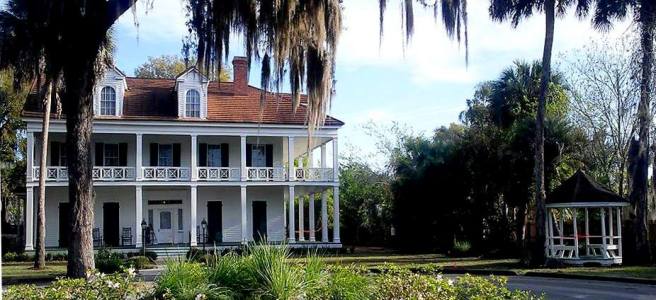
Turns out that the first Sunday each month is a special day in Palatka. Every historical place is open to the public. Among the top 10 places to visit, the Bronson-Mulholland House caught my eye because I love history stories and restoration. I checked out the house’s official website and learned that, while you can drive up to the house and explore the grounds, you can only tour the house on Saturdays, 10 a.m. – 4 p.m., and Sundays, 1-4 p.m. Tours need to be scheduled 72 hours in advance, so that a tour guide can be arranged to take you through the house. I came in just under the wire in making a reservation for 1 p.m., today, Sunday.
We had time to eat brunch before the tour, so I researched good places to eat in Palatka and discovered several. Most feature seafood and fish, which makes perfect sense given Palatka’s location along the St. Johns River – Corky Bell’s Seafood and Musselwhite’s Seafood & Grill received good reviews when I goggled “best places to eat in Palatka, Florida.” Angel’s Diner got good reviews for its hamburgers. But, Magnolia Cafe intrigued me the most, because it seemed to feature a creative brunch menu and had great review comments.
We arrived shortly after the cafe opened at 11 a.m. Located in the middle of downtown Palatka at 705 St. Johns Avenue, the cafe is modestly decorated and has the aura of a comfortable, small-town eatery that everyone knows about, frequents and loves. It is brightly lit mostly by sunlight from the large front windows and the waiters are friendly and attentive. I decided to order the Steak and Egg Benedict with a side salad and my husband ordered the Eggs Florentine Benedict and Cheese Grits. Our eggs benedict were delightful – perfectly puffy poached eggs with beautiful yellow yolks that ran, but didn’t gush, when cut. My husband said his cheese grits were well seasoned and I enjoyed my steak.
I started with a hot cup of coffee and, while my meal was very good, the coffee might have been the star of the meal. Magnolia Cafe is committed to serving organic food, including organic coffee. It serves and sells Sweetwater organic coffee, ground and whole beans, and it is delicious. I was served a tall, narrow mug of steaming coffee with real cream and enjoyed not one, but two, cups. And, I bought one bag each of Dark French Roast from Honduras, Sumatra and Ethiopia and Full City Roast from Peru and Colombia. The coffe is artisan roasted and fairly traded, as a member of the Fair Trade Federation.
After brunch, we had about 45 minutes before our tour started at the Bronson-Mulholland House, so we drove around Palatka checking out the sights. Palatka bills itself as the City of Murals, so the drive was an artistic experience. The Conlee-Snyder Mural Committee is in charge of the larger-than-life murals painted onto the walls of buildings downtown to accurately depict the historical, cultural, and natural riches of Palatka and Putnam County. You can learn about the murals and get a map of their locations on the Conley-Snyder Mural Committee website.
The tour of the Bronson-Mulholland House was free (although donations are much appreciated). Our tour guide was very knowledgeable, interesting, thorough and obviously passionate about sharing history. He took us through the house giving us a history tour of the home’s six eras: Bronson Era, 1854-60; Civil War Era, 1861-65; White Era, 1865-1904; Mulholland Era, 1904-45; Post War Era, 1945-1977; and Restoration Era, 1977-Present. In its early years, the home was the largest in northeast Florida, perhaps even north Florida. It was continuously owned until 1977, when the town government took it over to prevent its further decline and restore it. A government restoration grant helped make the restoration possible. The home has not been restored further since then, and Palatka is seeking another grant to do necessary repairs.
As we prepared to leave Palatka in mid-afternoon, we decided to find Ravine State Gardens and see what was there with the idea that we might want to bookmark it for a return trip in cooler weather. We both grew up in the cool, high mountains of Virginia and the hot, humid Florida summers don’t entice us to take the long walks and hikes that we generally love.
We paid the $5/car admission fee and discovered that a 1.8 mile scenic driveway borders the 70-120 feet deep ravine for which the park is named. In 1933, the ravine was transformed into a dramatic garden by the federal Works Progress Administration. Some of the original landscaping still exists as formal gardens and a unique system of trails. A 64 foot tall obelisk, dedicated to Franklin D Roosevelt, is located near the park entrance. We noted fieldstone terraces, rock gardens, picnic tables including grills, an amphitheater and a suspension bridge, all worthwhile reasons to return again sometime between January and April, peak time for all of the blooming plants and temperate weather, for a picnic and some hiking. Visit http://www.floridastatepark.org for more information.
All in all, it was a perfect Florida day. As we drove back home to Jacksonville, I found myself recalling three of my favorite female Florida authors whose works have captured the real Florida that I love – Marjorie Kinnan Rawlings, Zora Neale Hurston and Connie May Fowler. Another good way to tamp down work stress – read or re-read more by these authors!
Later this evening, my husband and I reflected on how nice the day had been, and he announced that he’d like our next day trip to be a return visit to Micanopy and Cross Creek. We had stayed in the Herlong Mansion many years ago and explored Micanopy but didn’t spend much time in Cross Creek, where Kinnan Rawlings had a homestead in which she lived and wrote. His comment was a perfect ending to the day, as it reminded us that rediscovering places, people and memories can be as exciting as new adventures.
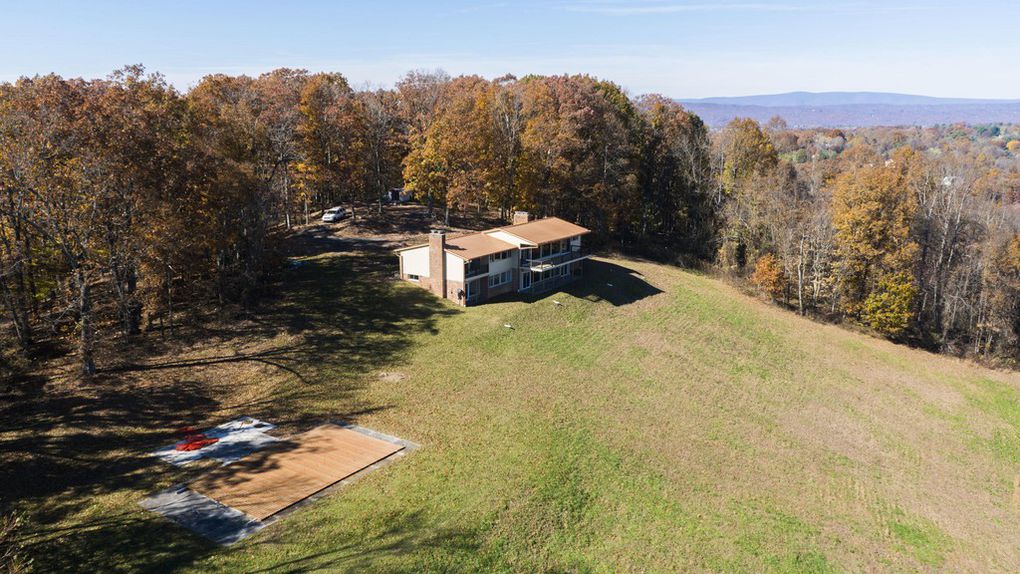
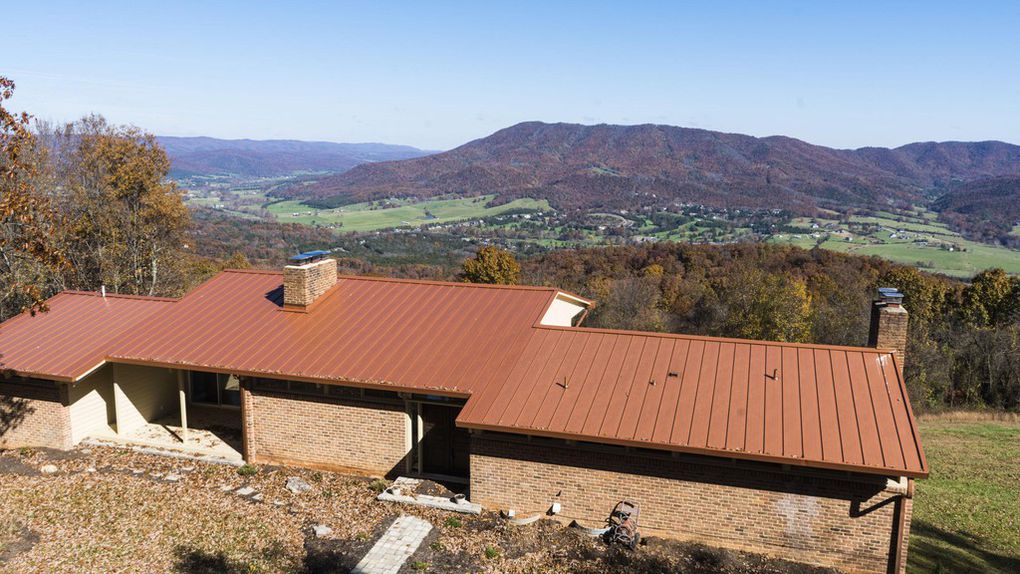 The house is a mid-century modern classic sitting on 66 private acres on High Knob along Cedar Run Road off of Ellett Road and adjoining the town limits of Blacksburg, Virginia. It overlooks the Ellett Valley in Montgomery County, Virginia. Nearly 64 acres of the 66 are forested.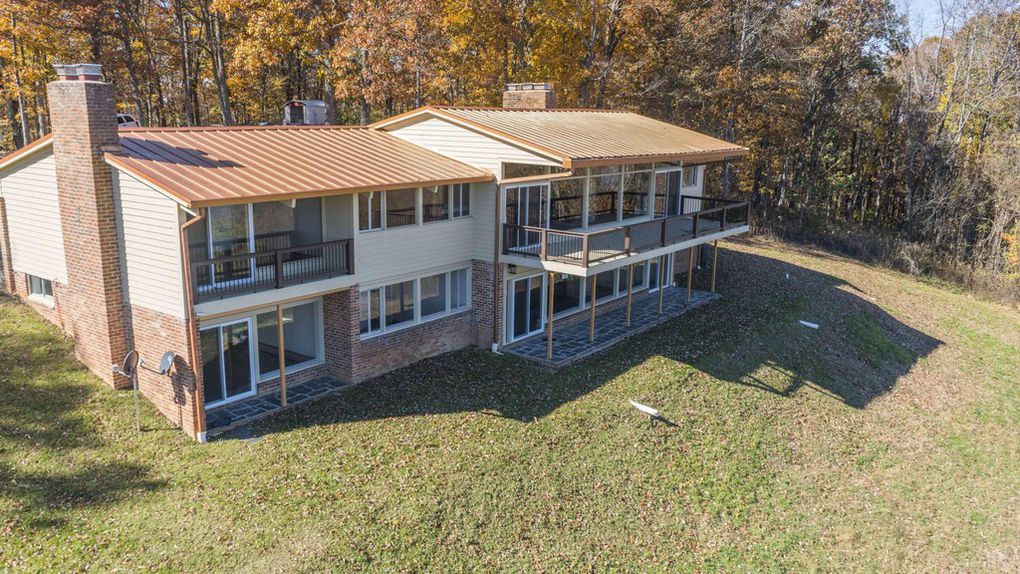
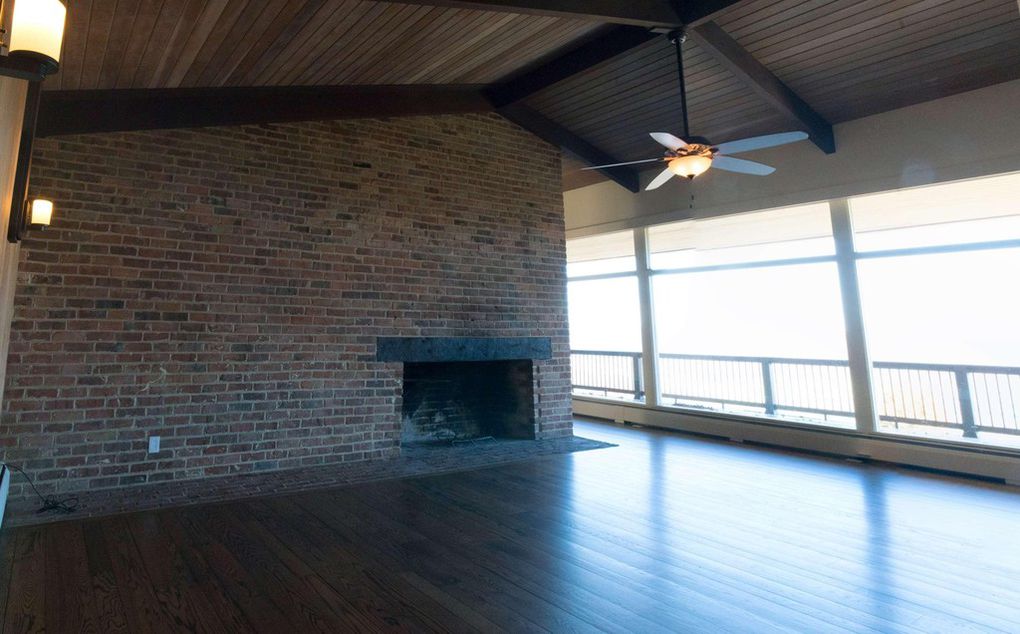 and Norris Hall on what was then called Faculty Row. The exterior is brick and wood siding with a new metal roof that replaced the original cedar shake shingled roof. An in-ground pool is also on the property.