The Way We Were: William H. Rose

William and Betty Rose
KAREN RIELEY
PUBLISHED IN MARCH 2019 ISSUE OF THE RESIDENT NEWS –https://residentnews.net/2018/08/02/way-we-were-william-h-rose

William Rose has a lifetime of memories and a postcard art collection that allows him to see Jacksonville through the eyes of his father, Max Rose, as well as recall his younger years growing up in Jacksonville.

Rose, 92, has collected postcards produced in the early 1900s of Springfield and downtown Jacksonville that he has enlarged and framed. Some of the postcards were ones his father bought in 1918 and wrote to mail to his mother, Bessie, who was living in Baltimore before his parents married. He also buys postcards of old scenes in Jacksonville.
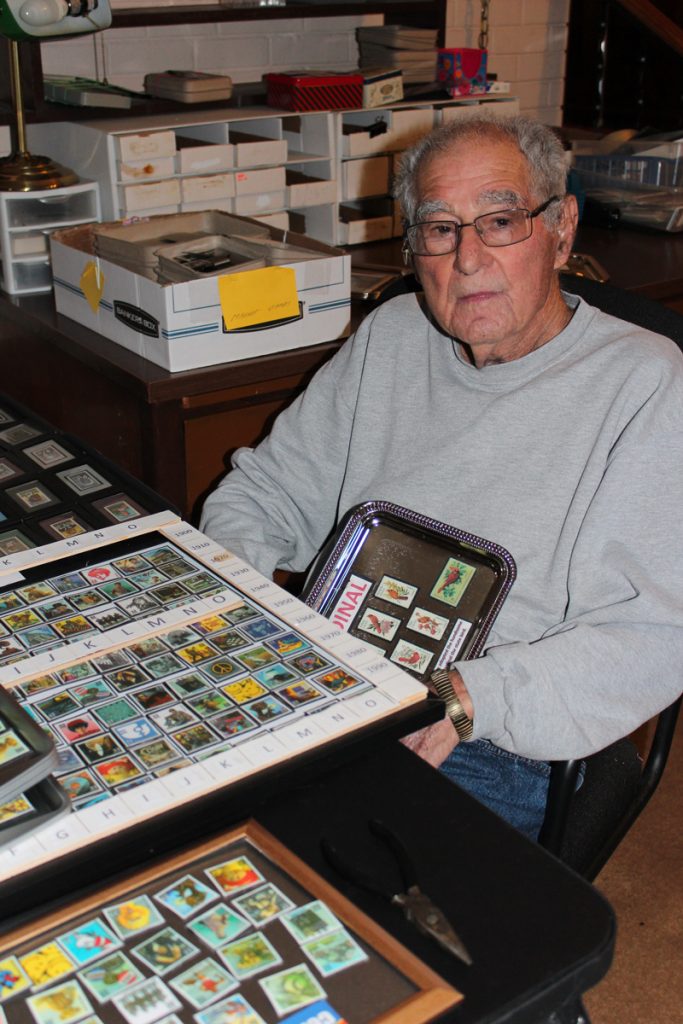
William Rose with stamp collection

He collects postage stamps, too. He remembers digging for stamps in the dumpsters behind the downtown U.S. Post Office building.

Rose’s father was born in Lithuania. His grandfather moved to South Africa to avoid serving in the military, and his father went to live with him when he was 13 years old. Rose’s father and grandfather moved to Jacksonville in 1911 so that his father’s aunt, Ida Feldman, could help raise his father.

“My aunt was extremely wealthy,” Rose said. “In the 1900s, she and her husband, Morris Feldman, owned a lot of downtown Jacksonville property on Bay Street.”

When the aunt died, she left the house that used to be at Post and King in Riverside to Rose’s father. She left the rest of her money to River Garden Nursing Home, Jacksonville Jewish Center and the country of Palestine.
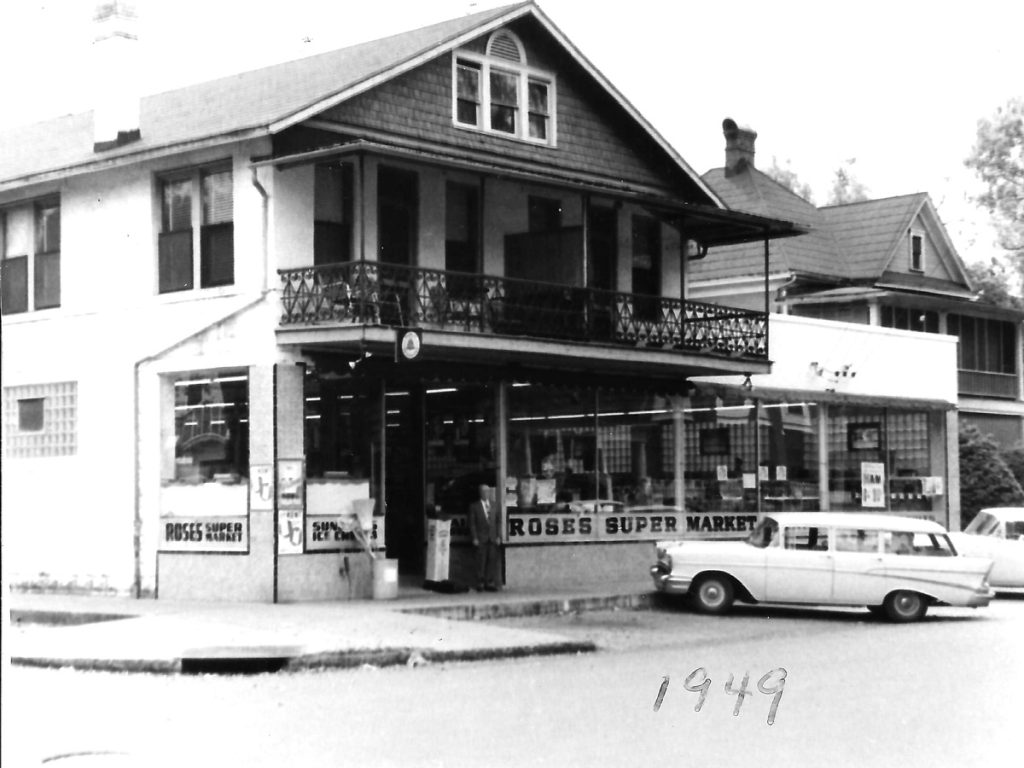
His dad's store, Rose's Super Market, at 6th & Market
His dad’s store, Rose’s Super Market, at 6th & Market

In January 1917, Rose’s father married Bessie Isaacs. In 1919, he opened a grocery store in Springfield at 6th and Market. A Feb. 2, 1935 ad for Rose’s Grocery & Meat Market, at the corner of Sixth and Market streets listed meat prices of 20 cents per pound for homemade pan pork sausage, 15 cents per pound for rump or chuck beef roast and three cans of dog food for 25 cents.

“My father would try to talk guys out of buying cigarettes by telling them that they weren’t good for them,” he said. “He told them that they weren’t made for smoking; they were made for selling.”

William’s father, Max Rose, operated the grocery and meat market for 50 years. In a story that appeared in the Oct. 23, 1972 edition of the Jacksonville Journal, Rose’s father, who was then 81, recalled the early days of operating the store. “In those days you knew everyone, and everyone was your friend,” he said.

Rose’s father had a delivery service as well. “I’d pedal over on a special bicycle with a big basket up front. People would call up for kerosene, and I’d go over, pick up their empty 5-gallon can, fill it and ride back to their house. I made a 10-cent profit on the deal.”

When William was born in 1926, his family lived in the house behind the grocery store. Rose had two older sisters, Mildred Rose Rothstein and Charlotte Rose Fialkow.
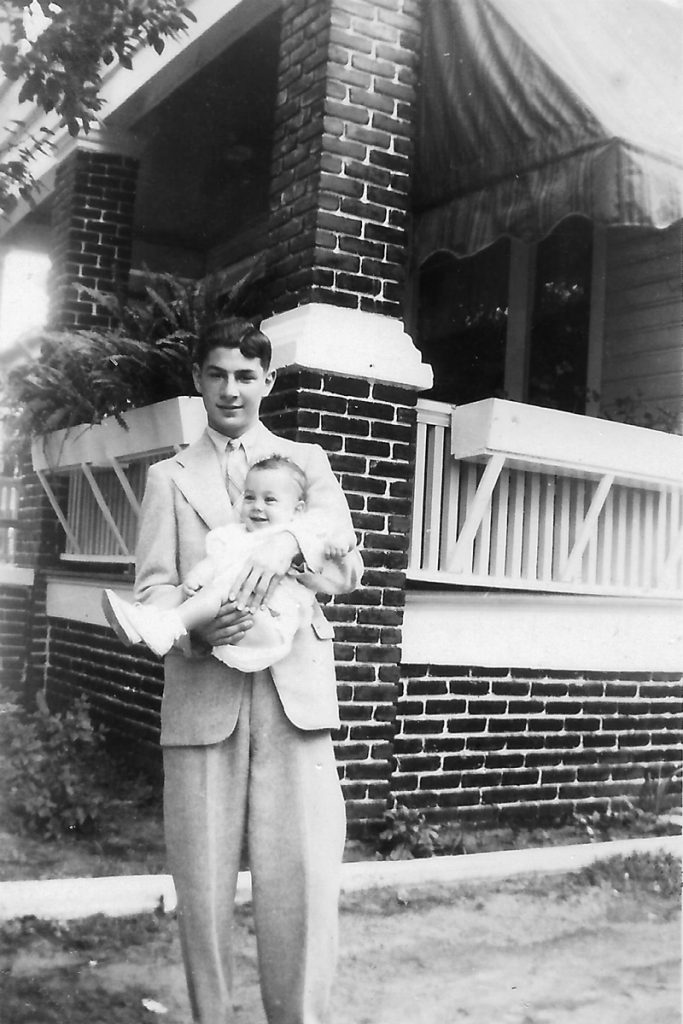
Uncle William holding niece Barbara in 1939 at the family home on 6th Street

“They tell me that my father was so happy to have a son that he added “and Son” to the “Rose’s Grocery Store sign when I was born,” Rose said. “But he took that off before I was old enough to notice it.”

Rose remembers that the streetcar in Springfield used to cost a nickel for one ticket or a dime for three tickets. Cabs cost 10 cents to ride, but they didn’t go everywhere. He had a girlfriend who attended Lee High School. After he finished a school day at Andrew Jackson High School, he would pay 10 cents to take a cab to downtown Jacksonville, and then he had to pay another 10 cents to take a different cab to Lee High School in Riverside.

Rose claims to have visited all of the movie theaters in downtown Jacksonville as well as the Riverside Theater, now called Sun-Ray Cinema, in 5 Points. That theater opened in 1927 and was the first theater in Florida equipped to show talking pictures and had air conditioning.

“I went to many movies at The Florida Theatre,” he said. “I remember Jimmy Knight playing the Mighty Wurlitzer organ in the mid- to late-1930s. The Florida Theatre, built in 1927, was the largest movie palace in Jacksonville and one of only four remaining grand movie palaces of the era in the state.

“I also remember going to the Capitol Theatre on Main Street between 7th and 8th Streets,” Rose said. “My father would give me a dime for the movie and a penny for the gum-ball machine.”

One Saturday in 1934 or 1935, when Rose was eight or nine, he went to the theatre to see what he recalls as “Little Orphan Annie.” When he finally got to the front of the line, he placed a coin on the counter. The cashier said, “Son, the movie is a dime, and this is a penny.” He suddenly realized that he must have put the dime in the gum-ball machine by mistake. “I never did see the movie,” he said.

Rose’s father bought a Pontiac in 1937 from Claude Nolan. “It cost more than $900. I couldn’t believe that it had a radio in it,” he said.

Rose worked for his father in the grocery store until he finished high school and enlisted in the Navy during World War II. He was on the USS Alex Diachenko, which was assigned to the Asiatic-Pacific Theater and participated as a transport ship in the consolidation and capture of the Southern Philippines and Borneo operations.
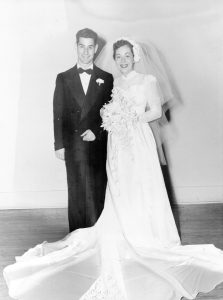
William and Betty Rose, 1951

When Rose came back to Jacksonville after service, he lived with his parents for a couple of years until he married Betty Sager in 1951, also a lifelong resident of Jacksonville. She had graduated from Lee High School and Florida State College for Women (FSU).

With his new bride, Rose bought the house he lives in now on San Amaro Road for $17,000. “People wondered why we wanted to live so far out of town,” he recalled.

He used to walk down the middle of San Jose Boulevard because there was so little traffic. “I remember cars hitting the telephone poles because the kerosene street lamps would go out and they couldn’t see the poles in time,” Rose said. “I used my flashlight to help direct traffic.”

He was working at his father’s grocery store in Springfield when he got married, and his daily commute required traveling from Miramar to Springfield every day.

“I’d buy turnip greens from the produce market, take them home, put them in the yard and sprinkle water on them to keep them fresh,” Rose said. “The next day I’d put them back in my car and take them to the grocery store.”

On Dec. 29, 1963, Rose was on his way to work when he saw smoke coming out of all the windows of the Hotel Roosevelt in downtown Jacksonville. Fire had broken out in the ballroom of the 13-story hotel, one of Jacksonville’s most grand hotels, on Adams Street just west of Main. Twenty-two people died, most from asphyxiation and carbon-monoxide poisoning. Some people escaped to the roof and needed help. Rose told the rescue people to call the Navy to get the people off the roof. “The next day I read in the paper that the mayor had called the Navy,” Rose laughed. “But I think they got the idea from me.”
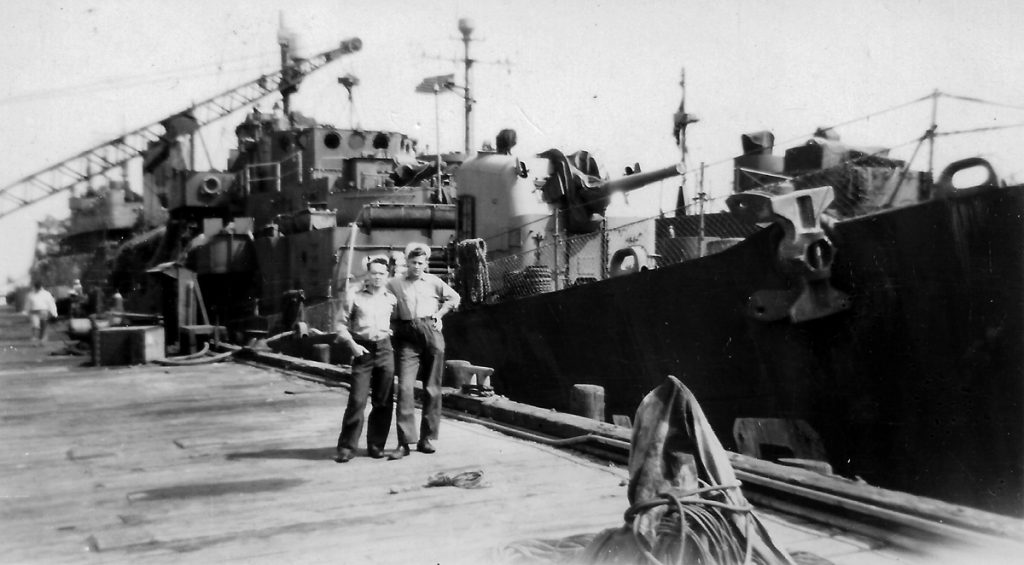
Rose in the Navy assigned to the USS Alex Diachenko transport ship

When his father became too old to run the grocery store, Rose sold it. His father told him to go see Benjamin Setzer at National Drug Company, who asked him to come to work for him to oversee distribution. Setzer, a Lithuanian immigrant like his father and a former Springfield resident, had operated Setzer’s Supermarkets that became one of Jacksonville’s early grocery chains by the end of the Great Depression.

Then Rose worked for his brother-in-law’s wholesale grocery, the Hymie Fialkow Company. His brother-in-law eventually sold his grocery to Sysco Corp., where Rose worked as senior marketing associate until his retirement 17 years later.

After he retired, he volunteered in gift shops. He noticed framed stamps that were selling for $25; the stamp was worth 25 cents. He thought would be a good way to get rid of his stamps at flea markets. He also makes kitchen magnets out of postage stamps and has earned the moniker of “The Stamp Man.”

After 30 years of service in the Department of Children & Families, Betty retired and devoted many hours volunteering for her synagogue, the Jacksonville Jewish Center, Hospice and Bikkur Cholim. The couple were married for 57 years before Betty passed away in 2008 and had two daughters, Margaret Rose and Allison Rose Holtz.

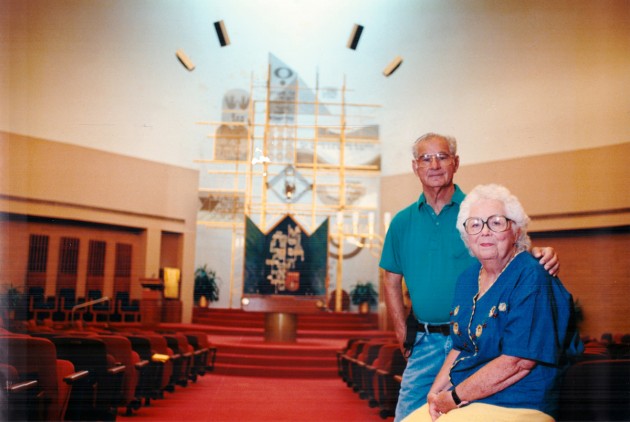
Both Betty and William were active in the Jacksonville Jewish Center and the center’s synagogue for many years. Betty volunteered in the office and William made sure the right prayer books were in every one of the 375 seats.

Age has caught up with Rose leading him to decide to quit driving, which means he won’t be going to the flea market any longer. But, he still intends on continuing to frame stamps. “It keeps me busy and I love doing it,” he said.
The Way We Were: Dr. Maria Acosta-Rua

BY KAREN RIELEY
PUBLISHED IN JANUARY 2018 ISSUE OF THE RESIDENT NEWS – http://residentnews.net/2017/12/05/youth-learns-lessons-homelessness-7th-annual-cardboard-city/

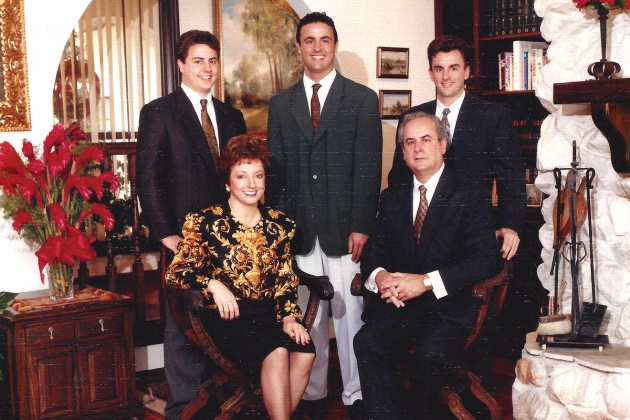
Dr. Maria Acosta-Rua and her late husband, Dr. Gaston Acosta-Rua, have never forgotten their past even as they contributed so much to their Jacksonville community. Theirs is truly an international tale, in which they have intertwined their Spanish and American lives to the benefit of both.

AcostaRua_01-200x300
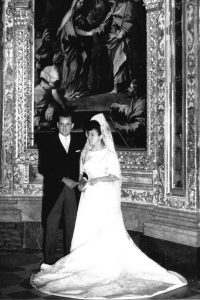
Acosta-Rua wedding in front of “The Marriage of the Virgin Mary and St. Joseph” in the Monastery of Guadeloupe

As soon as they graduated, he moved to Miami to work hard, save money and take his Educational Council for Foreign Medical Graduates (ECFMG) exam, but he promised he would come back for her in Madrid in a year. He kept his promise, and they were married two weeks later in the Monastery of Guadeloupe, because he had to start an internship in Cleveland very soon.Gaston Acosta-Rua and Maria Victoria Pol Gimenez met in Madrid in their last year of medical school. Gaston was a counter-revolutionary who escaped from Cuba, and Maria was from Madrid.

Maria found herself in a new country, with a new husband who worked rotation in the hospital every other night, in what seemed to her to be gloomy Cleveland compared to Madrid, where she remembers people always out in the streets visiting with each other. She became pregnant almost immediately so that meant she would soon be a new mother in addition to being a young wife.

“It was a real cultural shock for me, and I felt very lonely and depressed,” Maria said. But, once Gaston Jr. was born, she had someone to care for and occupy her time. She began to meet people in the neighborhood when she took baby Gaston out for walks.

As she gradually adjusted to her new life, she started thinking about her own career and studying to take ECFMG exam herself.

“It was not an easy task,” Maria said. “The exam was in English and included subjects from all of the medical school courses, which I had studied in Spanish.” But she persevered and became a “real” doctor.

In 1967, Gaston moved to Iowa City to start his neurosurgical residency. Maria and Gaston Jr. stayed in Cleveland until she completed her internship the following June.

AcostaRua_04-200x300
Maria Acosta-Rua with her grandchildren: Somerset (seated), Alex and Daría (in the front), Andrew (standing), Mills and Fernando Jr. (back), circa 2005

Gaston Jr. now lives in Connecticut with his wife, Lianne. Fernando was born soon after they moved to Iowa and right before Maria began her child psychiatry training. He lives in Jacksonville and is the CEO of Pet Paradise. Tony, who was born when Maria was mid-way through child psychiatry training, lives in Costa Rica with his wife, Adriana. Maria now has six grandchildren – three each by Gaston Jr. and Fernando.

After completing their training, they wanted to move to Florida. Like most Cubans, Gaston hoped he could return to Cuba someday and Florida was as close as he could get us to Cuba,” Maria said.

They thought they would move to Miami, but Gaston’s chief resident in Iowa, Dr. Tom Boulter, who was by then practicing in Jacksonville, found him a position with Lyerly Neurosurgery in Riverside.

The doctor rented a house for them on Ortega Boulevard, and they ended up liking the neighborhood so much that after two years they bought a house on Long Bow Road, where they lived from 1975 to 1981. Next, they moved to Ortega Forest, where Maria still lives.

After moving to Jacksonville, Maria was determined to put her education to work. In 1973, she started her child psychiatry practice on Oak Street in Riverside.

She was a pioneer as the very first child psychiatrist in Jacksonville. She worked the longest with children at Daniel Kids and has also worked with many other nonprofits that provide services to children, for example, Youth Crisis Center, Florida Baptist Children’s Homes, Child Guidance Center, Children’s Home Society, the Florida School for the Deaf & Blind, Jacksonville Youth Sanctuary, Northeast Florida State Hospital and Boys Home Association of Jacksonville, in addition to her own private practice. For the last 15 years of her career, Maria worked with foster children.

“I started the first day treatment facility for emotionally disturbed children with St. Vincent’s and the school system, and then I started a children’s psychiatric ward with Baptist,” said Maria, who retired three years ago.

AcostaRua_02-300x200
Gaston Acosta-Rua relaxing on the porch of his Costa Rican farm

Maria shares Gaston’s story of escaping from Cuba. “He was 21 years old and working underground against Castro,” she said. “The government was looking for him to put him in prison.”Maria is very proud of the work her husband did, not only in Jacksonville, but in Mexico, Costa Rica and Africa as well. “Gaston was an excellent neurosurgeon and worked in every hospital in Jacksonville,” she said. “He did missionary work for more than 20 years. Going with a Mercy Ship to Africa in 1995 was the highlight of his life.”

He was introduced by his mother to Fidel Castro’s sister, who was anti-Communist. She arranged for Gaston to get on a plane out of Cuba, rather than having to escape by boat. After a brief stay in Costa Rica, Gaston eventually traveled to Miami.

Gaston returned to Cuba only once in 1998. He traveled with a Catholic organization called the Order of Malta to bring wheelchairs to Daughters of Charity for the home they were running for severely handicapped children and adults.

The Acosta-Ruas have contributed much to Jacksonville’s medical sector. “Even now, when I sign something people often recognize the last name and remember that one of us helped them,” Maria said.

Gaston kept feeling drawn to help people in Costa Rica, so much so that he bought a farm there. He helped with medical and social contributions.

In 2002, Gaston was diagnosed with pancreatic cancer. As physicians, Maria and he both knew that this meant the end. “He was never in hospice,” Maria said. “Gaston knew what was coming and was determined to live each day to the fullest.”

He went back to work, played tennis and decided to write about his childhood and his experiences in Cuba, his escape and his memories of life for his children and grandchildren. He also established the Acosta-Rua Family Foundation, with the mission to relive the burden of the poor and the sick, both locally and in Latin America.

AcostaRua_05-300x200
Maria Acosta-Rua relaxes at home in Ortega Forest.

Gaston passed away seven months after he was diagnosed. After his death, their son, Fernando, became involved with Community Hospice & Palliative Care. He is presently the chairman of organization’s Board of Directors and a member of its foundation. The Acosta-Rua family made a naming gift for a new 16-bed center called “The Dr. Gaston J. Acosta-Rua Center for Caring” in Gaston’s memory.

Fernando and his wife, Brooke, have held seven fundraising events called “A Sunset in Costa Rica” to benefit both the Children’s Hospice in Costa Rica, and Community PedsCare (pediatric hospice and palliative care) in Jacksonville. When a second hospice was built recently in Costa Rica, it was named “Doctor Gaston Acosta-Rua Center.”

At the time of this interview, Maria and various other friends and workers were busily preparing for the Acosta-Rua family’s annual celebration of Gaston’s escape from Cuba. They used to hold the event on the actual date of his escape, Dec. 28, but now they hold it earlier in the month when it is most convenient. Fernando and Tony roast a whole pig outside. Maria prepares black beans, rice and salad for more than 100 people.

When Maria and Gaston first moved to Ortega Forest, mostly Cuban friends attended, but now friends of their children and their families are the majority of those attending. Many of them are Bolles alumni because all three sons played football for and graduated from the private school in the San Jose area on the St. Johns River. Tony also played Bolles baseball. Fernando is currently a member of Bolles’ Board of Trustees.

The Acosta-Ruas Spanish-style home built in 1981 and Spanish furnishings that they collected from their many trips are the perfect backdrop to the event and reflect their commitment to giving back to help people from the communities of their past and present.

The epigraph in Acosta-Rua … Las Memorias, written by Gaston and Maria Acosta-Rua with Susan D. Brandenburg, exemplifies the Acosta-Ruas’ lives: “To be ignorant of what occurred before you were born is to remain always a child for what is the worth of human life unless it is woven into the lives of our ancestors by the record of history.” (Cicero 106 BC)