Karen Rieley
Published in the Autumn 2021 issue of Carolina Mountain Life – pp. 80-81
Risk and Resilience: Being Black in Appalachia
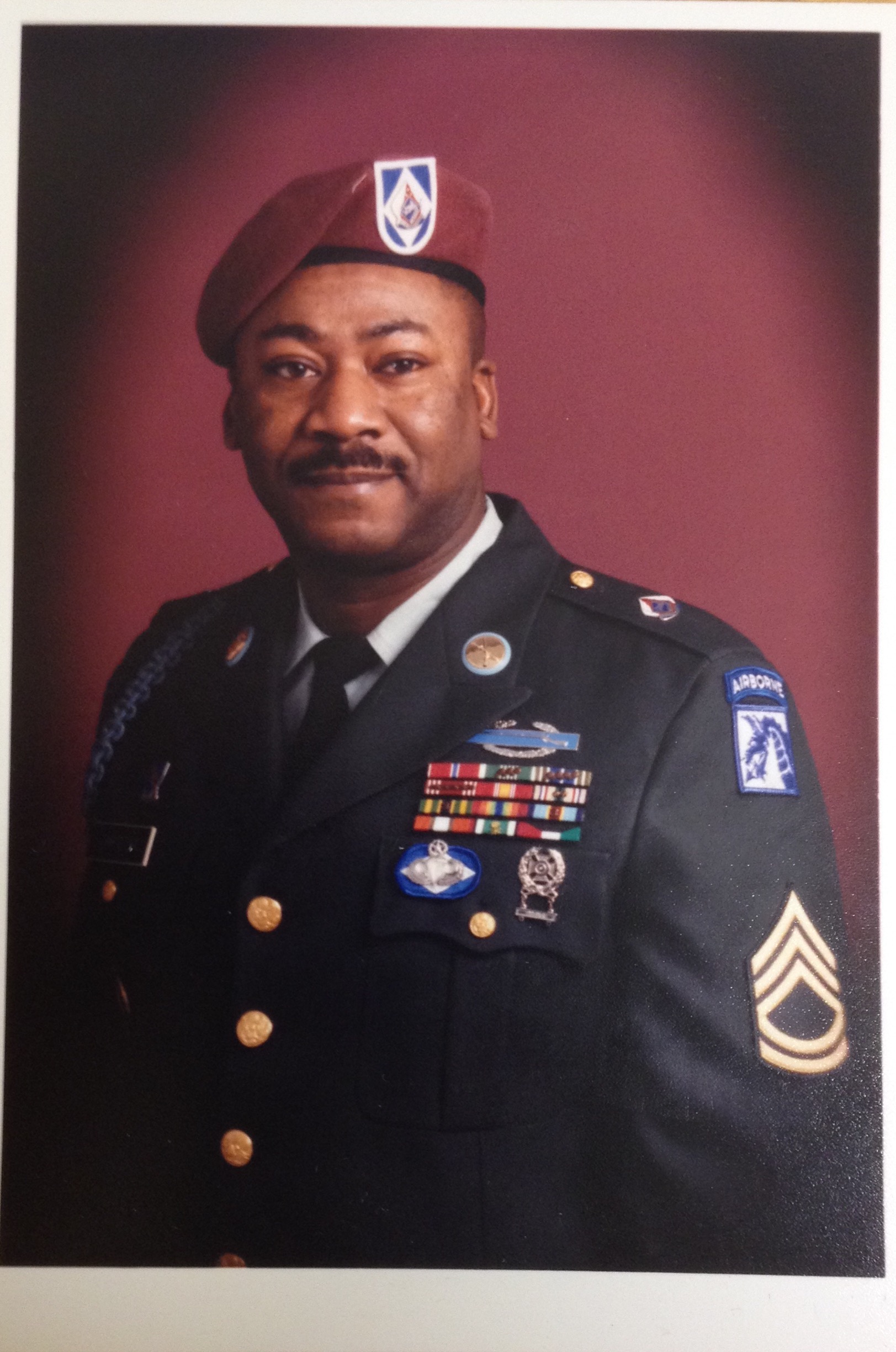
Dr. Ray Christian didn’t grow up in Appalachia; in fact, he spent the first third of his life in Richmond, Va., living in a ghetto with his illiterate mother, who he credits with driving his thirst for education, his two older sisters and an “emotionally inaccessible stepfather,” as he describes it. Then, there were 20 years in the U.S. Army as an infantryman and paratrooper awarded The Bronze Star and Combat Infantryman’s Badge.
He learned a lot about life while he was in the service where he was forced to grow up fast. He also credits that experience for convincing him that he needed a college education. He wanted options after his 20 years of service ended, and education was a steppingstone.
It’s these last 20 years in education in the Appalachian mountains that have defined Christian and given him a spotlight in the world, however. With a bachelor’s degree in liberal studies from Excelsior College, a master’s degree in public history from N.C. State University, an Education Specialist (EdS) from Liberty University, he became an adjunct professor at Appalachian State University, after moving to Boone, North Carolina when his wife was hired by the university. While there, he earned a doctorate in doctorate in education leadership (EdD) also from Liberty University.
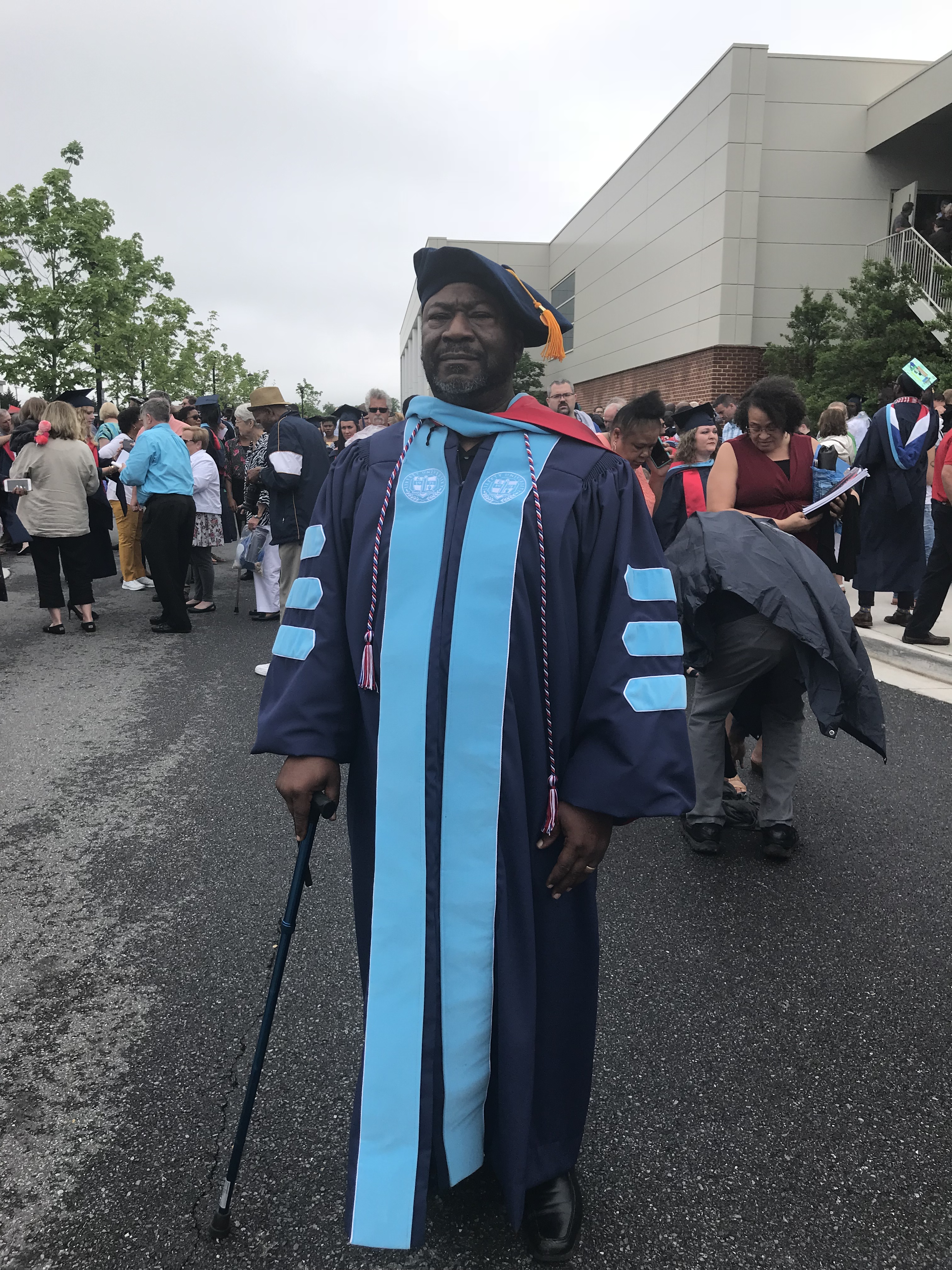

“I taught at Appalachian State for about 15 years, but I’ve taken a little pause right now to take care of my health and focus on reaching a broader audience with my storytelling,” said Christian.
“Education is a great equalizer in terms of giving you more options. But people have to believe they can work around whatever disadvantages may exist in their life to achieve education. Often people who have come up hard have the least amount of empathy. They think that if they succeeded in getting an education everyone else ought to be able to as well.”
He wrote his dissertation on risk and resilience in African American children, exploring why some children do well in spite of their environmental and social disadvantages. He talks about risks as factors that create negative social outcomes and low academic achievement, such as limited education opportunities, racial discrimination and parental conflict. Resilience, on the other hand, contributes to children’s academic success and is composed of elements that serve as protective factors that can create positive academic outcomes, such as parental involvement, parental education, and religious.”
“A lot of people don’t have the factors that let them get over that last hump. One day may be the last straw. ‘I failed one more class. One more person told me I’m a bad person, and there’s no way I can do this.’ You can never have enough people tell you that you can do it.”
Christian sees the achievement gap as wider for Blacks in Appalachia than for Blacks living in urban areas, with the number one reason being the lack of community. According to the U.S. Census Bureau, Watauga County’s Black population is less than two percent.
“The absence of a Black community is magnified in rural areas where family and church mean a lot,” Christian said. “Small, tight-knit groups form and are very exclusive.”
Christian notes that Boone Mennonite Brethren Church, the largest Mennonite congregation in North Carolina, is the only church in Watauga County with Black origins. In 1911, Rev. Tschetter started Mennonite services in Watauga County in what became known as the Junaluska community of Boone. In 1918, the congregation built the church that still stands today.
As an adjunct professor, Christian taught two courses, “The Souls of Black Folk,” and “Storytelling: Life in the Narrative.” He loved the classes and hopes to get back to teaching them soon.
“At first, they are careful, especially the white students, because they don’t want to say anything offensive,” he said. But near the end of the class, they’re throwing everything out.”
“Some stories are universal. We’re not so different after all – we have the same problems, same concerns, same fears. I encourage students to go beneath the surface and explore what about you the person, not you the color of your skin. White students often say, ‘I didn’t know you felt that way. I didn’t know it happened all the time.’”
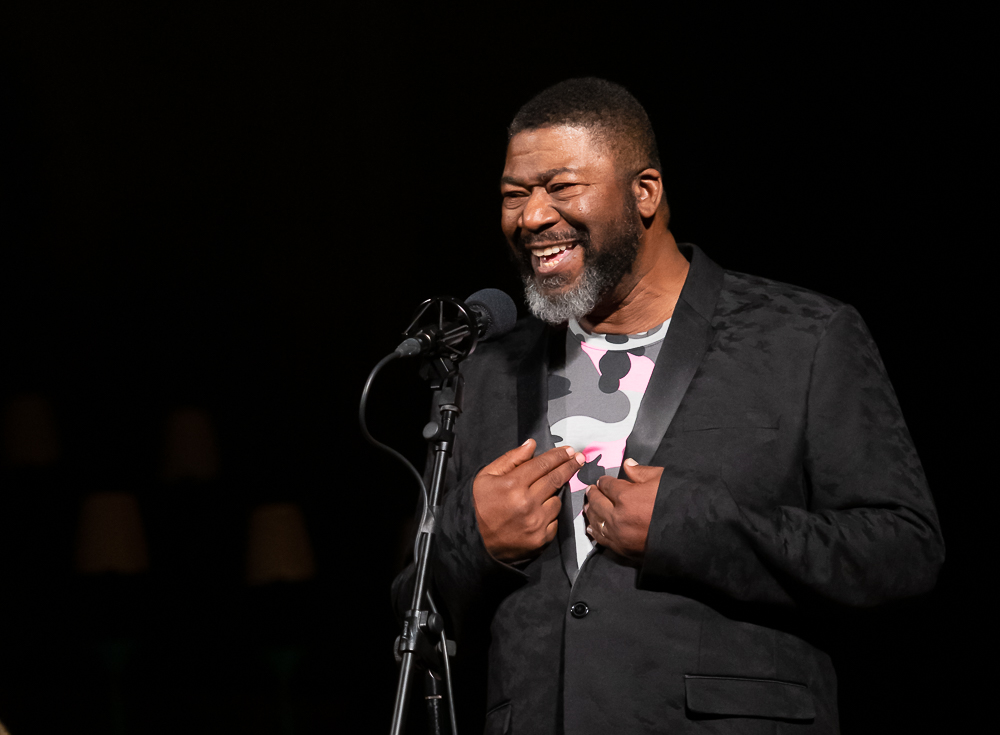
Christian has become one of the best and most famous Southern storytellers in the world. His stories have appeared in Reader’s Digest’s “Best Stories in America” (2016 and 2017) editions. He was selected as the 2017 Serenbe France Focus Storytelling Fellow (Atlanta, GA), and his stories have been featured on NPR radio shows such as “The Moth Radio Hour”, “Snap Judgment”, and “Backstory”, as well as the “Risk” podcast.
Christian is a 12-time Moth Story Slam Champion and winner of the 2016 National Storytelling Festival Story Slam. He has appeared on Moth Mainstage, The National Storytelling Festival Exchange Place (2019) and was part of the 2018 tour of “Snap Judgment Live!” In 2018, he was named as the best-known storyteller in the south by Bitter Southerner magazine.
Christian is currently the producer and host of “What’s Ray Saying”, a podcast that utilizes history, storytelling and commentary to provide a unique perspective on the African American cultural experience. He is a member of the Academy of Certified Archivists and has been selected by the Department of State as a Fulbright Specialist scholar in education and storytelling narrative and will teach faculty and graduate students abroad about storytelling and narratives.
Christian and his wife, Tiffany, live in remotely about eight miles outside of Boone, N.C., where they’ve raised six children. Four are still in the area and two are out-of-state. Twins are still living at home.
“We’re the only Black family in our area,” he said. “Even though we’ve lived here for 17 years, some people still get weirded out when they see me out and about. They don’t expect to see a Black person living there.”
He admits that he still fights battles as a Black person living in the South.
“People want to tell you about all the Black people they’ve met in their life. They assume I’m like every other Black person,” said Christian. “I’m still stopped often by police when I’m out driving. For a while it was once a month. I always have to think about what I want to do versus what I need to do if I want to stay safe.”
“Despite the challenges of raising Black children in Appalachia, we find the school system here in the Boone area outstanding,” Christian said. “Teachers colleges in the state and Appalachian State University have produced lots of good teachers.”
At the heart of everything for Dr. Christian is storytelling. In his podcasts, he explores issues such as the legacy of Black children in slavery, plantation life and current trends; Black leadership; Black hair issues; Black Americans and the police; the origins of a false narrative of Black American history; the nature of Black American assimilation into white culture; Blacks and whites in education; and dying while Black.
“You can’t deny a person’s individual story. Their perception is absolutely true. Factual stuff you can debate. But we’re not going to debate what you feel.”
“History isn’t a series of starts and stops; it’s one long continuum,” he said. “It’s important to remember so we don’t repeat mistakes. Stories serve to inspire and connect us to another time.”
 Karen J. Rieley