Our cookie choices grow each week! We’re also open to suggestions of other cookies you’d prefer, as well as other baked foods, such as dessert bars, pies, quiches and casseroles. Cookies are $18/package of 36, unless you request more.






In Essence
Our cookie choices grow each week! We’re also open to suggestions of other cookies you’d prefer, as well as other baked foods, such as dessert bars, pies, quiches and casseroles. Cookies are $18/package of 36, unless you request more.
I’ve struggled with starting this blog post, because, I fear that I have nothing original to say about achieving a healthy lifestyle. I mean, really, what hasn’t been researched, written, criticized and rehashed already? So much has been put out there for so long that it even contradicts itself in an attempt to at last find a solution to achieving the perfect weight and body. Low fat is the answer; no, it’s not because low fat, processed foods have hidden sugars in them. Eggs raise your cholesterol; no, they’re good protein. Coffee causes heart disease; no, it actually improves cognitive function.
Similarly, is there anything new under the sun to say about how to lose weight. Seemingly not and the end result seems to be that no specific diet plan offers a golden bullet to weight loss. Frustratingly, it seems that it all comes down to taking fewer calories in than you’re expending, or, conversely, increasing your activity level to offset the calories you consume.
Once I became a teenager and conscious of my body image, I intermittently tried every weight loss program out there – Atkins, Keto, Mediterranean, South Beach, DASH, Glycemic Index, Mayo, etc. I tried just eliminating certain foods like sweets and/or carbs or alcohol altogether. I even tried a weight loss candy called Ayds, which appears to no longer be in production, that you could buy in chocolate or caramel flavors and were supposed to eat about 30 minutes before a meal to curb your appetite. I went to one of those weight loss clinics where staff dressed up in white coats and uniforms pretended to have medical knowledge and gave me prepackaged food and a special drink to solely consume for weeks at a time.
In truth, they all worked for a while, although some kept my interest and determination for shorter lengths of time than others. However, they all failed, or I failed them, eventually. I got busy and would forget to log what I ate during the day. I’d go out to party with friends and couldn’t resist eating too much or too rich of food. There was always some holiday or trip or other occasion coming up, and I would try to tell myself to eat carefully so that I could at least maintain my weight loss, but then succumb to all the special food associated that had been prepared. I’d lose about 10 to 15 pounds and decide I was doing so well that I could afford to splurge “just once,” which always turned into days of splurging and then going off the diet altogether. I’ve signed up and canceled my Weight Watchers online membership so often that I’m running out of passwords to set up when I enroll yet again. I beat myself up for my lack of willpower for so long, and then I decided that wasn’t healthy and evidently wasn’t helpful, given that I continued to not be able to stay on a diet, so I tried to tell myself that it was better to just accept myself as I was. After all, life’s too short, right?
Now that I’m 65 years old, I have a new outlook on my future. Perhaps some of what I’ve been through and discovered about myself along the way will resonate with some of you. Maybe that will be inspirational or at least encouraging in some way.
I’m not sure I can pinpoint why this happened, but one morning I woke up and knew I wanted to focus on my wellbeing and healthy eating. My very first decision that morning was to stop drinking alcohol essentially altogether.
Part of my decision was the realization of how many calories I could save by simply eliminating alcohol. I estimate that I have reduced my total weekly calories by 5,250 to 7,ooo calories. Given that a reduction of 3,500 calories equals a loss of one pound, that decision alone might result in a weekly loss of at least one pound.
Beyond the weight loss benefits, however, was my desire to improve my overall health – physically, mentally and emotionally. That’s what turning 65 does to you, I guess. You start to evaluate the quality of your life and what you need to do to prolong it. When I was in my 20s, 30s and even 40s, I could recover from abusing my body by eating too much, eating the wrong things and drinking too much. Not that there weren’t consequences – mainly in the form of weight gain – but I could still physically do most anything I wanted.
At 65, I had begun to realize physical limitations that aggravated me. My knees hurt which made going up and down stairs and hiking the mountains I so love difficult. I showed signs of arthritis in my hands and fingers. I didn’t have the energy to do all the things I used to do, and that meant I had to pace my work with periods of rest.
The physical limitations were the wake-up call, but the impetus for change was probably the fact that I semi-retired about two years ago. For the first time in my adult life, I had more time to myself to pursue personal interests. I wasn’t sitting in an office working at a computer or attending boring meetings all day. I could be out and about traveling, visiting attractions, attending arts events visiting with friends. My physical limitations were inhibiting some of that, however, and I didn’t like it. Something needed to change.
I’ve spent a lot of this blog talking about what led me to deciding to change my food and alcohol consumption, because I think the process of getting to the point of making changes is more important than the actual plan I have decided to pursue to reach my goals. I needed to change my frame my mind and see the changes as a new direction in my life rather than as a short-term crash diet. The changes needed to become habits and my lifestyle.
It may surprise you to learn that my biggest inspiration has been my 27-year-old niece. I recently learned that she has lost 60 pounds in the past four years. More than that, she has completely changed her lifestyle, focusing on healthy and fresh food and becoming much more physically active including running marathons. She’s done all that without letting it consume her life, however. I’ve been around her fairly regularly in those four years, most often during meals out and at special occasions and had no idea she was making such major changes in her life. To me that seems like someone who has incorporated a new philosophy in her life rather than putting on a temporary bandaid. I’m proud and impressed by her, and I’m reminded once again how much we older women can learn from the next generation of women who are less encumbered by the traditions, expectations and limitations that my generation inherited.
For what it is worth, I have rejoined Weight Watchers, now called WW. It is a.new plan that focuses on points rather than calories and lots of “free” choices, and it works well with my new philosophy of living and eating. This plan is working much better so far than previous ones, which is encouraging.
But, mostly what has changed is my attitude about myself. I am focusing on doing those things that benefit me and make my life better. I am relearning what my personal passions are and trying to pursue them in some way every day. I am trying not to focus on pounds on the scale but on how I feel about what I’m eating. I am making plans and setting goals for the next 25 years and feeling more positive that I will be healthy enough to realize and enjoy these goals.
I’d love to hear about your goals and successes! I’m sure we can learn from each other. She persisted and so can we!
 A good friend posted this meme today. I saw it this morning, before I started getting ready for church. It bothered me throughout the morning and, now, it is mid-afternoon, and I’m still disturbed by it.
I started to post back something equally “in your face,” like, “So you’re saying that the President’s party wants to let no one into our country, thinks anything that law enforcement does, no matter how biased or unwarranted it may be, is okay, and wants to arm everyone of all ages and without regard to their background have guns of all types including semi-automatic and automatic rifles? I refrained, mainly because the person who passed the meme along is my friend, and I don’t want to offend her, even if what she posted offended me. I’m sure she didn’t mean to personally offend me.
But, as the day has gone on, I realize that this is the point – she DID offend me, because in a world that through her eyes is either one or the other, I’m the other, it seems. I’m registered as a Democrat, although I have not always voted along party lines. That does not make me a DemocRAT, as another one of the memes this friend has posted called the party.
I matter. Each one of us matters, but memes like these just lump us into groups at which other groups can point fingers and make disparaging remarks. We seem to have forgotten any form of empathy or consideration for the other person.
I don’t know any Democrats who are advocating for no borders and want anyone and everyone to enter our country without any scrutiny about from where they came, what they’ve done prior to coming here or why they want to come to our country. I do know Republicans and Democrats who are frustrated that Congress cannot seem to pass meaningful, effective, humane immigration laws and who are dismayed at the way we are treating people – families and children – who are seeking asylum from horrible, dangerous conditions in their own countries.
I don’t know any Democrats who hate the police; however, I do know Democrats and Republicans, myself included, who are concerned about racial profiling, insensitivity to or unawareness of mental health issues, and political agendas that some police officers have shown.
I don’t know any Democrats who are advocating for taking guns from all citizens. I do know Democrats and Republicans who are in favor of gun sense safety laws such as more effective background checks, keeping guns out of the hands of mentally ill people and banning assault weapons.
I assume that all of us are concerned with security, regardless of political party.
Advent has special meaning this year, at least for me, in helping to see some hope in the midst of the chaos and division to which we are being subjected.
Isaiah 11:1-10 – The Branch From Jesse
11 A shoot will come up from the stump of Jesse;
from his roots a Branch will bear fruit.
2 The Spirit of the Lord will rest on him—
the Spirit of wisdom and of understanding,
the Spirit of counsel and of might,
the Spirit of the knowledge and fear of the Lord—
3 and he will delight in the fear of the Lord.
He will not judge by what he sees with his eyes,
or decide by what he hears with his ears;
4 but with righteousness he will judge the needy,
with justice he will give decisions for the poor of the earth.
He will strike the earth with the rod of his mouth;
with the breath of his lips he will slay the wicked.
5 Righteousness will be his belt
and faithfulness the sash around his waist.
6 The wolf will live with the lamb,
the leopard will lie down with the goat,
the calf and the lion and the yearling[a] together;
and a little child will lead them.
7 The cow will feed with the bear,
their young will lie down together,
and the lion will eat straw like the ox.
8 The infant will play near the cobra’s den,
and the young child will put its hand into the viper’s nest.
9 They will neither harm nor destroy
on all my holy mountain,
for the earth will be filled with the knowledge of the Lord
as the waters cover the sea.
10 In that day the Root of Jesse will stand as a banner for the peoples; the nations will rally to him, and his resting place will be glorious.
My hope is that we will remember how to value each other for what we each can bring to the world – right AND left, Democrat AND Republican and others in between, saint AND sinner (because we are all both). We can’t survive in a to-the-death battle. Yes, one side wins each election, but we all have to live and work together afterwards. Advent gives us hope for a better world, one in which “the wolf will live with the lamb, the leopard will lie down with the goat, the calf and the lion and the yearling together.”
Neither Trump nor either political party will save us. Trump is not God’s messenger; I’ll try not to think of him as the anti-Christ, mostly because I don’t believe that we are near the end of the world. These only know how to divide us, because to divide us is to control us and our votes.
We have a responsibility as humans tasked with stewarding the earth to start relying on our own common sense and common values based on our spiritual beliefs in what is good and right. The Golden Rule is universal to all major religions – from the Baha’i Faith to Buddhism, Christianity, Islam, Judaism, Native American spirituality and others. I personally like the Buddhist version: “One should seek for others the happiness one desires for oneself.”
I do not believe that Republicans should win every election, nor do I want Democrats to win every election. I don’t think a Democrat House and a Republican Senate are healthy; I particularly don’t think a President of one party trying to lead with both the House and Senate controlled by the other party is productive. But, it happens, and, fortunately, our Constitution anticipated the limitations of that and set up a process to keep a healthy mix. Every four years the president, vice president, one-third of the Senate, and the entire House are up for election (on-year elections). On even-numbered years when there isn’t a presidential election, one-third of the Senate and the whole House are included in the election (off-year elections).
I think the problem with this past election is that it has never ended. We’re still in a “them against us” mode, when Congress and the President should be well into a process of working together to build compromise and already coming up with solutions to big problems like immigration, climate change, crime, drugs, mass killings, terrorism and national security, fair election process, equal pay, women’s health, sexual abuse, mental health, hunger, homelessness, poverty, shrinking middle class, our dying industries, etc.
I propose that each of us as individual citizens take action, since Congress, which has everything to lose, is unlikely to do so. Write your Congressional representative TODAY and state that you will not vote for anyone currently in office and up for reelection unless she promises to vote for term limits and no lifetime pay or pension payments. Regardless of who wins this next election, we need change, and we can’t expect that as long as we let the current system continue.
When twin brothers Mark and Will Adkins, 51, first saw High Valley, 160 acres in the mountains of North Carolina on the New River in 2006, they thought it would be a perfect place to build, develop or sell. After all, as owners of Waterfront Group, which they established in 1994 and which has become one of the Southeast’s most successful land development and second-home marketing companies, they know a good business deal when they see one, such as their purchase of The Lodges at Eagles Nest and development of its second phase.
But the Adkinses also believe that land is more than just real estate. “It’s where you lay down roots and build your dreams,” Mark Adkins said. “Our mission is to turn your dreams into realities.”
That mission and the brothers’ strong commitment to helping others led them to put High Valley to special use as a place for families with children who have life-threatening diseases, rather than develop or sell it. They renovated the hunting lodge built in the early 1950s on the property into a place where these special families could come for a week of much-needed relaxation. The Adkinses committed to provide the lodge and food for the week at no cost to the families, so that more could participate.
They began work immediately, with the help of many volunteers, funding the costs themselves. Camp New Hope opened to its first family in just 14 weeks. During the short season of the first year, the lodge provided nine families with a week’s vacation.
Renovations continued in 2007 including glassing in the 30-foot long front porch, adding a 20’x50’ stone patio and grill, picnic areas and a waterwheel with a swing. Camp New Hope is now hosting an average of 42 families each year. Families are able to enjoy canoes, kayaks, tubes, volleyball, baseball, soccer, fishing and a “swimming hole.” A play set caters to the smaller children.
The Adkins brothers want to meet the growing need for no-charge facilities like Camp New Hope. They are actively searching to find another special piece of property that can one day become the second Camp New Hope.
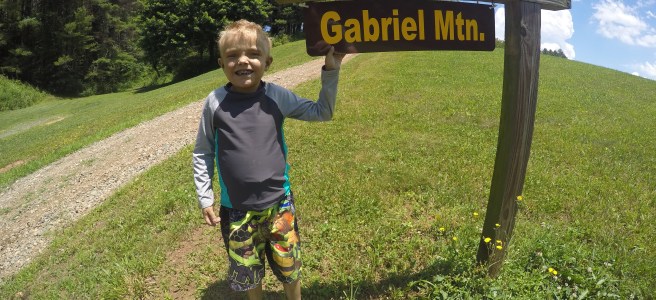
Their mission is to provide campers with a life-changing moment and renewed hope for the future, knowing miracles happen every day. The children who come to the camp have a range of diseases, such as Spinal Muscular Atrophy (SMA), Trisomy 18, mitochondrial disorders and Batten disease which is always fatal. Randy Brown, camp director, remembers one child in particular, Gabriel, who had liver cancer.
“When he arrived at camp, he looked very sick, didn’t smile and was withdrawn for the first couple days,” Brown said. “We tried to interact with him, but weren’t successful until we told him he was going to be visited by Santa Claus.”
Sam “Santa” Simmons, a retired dentist from Sparta, N.C., comes to the camp every week. After he retired, Simmons decided to go to school to become a professional Santa. He loves to tell the campers the story about the best gift of all given at Christmas, Jesus Christ. And the children love him.
“When I told Gabriel that Santa was coming, his face lit up,” Brown said. “He said, ‘Here, he’s coming here?’ I told him, ‘Yes, just to see you.’”
The next day, when Santa arrived, Gabriel went running out to him as fast as he could given he used a crutch. “Santa asked Gabriel what his biggest wish would be if Santa could grant it,” Brown said. “Gabriel told him that it would be a hug from Santa.”
Gabriel ended up having such a great experience that he made “Miss Randy” promise him that he could come back next year. But in December Gabriel’s father emailed the camp to let them know that Gabriel had died.
“Gabriel’s parents said that all he ever talked about was coming back to camp and seeing Santa,” Brown said. “I still cry when I think that I wasn’t able to fulfill my promise to him.”
Brown admits the work is hard, but she finds it very rewarding. “We are so heartened when we see campers enjoying themselves, like turning a caterpillar into a butterfly,” she said. “It keeps your life in perspective. Your back and legs may hurt and you may be tired, but then you remind yourself that’s not that big a deal compared to what the kids put up with every day.”
Mary Sue Street, broker-in-charge for Eagles Nest Real Estate Office, is mother to the Adkins brothers. She shared a special story about a time when Will took one little girl staying at the camp up in his helicopter. “After the ride, her parents told Will that it was the first time she had smiled or laughed in years,” Street said.
“Just look at the smiles on the children’s faces and you will know why this camp is so important to my brother and me,” Will Adkins said.
“Camp New Hope has become an important part of the West Jefferson community, which is next door to the camp,” Street said. “Many of its citizens volunteer regularly to help the campers and their families.
“Eagles Nest occasionally does fundraisers to benefit Camp New Hope as well,” Street said. Proceeds from this year’s Open House & Builder Showcase, May 4-5, which Eagles Nest hosted were donated to Camp New Hope, Spirit Ride, Feeding Avery Families Inc. and Hospitality House.
The lodge was renovated last year to sleep up to 18 people for big family vacations. “Right now, we’re tweaking what we have, buying some new equipment and improving the roads,” Brown said.
Camp New Hope depends on donations and volunteers. Visit http://campnewhopenc.com/ to learn more.
Karen Rieley
Published in the Autumn 2019 issue of Carolina Mountain Life – pp. 98-99
Eat, shop, explore—opportunities to indulge abound here for residents and tourists in the High Country. While touring around, be sure to stop in the town of Crossnore to experience a special coffee shop and café, second-hand store, weaving room, fine arts gallery and fresco by a world-famous artist. Crossnore is in Avery County, about halfway between Linville Falls and the town of Linville on US-221.
The town developed around a boarding school established by Dr. Mary Martin Sloop, who, with her husband, Dr. Eustace Sloop, came to Crossnore in 1911 and began providing healthcare. In 1923, she set up two looms to teach native mountain weaving to women and girls living in the area to support themselves. The Weaving Room at Crossnore School & Children’s Home now employs women and students working on 30 looms and in a finishing room.
Crossnore School & Children’s Home is a nonprofit 501(c)3 organization providing residential foster care for children in crisis from North Carolina. With 90 children living on the 86-acre Avery Campus in Crossnore, 40 living on the 212-acre Winston-Salem Campus at the edge of downtown Winston-Salem, and a satellite office in the historic district of downtown Hendersonville, Crossnore is a sanctuary of hope and healing for children.
Since its opening, Crossnore School & Children’s Home has operated a second-hand store and fine arts gallery, in addition to the Weaving Room. In 2006, Crossnore School & Children’s Home acquired Miracle Grounds Coffee Shop and Café. The businesses are all located in Crossnore and are self-supporting with net revenue going to help fund the nonprofit’s mission.
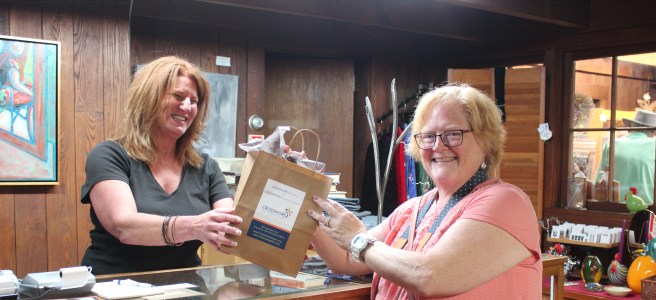
Shop from an array of treasures in the Blair Fraley Sales Store, select from beautiful hand-woven goods made on looms by Crossnore weavers and purchase works of art by regional painters, sculptors and fine craft persons in the Crossnore Fine Arts Gallery. A beautiful fresco awaits your viewing in the E.H. Sloop Chapel. When you need a respite from all that shopping and cultural enrichment, stop in the Miracle Grounds Coffee Shop & Café to enjoy specially selected coffees from all over the world, specialty drinks, teas and breakfast and lunch specials.
The Weaving Room is a working museum for Appalachian history. The weavers are always willing to explain their craft and answer questions. Whenever you decide to visit, you are likely to find Ellie Hjemmet and Shirley Gragg at their looms. The women of the Weaving Room are paid by the completed piece and by the hour for some other tasks.
Hjemmet was the manager of the Weaving Room for 12 years, 1986-1998. Now she works part-time four hours a day weaving.
“Weaving not only helps me make some money, but it also eases my mind and makes me feel good,” Hjemmet said. She also teaches in the week-long classes that are offered to the community and plays music at Crossnore events.
Gragg, who has been weaving for 42 years, said, “It’s a lot of fun. You can sit here and meditate. I come here about four days a week for seven to seven and a half hours a day. I’ve made hundreds of pieces over the years and thousands of passes through the loom a day.”
In the Weaving Room store, you can shop for woven goods including wearables, tartans, kitchen and table linens, home décor, baby apparel and more. For those who find the actual act of weaving intriguing, classes are offered to the public three times per year on the Avery Campus. At the end of the session you will have completed handwoven placemats and a table runner. You can come back later to volunteer as a weaver and donate the goods you make.
Crossnore Fine Arts Gallery, open year-round, specifically supports the school’s Stepping Stones program that transitions students from foster care to successful independent living. Gallery shows are held throughout the summer. Local and regional professional artists donate a portion or all of the sales price for Stepping Stones.
The Blair Fraley Sales Store is the largest resale shop in the High Country and offers treasures to locals and visitors alike. Generous friends donate quality new and used goods. The store is immaculate and well-organized with products that are displayed well.
What began as a weekly sale to provide clothing for the children at Dr. Mary Martin Sloop’s school is now an ongoing second-hand store that is a busy emporium and important source of income for the nonprofit. The store is named after Blair Fraley, the young daughter of John Fraley, a former trustee for the nonprofit, and wife Guyann; Blair died in a bicycle accident.
Miracle Grounds is the nonprofit’s newest business. It is open Monday through Saturday, from 7:30 a.m. – 5 p.m. The coffees are selected from all over the world and roasted in nearby Boone, N.C. Many varieties grow on organic farms and are purchased in fair-trade business agreements.
Children ages 14 and up who are part of Crossnore School & Children’s Home may work in the nonprofit’s businesses. During the school day their work is part of a class. They are paid for work done outside of class and in the summer. They go through an application process and interview before being hired.
“We try to teach them all the skills they will need when they go into the real world,” said Sherry Nixon, who is the Blair Fraley Sales Store manager. “We can help the students overcome behaviors that might keep them from being successful. That’s part of loving them, just like we do with our own children.”
The children receive more than job training from the experience. Working with staff gives them the opportunity to interact with someone other than their cottage parents, case manager and teachers and helps them build positive relationships with adults.
The E.H. Sloop Chapel, open daily from 8:30 a.m. to 5 p.m., at no charge, houses world-famous fresco artist Benjamin F. Long IV’s powerful rendering of Mark 10:14, “Suffer the little children to come unto me and forbid them not; for such is the kingdom of God.” The art fills the back wall of the sanctuary and is part of the Benjamin F. Long IV Fresco Trail that includes nine frescoes at six locations in the Blue Ridge National Heritage Area (https://www.blueridgeheritage.com/destinations/blue-ridge-frescoes/).
Crossnore School & Children’s Home provides love and assistance 24 hours a day on its Avery and Winston-Salem campuses to children in foster care. The children live under the close supervision of two cottage parents, who model a healthy, family relationship in a homelike setting. It is licensed to serve children from the ages of one to 21. The nonprofit also provides clinical services to children and families at all three of its locations. Its community-based services include single-family foster care and therapeutic foster care across western North Carolina.
The Youth in Transition program is designed to support youth who have experienced foster care during their critical transition into young adulthood. It offers financial literacy and peer counseling services, as well as education, housing, transportation, and career support for young adults up to the age of 26.
Visit www.crossnore.org to learn more about the nonprofit’s mission, the businesses that support its work and ways you can be a part.
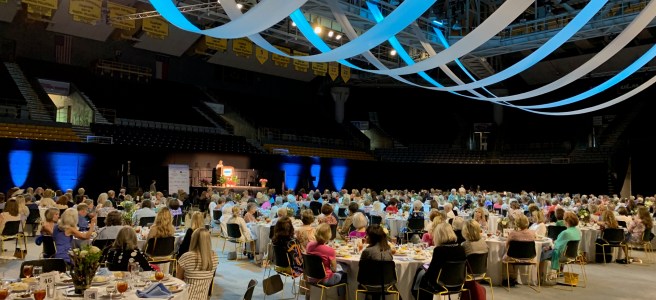
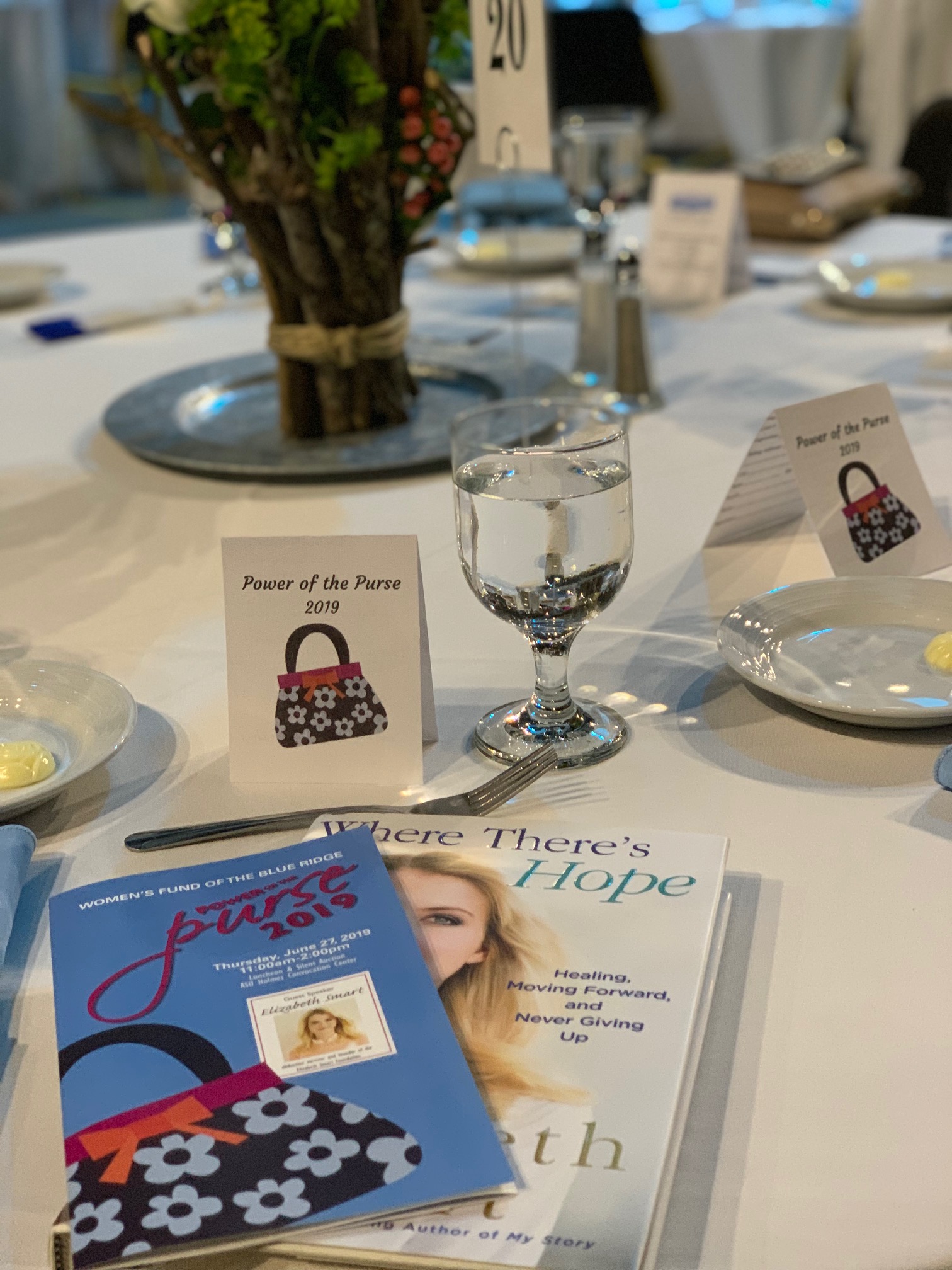 Four hundred fifty women and four men generated much excitement in Appalachian State University’s Holmes Convocation Center during the 2019 Power of the Purse Luncheon on June 27, the kind of positive energy that improves the lives of women and girls in the High Country. As the largest annual fundraiser of the Women’s Fund of The Blue Ridge, the luncheon raises funds that are granted annually to nonprofits providing vital services in Ashe, Avery and Watauga counties.
Guests bid on a wide range of items—landscaping services, acupuncture, entertainment venues, pottery, art, electronics, purses and more—donated by nearly 100 sponsors. Last year, ticket, merchandise and silent auction sales and monetary donations given at the event raised $60,000, according to Karen Marinelli, who was named executive director of the Women’s Fund of the Blue Ridge in 2018.
The fund granted a total of $103,000 to 10 area nonprofits including Community Care Clinic, Creative Peacemaker Center, F.A.R.M. Café and Western Youth Network in Watauga County; Hospitality House and Hunger and Health Coalition in Ashe, Avery and Watauga counties; OASIS in Watauga and Avery counties; and Reaching Avery Ministry, Shoes for Kids and Volunteer Avery County in Avery County.
“With this year’s luncheon attracting the largest audience in our history, we hope to fund more nonprofits with larger grants,” Marinelli said. “We have started up our outreach program again to attract new members and have a new membership program beginning soon.”
“The nonprofit has changed a lot since 2006,” said board member Josette Glover. “We now have an advisory board of previous board members and are attracting well-connected, philanthropic women from outside the High Country.”
Following lunch, guests heard from child safety activist, author and abduction victim Elizabeth Smart. Her abduction in 2002, when she was 14, was one of the most followed child abduction cases in recent history. Her captors controlled her by threatening to kill her and her family if she tried to escape. She was safely returned to her family nine grueling months later.
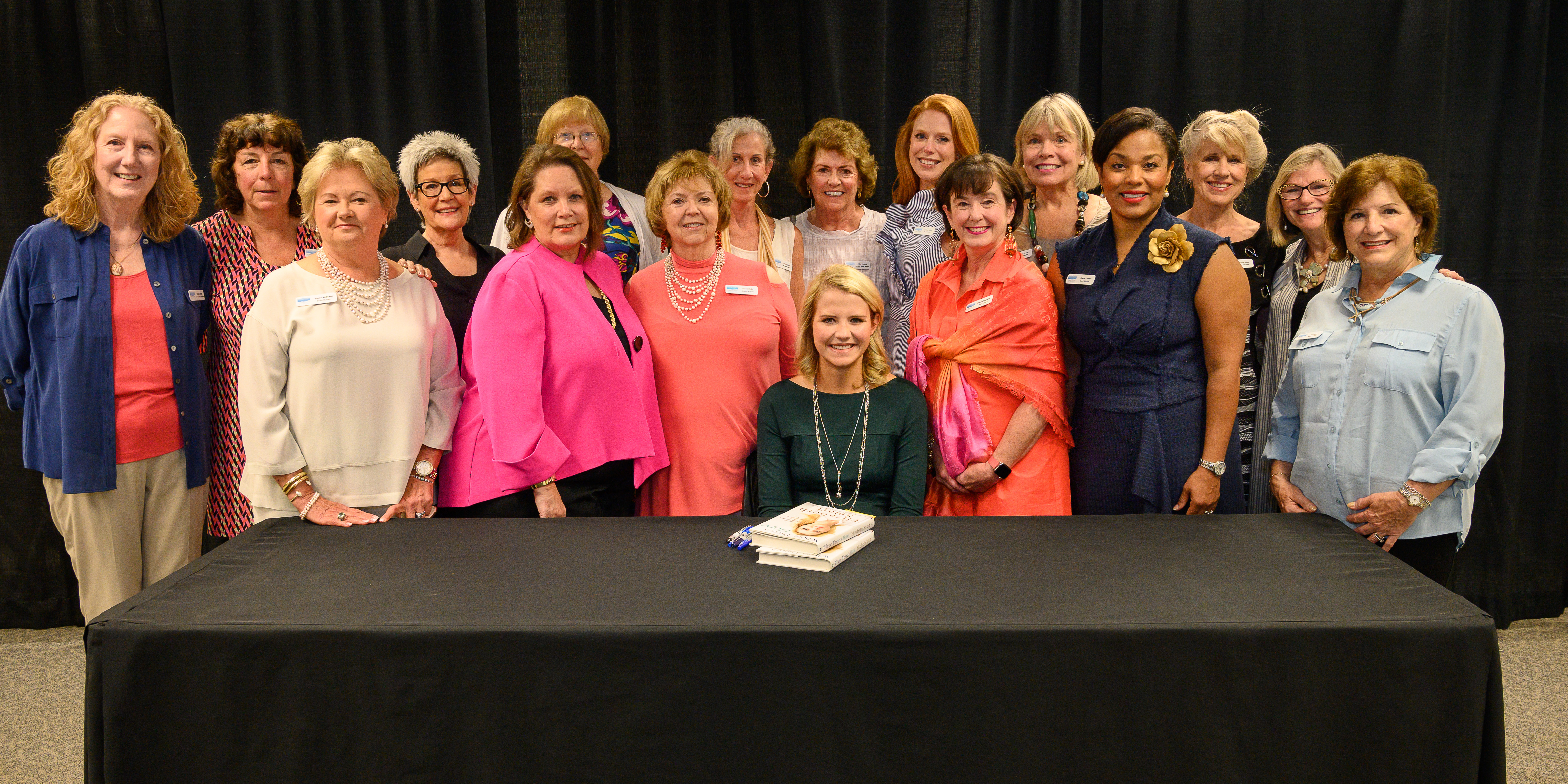 Smart has become an advocate for change related to child abduction, recovery programs and national legislation. She founded the Elizabeth Smart Foundation and has helped promote the national AMBER Alert, Adam Walsh Child Protection & Safety Act and other legislation to help prevent abductions.
Smart shared thoughts from her recently released book, Where There’s Hope, about what it takes to overcome trauma, find the strength to move on and reclaim one’s life. She emphasized the importance of support from family and others in a person’s moving forward. Even given the many rape, abuse and emotional torture that she endured while imprisoned, “It was always so much more comforting to know that God was on my side than to be alone, so it was easier to believe than not.”
“It is extremely empowering for me to see a big room full of women helping others,” Smart said.
Jenny Miller, former director of High Country United Way, started Power of the Purse after attending a similar event at another United Way. “Tricia Wilson told me about the event, attended it with me and then told me we needed to make this fundraiser happen in the High Country, too,” Miller said. “So, what do you do when you want something done? You put 10 women around the table.”.
The Women’s Fund of the Blue Ridge was formed in 2014 when High Country Women’s Fund (established in 2006) and another philanthropic nonprofit, Appalachian Women’s Fund, merged. It is sustained by a group of women philanthropists who want to make a positive impact on the lives of women and their families in the High Country.
“Women bind together and help each other,” Miller said in asking the event’s guests to contribute to the cause.
Miller shared the story of one woman, Wendy, to whom the Women’s Fund was able to bring hope and dignity. Wendy was a rising senior at Watauga High School. She had a two-month-old child and was living with an abusive family. In addition to trying to finish school, she worked at two minimum-wage jobs. She feared she would have to drop out of school to take care of her child because she couldn’t afford day care. With the support of a nonprofit funded by the Women’s Fund, however, Wendy stayed in school, graduated, left her abusive family, got a job at Appalachian State University, could afford day care and an apartment and received four years of tuition-free education at App State.
Miller encouraged guests to consider contributing $10 a month, which covers an apartment rental deposit; $25 a month for heating oil; $50 a month for three months of day care, car repairs or gas; or $100 a month to provide tuition-free, books-free education at a state university.
At this year’s event, an anonymous donor gave a match challenge of $10,000 if someone at the event would make a $10,000 five-year matching pledge. Board member and owner of Bickers Consulting Group Mary Bickers rose to the challenge.
Bickers of Atlanta attended the Power of the Purse luncheon for the first time in 2017. She said then, “I had lunch with some friends up here, and they were involved with the Women’s Fund. I’ve heard about it for years and am sold on it because it is all about helping women. It’s a great organization.”
“We’re becoming a highly professional organization capable of making a significant difference in the quality of life of all women and girls living in the High Country,” Women’s Fund board member Josette Glover said.
To learn more about the Women’s Fund of the Blue Ridge, visit http://www.womensfundoftheblueridge.org/.
Published in the Autumn 2019 issue of Carolina Mountain Life – pp. 100-101
 Shannon Carmichael seems destined to have ended up in Banner Elk and the Eagles Nest community. His path through life—being raised in a Beachy Amish-Mennonite community in Ohio, earning a master’s degree in engineering management at Dartmouth, living in an off-grid cabin on Beech Mountain, and learning how to move large stones to build walls may seem incongruous. They are actually all in keeping with his respect for nature and simple living.
Highway 194 between U.S. 19E and Banner Elk offers a lush landscape interspersed with private homes, local businesses and the private airport for the Elk River community. The highway runs between Elk River to the south and Beech Mountain to the north.
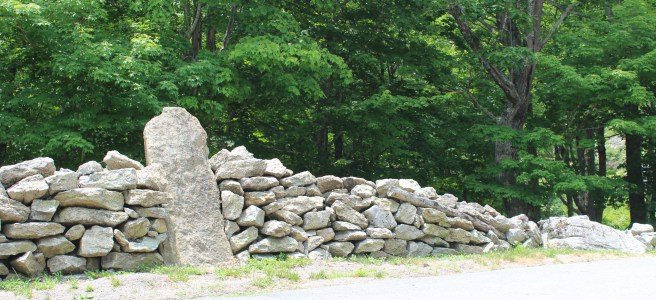
About four miles west of 19E at Elk Park and three miles east of Banner Elk, on the north side of 194, low, serpentine stone walls suddenly appear on a well-maintained open hillside and wind their way up to a large, rustic-looking structure that is the gatehouse for one of the area’s newest living communities, Eagles Nest. The property is owned and being developed by The Waterfront Group founded by brothers Mark and Will Adkins.
As intriguing and striking as these walls are, they are just a hint of how walls are used throughout Eagles Nest. In addition to being eye-catching, the walls are used for erosion control and as guard rails.
“Steve Shields created the serpentine walls in the early days of developing the property,” Carmichael said. “The walls are made of blasting rock from clearing the land for development and are stacked by hand. Smaller stones will move with freezing and thawing and then have to be repaired, so they do better at the base of the mountain which is warmer. The bigger rocks are more stable and are better to use at 5,000 feet and higher.”
“We use a couple of different styles for the big rocks. Some of the walls have small stones with occasional large, vertical stones that have been flipped so that they show a flat face,” Carmichael said. “I purposefully stack other walls with large stones to make them look natural so that they blend into the surroundings.”
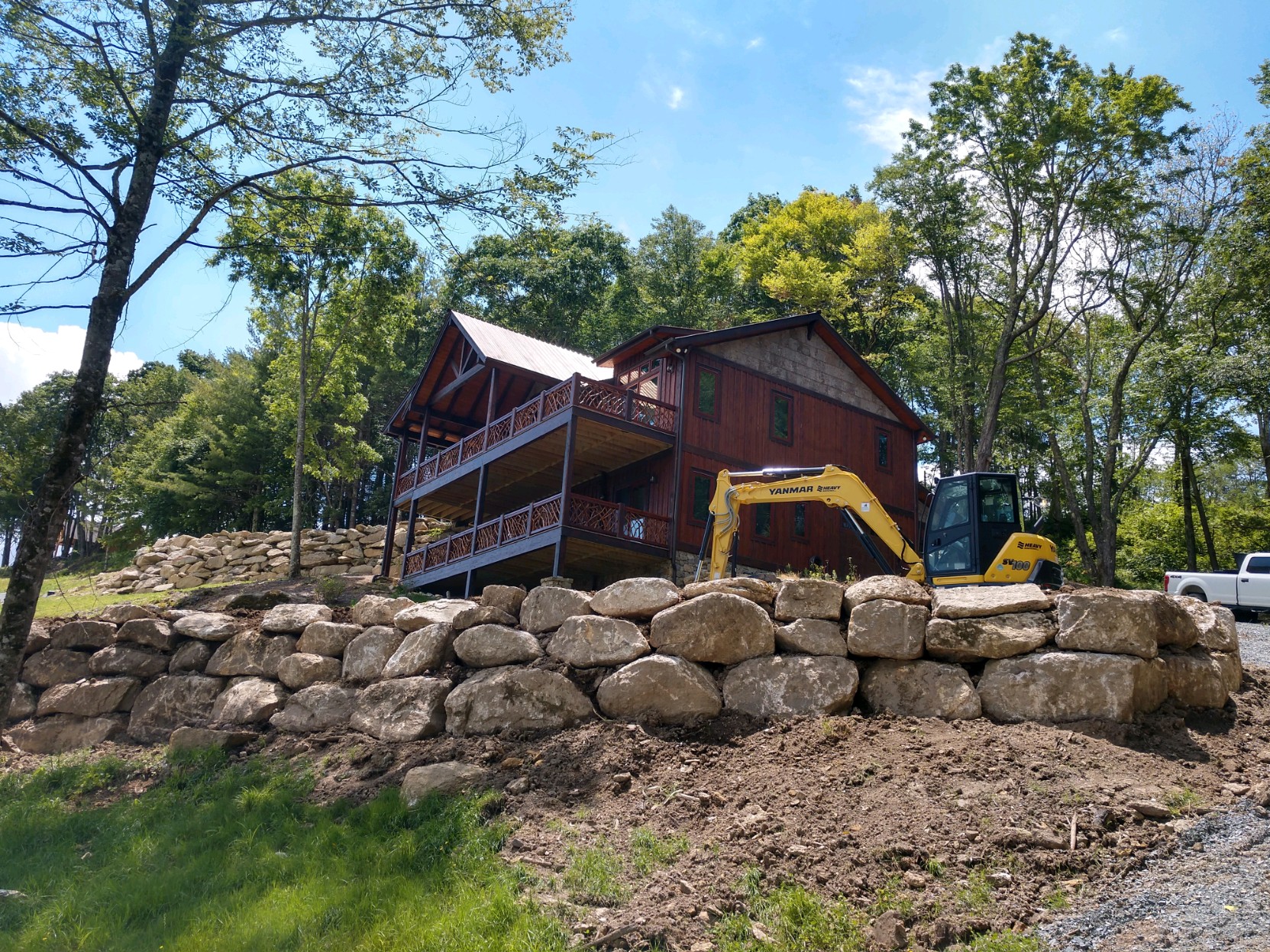
While a large team of people has been involved in stacking stones, building rail fences, landscaping and maintaining the property, Carmichael is responsible for the large stone walls. He operates excavators that have a hydraulic thumb and weigh 35,000, 22,000 or 11,000 pounds, depending on the size of the rocks and the space where he is trying to place them.
 Shields hired him to work on the property, but Carmichael credits Mark Eggers, M & E Excavating, Banner Elk, N.C., for teaching him how to design, use the equipment and build walls out of large stone. “He’s the best there is,” Carmichael said.
Carmichael had lived on the property since 2011 in an off-grid cabin on 60 acres. “I had no electricity or plumbing,” he said. “I grew and prepared my own food and sold cheese and goat’s milk to local restaurants. I kept food cold in a canning cellar and little cave near the cabin, got water from a spring and used a headlight inside after the sun went down.”
As tough as that lifestyle may sound, for Carmichael it is the natural way to live. He was born on September 11, in a barn of a Grade A dairy farm in Holmes County, OH, which along with Lancaster County, PA, is one of the world’s two largest Amish communities.
“I didn’t have a birth certificate or Social Security card, so I don’t know exactly what year I was born, but I’m sure it was around 1972,” he said. “My mom’s family is Irish and my dad’s Scottish,” Carmichael said. His father’s family lived in Carmichael, PA, in fact.
“I grew up in the Mennonite lifestyle, with electricity, but no phone or TV.” His dad owned gas stations, and crop- and dairy-farmed.
“I was actually raised by Esther, a lady in the Amish community, after my mother left us, until I was about 11,” Carmichael said. “Then, I took over taking care of myself and my father, doing my own laundry, cleaning and canning.”
He had planned to go to a local Mennonite College, maybe become a veterinarian and stay in the Amish community, until 1990, when he was 18 years old and his father died. “After that I just couldn’t stay there, so I decided to travel around and see the world.”
“My dad’s friend owned a company that built silos for the government,” Carmichael said. “The friend paid for my college tuition, because he needed an engineer who could climb 60 feet up to inspect the silos. I worked for his company for two years after I got my degree, but then he died, too, and I decided to quit.”
While Carmichael was in college, he enjoyed hiking the Appalachian Trail that runs through the school. In 1999, he hiked from Springer Mountain, GA, to 19E. He fell in love with the area and stayed. He’s had a variety of jobs—in the fudge shop at Grandfather Mountain, as part-owner and manager of Jackalope’s View and Archer’s Mountain Inn, and for eight years until he quit last year, as a bouncer for Beech Mountain Resort.
“It was hard to find enough work to live while the economy was struggling, particularly in this area,” Carmichael said. “There were 100 days in the winter when I worked with no days off, between working for the ski resort and Eagles Nest. I didn’t have a car, so I walked or skied four miles from my cabin to work and then back late at night in the snow. Now I’m making enough at Eagles Nest to work full-time doing what I love most.”
Today he lives in a trailer that Will Adkins remodeled for him near the maintenance area. “It’s a really nice place, but I miss living off-grid,” Carmichael said. “I was used to complete silence at night and couldn’t sleep at first.”
He’s teaching “rockling” to a small crew that works with him and builds the fencing, too. They hand-pick the rocks while they are out driving on the property and haul them around in massive trucks.
“The best compliment I get is, ‘Wow, this wall looks like it was always here,’” Carmichael said. “I hope I get to work here forever.”
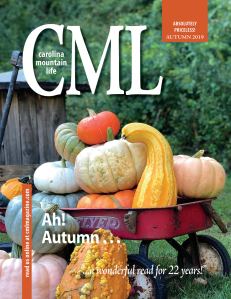 For 22 years, Carolina Mountain Life Magazine has reflected the heartbeat of the High Country (& neighboring communities) with stories showcasing the people and places that make living or visiting this area special. This quarterly lifestyle magazine features events, supports local business & builds community.
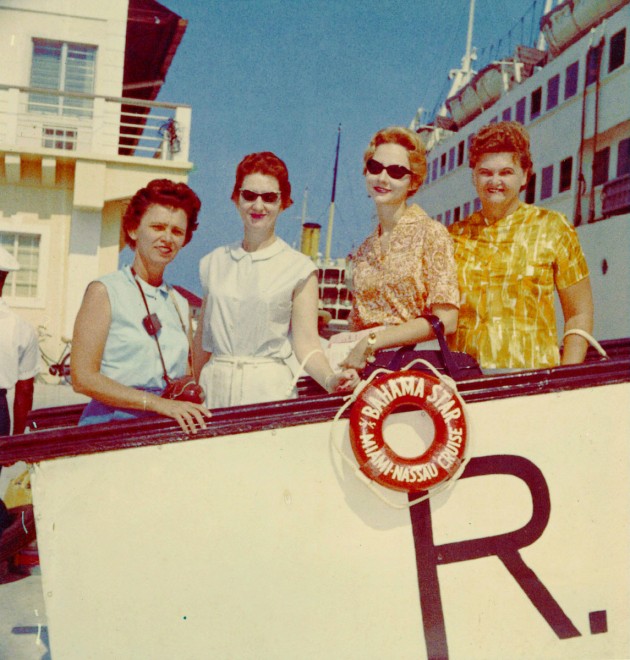
Her knees may prevent her from walking these days, and her memory isn’t what it used to be, but at nearly 100 years old, Elizabeth “Libby” Battle Lee still has an engaging personality and tells great stories. She is full of many good memories of living, worshiping and clubbing in San Marco. When all is said and done, however, memories of friendships and family are clearly what matter the most to Libby.
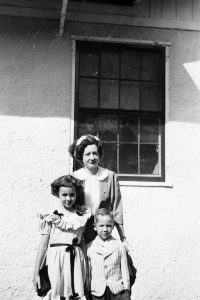
Born August 17, 1919, Libby grew up in Camilla, Georgia, from where all her family came. She went to business college in nearby Albany after high school. “Seven of us would ride the bus from Camilla to go to school,” she said. After finishing business college, her first job was secretary to the vice president and general manager of Greyhound bus company.
“I made $7.50 a week and had to work on Saturday mornings,” Libby said. “But given that the Great Depression was happening then, I felt lucky to have a job.” The man who would become her husband, Randolph “Randy” Edward Lee, also worked for Greyhound. His family were all from Albany.
They married in 1939 and lived in Chattanooga, Tenn. for eight years. Her daughter, Barbara Lee Myrick Jernigan, was born in 1941, and her son, Randolph “Randy” Edward Lee Jr., was born in 1943.
Libby wanted to live closer to her family who lived in Camilla, so the family moved to Jacksonville in 1947 when Greyhound transferred Randy.
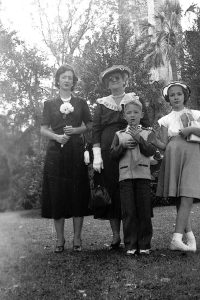
Their start in Jacksonville was rough, however. “Honey, nobody wanted to rent a house to anybody with children,” Libby said. “I had a first cousin who worked for Buckman, Ulmer & Mitchell real estate firm. She found a place way north of downtown on Laura Street that would take children. It was horrible,” Libby said.
When her mother-in-law came to visit, she announced they were going to find Randy and Libby a better place to live or she would take her grandchildren back home with her to Albany. They found a place in San Marco at 1570 Alford Place and lived there for 20 years. “The children had lots of others to play with. We had three grocery stores – A&P, Lovett’s and Setzer’s near the theater in San Marco – and a wonderful bakery. We had everything we needed.”
Barbara and her brother, Randy, went to Southside Grammar School. The school building, which was built in 1916, is now home to The Lofts of San Marco. They both then attended Landon Junior/Senior High School, which is now Julia Landon College Preparatory School.
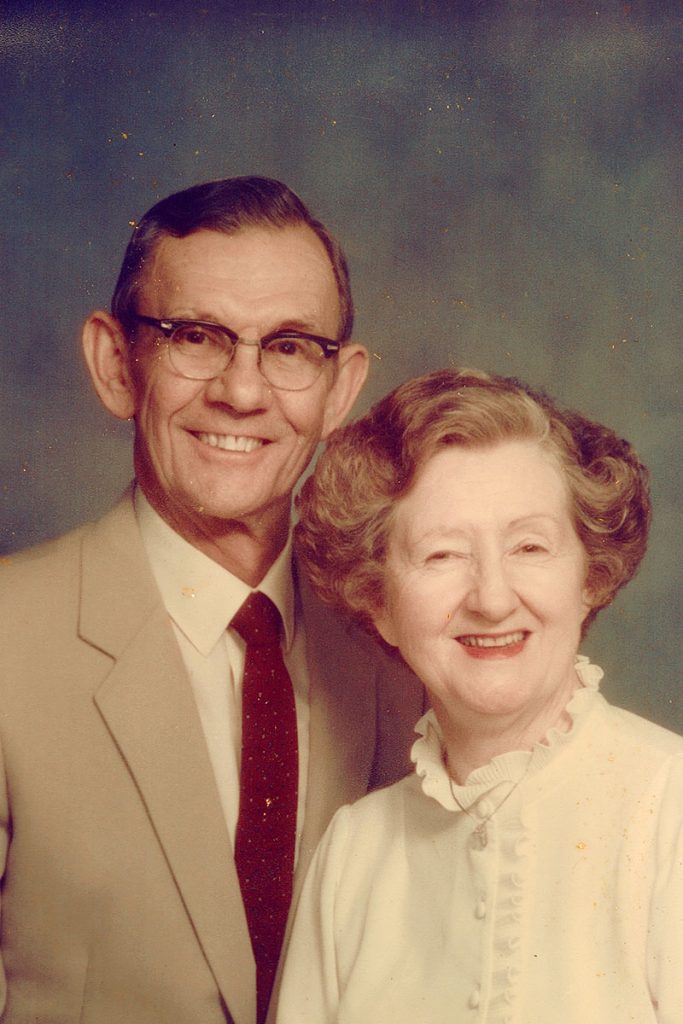
“We had a movie theater we could walk to, a drug store with a soda fountain, a five-and-dime – Kress and then Peterson’s, Geisenhoff Gift Shop right next to the fire station and eventually Underwoods,” Barbara recalled.
Nancy Scott’s Dress Shop sold capezio pants. “Barbara must have had 20 pairs; she loved them,” Libby said. She also remembers Reynold’s Piano Shop beside Kress.
Madeline Geisenhoff, one of Libby’s many “dear friends,” also lived in the neighborhood. Paul Geisenhoff ran the Little Theatre, home for Theatre Jacksonville. Their son, Jay, was the same age as Randy, and they played together at the River Oaks Park.
Their house on Alford Place has been torn down. Libby remembers that there used to be a bank across the street from their house. Then the bank moved to Hendricks across from the vacant lot at Hendricks Avenue and Atlantic Boulevard.
Barbara remembers there used to be a drive-in restaurant, but it was torn down in the early 1950s to build the bank. “It had smooth concrete painted green in the front. All the other sidewalks were rough,” she said. “We loved to skate on the smooth concrete.”
Barbara also remembers that there were gas stations on all four corners at Alford and Hendricks – Harry’s Texaco service station, Pure Oil station that the Earlys owned, and two other gas stations of which she can’t recall the names.
“We walked to Southside Baptist Church and Landon School or rode our bikes everywhere,” she said.
Barbara and her friends played in Fletcher Park where Preservation Hall is now. “Back then it had beautiful rose bushes.” Libby remembers that she would “borrow” some roses to decorate her house when her friends were coming to play bridge.
“The park had sidewalks that led to a big circular sidewalk in the middle of it,” Barbara said. “Kids used the park a lot then. The park had a football field and every afternoon the boys played football there. And, of course, where the boys were, so were the girls.”
The Landon football players used to practice in what is now called the FEC Park. There were houses built right behind Landon School so they had to go somewhere to practice. Libby’s son, Randy, played football. Libby would make a cake once in a while to serve the football players after practice, as they walked back to Landon.
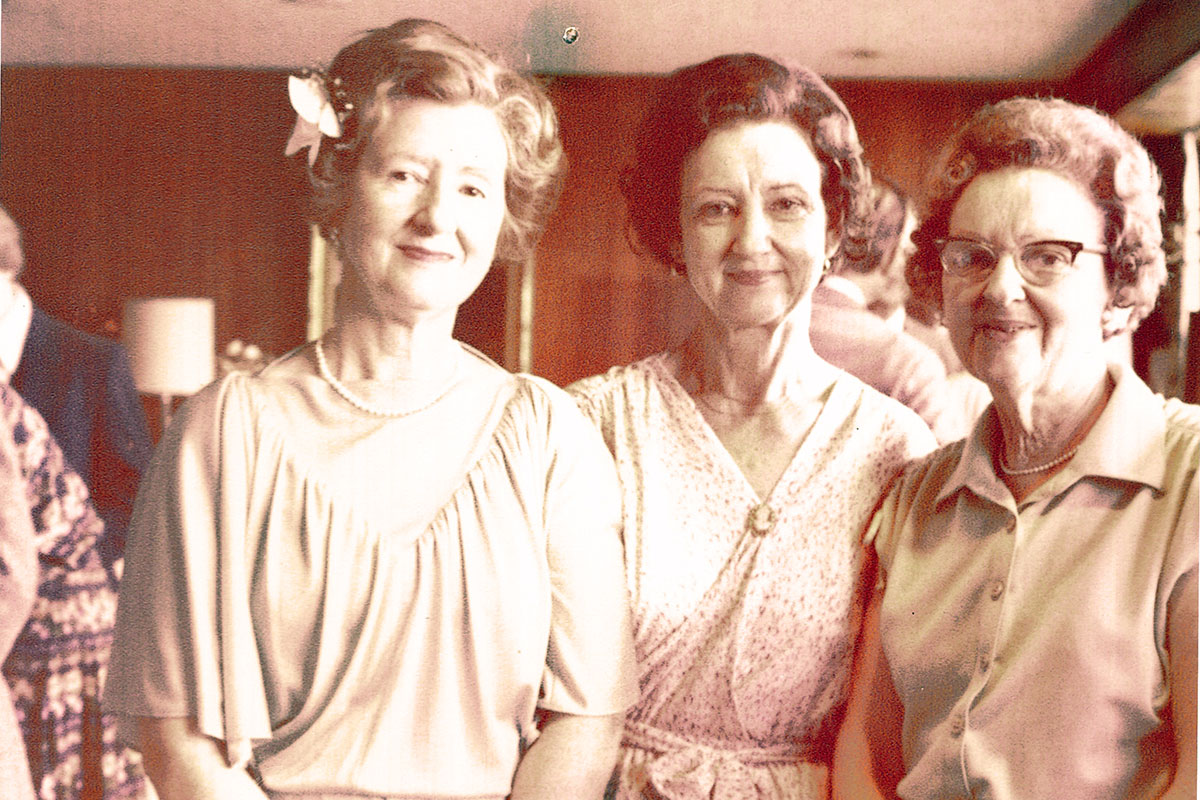
Barbara went to Florida State College in 1959 to major in business. Having played more than studied, as she willingly confessed, she returned to Jacksonville. She worked for William Lovett, who owned the Jacksonville Shipyards, until she began having babies and then later became a paralegal for CSX for 30 years. “It was a wonderful place to work,” she said. She retired from CSX in 2005.
Randy graduated from high school in 1961 and then went to the University of Florida where he received a bachelor’s degree in aerospace engineering and a master’s degree in engineering on a Ford Foundation Scholarship.
With both kids out of the house, after 20 years on Alford Place, Libby and Randy moved to 1902 San Marco Place in 1995. “We bought from a friend of mine, Nona Jones, who was the first person I met when we moved to Jacksonville,” Libby said. Randy and Libby lived together in the house until Randy died of lung cancer in 1995. Libby continued to live there until April 2018 when, after 50 years total in the house and at 98 years old, she moved in with Barbara and her husband, Virgil Jernigan.
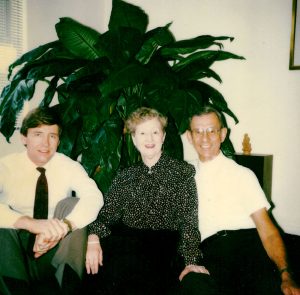
Barbara has lived at 1455 Riverbirch Lane in Miramar since 1990, but has owned it since 1976, when following a divorce, she and her children moved in. Then she married Virgil in 1979, and they put two families together. With the need for more bedrooms, they moved to Gadsden Court and rented out the Riverbirch house. After all the kids left, they sold the Gadsden house and moved back to Riverbirch.
Barbara and Virgil have a total of five children, eight grandchildren and two great-grandchildren. Two of their children live in Jacksonville. Paula Jeter lives in Fruit Cove and has two children; Myra Johnson lives in Beauclerc and has two children and two grandchildren. Betsy Bullard lives in Winter Park, Chuck Myrick lives in Lakeland and Mark Jernigan lives in Atlanta.
Randy and his wife, Sue, lived in Key Biscayne. He was a fighter pilot in the USAF during the Vietnam War. He was a partner with the Enrichment Group at Kathleen Day & Associates until his retirement in November 2008. Randy lost his fight with pancreatic cancer on Feb. 15, 2009.
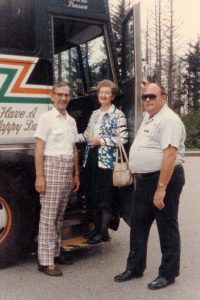
The next big phase of Libby’s life started when she was 40. She took on a temporary assignment to create a membership directory for Southside United Methodist Church. When the eight weeks were over, the pastor asked her to take the job of church secretary. “I was supposed to be there six to eight weeks but ended up working there for 51 years,” Libby said.
“I did a bit of everything at the church, except sweep the floors,” said Libby. She directed weddings almost every weekend for 47 years. She worked for the senior minister and ran the office. Including senior and associate pastors, she worked for 26 pastors.
Libby started a ministry with volunteers delivering the flowers after church services to people in the hospital or home sick and to shut-ins. She also took seniors to different places for lunch each month and to the Cherry Blossom Festival in Washington.
Libby has been a member of San Jose Country Club since 1994. She loves the Sunday buffet and still goes to the club to see friends. She had hoped to have her 100th birthday party there in August 2019, but the club begins major renovations in June and won’t be available to host the party.
Regardless of the location of the birthday party, Libby is looking forward to enjoying 100 years’ worth of memories and friends and family wishing her yet another happy year, 72 of them in San Marco, “the sweetest, safest neighborhood where you have everything you need,” as Libby says.
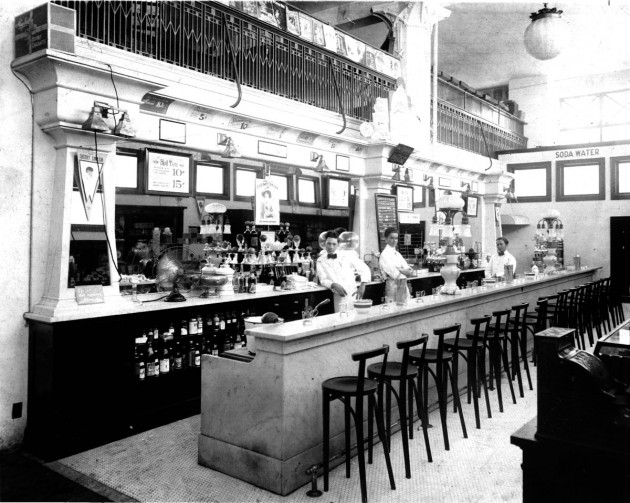
Dorsey-Ann Rhames is proof that you can come home again. After growing up in Murray Hill and moving to Ft. Lauderdale, she eventually moved back into the house in which she grew up. Like the neighborhood itself, however, with her husband’s and her efforts, the house has changed somewhat.
“My father’s name was Gunther Schlichtholz, but he shortened it to Holz when he went into the Navy,” Dorsey-Ann said. Her father was born in Germany. Her grandfather came to Ellis Island first, and then her grandmother brought her father to America in 1924 to settle in Chicago.
“My parents met at a USO dance when my father was in the Navy and stationed here in Jacksonville,” said Dorsey-Ann, who was born in 1944.
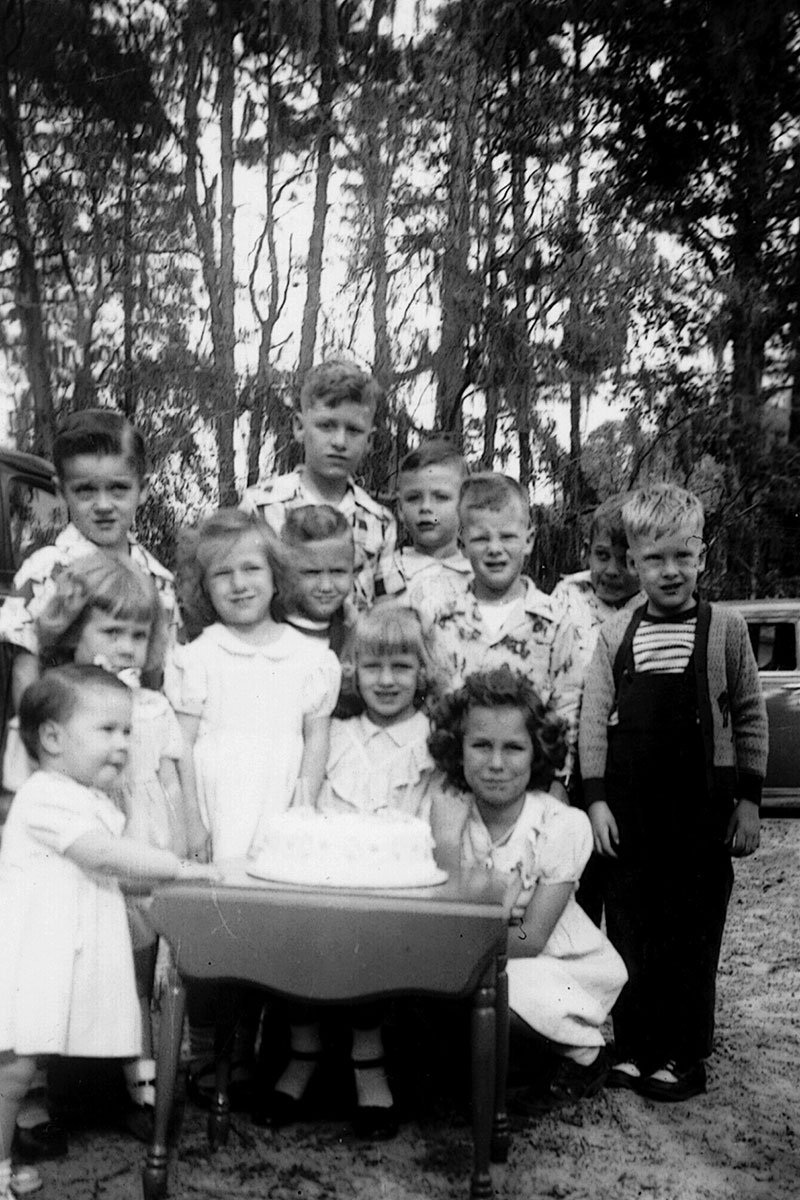
After she was born, Dorsey-Ann and her mother, Bebe Holz, lived in an apartment on Market Street in Springfield. Her grandparents lived at 7th and Liberty in Springfield, too. After her father left the Navy, he worked odd jobs. Eventually he went back into the Navy and then her parents divorced.
In 1950 when Dorsey-Ann was 6 years old, her mother moved them to Murray Hill into 1022 Antisdale Street, where she now lives again. The house was built the year before in 1949.
“Murray Hill was a nice place to grow up,” Dorsey-Ann said. “It had a post office, department store, Edgewood Theater, other retail stores, a meat market and Woods Pharmacy.” She walked to the downtown Murray Hill shopping area which was only about two blocks from her house. “I could go to Murray Hill Theatre for a dime.
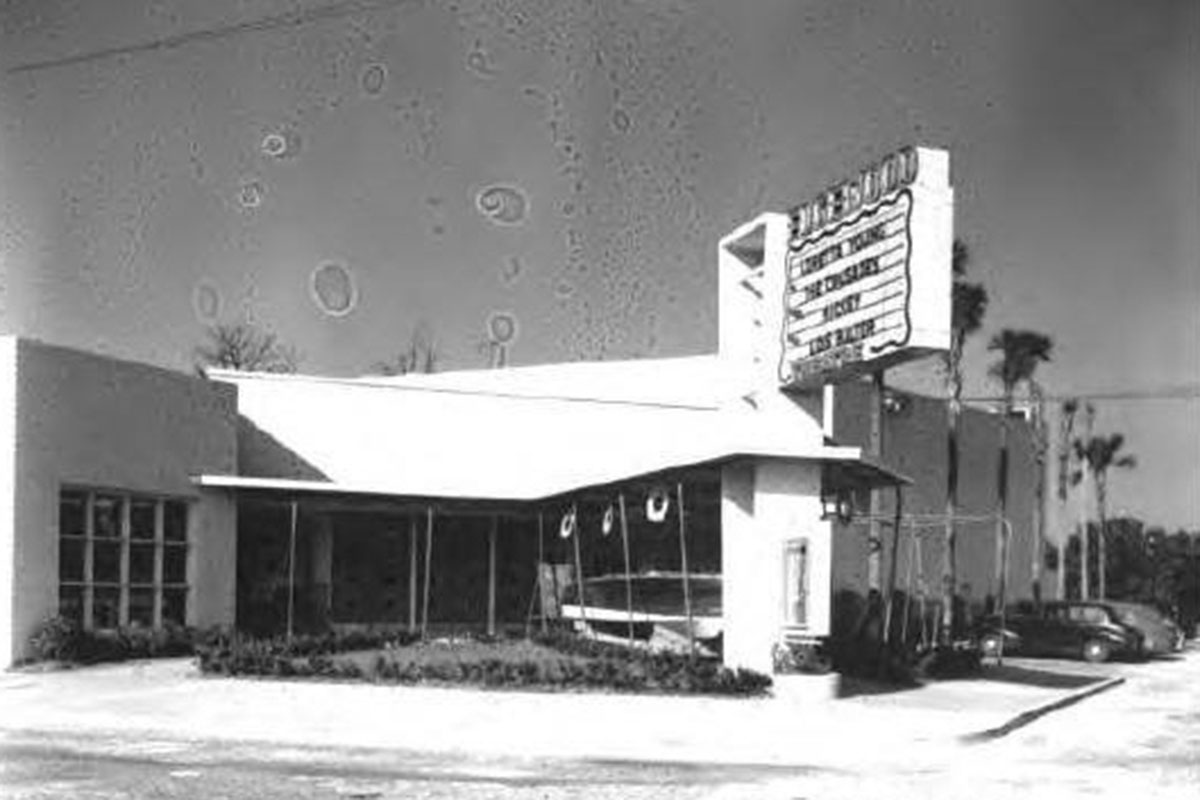
“The grocery store used to run a tab for shoppers,” she continued. She remembers an A&P grocery store opening up on Post Street.
Edgewood Avenue Christian Church Disciples of Christ owned a large brick building across the street from the church that was known then as the “Old Folks Home.” At the time, the church owned all the property. “It had a beautiful garden,” she said. “Now there are condos and the Florida Christian Home, which are not part of the church anymore. The gardens were removed.”
On the corner of Post and Cypress Streets was a soft ice cream store. “When we first moved into our house, it was called the Creamette,” Dorsey-Ann said. About five years later, however, someone complained when the store stopped using cream because it was too expensive. “A lawsuit made them change the name to Dreamette,” she laughed.
She remembers roller skating was the big past-time. “They were the kind of skates that you clamped onto your shoes with a key. All of us girls skated. We had to wear shoes with thicker soles like saddle oxfords for the skates to have something to grab onto,” Dorsey-Ann said. “We regularly lost our keys and would go to the five-and-dime store where we could get a new skate key for a nickel.”
Dorsey-Ann did a lot of walking back in her growing-up days, of necessity because her mother couldn’t drive, and they didn’t have a car. Her mother worked for Admiral Distributor on Edison Street, and another employee picked her up each morning to take her to work and bring her back home.
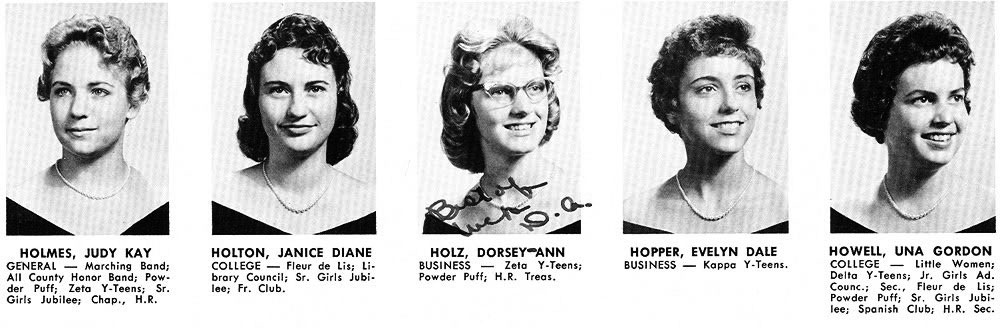
“To see my grandmother after school, I had to take a bus downtown, catch another bus to Springfield and then walk from Main Street to Liberty Street. Either that or I had to pay 20 cents to take a cab.
“We put on our Sunday dresses and high heels to go downtown on Saturday mornings to high-end department stores like Furchgott’s and Cohen’s and tried to look like we could afford to buy things there. I remember going to see “Gone with the Wind” at the Florida Theatre.
“Walgreen’s drugstore had a soda fountain. My mom would take me there for a special treat. I always wanted a tuna fish sandwich. My grandmother would take my mother and me to Morrison’s Cafeteria.”
Her grandmother’s house at 1642 Liberty Street was a big, two-story house. “After both of my grandparents died in the late 1950s, the house sat empty for five years because the heirs couldn’t decide whether to sell it,” she said. “My mother finally sold the house for $5,000 because it was going to need major repairs.”
Her best friend lived across Post Street on College Place. “We rode bikes and went to sock hops at Good Shepherd Church when we were in high school.”
They collected soda bottles to turn in at A&P for a nickel each and then rode their bikes to Lackawanna Pool about a mile from her house, where it cost a quarter to get in. Sometimes she would go with her friend’s family to Jacksonville Beach.
When her cousin from Chicago came to visit, they would get a wagon and go door-to-door asking if they had ceramic figurines they no longer wanted. Dorsey-Ann and her cousin would clean them up and sell them to people living on another street. They would also collect empty cream soda bottles because they were worth five cents each.
Dorsey-Ann has generational history with the Red Cross. During the war, her grandmother went to the train station to hand out coffee, doughnuts and cigarettes to servicemen passing through. When Dorsey-Ann was a teenager, her mother and she served sandwiches during dances at the Naval Air Station and at beach parties for the servicemen.
“We took the bus on a two-lane road to the Naval Air Station,” she said. “I’m not sure it was even paved.”
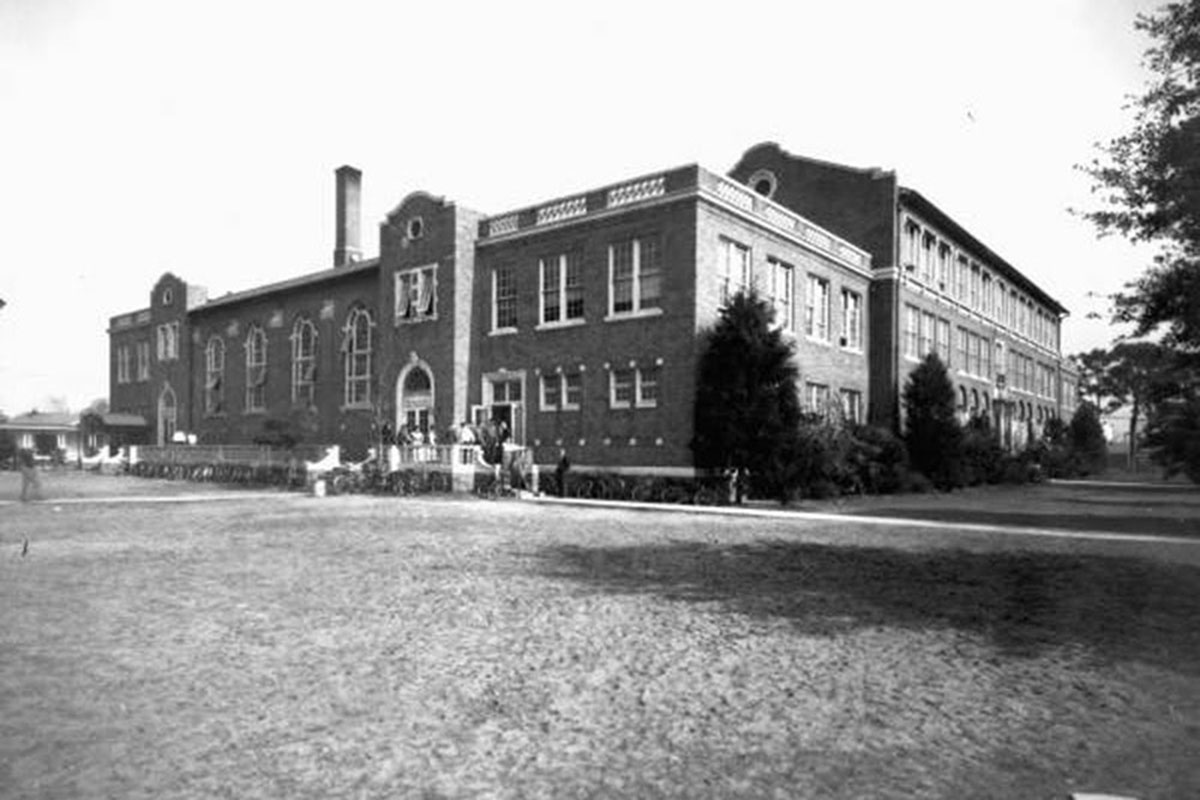
Dorsey-Ann attended Ruth N. Upson Elementary School from first through sixth grade, John Gorrie Junior High School in seventh through ninth grade and then graduated from Robert E. Lee High School in 1962. “I walked to and from school because our house was just inside the two-mile limit for being able to ride the bus,” she said.
After high school, Dorsey-Ann married and divorced, then moved to Ft. Lauderdale in 1975 where she raised her daughter, Donna Marie Hitch, and worked for a heavy construction equipment dealer. When Donna was 17, she was killed in an auto accident, so Dorsey-Ann decided to come back to Jacksonville.
Her mother had married Herb Kuebler and was still living in the same house at 1022 Antisdale. Her stepfather wanted Dorsey-Ann to buy the house across the street from them, 1035 Antisdale. “He bought it for me in 1983 and let me pay him back,” she said. In 1984, Dorsey-Ann met her husband, Vernon Rhames, a veteran of the U.S. Air Force, who had two daughters.
Dorsey-Ann and Vernon lived in the house for 32 years until 2015. When Bebe died in 2013, she left her house to Dorsey-Ann, and she and Vernon decided to totally renovate the house so that they could move into it and rent out 1035 Antisdale.
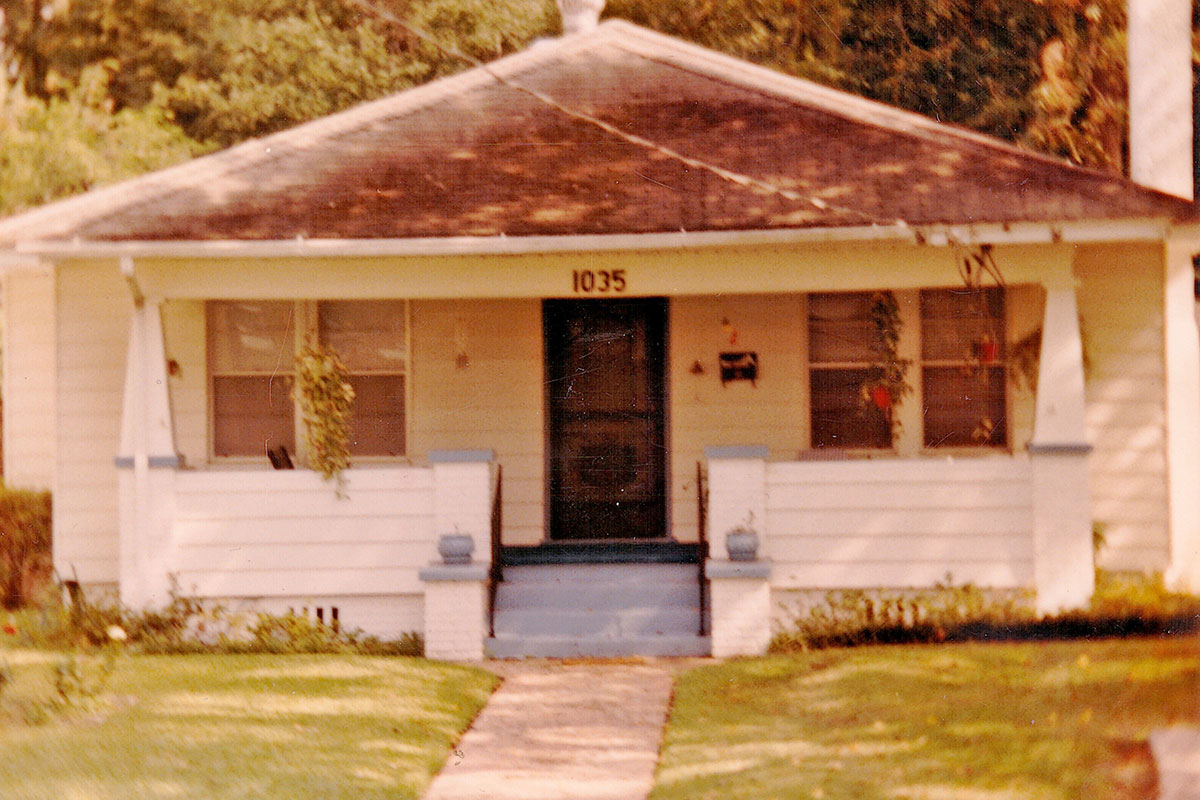
Just as they were nearing completion, however, one of the stepdaughters moved back to Jacksonville and her family needed a place to stay, so they moved into the same house with Dorsey-Ann and Vernon in January 2014. By March, Dorsey-Ann knew that they needed more room, and she and Vernon moved into her nearly-
renovated home so that her stepdaughter and family could have 1035 Antisdale to themselves.
Dorsey-Ann thinks it is great that millennials are moving into the neighborhood. “When I was growing up you could lay down in the middle of the road on a Sunday afternoon and not worry about any cars driving through.”
Dorsey-Ann retired in 2009 after 33 years working for the same heavy construction equipment dealer. Vernon retired in 2014 from more than 20 years’ work with the United States Postal Service. He died in 2017.
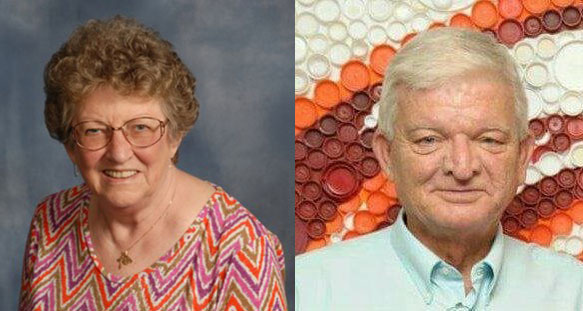
Dorsey-Ann serves as membership secretary for Riverside Park United Methodist Church, where she has worshiped and worked with Vernon for 22 years. They started Sunday breakfast and Dorsey-Ann continues to serve at the breakfast.
You can almost always find Dorsey-Ann at the church on Mondays and sometimes one to two other days each week. The church has recognized the Rhames’ commitment by dedicating its fellowship hall to them, one sign of how woven into the community Dorsey-Ann remains.
Moe Dimanche For Governor of Florida
Free Knitting Patterns and Free Crochet Patterns
the stories behind the pictures, and vice versa
In Essence
The Art and Craft of Blogging
News, Tips & Website Tutorials

