The Way We Were: Joyce and Malcolm Hanson

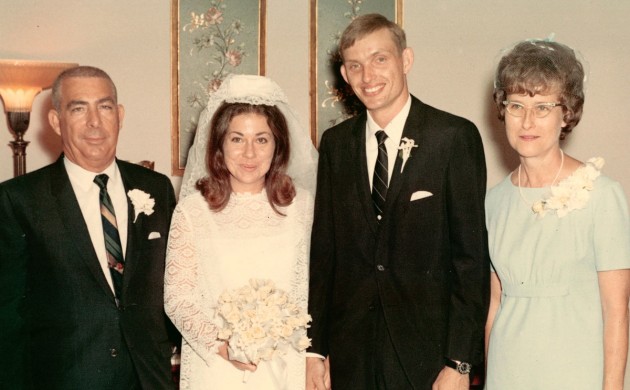
1968 wedding photo: Bob Ashley, Joyce and Malcolm Hanson, Betty Ashley
KAREN RIELEY
PUBLISHED IN April 2019 ISSUE OF THE RESIDENT NEWS –2019/04/04/the-way-we-were-joyce-malcolm-hanson/

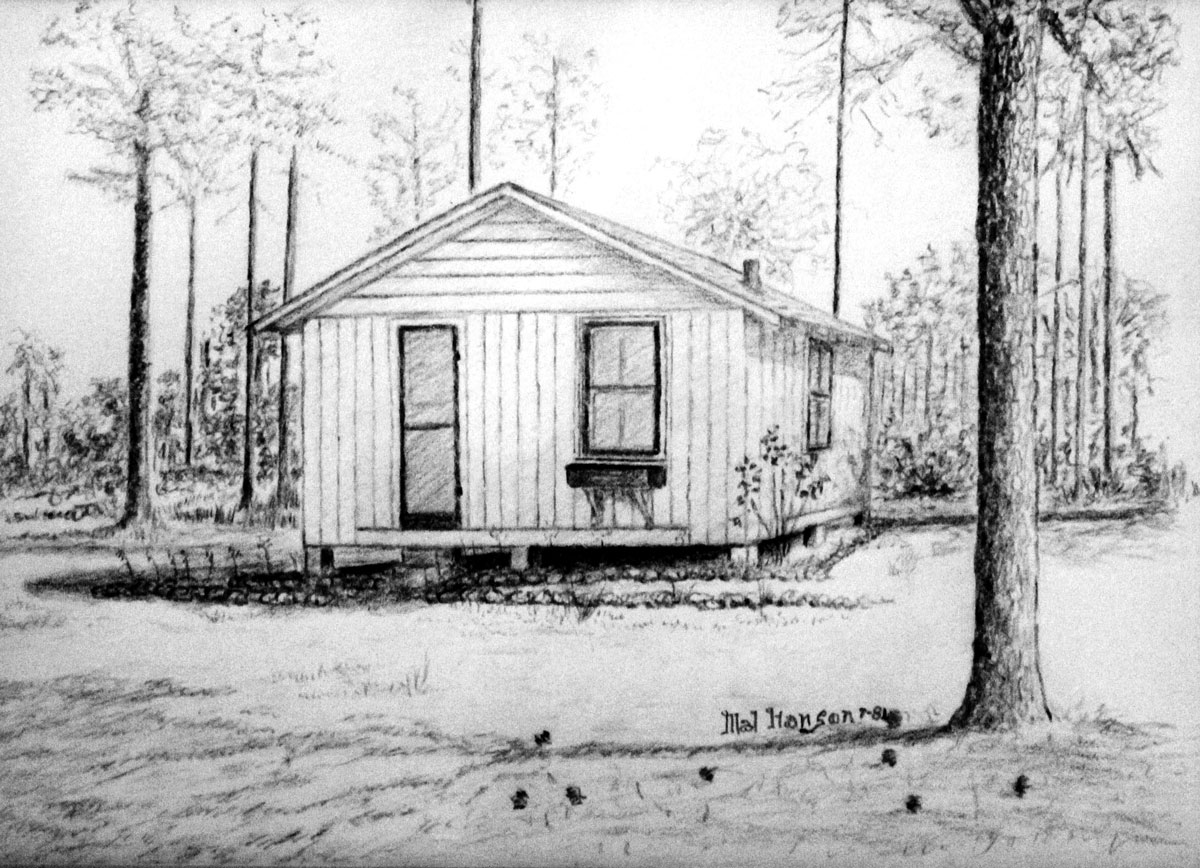
Her most treasured wall hangings in the charming 1942 painted brick home on Dunsford Road help weave the story of Joyce and Malcolm Hanson’s lives individually and together in the San Marco and Lakewood areas. For Joyce, the drawing that hangs just to the right when you walk in the front door captures the beginning of the story. It is of her father’s parents’ home, which was located between Emerson Street and University Boulevard. Joyce’s husband, Malcolm, drew it from an old photo in 1979.

“My dad’s life started in that house,” Joyce said. “I suppose my grandparents would have been considered ‘Florida crackers.’ They lived off the land on a family piece of property with a small garden, and I don’t remember hearing that my grandfather ever worked anywhere else.”
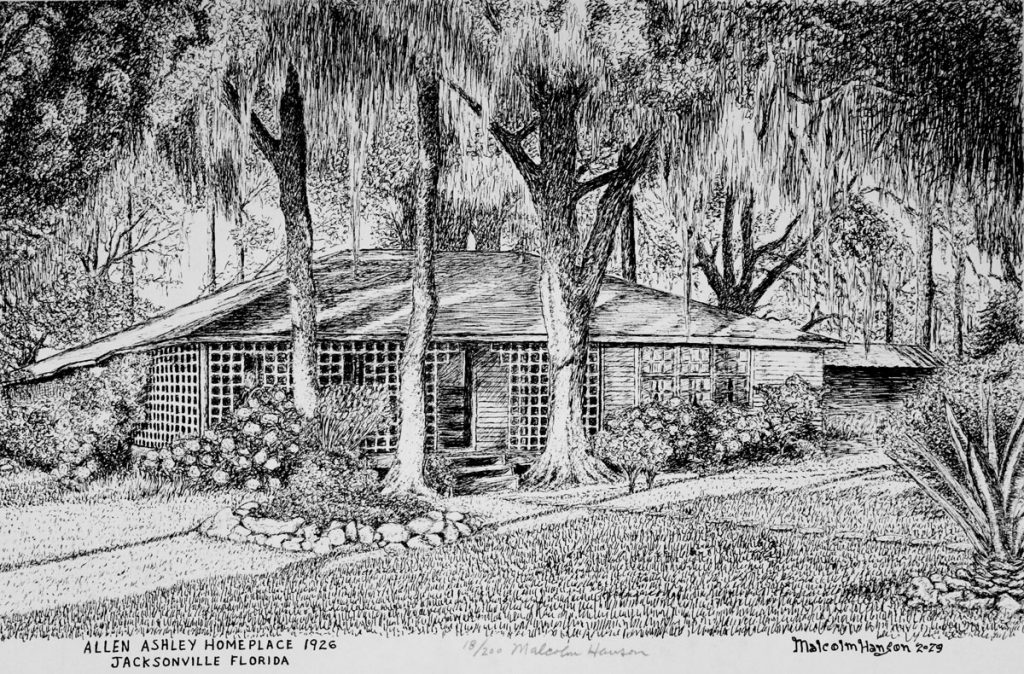
Joyce Hanson’s grandparents’ house
After their four sons were born, including her father, Bob, who was born in 1920, Hanson’s grandparents found the original Ashley home place was too small, and her grandfather, Allen Ashley, moved one section of the house to the side so that he could add a middle section to it in 1926.
Her grandfather deeded part of the land to her father, who built a one-room house, a drawing of which also hangs in the house. “It didn’t even have a bathroom,” Joyce said. “My parents had to use the bathroom in my grandparents’ house at first.”

When Joyce was born in 1945, her parents added a kitchen, bedroom and bathroom. The house was behind the now-closed Palmer Hall Floors, where Affordable Plumbing is now located. “Our property backed up to a black community with whom we got along,” Joyce said.
Joyce Hanson lived in a one-room house until she was eight years old.

Joyce, her brother, Bob Jr., and her parents lived in the small house until she was eight. Then they moved to Rainbow Road into a house her father built in a neighborhood called Fleetwood then, now known as the Lakewood area. Joyce remembers that houses were just beginning to be built in that area.

“We had to go to San Marco to shop at the A&P grocery store in the Square,” Joyce said.

Bob Ashley owned a filling station, aptly named Ashley’s Texaco Gas Station, at the corner of University and St. Augustine where Walgreens is now. “When my dad couldn’t enlist for World War II because of a slight disability, he quit Landon High School before his senior year and went to work in the shipyards,” said Joyce. After the war, Bob installed gas tanks in gas stations for different oil companies and built concrete backyard barbecue pits.

“Because of his dealings with Texaco in helping to build the company’s gas stations, when they wanted to open one in San Marco, they asked him to run it,” Joyce recalled.

“It was a true family-run business. I was in the 10th grade when the station opened and did some of the bookkeeping and ran the cash register,” said Joyce. “But I never pumped gas because women weren’t supposed to! I do now, though.” Her brother, Bob, worked at the station, too, and her mother, Betty, also worked in the office.
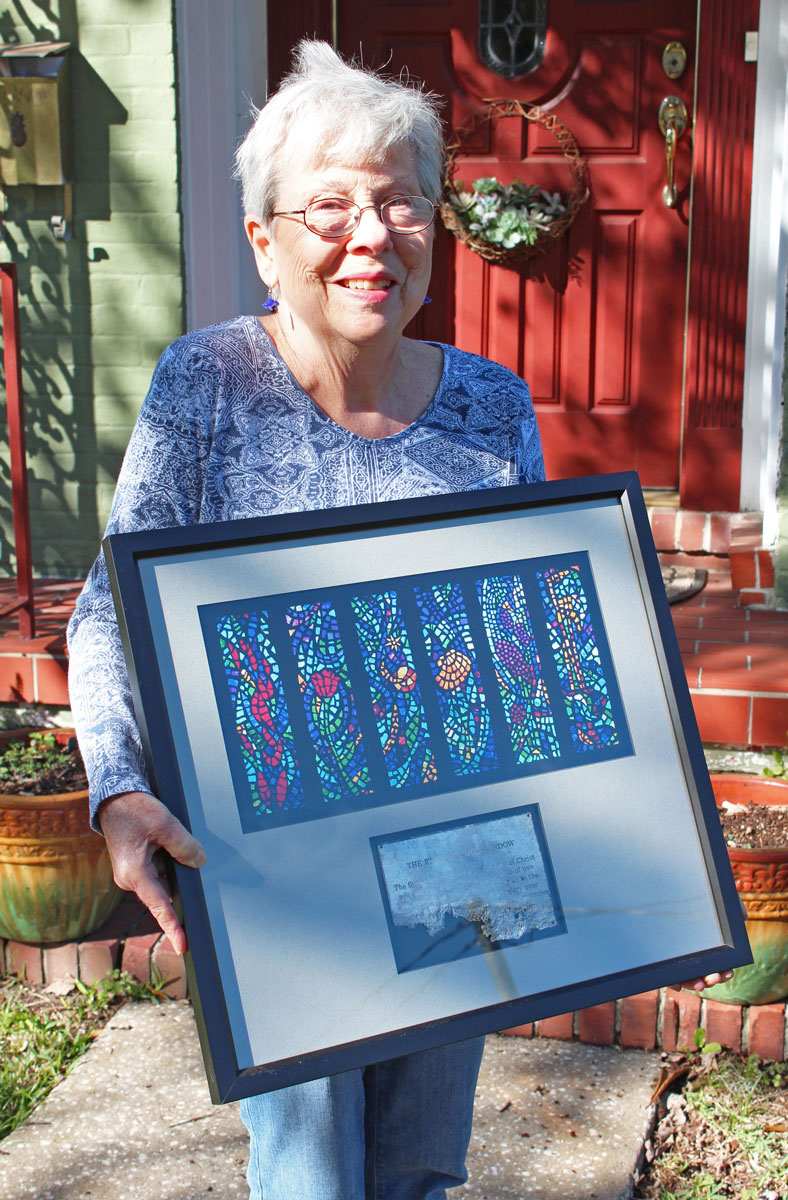
Joyce Hanson holds the Resurrection Plaque, depicting stained-glass windows donated in her father’s memory in 1972, resurrected from the Hendricks Avenue Baptist church fire in 2007.

“My father became a legend. He loved people and people loved him. He took the time to talk to people. He helped anybody that needed help. He dealt with the least people the same as business executives. He ran charge accounts for a lot of big companies. He was always totally honest in his repairs.”

Joyce remembers the ad slogan, “You can trust your car to the man who wears the star. The big bright Texaco star.” “Every car had the windshield cleaned, the floor swept, the oil checked. People would bring their babies up for him to hold. The station was the hub of the community,” she said.

Joyce went to duPont for first grade and half of second until San Jose Elementary was built and opened. Then she attended San Jose through fifth grade and found herself back at duPont for sixth through twelfth grades. When she eventually taught for a year and a half at San Jose, she was surprised to find that some of the teachers she had were still teaching.

Her parents were married in the little church at the end of Kingsley Road, however, almost all of Joyce’s life is intertwined with the life of Hendricks Avenue Baptist Church, known in the community as HAB. Her parents brought her there when she was three, soon after the church opened. She remembers a little hut in the back to the right side of the gym, the Scout Hut, which was the church nursery. HAB built its first building as a gymnasium, where Joyce was baptized.

“I remember carrying a little flag as we marched to the hymn, ‘Onward Christian Soldiers,’” Joyce said.

Her dad became a deacon at HAB. Both of her parents taught Sunday School classes, and Joyce participated in children’s choir and youth activities.

Bob ran the station from 1960 until he died unexpectedly in 1971, after which Betty and Bob, Jr., ran the station briefly before selling it.

After Bob’s death, Betty donated stain glass windows to Hendricks Avenue Baptist Church in remembrance of her husband. When the sanctuary was destroyed by fire in 2007, the only plaque that could be salvaged was the Resurrection Plaque for her father’s window. A wall hanging of that window and the rescued Resurrection Plaque hang in Joyce’s and Malcolm’s living room.

“Through all of the things that have happened – good or bad – our church has stood with us,” Joyce said. “When my dad died, it was unexpected. My mom fell apart. I was just 24 years old and didn’t know what you did for a funeral. Rev. Lipscomb [Clyde B. Lipscomb, HAB’s pastor then], helped us make the arrangements; without him it would have never gotten done. Everything in our lives happens surrounded by church. That’s why HAB has become our family and support group.”
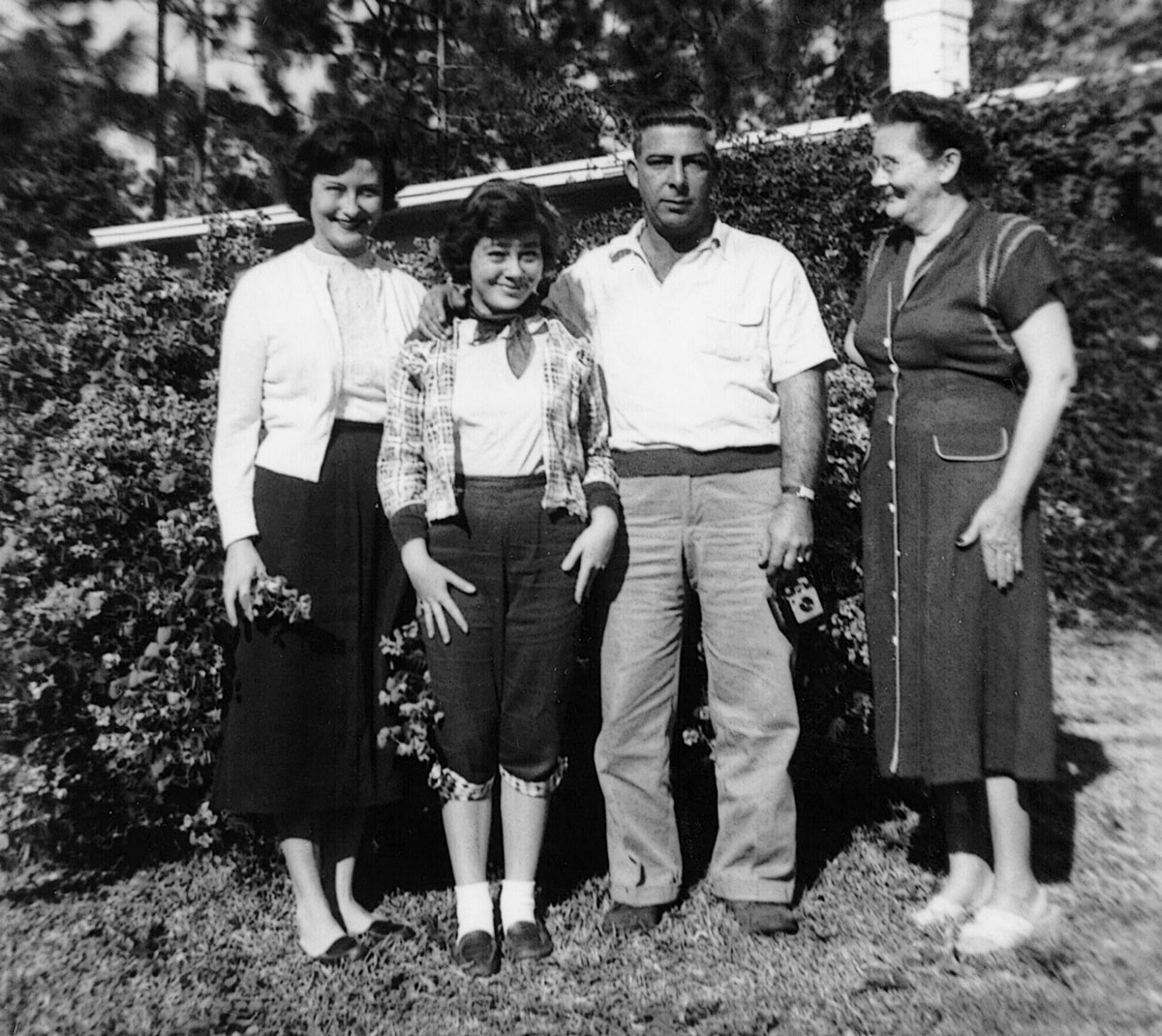
Betty, Joyce and Bob Ashley with Bertha Hartley, Joyce’s only grandparent not born in Jacksonville

Joyce remembers that kids from school came to their house for parties. Her brother had a hootenanny band. “Drive-in theaters were wonderful memories. We went until we were teenagers,” she said. “We could wear our pajamas and Momma would bring fried chicken. We did a lot of things as a family and were very close.”

As a teenager, Joyce went to the bowling alley in San Marco, where the AT&T building is now across from Theatre Jacksonville. Malcolm set pins there as a child. “There was a Texas barbecue on San Marco Boulevard,” she said.

I loved the football games at duPont, not so much for the game as for the marching band,” Joyce said. “At one point it was the best in the nation.”

After Joyce graduated from duPont High in 1963, she went to Stetson University and got a degree in education. At the beginning of her first year of teaching at San Jose Elementary, she met Malcolm.

Malcolm was born in New York, but his parents moved to Jacksonville when he was a year old. He lived in apartments in the San Marco area and a garage apartment on River Road while he attended Southside Grammar School. Then his family moved to Belmont Terrace and he attended Landon High School. After high school, his family moved to Arlington and he went to Jacksonville University.

On the day he graduated from JU, a good friend of Joyce’s introduced Malcolm to Joyce at HAB. “We were good friends first, and then we started dating,” Joyce said.

Joyce and Malcolm were married in Rev. Lipscomb’s house in front of the fireplace on Aug. 21, 1967. They didn’t want to have a big wedding because Malcolm was on leave from the military.

While Malcolm went on a military cruise, Joyce continued teaching until Malcolm was transferred to Norfolk, Virginia, for 2-1/2 years, where Joyce taught for half of a year in a public military school until she got pregnant in 1971 and wasn’t allowed to teach any more.

After they returned to Jacksonville, Joyce and Malcolm returned to HAB. Malcolm became a deacon first, and Joyce eventually did as well. “HAB is a moderate Baptist church that didn’t see any reason why women shouldn’t be deacons, too,” Joyce said. Malcolm and she were in the church’s first couples’ class.

When their daughter, Jennifer, was in second grade, Joyce went back to teaching full-time, teaching “hospital homebound” in Jacksonville until 2010, when she retired. “I loved home-schooling because it wasn’t like teaching third grade a hundred times. I taught special needs kids. The sad part was that a lot didn’t survive, but you knew you were providing normalcy. I felt that was my calling,” Joyce said.

Also in 1980, Joyce and Malcolm bought the “Balfour House,” as it is known in the neighborhood, from Betty Balfour Marks, artist, dancer, choreographer and director of her own dance school, the Ballet Arts Centre, and performing company, the Florida Dance Theatre, in Jacksonville. Her husband, Lewis Marks, developed the neighborhood.

When they first saw the house on Dunsford Road, off Hendricks Avenue, it was painted with white trim and a red roof. “I hated it,” Joyce admitted. But then they went inside and saw the hardwood floors and the dining room chandelier, and she had second thoughts. It was more than they could afford so they started negotiating.

“Betty told us that maybe she could help us out on the price if we’d promise to stay in the house and love it and if we’d have our two girls attend her daughter’s Ballet Arts Centre,” Joyce said. “Well we have stayed in the house and our girls did take ballet, and, in fact, our granddaughters take ballet now, too.”

Joyce thinks they live in the best neighborhood in the world. “We walk everywhere. There’s lots of variety. It is a community within a community. We walk just four miles to San Marco Square and know and talk to everybody. We walk to the library, Theatre Jacksonville and the movies.”

Joyce does not have fond memories of the year 2008. “HAB’s sanctuary burned on Dec. 23, 2007, and then I was diagnosed with cancer in 2008 and my mom died as I started treatments.”
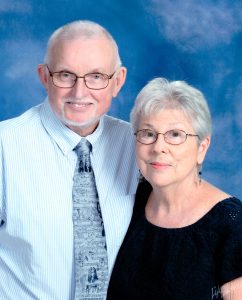
Malcolm and Joyce Hanson 2018

The next day, Christmas Eve, the members had worship in the gym, which didn’t burn in the fire. “At the end of worship, All Saints came in and announced they had lunch for us,” Joyce recalled tearfully.

Other churches helped as well, by loaning them music and choir robes. “I remember that a Jewish young lady and her family bought the church pew bibles. The fire pulled the community into HAB and HAB even further into the community,” Joyce said.

During that time, “our grandson, Hunter Closson, was ready to be baptized so we used Rev. Kyle Reese’s swimming pool,” said Joyce, making his baptism unique among the four grandchildren, Rhianna Casey and Hunter, Shelby and Brooke Closson.

Joyce’s daughters, Elisa Casey and Jennifer Closson, used part of the money they had inherited from their grandmother, Betty, to donate new stained-glass windows in memory of their grandfather, Bob. Malcolm helped design the Fire and Dove windows.

The Hansons love that their friends and they have, in some cases, grown up together and have raised children together. And, they count their blessings that they have grown up with Hendricks Avenue Baptist Church and that the church has enmeshed itself in their community.
If the walls could talk: Details vague about house swap deal

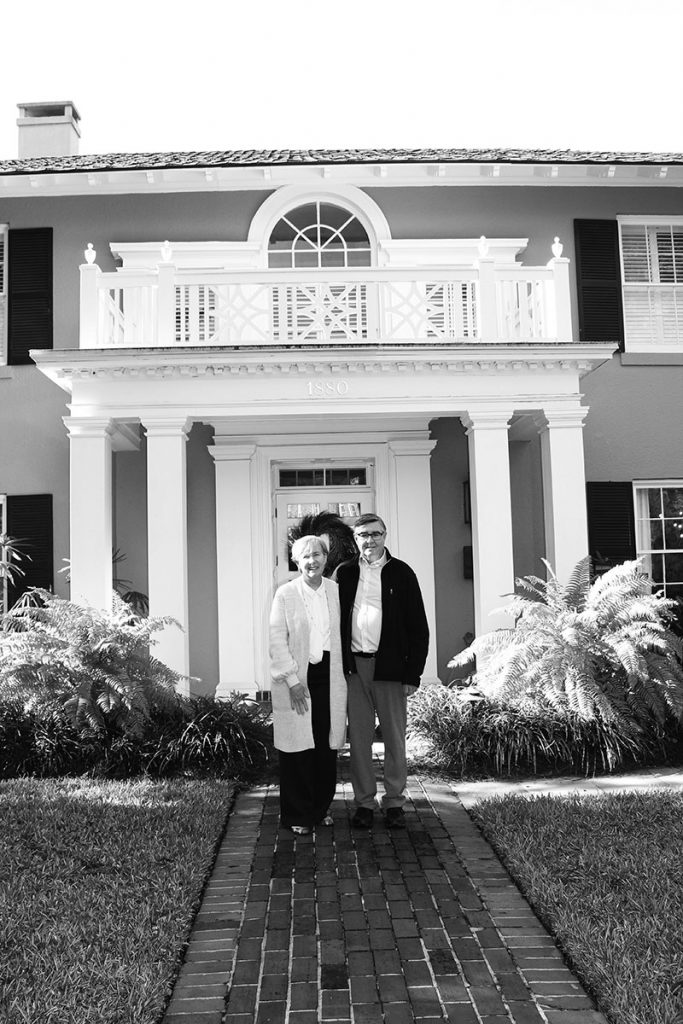
Early photo of 1880 Shadowlawn
KAREN RIELEY
PUBLISHED IN june 2019 ISSUE OF THE RESIDENT NEWS –2019/06/10/if-the-walls-could-talk-details-vague-about-house-swap-deal/

If ever a house needed walls that could talk, it could well be the one at 1880 Shadowlawn Street in Avondale. The house is hiding a mystery that only the walls themselves might be able to solve for sure.

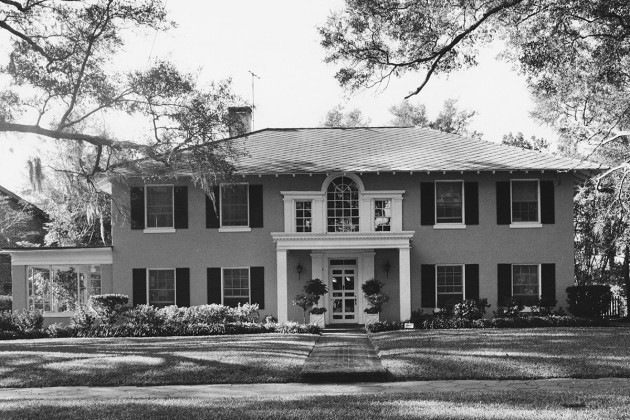
The house’s origin is clear enough. Built in 1924 for real estate and insurance salesman Addison Palmer, it is one of three Jacksonville buildings by Hentz, Reid & Adler Architects in Atlanta. Wayne Wood, Jacksonville’s architectural history expert, describes the house in “Jacksonville’s Architectural Heritage: Landmarks for the Future” as “not very fancy” and having a “subdued eclectic facade … [and] striking formality with Georgia overtones.”

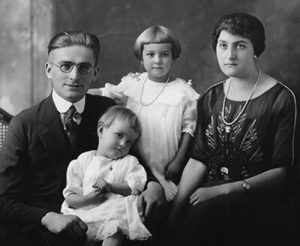
Second owners of 1880 Shadowlawn, the Reinhold family: Paul and Klare, with daughters June and Anne.

Palmer sold the house to Paul Reinhold, a dairy-business executive who was president of Foremost Dairies, which became the Reinhold Corporation. Both gentlemen are listed in a 1934 event program for Ye Mystic Revellers. Reinhold and his wife, Klare, raised two girls – June, who graduated from Robert E. Lee High School in 1937 and married Jack Myers, and Anne, who married Paul “Cotton” Wellington.

At this point in the house’s history of ownership a mystery comes in. It all has to do with a friendly house swap.

According to current owner Pattie Houlihan, the Reinhold family sold the house to a Mr. Livingston, who eventually decided to swap 1880 Shadowlawn with Bob “Squirrel” Read, who lived at 1820 Shadowlawn. As the story goes, the Livingston children had moved out and the house seemed too large for Livingston and his wife, while Martha and Bob Read had four daughters, making their smaller house too cramped. For the whopping sales price of one dollar, the Reads moved in and lived at 1880 Shadowlawn for 18 years, 1965-1983.

That’s one version of the story. In another version, which Peggy Bryan remembers being passed down through her family, three men – Paul Reinhold, A. Y. Milam and another man whose name has been lost in this telling – decided to swap houses. The Reinholds, living at 1880 Shadowlawn, moved to the Milam home on Yacht Club Road. The other home traded was presumably on Edgewood Avenue in this version of the story. The three couples not only survived the house swap but eventually all three celebrated their 50th wedding anniversaries.

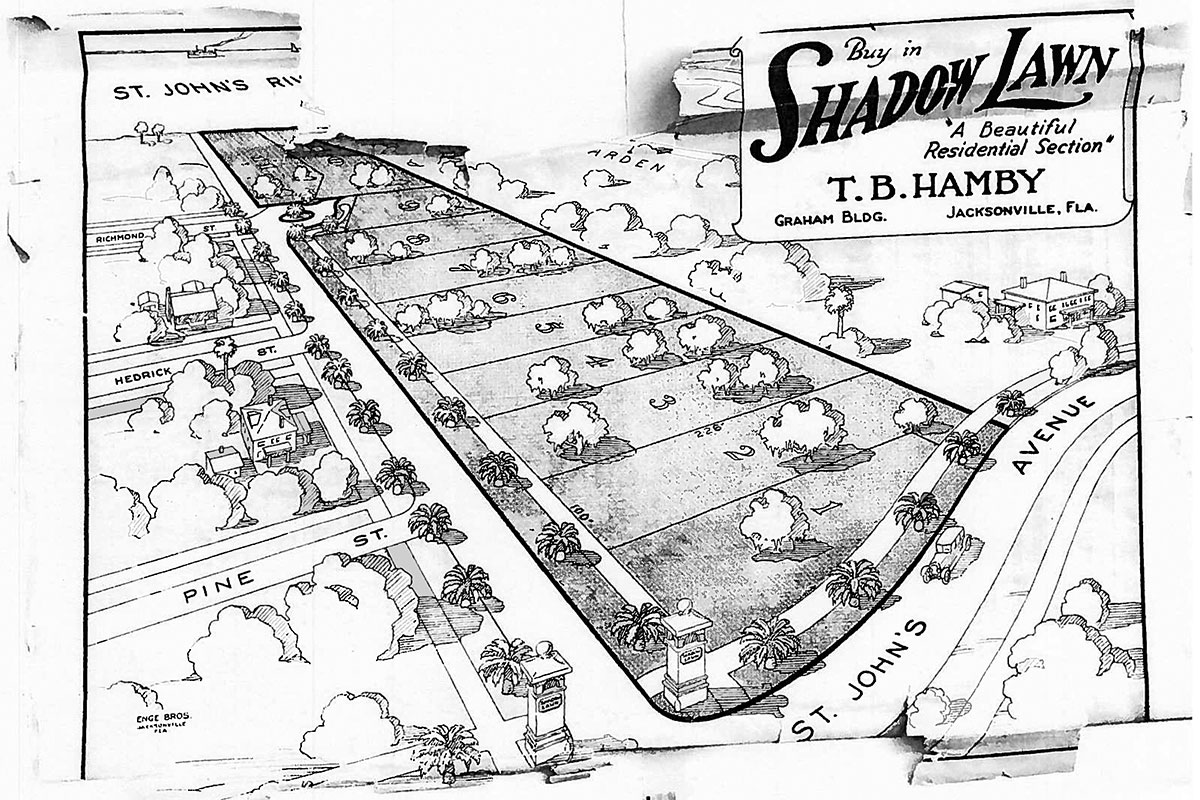
Marketing plat map shows 1880 Shadowlawn as lot #8, near where Richmond Street meets Shadowlawn Street.

Coincidentally, Randie Read, one of Martha and Bob Read’s daughters, married Brightman Skinner, second cousin to Houlihan’s husband, Richard Skinner. Bryan is the daughter of Anne and Cotton Wellington and granddaughter of Klare and Paul Reinhold.

After the house-swap years, Kim and James Toliver Lane lived there for a short time, adding a pool, and then Lisa and Jim Borger owned 1880 Shadowlawn for 14 years.

In 2003, Houlihan and Skinner decided to move from their home on Pine Street to accommodate their two daughters’ need for more room as they approached their teenage years. Greta is now 28 and Claire is 25.

“Shadowlawn reminded me of the houses I grew up with,” said Houlihan, an architect. “I loved the house on Pine Street, and we had planned a large addition for it, but it seemed too much for what the house was originally meant to be.”

Pattie Houlihan and Richard Skinner, current owners of 1880 Shadowlawn, added more pillars to the front porch overhang and a decorative balustrade was installed on top.

Her husband was skeptical about Shadow-lawn at first. “My first reaction when I toured the house was it had giant dining and living rooms we’d never use,” said Skinner, who is also an architect. Then, his wife showed him a room in the back that could be a music room and took him to see how large the backyard was. He was beginning to be hooked.

“Then I saw how large the bedrooms on the second floor were and I could see how wonderful it would be for the girls,” Skinner said. “They could have their friends over in their own space.”

Not a lot has changed about the house except an addition off the back made by the Lanes to enlarge the kitchen. “When something is beautifully designed there’s no reason to mess with it much,” Houlihan said, “but Richard and I did make changes to the front entry portico about six years ago. It seemed there were a few alterations made to the house exterior that were incongruous and not in keeping with a Neel Reid design. After looking at many of the homes designed by his firm in the Atlanta area, Richard felt strongly that the proportion of a double column and detail of the balustrade were much more in keeping with something that would’ve come out of their office back in 1923.”

The couple also had to do some structural work. “We shored up the center beam to level things,” said Skinner. They also needed to install an updated air conditioning system without impacting the house’s layout. The solution was to install it in the attic and put the ducts in built-out chase walls. “You would never know there is ductwork in the house,” he said.

The only other changes upstairs are that the master bedroom now has its own en suite and opens into a room that used to be sectioned off as a morning room/sewing room.

Downstairs the couple updated the kitchen with new finishes and lots of counterspace and cabinets and added a laundry room.

They love best the room off the living room because the sun comes up outside the windows. “We have coffee in here every morning and read the newspaper,” Skinner said.

The couple also did some extensive landscaping. “The house is on a sand ridge that makes it the highest point in the neighborhood,” Houlihan said. “Because it is such a walking neighborhood, we did a garden wall and whole new planting plan.”

They also planted fruit trees and created a parking court.

As the house on Shadowlawn approaches its centennial birthday in 2024, the home’s classic lines have stood the test of time. “This house was really well-designed,” said Skinner.

Symphony transports listeners to another world

Yesterday, my husband and I had the pleasure of attending the matinee performance of Jacksonville Symphony’s “Mozart’s Jupiter” concert, part of its 2019 Masterworks Series. What an inspiring way to spend a Sunday afternoon!

Mozart’s Symphony No. 41 in C major, K. 551 was his last symphony. According to the concert’s program notes, it was given the sobriquet (which I had to look up to learn means “nickname”) of “Jupiter” by Mary and Vincent Novello, a 19th-century English couple who said that the nickname was bestowed by Johann Peter Salomon, the entrepreneur responsible for Haydn’s two visits to London in the 1790s.

JSO Associate Conductor Nathan Aspinall led the orchestra through the complex piece that takes the listener through a range of emotions, truly an apotheosis (another word to look up meaning “culmination or climax” of Mozart’s musical talents. The piece is full of syncopations and unexpected accents and harmony. The finale features a double fugue and a sonata and climaxes in a magnificent coda which interweaves all five principal themes in the symphony.

“Jupiter” was the central piece bookended by Maurice Ravel’s Le Tombeau de Couperin and Sir Edward Elgar’s Enigma Variations, Op. 36. Le Tombeau originally appeared in 1918 as a six-movement suite for solo piano. The next year Ravel orchestrated four movements. It is a lilting but melancholy piece, appropriate because Ravel dedicated it to a friend who died in combat during World War I.

My favorite piece of the concert was by a composer with whom I was not familiar, Sir Edward Elgar. I learned in the program notes that the score bears the inscription “Dedicated to my friends pictured within.” Each of the 14 variations in the piece is titled with with a monogram or a nickname referring t o members of Elgar’s circle. “C.A.E.” of the first variation is his wife, Caroline Alice Elgar; Variation II’s “H.D.S.-P.” is Hew David Steuart-Powell, pianist in Elgar’s trio (along with “B.G.N.,” Basil Gevinson, the cellist and subject of Variation XII), and so on.

The piece thus becomes a series of character sketches, which appeals to my writer side. In general, Enigma soared and flourishes and literally gave me chills. I felt my soul rise at times. It may have been for Elgar a series of variations, but for me it gave the impression of animals in nature beginning their day of roaming in the forest during morning twilight.

Speaking of morning twilight, did you know that astronomers describe it as having three stages? Astronomical dawn is when a very small portion of the Sun’s rays begin to rise above the horizon. It is so faint that you generally can’t distinguish it form night. Next is nautical dawn, the point at which the horizon becomes faintly visible, enough so that seafarers can use it as a reference point when navigating by the stars. Last is civil dawn when the sky is full of bright orange and yellow colors. Civil twilight is the period of daybreak just before sunrise, which is when the upper edge of the Sun touches the horizon.

I realize I am taking license in describing Elgar’s score differently than he may have imagined it, in the same manner that French literary critic and theorist Roland Barthes described interpreting a text in The Death of the Author. He argues against traditional literary criticism’s practice of incorporating the intentions and biographical context of an author in interpreting text. He argued instead that writing and creator are unrelated. And reader response theory goes even further by contending that, while the author creates the text, readers are the ones who create meaning by interpreting the text.

Likewise, the Jacksonville Symphony Orchestra is grooming future symphony audiences by including information about how to experience the symphony in its program. As the printed program encourages, the best way to enjoy the music is to just listen and see where it takes you. Close your eyes and imagine the memories, colors, movie scenes, images or moods the music brings to mind. Listen for patterns in rhythm, sound or melody and notice how they change.

I was very encouraged to see family’s with preteen and teenage children and young adults attending Sunday’s matinee. By encouraging them to make the music their own, the symphony is ensuring its future.

Sunday was the last performance of “Jupiter,” but you can hear some of it at https://www.jaxsymphony.org/event/mozart-jupiter/. Explore the website while you’re there and decide which future concerts you’d like to experience!

High Knob House, 1620 High Knob Lane, Blacksburg, Va.

High Knob
High Knob

Currie also designed the house at 1620 High Knob Lane in 1962 for James Adger Smyth Johnson and his first wife, Elizabeth Jenkins Johnson.

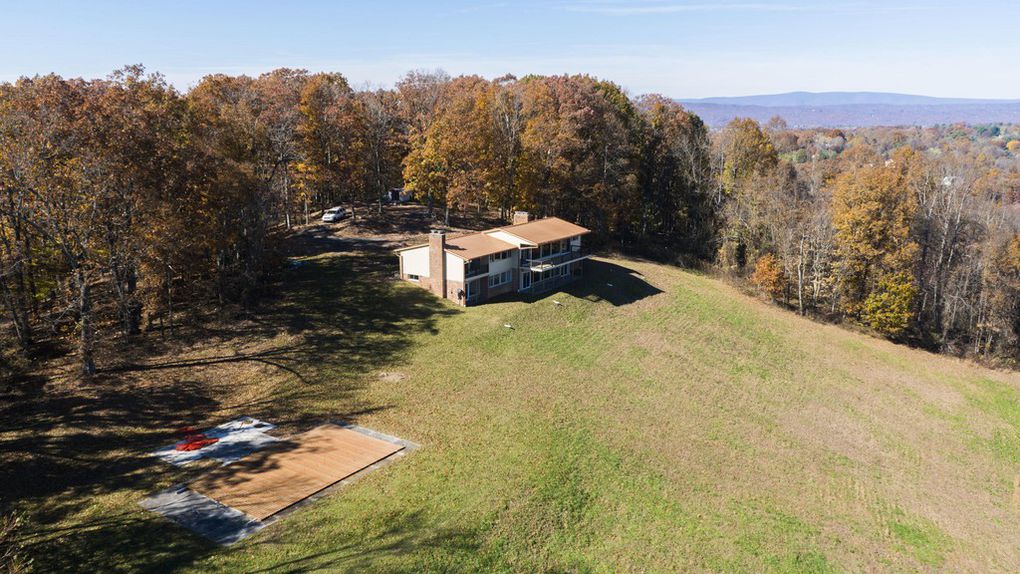
The house is a mid-century modern classic sitting on 66 private acres on High Knob along Cedar Run Road off of Ellett Road and adjoining the town limits of Blacksburg, Virginia. It overlooks the Ellett Valley in Montgomery County, Virginia. Nearly 64 acres of the 66 are forested.

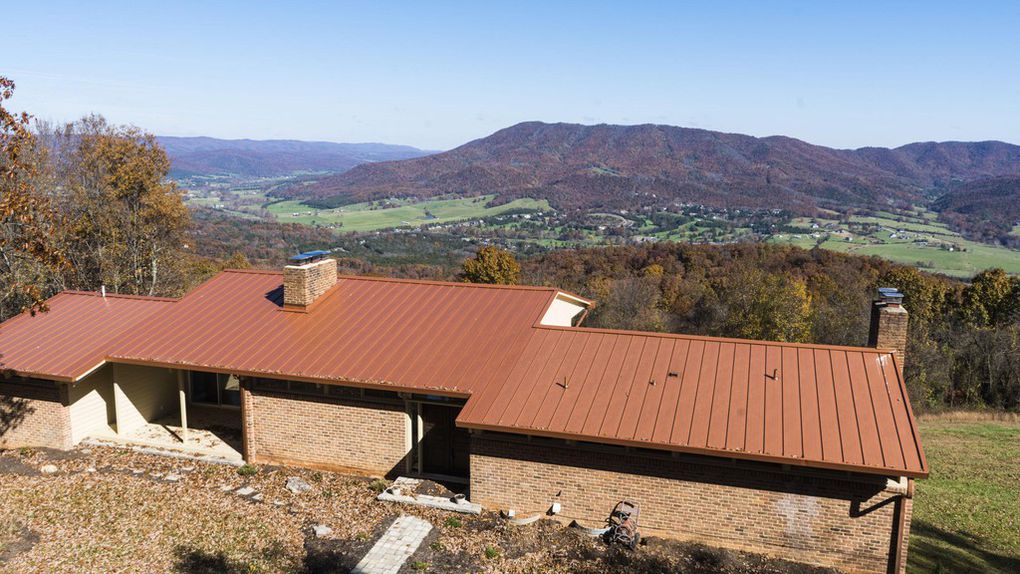
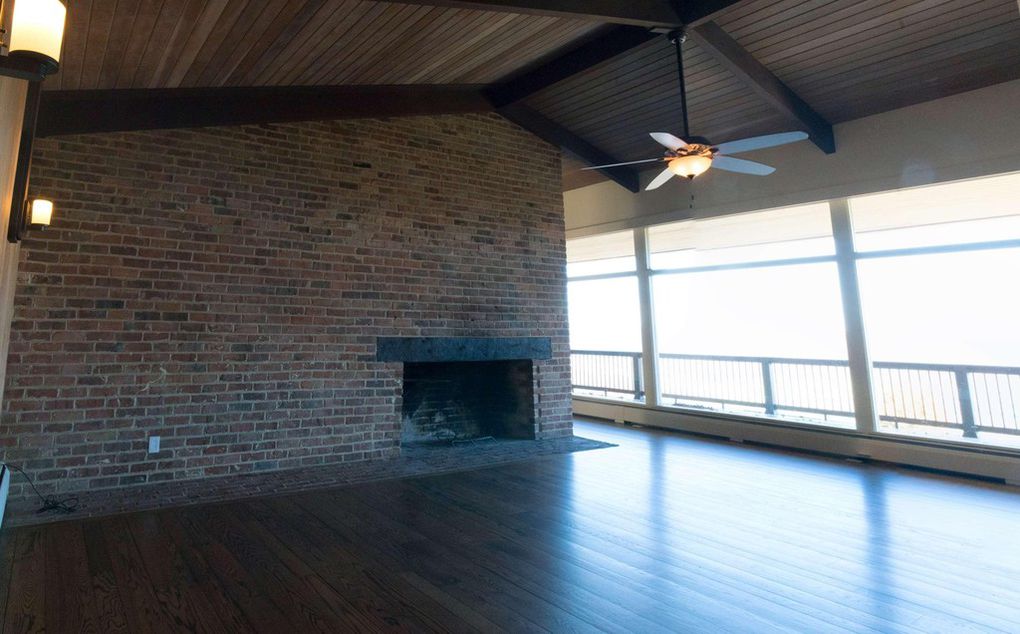
The house is 4,800 SF with a large main level deck and matching patio below and expansive windows throughout. In addition to master suites on both levels with direct access to the balcony or patio, there are two more bedrooms and four full and one half baths. The interior features rare wormy chestnut paneling, random-width pegged hardwood flooring and four fireplaces built of bricks from original Virginia Tech faculty houses built in 1893 – 1894 along a lane in the vicinity of today’s Pamplin Hall, Burruss Hall, and Norris Hall on what was then called Faculty Row. The exterior is brick and wood siding with a new metal roof that replaced the original cedar shake shingled roof. An in-ground pool is also on the property.

Johnson retired as vice chairman and a director of Union Carbide Corporation. A graduate of Virginia Tech, he began his career with the National Carbide Division of Union Carbide in Cleveland, Ohio. He served as general manager of the Eveready Battery Company in Shanghai, China, during the 1930s. Following his return to the United States he held a variety of senior management positions with Union Carbide prior to be being appointed vice chairman in 1967. Johnson, who died in 1999 at the age of 91, was a former member of the Board of Visitors of Virginia Tech.

PRESERVATION THOUGHTS

Courtesy of Marc Brodsky, public services and reference archivist, Virginia Tech’s Special Collections in Newman Library, Currie’s drawings of High Knob House show a wooden bridge made of 2” x 4” wood deck (on edge) and handrail bolted to the inside of posts that leads to the front door. In addition the plan includes a covered walk with a built-up roof above and brick paving in a herringbone pattern in 2” sand over 4” of gravel.

Current photos of the house, however, show no bridge or covered walkway and, in fact, it appears that the land leading up to the front door of the house is infill. If it is not infill, then perhaps the house was sited on the property differently than Currie intended.

Currie’s plan also shows a carport to the left and 8’ in front of the house that includes storage units on both interior side walls. There is a 2” X 4” wood deck bridge from the back of the carport that leads to the house with two doors into the house – one on the side that leads into the “Servant’s Room” and a second entrance into the kitchen.

Between the bridge from the carport and the bridge to the front door was supposed to be a 11’-2” deep by 18’-8” wooden deck outside sliding glass doors that lead into the dining room. Current photos show no carport and the wooden deck is now a concrete patio that sits directly on the ground.

This changes the entire elevation of the front of the house is several significant ways. Currie clearly planned a more dramatic entrance to the house. Currently, what was supposed to be at least a story and a half front is now one-story. In fact, the house as Currie planned it was supposed to be a full 9’ out of the ground on the left. The deck outside of the dining room was supposed to be about 4’ above ground under the deck outside of the dining room, and the wooden bridge to the front door about 3’ above ground. The wooden deck outside the dining room connected directly to the wooden bridge from the carport to the Servant’s Room and kitchen, which made servicing people using the deck more practical. There is no direct connection now. A concrete walk leads part of the way up to the front door, and stones have been placed to imply a walkway from the sidewalk to the concrete patio.

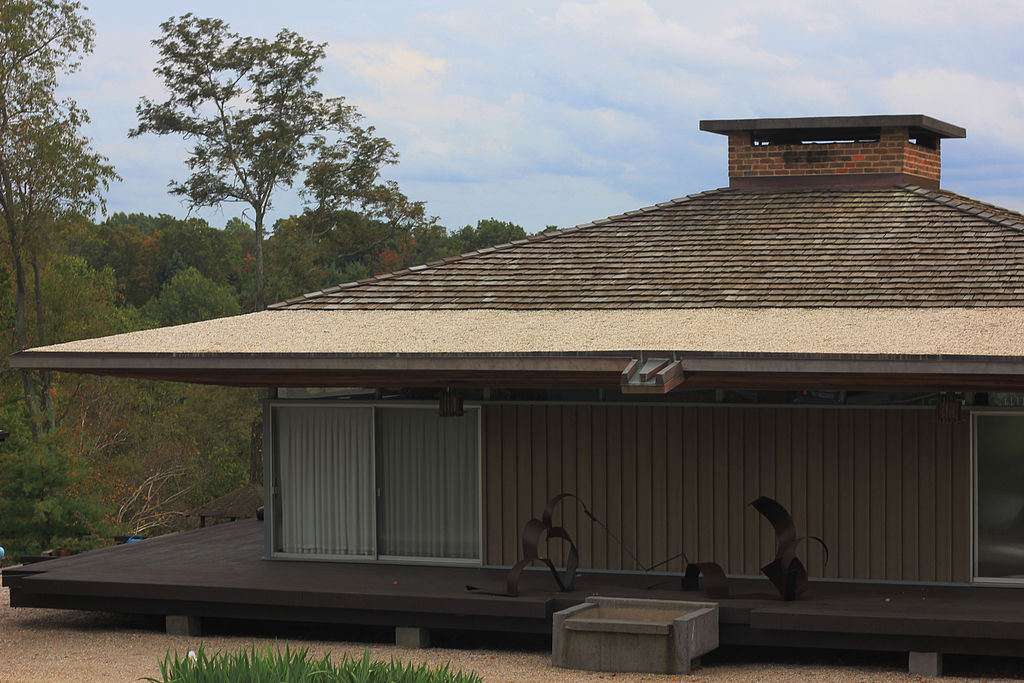
Another major change to the exterior of the house is that a red metal roof has replaced the cedar shake shingles that Currie planned.

Currie House I (Pagoda House), 1105 Highland Circle, Blacksburg, Va.

Currie House I
Currie House I

While in Blacksburg, Currie designed a number of homes in the International Style that he learned under Gropius and Breuer. The Currie house stands as a highly proficient and personal expression of 1960s Modernism, an architectural style influenced by the International Style of earlier decades. A rare instance where the architect was his own client, the house was designed in 1960 by Currie, head of the Virginia Polytechnic Institute school of architecture, for his own residence. He incorporated into his design Gropius’ and Breuer’s penchant for strong horizontality and large glass areas. Currie departed somewhat from his mentors’ industrial character by using a spreading hipped roof, a feature reminiscent of the works of Frank Lloyd Wright.

There are few award-winning, high-style modern houses of the Currie House’s era in the state, and in the southwest region it is recognized as the finest. Currie’s clear, formal statement of contemporary design received exception to the fifty-year rule for the National Register of Historic Places because of the rarity of similar architectural resources in southwest Virginia. The home’s deck offers a spectacular view from the Allegheny ridge above Blacksburg looking northeast to the Roanoke Valley and south to Christiansburg.

Completed in 1961, the house won American Institute of Architecture awards in 1962 and 1982. It was named to the Virginia Landmarks Register and the National Register of Historic Places (NPS property number 94000549) in 1994.

Currie sold the house in 1966 when he left the area to its present owner, W. Peter Trower, Ph.D., managing director of The Secular Society Inc. and retired Virginia Tech physics professor.

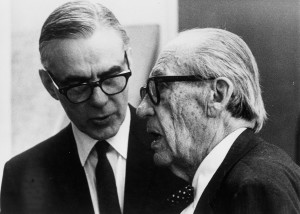
Leonard James Currie and James Adger Smyth Johnson

Leonard Currie with Walter Gropius
Leonard Currie with Walter Gropius https://50years.caus.vt.edu/history/

In the late 1950s and early 1960s, two men – Leonard James Currie, American architect, planner, educator, and James Adger Smyth Johnson, retired vice chairman and a director of Union Carbide Corporation, graduate of Virginia Tech and former member of Tech’s Board of Visitors – made indelible marks on both Virginia Tech and the town of Blacksburg. Several homes in Montgomery County still stand as monuments to their commitment to bring International Style architecture to southwest Virginia.

Leonard James Currie, who was born in 1913 and died in 1996, came to Blacksburg in 1956 to teach architecture at Virginia Tech. In 1956, Currie was appointed to replace the retiring Clinton Cowgill as department head of architecture.

He received a bachelor’s degree in architecture from the University of Minnesota in 1936 and a master’s degree in architecture from Harvard University in 1938. He did an apprenticeship with Walter Gropius and Marcel Breuer, 1938 – 1940, and was a Wheelwright traveling fellow, 1940 -1941. Gropius was head of the Bauhaus in Berlin, 1919 – 1928. Gropius and his Bauhaus protégé, Marcel Breuer, both moved to Cambridge, Massachusetts, to teach at the Harvard Graduate School of Design. Currie was a student of both and a subsequent colleague of Walter Gropius at The Architects Collaborative (TAC).

Currie joined the Carnegie Institute’s archaeological expedition to Copan, Honduras in 1941 and assisted Pan Am Airways and the U.S. Government in the construction of airport facilities in Guatemala and Nicaragua, 1941 – 1942. He served as an officer in the United States Army, 1942 – 1945, retiring as a lieutenant colonel.

He then was named assistant professor of architecture at Harvard University, 1946 – 1951. Currie provided technical assistance to the U.S. government and other institutions in Costa Rica, 1951, and served as director of the Inter-Am Housing Center in Colombia, 1951 – 1956. After he returned to the United States in 1956, he chaired the architecture department at the Virginia Polytechnic Institute.

As department head, Currie added urban design and planning to the curriculum, which became a degree program. Art courses were actively taught as support courses for the architecture degree and for the university community at large. Currie introduced international content into the curriculum and recruited new faculty with significant national and international stature.

He left Virginia Tech in 1962 to become dean of the College of Architecture and Art at the University of Illinois, Chicago, 1962 – 72. Currie continued his work as a professional architect, educator, and planner throughout the 1970s and 1980s. No longer dean, he continued to serve as a professor at the University of Illinois at Chicago, 1972 – 1981, as a Fulbright Senior Fellow, 1972 – 1973, and as a visiting professor at international universities. A partner in the firm Atkins, Currie and Payne, he later headed Leonard Currie and Associates.

Currie served as a member of the Chicago Cultural Commission, 1963 – 1966, as a co-promulgator of the Charter of Machu Picchu. He authored numerous books and articles including Housing in Costa Rica (with Rafaela Espinosa), Planning of Central American Campuses, and Designing Environments for the Aging. Involved in many different projects, Currie’s achievements include work on the Rockefeller Foundation, planning for the campus of the National University of Nicaragua, and award-winning residential homes.

He participated on various college committees and represented Virginia Tech both nationally and internationally. He endowed a scholarship in the name of his granddaughter, Michelle Currie, and funded an award for teaching excellence in the college.

Currie achieved status as a fellow of the American Institute of Architects, and in 1993, received the Virginia AIA Chapter’s highest award, the William C. Noland Medal. At CAUS awards ceremony in April, Currie was presented a special lifetime achievement award. For his achievements and outstanding service to the college, he was recently named professor emeritus of architecture.

While in Blacksburg, Currie designed a number of homes in the International Style that he learned under Gropius and Breuer. One of the homes he designed was for James Adger Smyth Johnson and his first wife, Elizabeth Jenkins Johnson, at 1620 High Knob Lane in 1962.

The house is a mid-century modern classic sitting on 66 private acres on High Knob along Cedar Run Road off of Ellett Road and adjoining the town limits of Blacksburg, Virginia. It overlooks the Ellett Valley in Montgomery County, Virginia. Nearly 64 acres of the 66 are forested.

Johnson retired as vice chairman and a director of Union Carbide Corporation. A graduate of Virginia Tech, he began his career with the National Carbide Division of Union Carbide in Cleveland, Ohio. He served as general manager of the Eveready Battery Company in Shanghai, China, during the 1930s. Following his return to the United States he held a variety of senior management positions with Union Carbide prior to be being appointed vice chairman in 1967. Johnson, who died in 1999 at the age of 91, was a former member of the Board of Visitors of Virginia Tech.

Grant Writing Fundamentals

I enjoyed catching up with Christine Rothberg, with whom I used to work at Lutheran Social Services and meeting future social workers during Christine’s class yesterday evening at the University of North Florida. She is doing great work in preparing these students for multi-method clinical and administrative practice with individuals, families, groups, organizations and communities by teaching them about biopsychosocial-economic and spiritual wellbeing.

Christine invited me to speak to her students about the role of grant writing in social work, something I have done in some form or another for the past 37 years. I enjoyed my time with the students. I assured them that, if they are interested in writing grants or perhaps asked to take on that role for their future employers, they can bring a unique perspective to the role, because unlike those of us who come to the role with a writing background and expertise, they can approach a grant application as someone “on the ground,” who knows the program/project and the need. My goal for the class was to give them a structure to work within to produce the most convincing request possible.

I saw this quote somewhere that I cannot now find – “Grant makers are in the business of funding ideas, as opposed to merely providing funds for things.” Writing grant applications may sound perfunctory, but I would submit that grants are what allow a nonprofit to dream, expand and re-invent itself. While donations from individuals are the backbone of an organization, grants fund projects and programs that meet specific needs the organization has identified and that enable it to provide better service.

Grant writers have the opportunity to work closely with other areas of the nonprofit, especially the program director/manager for the project that needs funding, the director/vice president of operations, the finance director/chief financial officer and the resource development director/chief advancement officer, to develop a sound proposal tailored to the specific funder being solicited.

To that end, an effective grant writer needs to be a critical thinker, someone able to see issues, needs and challenges from all sides – the organization’s, the community’s and the grantor’s, specifically. The following points may help a grant writer achieve this omniscient point of view: 

  • Ask yourself what would motivate, engage, inspire and fundamentally change the lives of the people (or other living creatures) you hope to help. How will the resources for which you are asking for funding accomplish that goal? What positive outcome(s) will the funding realize?
  • Research is critical. Conducting targeted research helps you find the right funders to partner with and support your organization’s work. Sending the right proposal to the right funder is key to finding the match. Get to know potential grant-makers better by obtaining copies of their annual reports. Scrutinize their website. What buzz words do they use? Most importantly, request a copy of the grant guidelines, if they are not available online. Follow the requirements of the funding notice or application strictly. Your guide for what to include or not to include in your document is the request for proposal (RFP) or grant application. Give the funder exactly what they ask for, no more and no less.
  • Present a logical solution to a problem. Think of your proposal as a story with a beginning (the problem or opportunity is the need statement), middle (the solution is your program), and end (the results are your outcomes). The solution to the presented problem needs to make sense. Tell the reader right up front what you are going to do, who is going to benefit and why they should care.
  • Convince the funder you know what you’re doing. The proposal should demonstrate that you have a clear understanding of the need in your community and a strong programmatic response. After reading your proposal, the funder should feel confident that your organization would be a responsible steward of their funds. Present a solid plan and highlight the skills and experience of your leaders. Show how your organization is uniquely able to solve an issue by providing the service for which you are requesting funding.
  • Make sure the budget and the proposal narrative match. The project budget is another opportunity to tell your story and demonstrate your credibility. Keep in mind that the budget is often the first thing funders study. Everything in your budget should be reflected in the narrative.
  • Give the funder reasons to care about those you are helping. Allow the funder to “see” a person helped by including testimonials and/or success stories in your grant application.
  • Remember that funders are people. Pick up the phone and call (when appropriate) instead of relying solely on email. Even better, make sure that your CEO, development officer and board of directors are aware of which funders you are approaching. If they have connections with the funders, a phone call or email from them to the funder ahead of time will improve your proposal’s chances of funding. Foundation fundraising (like all fundraising) is about relationships. Some funders require a site visit of those organizations they are most interested in funding. Offer a funder a site visit, if not required, both before and after receiving the grant. Remember to thank the funder for taking the time to consider your application, whether you receive the grant or not. You may well get another chance to apply, and you want to leave things on good terms.

Core Elements of a Grant Proposal:

  • An abstract, or summary, that introduces the project and argues for its need.
  • Background information on your organization, which may include an outline of its history, key leadership, demographics and special programs, among other items. In this section, assure funders that yours is a viable and trustworthy institution that will use awarded funds well.
  • A needs or problem statement that draws on facts, data and research to justify the importance of your project.
  • A description of the program chronicling your solution to the problem set forth in the preceding section.
  • A description of the program’s outcomes, highlighting what will change as a result of it.
  • Evaluation criteria demonstrating how you will measure whether or not the program’s goals have been met.
  • Other funding sources that you’ve petitioned for support.
  • Projections of sustainability and future funding, to show that it will continue beyond their donation.
  • A budget that shows project costs.
  • Any requested supplemental materials and a cover letter. Typical attachments/supplemental materials requested include:
  • IRS 501(c)(3) Determination Letter – A vital document that every 501(c)(3) organization must keep safe. State laws vary, but in order to keep nonprofit status current, the group may be required to file a copy of the determination letter with the state agency that registers nonprofits.
  • IRS Form 990 – A United States Internal Revenue Service form that provides the public with financial information about a nonprofit organization. It is often the only source of such information. It is also used by government agencies to prevent organizations from abusing their tax-exempt status.
  • Current Organization Operating Budget
  • Project/Program Budget
  • Financial Statements for the previous two years (audited, preferably)
  • Organization’s Most Recent Audit

Most foundations and grantors, private and public, have online applications with specific information and usually maximum character/word counts; however, some family foundations and individuals still prefer a letter proposal format that may be emailed or mailed as a hard copy. Often private foundations will dictate a maximum number of pages allowed. Regardless, in all cases, pay close attention to stated limits.

The Way We Were: William H. Rose

William and Betty Rose
KAREN RIELEY
PUBLISHED IN MARCH 2019 ISSUE OF THE RESIDENT NEWS –https://residentnews.net/2018/08/02/way-we-were-william-h-rose

William Rose has a lifetime of memories and a postcard art collection that allows him to see Jacksonville through the eyes of his father, Max Rose, as well as recall his younger years growing up in Jacksonville.

Rose, 92, has collected postcards produced in the early 1900s of Springfield and downtown Jacksonville that he has enlarged and framed. Some of the postcards were ones his father bought in 1918 and wrote to mail to his mother, Bessie, who was living in Baltimore before his parents married. He also buys postcards of old scenes in Jacksonville.

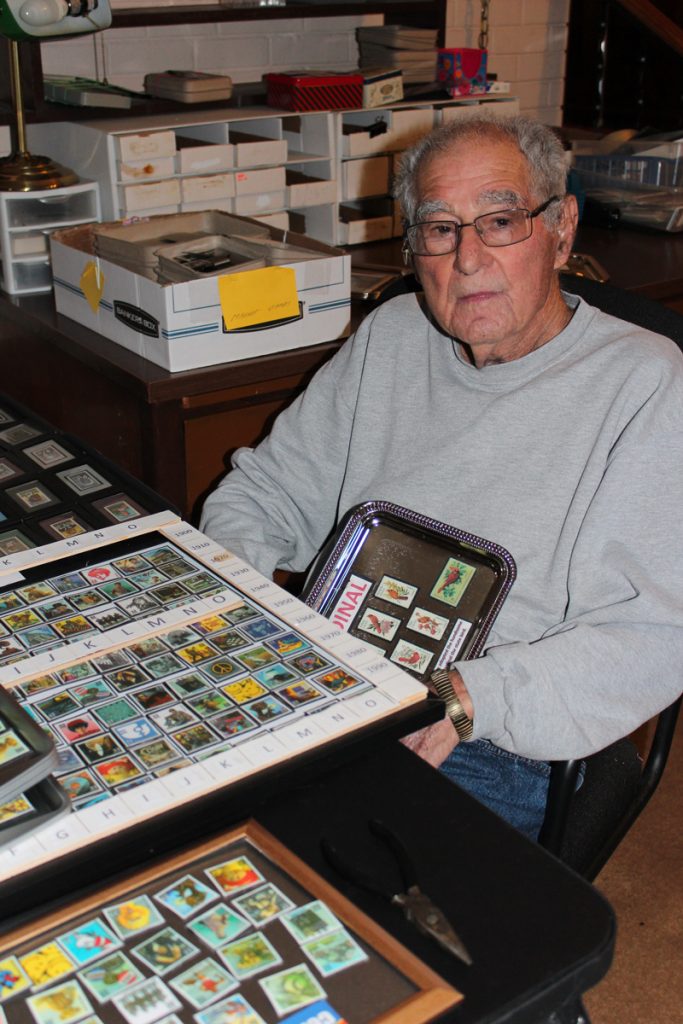
William Rose with stamp collection

He collects postage stamps, too. He remembers digging for stamps in the dumpsters behind the downtown U.S. Post Office building.

Rose’s father was born in Lithuania. His grandfather moved to South Africa to avoid serving in the military, and his father went to live with him when he was 13 years old. Rose’s father and grandfather moved to Jacksonville in 1911 so that his father’s aunt, Ida Feldman, could help raise his father.

“My aunt was extremely wealthy,” Rose said. “In the 1900s, she and her husband, Morris Feldman, owned a lot of downtown Jacksonville property on Bay Street.”

When the aunt died, she left the house that used to be at Post and King in Riverside to Rose’s father. She left the rest of her money to River Garden Nursing Home, Jacksonville Jewish Center and the country of Palestine.

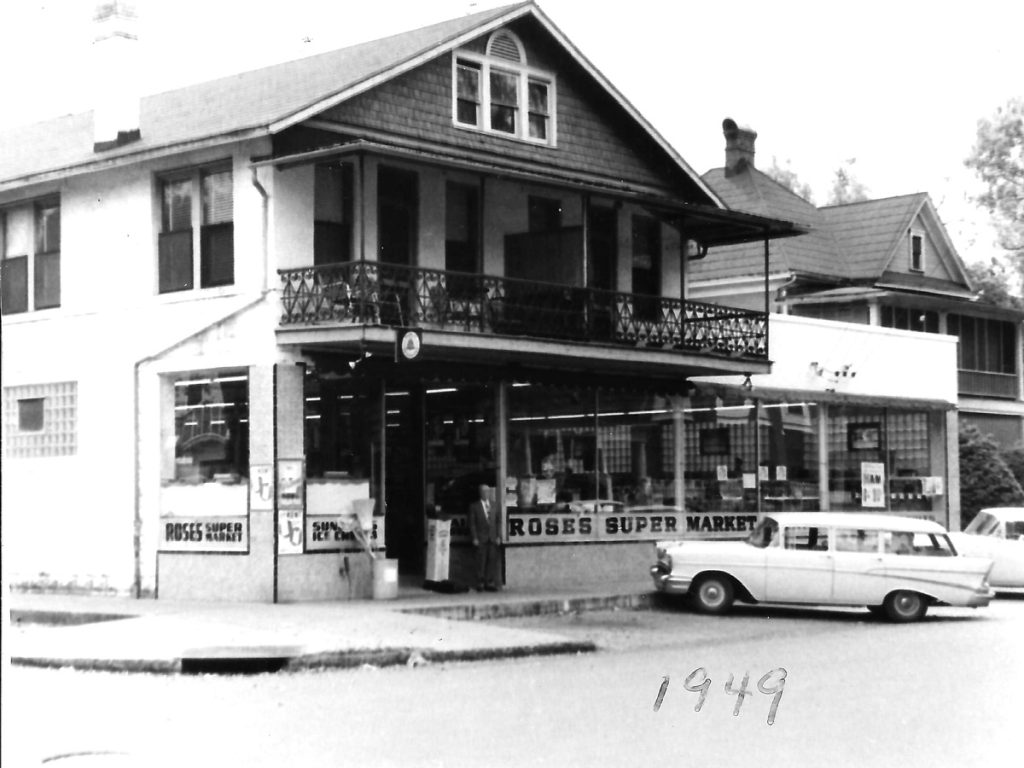
His dad's store, Rose's Super Market, at 6th & Market
His dad’s store, Rose’s Super Market, at 6th & Market

In January 1917, Rose’s father married Bessie Isaacs. In 1919, he opened a grocery store in Springfield at 6th and Market. A Feb. 2, 1935 ad for Rose’s Grocery & Meat Market, at the corner of Sixth and Market streets listed meat prices of 20 cents per pound for homemade pan pork sausage, 15 cents per pound for rump or chuck beef roast and three cans of dog food for 25 cents.

“My father would try to talk guys out of buying cigarettes by telling them that they weren’t good for them,” he said. “He told them that they weren’t made for smoking; they were made for selling.”

William’s father, Max Rose, operated the grocery and meat market for 50 years. In a story that appeared in the Oct. 23, 1972 edition of the Jacksonville Journal, Rose’s father, who was then 81, recalled the early days of operating the store. “In those days you knew everyone, and everyone was your friend,” he said.

Rose’s father had a delivery service as well. “I’d pedal over on a special bicycle with a big basket up front. People would call up for kerosene, and I’d go over, pick up their empty 5-gallon can, fill it and ride back to their house. I made a 10-cent profit on the deal.”

When William was born in 1926, his family lived in the house behind the grocery store. Rose had two older sisters, Mildred Rose Rothstein and Charlotte Rose Fialkow.

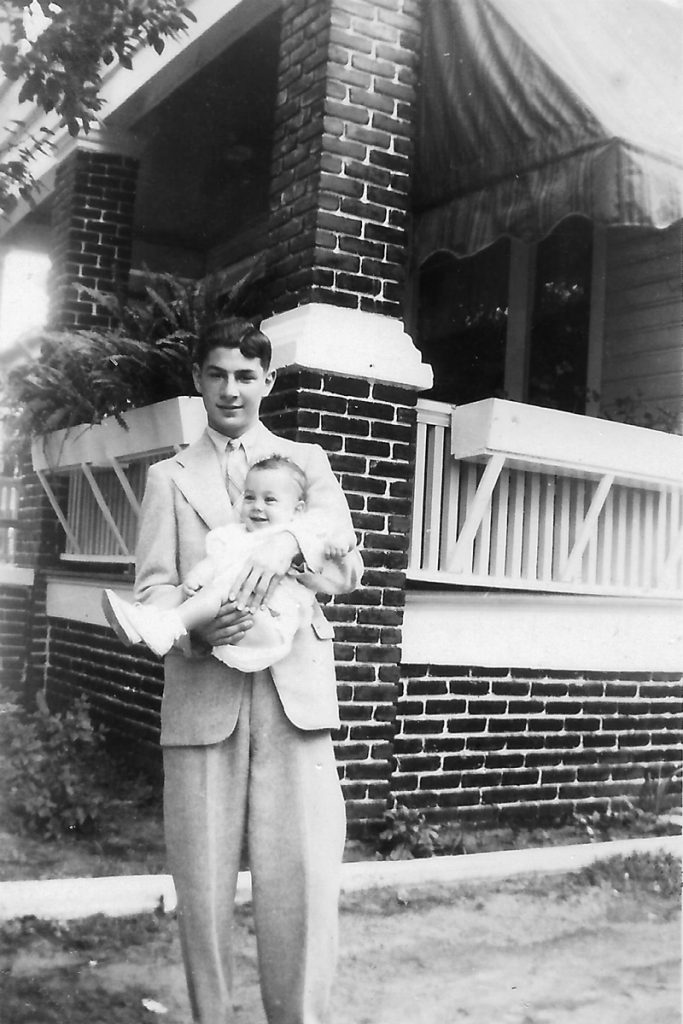
Uncle William holding niece Barbara in 1939 at the family home on 6th Street

“They tell me that my father was so happy to have a son that he added “and Son” to the “Rose’s Grocery Store sign when I was born,” Rose said. “But he took that off before I was old enough to notice it.”

Rose remembers that the streetcar in Springfield used to cost a nickel for one ticket or a dime for three tickets. Cabs cost 10 cents to ride, but they didn’t go everywhere. He had a girlfriend who attended Lee High School. After he finished a school day at Andrew Jackson High School, he would pay 10 cents to take a cab to downtown Jacksonville, and then he had to pay another 10 cents to take a different cab to Lee High School in Riverside.

Rose claims to have visited all of the movie theaters in downtown Jacksonville as well as the Riverside Theater, now called Sun-Ray Cinema, in 5 Points. That theater opened in 1927 and was the first theater in Florida equipped to show talking pictures and had air conditioning.

“I went to many movies at The Florida Theatre,” he said. “I remember Jimmy Knight playing the Mighty Wurlitzer organ in the mid- to late-1930s. The Florida Theatre, built in 1927, was the largest movie palace in Jacksonville and one of only four remaining grand movie palaces of the era in the state.

“I also remember going to the Capitol Theatre on Main Street between 7th and 8th Streets,” Rose said. “My father would give me a dime for the movie and a penny for the gum-ball machine.”

One Saturday in 1934 or 1935, when Rose was eight or nine, he went to the theatre to see what he recalls as “Little Orphan Annie.” When he finally got to the front of the line, he placed a coin on the counter. The cashier said, “Son, the movie is a dime, and this is a penny.” He suddenly realized that he must have put the dime in the gum-ball machine by mistake. “I never did see the movie,” he said.

Rose’s father bought a Pontiac in 1937 from Claude Nolan. “It cost more than $900. I couldn’t believe that it had a radio in it,” he said.

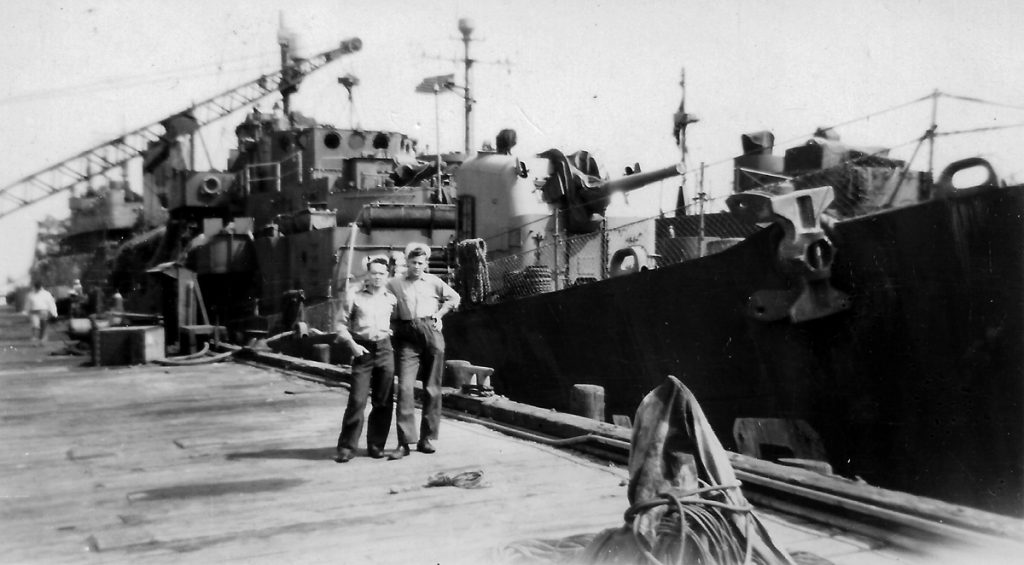
Rose worked for his father in the grocery store until he finished high school and enlisted in the Navy during World War II. He was on the USS Alex Diachenko, which was assigned to the Asiatic-Pacific Theater and participated as a transport ship in the consolidation and capture of the Southern Philippines and Borneo operations.

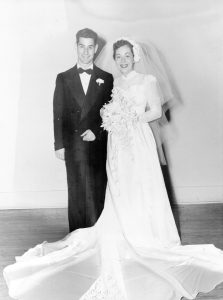
William and Betty Rose, 1951

When Rose came back to Jacksonville after service, he lived with his parents for a couple of years until he married Betty Sager in 1951, also a lifelong resident of Jacksonville. She had graduated from Lee High School and Florida State College for Women (FSU).

With his new bride, Rose bought the house he lives in now on San Amaro Road for $17,000. “People wondered why we wanted to live so far out of town,” he recalled.

He used to walk down the middle of San Jose Boulevard because there was so little traffic. “I remember cars hitting the telephone poles because the kerosene street lamps would go out and they couldn’t see the poles in time,” Rose said. “I used my flashlight to help direct traffic.”

He was working at his father’s grocery store in Springfield when he got married, and his daily commute required traveling from Miramar to Springfield every day.

“I’d buy turnip greens from the produce market, take them home, put them in the yard and sprinkle water on them to keep them fresh,” Rose said. “The next day I’d put them back in my car and take them to the grocery store.”

On Dec. 29, 1963, Rose was on his way to work when he saw smoke coming out of all the windows of the Hotel Roosevelt in downtown Jacksonville. Fire had broken out in the ballroom of the 13-story hotel, one of Jacksonville’s most grand hotels, on Adams Street just west of Main. Twenty-two people died, most from asphyxiation and carbon-monoxide poisoning. Some people escaped to the roof and needed help. Rose told the rescue people to call the Navy to get the people off the roof. “The next day I read in the paper that the mayor had called the Navy,” Rose laughed. “But I think they got the idea from me.”

Rose in the Navy assigned to the USS Alex Diachenko transport ship

When his father became too old to run the grocery store, Rose sold it. His father told him to go see Benjamin Setzer at National Drug Company, who asked him to come to work for him to oversee distribution. Setzer, a Lithuanian immigrant like his father and a former Springfield resident, had operated Setzer’s Supermarkets that became one of Jacksonville’s early grocery chains by the end of the Great Depression.

Then Rose worked for his brother-in-law’s wholesale grocery, the Hymie Fialkow Company. His brother-in-law eventually sold his grocery to Sysco Corp., where Rose worked as senior marketing associate until his retirement 17 years later.

After he retired, he volunteered in gift shops. He noticed framed stamps that were selling for $25; the stamp was worth 25 cents. He thought would be a good way to get rid of his stamps at flea markets. He also makes kitchen magnets out of postage stamps and has earned the moniker of “The Stamp Man.”

After 30 years of service in the Department of Children & Families, Betty retired and devoted many hours volunteering for her synagogue, the Jacksonville Jewish Center, Hospice and Bikkur Cholim. The couple were married for 57 years before Betty passed away in 2008 and had two daughters, Margaret Rose and Allison Rose Holtz.

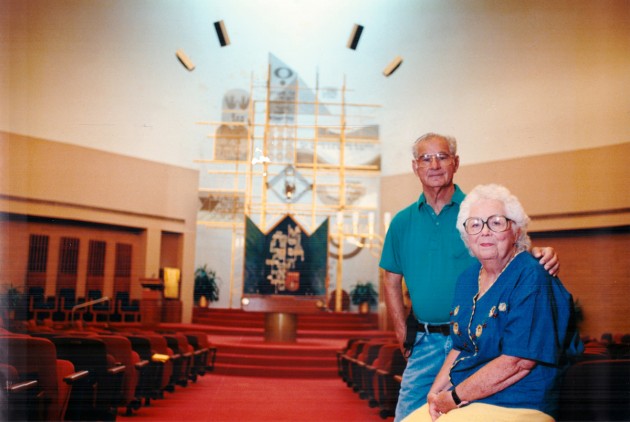
Both Betty and William were active in the Jacksonville Jewish Center and the center’s synagogue for many years. Betty volunteered in the office and William made sure the right prayer books were in every one of the 375 seats.

Age has caught up with Rose leading him to decide to quit driving, which means he won’t be going to the flea market any longer. But, he still intends on continuing to frame stamps. “It keeps me busy and I love doing it,” he said.

Street flooding fix still nearly three years out

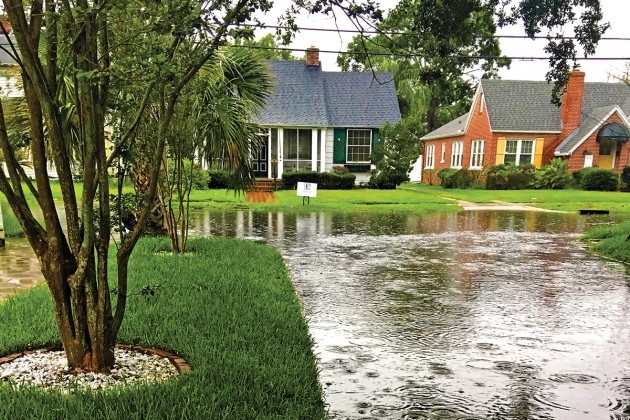
Moro and Riviera Streets flooded after an hour’s worth of rain May 31.
KAREN RIELEY
PUBLISHED IN JULY 2018 ISSUE OF THE RESIDENT NEWS –https://residentnews.net/2018/07/01/street-flooding-fix-still-nearly-three-years-out/

With the memories of Hurricane Irma still fresh, some San Marco residents and business owners are nervous about whether the City of Jacksonville is prepared to deal with this year’s hurricane season. A reported one-hour rain event on May 31, which resulted in water levels between 12-18 inches deep on Riviera Street and the surrounding area, has San Marco resident Craig Marlowe and other neighbors concerned.

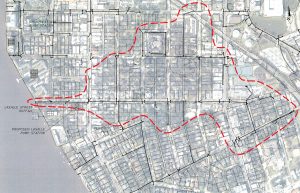
The dashed line shows the drainage divide in the San Marco neighborhood. Moro, Colombo, LaRue and Belmont streets should drain to Landon Park Pump Station after it is completed, while the areas to the north of those streets will drain to the Lasalle Pump Station instead of the Landon Park Pump Station.

Approximately 20 residents met with city officials during a special meeting June 14 at First Citizens Bank in San Marco. Representing the City were Lori Boyer, District 5 City Council representative, as well as John Pappas, public works director, and Bill Joyce, public works operations director, who presented diagrams and fielded questions.

The meeting was called in response to localized street flooding caused by a breach in the basin at the corner of Moro and Colombo or some other unknown contributing factor that might have been introduced by drainage improvements elsewhere in the area.

According to Marlowe, the St. Johns River was at low tide when the rain occurred May 31. “Hours later the water levels had still not measurably fallen, and the storm drain inlets were still overflowed at 10 a.m. the next day,” Marlowe complained in an email sent to Pappas.

Matt Carlucci, former City Council member and State Farm Insurance agent, points out the financial effects of flooding to City representatives and neighbors.

Alicia MacLean, who only recently was able to get back into her newly-restored home on Moro Avenue after Hurricane Irma, is also upset. “The [May 31] rains again flooded the streets terribly, and the water was coming up out of the drains,” she informed Boyer in an email.

“We all need a clear explanation of how every recent rain event, heavy or minor, has resulted in flooding,” Marlowe said during the meeting.

MacLean agreed. “There is an issue which needs to be explored before we get any significant rainfall,” she said.

Pappas acknowledged that a solution to flooding has been more difficult and will take longer than anticipated. “I wish the problem were just a broken pipe,” Pappas said. “The problem is more difficult than that because the streets reporting the worst problem with flooding are located at the lowest point in the area.”

“My backyard today has water sitting in it,” said Steve Costas, who lives on Colombo Street. “I’m getting ready to replace my duct for the third time.”

Lori Boyer, Jerry and Elizabeth Harty, Alicia MacLean and Jose Vasquez, at a June 14 meeting where MacLean told the group she had installed a sump pump that was supposed to come on just during heavy rains, “but now any time it rains at all the sump pump runs every 90 seconds.”

Pappas’ enlarged maps of the neighborhood illustrated why water pools at Riviera and Colombo streets, the area east of European Street Cafe across San Marco Boulevard. Currently, the Children’s Way and Landon Park storm-water pump stations serve the San Marco neighborhood.

“Originally, we thought the Moro and Colombo drainage systems only flowed to Landon Street and out to the St. Johns River,” Pappas said. “Consequently, we put in a Tide-Flex valve in the Landon Park system to eliminate high tide flooding of the area.”

When the neighborhood continued to experience flooding, Public Works did a more extensive investigation and discovered the tides were making their way up through a second connection to the area, from the LaSalle system, making the Tide-Flex valve of no use. The LaSalle system is currently an outfall, meaning there is no pump station to push high water out to the river.

According to an article in City Council District 5 News (Jan. 22, 2018), an online newsletter distributed by Boyer to her constituents, last year the City acquired a vacant lot on LaSalle Street in preparation for the construction of a long-contemplated pump station. The project was first planned and partially funded seven years ago, but during the recession funding was reallocated to allow completion of an overbudget project in progress.

Ruler indicates 8 inches of water on Riviera Street after one hour of rain on May 31. (Photo by Craig Marlowe)

The proposed LaSalle Street pump station is now back in line and a portion of the required funding was allocated this year with the remainder programmed over the next two years to support the construction phase.

“Public Works is developing plans for the planned Lasalle Street pump station to collect storm water from Moro, Colombo, LaRue and Belmont Streets,” Pappas said. “Our goal is to go to design-build when design gets to 30 percent, which will take until the end of 2018. This will be an $8 million project. Completion of the pump station is probably two to three years away.” Design-build is a construction project delivery system where the same contractor handles both the design and the construction services of the project.

In the meantime, Pappas told the group that the City would make it a top priority to send a truck out to unclog drains whenever flooding occurs.

“The reality we all have to deal with is that the river is rising and that makes a difference at high tide in the neighborhoods along the river,” Pappas warned. “The City’s bulkhead is at three and a half feet, but most of the property on the river is private, and we can’t make those homeowners build higher bulkheads.”

“The rising water levels are why new construction must be built eight feet off the ground,” Boyer added.

That doesn’t help homeowners living in historic home along the river, however. “I really hate moving inland, but water seems to be the evil element now,” said one neighborhood homeowner, who wished to remain anonymous because she fears flooding issues will negatively affect home values. “We’ve decided to move, but with the discussion by Public Works at the June neighborhood meeting, we are undecided about where to buy.”

State, federal budget cuts to the arts present opportunities, challenges for downtown museum

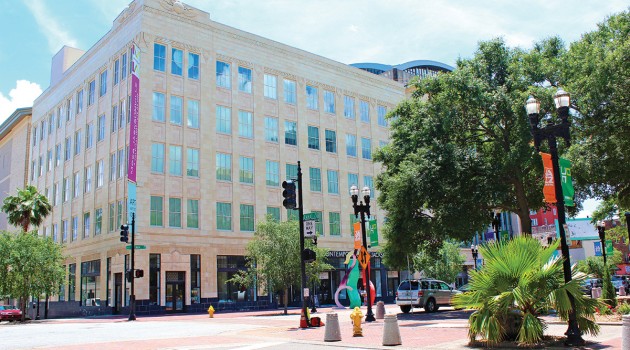
The Museum of Contemporary Art at Hemming Park
KAREN RIELEY
PUBLISHED IN JULY 2018 ISSUE OF THE RESIDENT NEWS –https://residentnews.net/2018/07/01/public-school-budget-cuts-present-opportunities-challenges-for-downtown-museum/

Due to proposed budget cuts at the state and federal level in arts education, including field trips, the Museum of Contemporary Art – Jacksonville, or MOCA, will continue to get creative in order to reach beyond its doors and engage young minds.

Dedicated arts magnet schools, such as Central Riverside and Fishweir Elementary Schools, and LaVilla and Douglas Anderson Schools of the Arts, could see their arts programs cut to one day a week or lose arts resource teachers, thus limiting opportunities for exposure to the arts.

While MOCA provides arts education for Duval County Public School children as well, government cuts in arts budgets will present challenges for the museum, too. “Currently, we no longer have government funding to bring children in Title I schools to our museum,” said Nan Kavanaugh, director of communications and marketing. “Sponsorships and private funding have become critical.”

It was private funding in 2016 through a gift from J. Wayne and Delores Barr Weaver that allows the museum to employ an educator for family and children’s programs. As the Weaver Educator, Anthony Aiuppy oversees the museum’s two flagship programs, “Voice of the People,” which brings fourth-graders from underserved schools to the museum twice a year to write an essay about an art piece and record an interpretive art essay for museum visitors to hear, and “Art Aviators,” an educational initiative designed for children with Autism Spectrum Disorders (ASD) and other exceptionalities.

In the meantime, MOCA is creatively working to attract visitors of all ages. For example, it hosts hands-on family days to get children into the museum, where they can engage with the permanent art.

The museum recently collaborated with Friends of Hemming Park on a Family Day, and is working with the other local museums and the main Jacksonville Public Library next door.

“We are also looking for outreach opportunities outside of downtown, such as satellite or pop-up art events like the one we hosted in Space 42 art gallery in Riverside,” said Kavanaugh.

In January, the museum teamed up with Space 42 to host New York City artist Rosemarie Fiore as she did a live “smoke painting” performance. “We want people to have the opportunity to experience contemporary art outside of our downtown walls,” Kavanaugh said.

Exposing youth to contemporary art in an educational format isn’t brand-new to the 94-year-old museum. Since 2009, MOCA has had a flourishing relationship between its artists and scholars and the University of North Florida students, faculty and staff.

“MOCA provides UNF with a learning laboratory in which ideas important to our time and place can be explored,” said MOCA’s new director, Caitlín Doherty. “That vitality, sense of exploration and curiosity drive artists and scholars alike and serve as a bridge back to our Jacksonville community as a whole.”

Doherty sees the challenge of deepening the relationship between UNF and downtown Jacksonville as an opportunity for growth that will attract new audiences to the museum.

The museum is making strides in increasing UNF student and faculty involvement beyond merely taking field trips to the museum. As one example, more UNF art classes are actually based at the museum.

UNF’s gallery space in the museum is coordinated by regionally-known artist and art teacher Jim Draper. He works with UNF faculty who guide students in creating their own art shows in the museum.

“Our goal is to have students understand all aspects of creating art,” Kavanaugh said. “While not every student will become a well-known artist, with exposure to all aspects of the arts, a student may end up curating art, funding the arts, loaning art from a personal collection and appreciating art, in general.”

UNF student Gabbi Bautista with Nan Kavanaugh, director of communications and marketing

In 2014, MOCA added a student-in-residence program with separate studio space. The student works with a curator, directs the installation team in hanging the student’s art and has the opportunity to interact with the public who comes to view the student art.

UNF students can also work in a paid position as MOCA ambassadors. They are the first point of contact for visitors at the guest relations desk and throughout the museum. The program is open to all UNF graduate and undergraduate students who have a passion for museums, art history, and contemporary art.

Gabbi Bautista is a public relations major at UNF. Bautista, who graduated from Douglas Anderson School of the Arts, appreciates the opportunity to interconnect arts and media and hopes to put her high school art skills to use in working with the media as a public relations professional someday.

“It is a very fun job,” Bautista said. “People often tell me how nice it is to have someone in the museum to talk to them about our works of art.”

The museum also offers internships to UNF students. Interns are exposed to art and art history, art education, the museum profession, and public programming.

MOCA is the perfect setting for art students as it is “self-curating,” according to Kavanaugh, explaining that it researches, collects, documents and creates its own exhibitions, rather than renting art shows like many museums choose to do.

Conversely, the museum’s first sculpture-only exhibition, “A Dark Place of Dreams,” will travel to Charleston, S. Carolina, after it closes here Sept. 9. The monochromatic assemblages of Louise Nevelson (1899-1988), one of the pioneering American sculptors of the 20th century, will stand alongside three contemporary artists: Chakaia Booker, Lauren Fensterstock and Kate Gilmore.

“For those living in or nearby downtown, a visit to MOCA can provide a transformational experience through the arts but, short of that, you can just enjoy a great meal, send your kids to a fun art camp or be entertained by a special film in the auditorium,” said Charles Gilman, outgoing board president. He will pass the torch to Rick Hawthorne, attorney at Driver, McAfee, Hawthorne & Diebenow, LLC, as the incoming board president.

Museum shop closing for new retail venture

Taking a step toward downtown revitalization, the museum is partnering with Troy Spurlin, owner of the 5 Points retail store Generation Us, to transition the museum shop to create a contemporary retail destination retail.

A larger initiative includes redevelopment of the lobby to make the museum’s first floor an open community space and to bring more people downtown, according to Doherty.

Spurlin, who also owns Troy Spurlin Interiors in Riverside, served as MOCA’s director of marketing and special events from 2004 to 2007. He decided to open a second retail store to be part of the focus on stimulating downtown commerce.

After the closing sale, which runs through July 14, the MOCA Shop will close for renovations, with an anticipated opening to kick off the fall exhibition season.