Real estate shift coming to historic areas

San Marco Promenade Groundbreaking: George Gummere, vice president, U.S. Real Estate Group, The Carlyle Group; Lori Boyer, District 5 Councilwoman; Jeff Rosen and Judd Bobilin, partners, Chance Partners, LLC; Paul Bertozzi, Live Oak Contracting president and CEO; and Walker Palmer, director of construction, Live Oak Contracting
KAREN RIELEY
PUBLISHED IN OCTOBER 2018 ISSUE OF THE RESIDENT NEWS –https://residentnews.net/2018/10/01/real-estate-shift-coming-to-historic-areas/

The face of Jacksonville – especially its historic neighborhoods – will look significantly different in a few years. In the San Marco and Southside areas alone, more than $700 million in mixed-use projects – apartments, townhouses and retail – are expected to be developed. More than 3,000 families are anticipated to move into the Southbank and San Marco’s historic neighborhoods.

To accommodate the greatest number of dwellers, multi-family living and amenities, rather than single family homes, are being planned. Following the growth path of Riverside, San Marco is almost at capacity and open land for development is dwindling.

“There has been a demographic shift from the suburbs to urban, walkable neighborhoods,” said Alex Sifakis, president, JWB Real Estate Capital. JWB owns 70 lots in Springfield, 4.5 acres in Brooklyn and various properties around TIAA Bank Field.

“This shift has made the historic neighborhoods that are closer to the urban core more desirable, which, in turn, drives prices up and makes it financially feasible for developers to come in and buy up property, especially property that once had something on it and has the infrastructure needed for [infill] development,” he said.

According to Sifakis, “highest and best use” of certain properties change over time. Prior to 2008, the highest and best use of the property on which San Marco Promenade will now be built was strictly commercial as the site of the Jerry Hamm Chevrolet dealership. Now, multi-use development is the property’s highest and best use, Sifakis believes.

Infill projects underway or on the horizon that aim to revitalize previously vacant land in and around San Marco include The District – Life Well Lived and Broadstone River House on the St. Johns River, San Marco Promenade and San Marco Crossing, SoBa Apartments on the vacant lot behind Clara’s Tidbits at 1444 Home Street, and a 185-unit building proposed by Ventures Development Group on Prudential Drive adjacent to the former Aetna Building on the Southbank.

In addition, two projects will renovate existing buildings in San Marco. Block One Ventures is currently remediating asbestos in the Florida Baptist Convention building at 1230 Hendricks Ave. with plans to eventually offer 345 apartments in the seven-story building, according to Scott Hobby of Block One. “The project is currently on hold until the rent that we can charge is able to support the total development cost we anticipate,” he said. Also, Corner Lot Development plans to renovate LaSalle Townhomes, on LaSalle  Street, as 14 three-story units.

While the Southbank and San Marco are now on the infill bandwagon, Sifakis views Riverside as the trendsetter in infill development. “Back when infill development started in Riverside in 2012, people thought the bars and restaurants would ruin everything,” he said. “Since then, Riverside has at least twice had the highest property value appreciation in the country.”

Noting that property values have appreciated 60 percent in Murray Hill as well, he predicts LaVilla and Springfield will be the next most likely places for infill development.

“It is indisputable that infill development raises everyone’s property values,” Sifakis said.
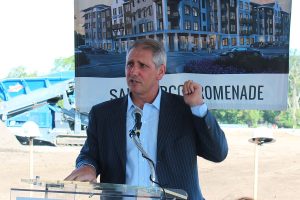
Judd Bobilin speaks at the groundbreaking for San Marco Promenade Sept. 11.

Major mixed-use projects underscore need for San Marco Publix

East of San Marco, developer Chance Partners officially broke ground on Sept. 11 for San Marco Promenade, a two-phase infill project. Once completed, its two phases – along with Chance Partners’ San Marco Crossing project – will fill the Philips Highway corridor from Atlantic Boulevard down to Service Street and west to the railroad tracks near Alexandria Oaks Park.

According to Jeff Rosen, a Chance partner, the Promenade will offer the current trend in amenities that attract potential homeowners to multi-family developments, such as a resort-style pool, fitness center, doggy spa and dog park, a bike-share program, co-working space with a coffee lounge, outdoor kitchen and fire pit, private garages and more.

“This is a transformative step on Philips Highway,” said Lori Boyer, District 5 Councilwoman, at the groundbreaking. “It brings increased density to San Marco, which is what is needed to get stores like Publix and other businesses such as shopping and restaurants to want to open in San Marco.”

The Resident reported in May 2018 that construction at the corner of Hendricks Avenue and Atlantic Boulevard of a 50,000-square-foot shopping center, including a 30,000-square-foot Publix and 20,000 square feet of shops and restaurants, would begin by the end of the year. In response to a request for an update, Dwaine Stevens, Publix’s media and community relations manager, Orlando region, which includes Jacksonville, said, “We remain committed to the project and look forward to serving this community.”

“The only thing we are missing in San Marco is a grocery store,” said Bryan Mickler, president, San Marco Preservation Society (SMPS). “We believe Publix is finally moving in a positive direction. If they’ll do what they did in Riverside, we’ll be happy.”

Chance Partners’ plans for the total mixed-use project include street designs all the way to Daily’s gas station and convenience store on Atlantic Boulevard. “The project’s connection to Atlantic Boulevard is very important in terms of its ability to be integrated into San Marco,” Boyer said.

The Promenade will face the northern side of the property towards San Marco and is scheduled to be open next fall for residents and completed by Spring 2020. San Marco Crossing will open in Spring 2019 on Southside Assembly of God property north of the Promenade. Southside Assembly of God sold its property to Chance Partners in March 2018 and plans to start construction in November on a new 24,000-square-foot, 450-seat sanctuary on about 5.1 acres it bought Aug. 8 for $1.45 million at 6851 Southpoint Parkway.

“We view the Promenade as part of the San Marco area,” said Rosen during the groundbreaking. “We are working with Brian Croft and Matt Hugo to create the San Marco East Association which will represent the area south of I-95 to Emerson.” Croft is president and CEO of Holmes Custom, a product personalization company formerly known as Holmes Stamp & Sign, located at 2021 St. Augustine Road, just off Philips Highway. Hugo represents Hugo’s Interiors at 3139 Philips Highway. The newly-formed association is working in concert with San Marco Preservation Society and San Marco Merchants Association.

“The development that is coming in is complementary and contributes to a vibrant community by bringing in lots of people into our shops and restaurants,” Mickler said.

While acknowledging that parking has been an ongoing issue in San Marco Square, Mickler notes that SMPS is working on new ways to address the issue. “SMPS is working with Beachside Buggies on providing service in San Marco similar to what it has been providing for the Beaches community since May 2017,” he said.

Beachside Buggies works in partnership with the Jacksonville Transportation Authority to provide free service to residents. SMPS hopes that the company will transport San Marco residents to and from San Marco Square for shopping and dining to their homes. Customers will be able to request on-demand rides via the Beachside Buggies’ free mobile phone app.

“We’re also working to educate residents on how to manage public transportation better,” Mickler said. He points to the widening of San Jose Boulevard and Hendricks Avenue to add bike lanes as another option. “Eventually the bike lane will run through the middle of San Marco all the way to The District on the Southbank.”

Digging up history in Memorial Park

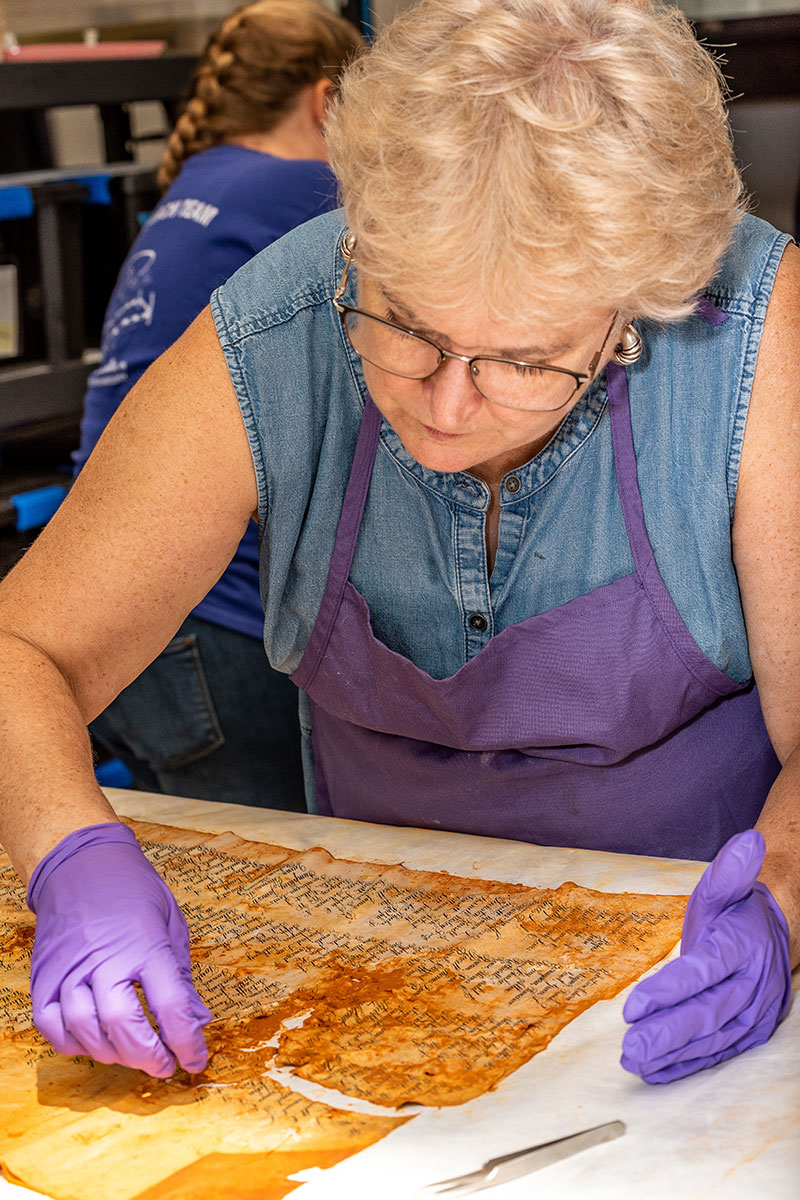
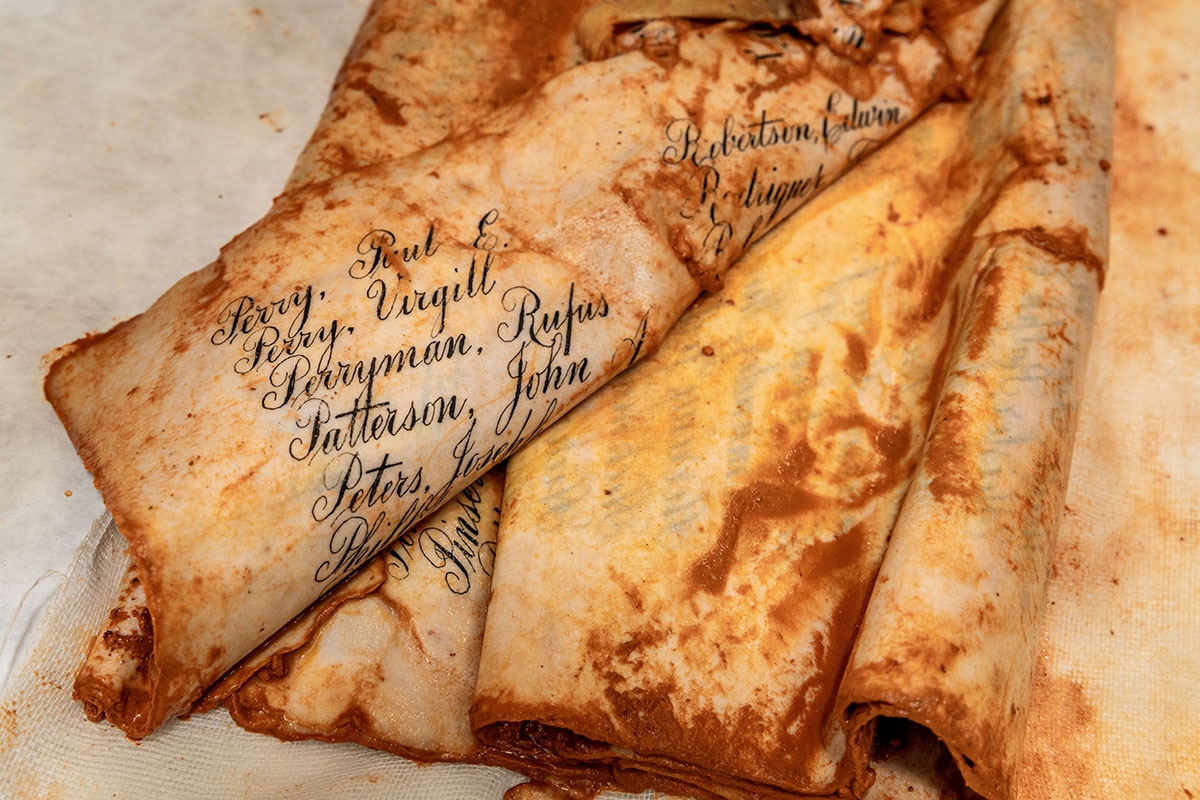
A soggy wad of parchment displays some of the names of 1,220 Floridians who served and died during World War I.
KAREN RIELEY
PUBLISHED IN NOVEMBER 2018 ISSUE OF THE RESIDENT NEWS –https://residentnews.net/2018/11/05/digging-up-history-in-memorial-park/https://

Nearly 94 years ago on Christmas Day, a Jacksonville Citizens Committee put a parchment scroll, onto which 1,220 names of Florida men and women who died serving in World War I had been beautifully inscribed in India ink, into a lead box. They soldered the box shut, put that box into a bronze box, soldered that box shut, too, and buried both in Memorial Park in front of the statue, “Spiritualized Life.” On top of the box they placed a plaque honoring the dead and walked away, certain that their work would be good to protect the scroll for a hundred years.

In 2017, Hurricane Irma was almost their undoing. A year later, on Sept. 27, volunteers with the Memorial Park Association, a nonprofit group that works to preserve the riverfront park in Riverside, removed the boxes. The purpose of unearthing the lead box was to reveal the 1,220 names of the Florida Fallen and compare them to nearly 1,600 names, identified from various sources by Dr. R.B. Rosenburg of Clayton State University in Morrow, Georgia, who has been researching the Florida World War I dead.

The Memorial Park Association plans to add the names of more than 300 additional men and women discovered to have died in the “Great War” to a new list and re-bury the boxes. The original scrolls will be on display at a location yet to be determined.

After the boxes were unearthed, the outer bronze box was successfully opened by members of the Jacksonville Fire & Rescue Department and St. Augustine-based Ann Seibert, who retired in 2016 as deputy director, Preservation Programs for the National Archives, and who previously worked in paper preservation for the Library of Congress. When they started to open the top corner of the inner lead box, they noticed a small amount of rust. Seibert feared water from flooding caused by Hurricane Irma had gotten inside and may have damaged the parchment.

The lead box was immediately taken to the Archaeological Maritime Lab at the St. Augustine Lighthouse where Seibert and Starr Cox, director of Archaeological Conservation, St. Augustine Lighthouse Archaeological Maritime Program, discovered a second smaller parchment folded inside the larger parchment.

“Seibert is incredible; the patience she has to have to mend the paper is amazing. Although all the records indicated the names were on parchment, they are actually on paper,” said Michele Luthin, MPA vice president at large. “Ann discovered the watermark while she was cleaning the pages. She is mending the pages now and after she is finished with that she will place them in a secure medium (probably a plexiglass type thing), so they can be displayed and moved without causing further damage. 

“I asked Ann Seibert how difficult this project was compared to other projects that she’d worked on,” said Luthin. “She said it is the most difficult of her career. We are so grateful for her willingness, patience and expertise.”

Some pieces of the pages were just tatters, but the names were generally listed in alphabetical order, which helped Dr. Rosenburg figure out who was missing. “The parchment scrolls were just a big wad of wet paper and the box had a big hole on the side,” Dr. Rosenburg said. “The plaque said that 1,220 names were listed, but I knew that I would find more than that because it is not unusual for lots of names to have been left off.”

Dr. Rosenburg believes that the intent behind how the names were listed on the six parchment pages found in the box was to separate them by race and by branches of the military. The first three pages have larger writing and the names are almost of all white male members of the U.S. Army. The fourth page has smaller-sized names of members of the Marines and Navy, as well as five YMCA workers, including the only woman listed on the scroll. The fifth and sixth pages are all names of black members of the service who died during World War I. The page that the association originally thought was a second scroll was probably originally attached to the second page, not a separate scroll.


“I have names of more women who held a rank within the Navy and served in the war, but they weren’t listed on the scroll,” Dr. Rosenburg said. He now has a list of nearly 1,600 names with 40 more possible names of Floridians who died during World War I.

Dr. Rosenburg is searching for more information on each name, such as residence; when, where and why they entered the service and into which service; birthplace; birthdate; last assignment at the time of their death; cause, date and place of death; next of kin; and other details.

“About 75 percent of those who served in World War I died of bacterial and viral infections, not from being killed in action or wartime wounds,” he said.

He has found the names of three brothers and several other sets of brothers. At least three names on the scroll are related to him, he discovered. 

He discovered personal stories about some of the people listed, such as Fred Safay (listed as Safey on the parchment). Safay, whose family was originally from Syria, was born in Jacksonville on May 15, 1889. After serving in the U.S. military for six years in two different Calvary units, he entered World War I in a Canadian regiment out of Quebec in 1915, before the war started. He served until his death in 1917 in Belgium where he is buried.

“About 500 Syrians lived in Jacksonville prior to World War I,” Dr. Rosenburg said. “About 25 fought for the United States against Turkey.”

The project started with the desire to say the names aloud, to honor the men and women in some way this Veterans Day, said Luthin. “Because of the work of Ann and Dr. Rosenburg, we are going to be able to do just that, honor these men and women 100 years after the end of WWI.”

Dr. Rosenburg will discuss other interesting findings from his research at a free lecture Saturday, Nov. 10, 10 a.m., at the Garden Club of Jacksonville, 1005 Riverside Ave. All the names will soon be available at MemParkJax.org.

Memorial Park, located at 1620 Riverside Ave., opened in 1924 as a World War I memorial, thanks to the vision of Rotarian George Hardee. On Nov. 12, 1918, the day after an armistice ending World War I was signed, a Citizens Committee was formed to raise funds, and on Dec. 25, 1924, the park opened. Designed by the famed Olmsted Brothers, it is the only park in the state dedicated to the Floridians who lost their lives in service during World War I.

Courthouse run goes big in Freed to Run 2.0

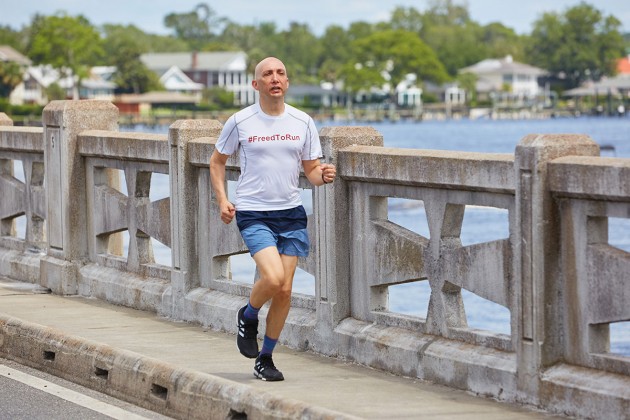
Mike Freed runs along the Ortega River drawbridge.
KAREN RIELEY
PUBLISHED IN NOVEMBER 2018 ISSUE OF THE RESIDENT NEWS –https://residentnews.net/2018/11/05/courthouse-run-goes-big-in-freed-to-run-2-0/

Jacksonville attorney Mike Freed’s passion for helping others is contagious. Last year, Freed launched Freed to Run, six marathons in six days from the Florida Supreme Court in Tallahassee to the Duval County Courthouse in Jacksonville.

After years of doing pro bono work with the nonprofit Jacksonville Area Legal Aid, he decided to create his own fundraising event to help the organization and raised $70,000 in the inaugural Freed to Run point-to-point relay race.

Freed covered at least 26 miles each day for a total of 157 miles. He ran from courthouse to courthouse along US-90, like circuit court judges used to do by horse.

“Officially I was the only runner, but I was surprised by some supporters and even some perfect strangers who joined in for fun and encouragement and ran some miles with me,” Freed said.

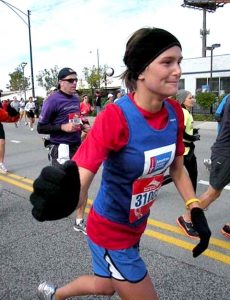
Lauren Purdy ran in the Chicago Marathon several years ago to support the American Cancer Society.
Lauren Purdy ran in the Chicago Marathon several years
ago to support the American Cancer Society.

Freed and his wife, Crystal, aren’t new to philanthropy. Independently and collectively, they have been working to raise money and awareness for causes. In 2016, Crystal hosted a Bollywood-themed benefit ball for her friends, Sarah Symons and John Berger, to add a third floor to their shelter in Jalpaiguri, India, that serves survivors of human trafficking. Her success inspired Mike to create Freed to Run in 2017.

This year at least 17 relay teams will join Mike in Freed to Run 2.0, Dec. 2-7, in an effort to raise $180,000. Each team is trying to raise $10,000.

With a commitment from Baptist Health Foundation to match by 125 percent the funds the relay teams raise, the event is seeking to raise $405,000 for the JALA Endowment for the Northeast Florida Medical Legal Partnership (NFMLP). Baptist Health Foundation has challenged Freed to raise $1 million over the next five years.

“I am not a runner, but I wanted to support Mike and, most importantly, spread awareness and raise funds for an important cause,” said Michelle Barnett, Jacksonville Bar Association relay team member. “Too many people need representation and even a simple question answered, but the don’t have the resources to get help. Legal Aid provides a tremendous resource and we are proud to support this cause.”

Including the Foundation’s match, Freed to Run has an ultimate fundraising goal of $2.25 million for the JALA Endowment. Interest from the endowment will pay for a lawyer’s salary to provide legal services for low-income, disadvantaged people and families facing issues related to medical problems, Freed said.

“Marks Gray has a longstanding relationship with Jacksonville Area Legal Aid,” said Shannon Peabody, who is volunteering as marketing director for this year’s run, in addition to leading the Marks Gray law firm’s relay team.

“Freed to Run 2.0 combines physical fitness and charitable giving to raise funds for the Northeast Florida Medical Legal Partnership – a perfect union for a great cause.” Peabody will be running the relay with Giselle Carson, who is captain of the Marks Gray relay team.

Northeast Florida Medical Legal Partnership (NFMLP) is part of a nationwide network of projects in which professionals from the medical and legal communities combine resources to produce outcomes for low-income and vulnerable patients (children and adults) that positively impact their health and ability to thrive. Jacksonville Area Legal Aid (JALA) supports NFMLP by providing high quality legal assistance to low-income and special-needs groups.

“Akerman law firm is dedicated to assisting the less fortunate in the communities in which we live and work,” said Katie Fackler, captain of the firm’s relay team with John MacDonald, co-captain.

“Running is one of my greatest loves, so I feel exceptionally lucky to have the opportunity to use it for a higher purpose,” she said.

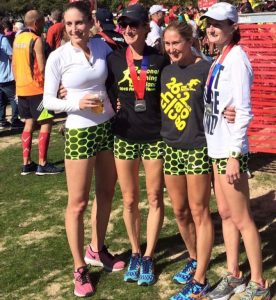
2015 Chicago marathon runners Allison Stocker, Jamie Joseph, Lydia McRae and Katie Fackler

“The goal is to have a lawyer available 24/7 to help the medical community improve people’s lives,” Freed said. “It is a good idea, but it is not fully funded. This marathon works to solve a critical social service problem. A pediatric patient may have asthma. The hospital can treat asthma but can’t solve the living conditions that are causing the health problems, but lawyers can help with that landlord issue,” he said.

Lawyers can also help with the medical benefits process and many other problems to reduce the need for medical attention.

“A modest amount of legal help can make a big difference and create a positive outcome for everyone,” Freed said. “Most lawyers practice on the business, criminal, corporate side; not as many are available to address the civil side, especially for indigent people.”

“My husband, Asghar, and I are supporters of Freed to Run because the need for donations is particularly dire in Florida given that the state does not allocate funds for civil legal aid,” Sabeen Perwaiz said. Asghar Syed joins Gunster law firm members Rachel Mills, Mike Freed and his assistant, Donna McGavic, in planning Freed to Run 2.0.

“Women’s Giving Alliance wanted to participate in Freed to Run to show our support for JALA and NFMLP,” said Lauren Purdy, who works for Gunster. She and Sabeen Perwaiz are both members of the Women’s Giving Alliance, which funds, educates and advocates for Jacksonville women and girls to strengthen families, communities and the future.

“The missions of JALA and NFMLP align very closely with WGA’s mission, in particular our current focus of breaking the cycle of female poverty,” Purdy said.

“There are so many great, philanthropic lawyers and law firms and other nonprofits in Jacksonville. Community First Credit Union saw this as a great opportunity as well,” Freed said. “I think the fact that the event is a cost-free, fun opportunity to run across the state that brings a 125 percent match captivated their interest.”

Freed graduated from Jacksonville University, went to Georgetown law school, and practiced law in D.C. until he and his family moved to Jacksonville in 1995.

“I enjoyed D.C., but it is a bit of a rat race,” he said. After the birth of their first child, Crystal and he thought the opportunity to raise a family and work in Jacksonville was more appealing.

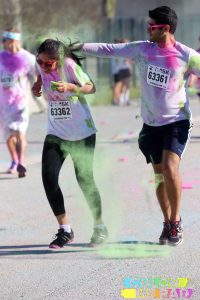
Sabeen Perwaiz and Asghar Syed in a 2018 Color Me Rad 5K race


Freed attributes his passion about social issues to Crystal’s influence. She left her job as a commercial litigator in 20018. Since then she’s focused her career as a human rights lawyer advocating for victims of human trafficking in her own firm, The Freed Firm. 

Crystal Freed, The Freed Firm; Dennis Harrison, Jim Kowalski and Kathy Para, Jacksonville Area Legal Aid; Circuit Judge Hugh A. Carithers; and Deno Hicks, Southern Strategy Group of Jacksonville, are also part of the working group that is producing Freed to Run 2.0.

To date, other relay teams are Abel Bean Law; Black Girls Run!; Jacksonville Area Legal Aid Board of Directors; Community First Credit Union; Forbes, Thompson & Gilham Wealth Management Group; Jacksonville Area Legal Aid – St. Johns County and Clay County; Jacksonville Bar Association; F3 Jacksonville; Office of the State Attorney for the Fourth Judicial Circuit; Shutts & Bowen; Fisher, Tousey, Leas & Ball Attorneys at Law; Florida Public Defenders – PDO 4th Circuit; and Jacksonville University.

Sponsors of Freed to Run 2.0 include Gunster law firm, The Freed Firm, Elite Parking Services, Jacksonville Bar Association, 1st Place Sports, Wahby Financial Services, UF Health and JTC Running.

The community is invited to help the relay teams finish by running a 5K to the finish line – from the Jacksonville Farmers Market to the Duval County Courthouse on Friday, Dec. 7. The run begins at 3:15 p.m.

All funds raised will directly to benefit JALA’s endowment. To learn more about Freed to Run 2.0, visit jaxlegalaid.org/freedtorun/.

When community comes together, students are the winners

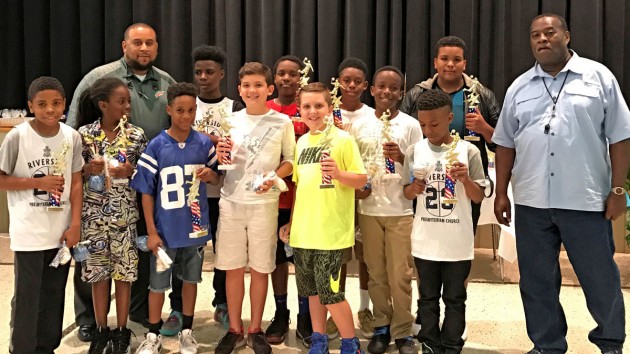
Boys’ basketball has been a regular afterschool activity at Trinity Lutheran Church for the past 20 years.
KAREN RIELEY
PUBLISHED IN NOVEMBER 2018 ISSUE OF THE RESIDENT NEWS –https://residentnews.net/2018/11/09/when-community-comes-together-students-are-the-winners/

The public elementary schools in Jacksonville’s historic neighborhoods enjoy a longstanding history of community involvement that spells success for their youngest students now and throughout their lives.

At many Duval County public elementary schools, three parent groups – the Parent-Teacher Association (PTA), Student Advisory Committee (SAC) and “Friends” of the school, a fundraising arm – work with teachers and the principal at schools to obtain resources needed beyond what the school can fund.

For example, Erin Scharer, who is on the Health and Wellness Committee of Hendricks Avenue Elementary School’s PTA, said her committee performs vision and hearing screenings for the school as well as coordinates the Walk/Bike to School Day in San Marco.

Friends of Hendricks Avenue Elementary School funds teacher grants and high-cost items like laptop carts, while Henricks Avenue Partnership Initiative (HAPI), a faith-based partnership between Southside United Methodist Church and Hendricks Avenue Elementary School, serves students and the school with after-school programs such as tutoring, digital music academy and Dance for Joy. The partnership also provides Backpack Blessings stuffed with supplies, a new outfit and shoes for students at the beginning of the school year; Friday Food for Families grocery delivery for two families; and Angel Tree Christmas gifts and a homecooked meal for all families in need.

In Ortega Forest, Friends of Stockton raised funds in the past year to put iPads in every classroom, create all-in-one media systems and purchase STEM materials and a new STEM lab, according to Stephanie Freeman, treasurer of Friends of Stockton.

West Riverside Elementary School benefits from many community organizations that provide everything from food to educational materials to character building to healthcare to mentoring. Blessings in a Backpack, with the help of Avondale United Methodist Church, gives nutritious snacks to select students on Fridays for the weekend. Bean Tree Dentistry provides nutritious snacks in partnership with Riverside Publix for student celebrations and gives lessons on dental hygiene. Feeding Northeast Florida coordinates a mobile food pantry several times a year for families needing help.

Last year, CenterState Bank and BoatUS donated school supplies for West Riverside students. The Woman’s Club of Jacksonville, the Community Foundation for Northeast Florida and Ortega Orthodontics donated funds for reading intervention curriculum, new art tables and a new speaker system; end-of-the-year academic celebration and academic-related incentives throughout the year; and other general expenses. Riverside Presbyterian Church’s Caring Tree donates gifts for select families around the holidays.

American Civility Association uses “Precious Not Prickly” curriculum to promote kindness and organizes the annual “Kindness Week” in February. Jean Grant-Dooley and Bud Para coordinate a group of 30 adults, mostly members of Riverside Presbyterian Church, in providing Lunch Buddies, a nearly 20-year-old program at West Riverside. One adult is paired with one student and they meet once a week during that student’s lunch time in the school building to talk or play games.

“Just once a week has a tremendous impact, because the student knows for that short time someone is paying attention to only them,” Para said. “It doesn’t matter if you play a game, read a book, or just talk. What matters is being with them.”

For 20 years, an association of churches in Riverside and Avondale called Children’s Enrichment Workshops (CEW) has provided quality after-school enrichment programs on Tuesdays and Thursdays during the school year for West Riverside, Central Riverside and Fishweir Elementary Schools.

Trinity Lutheran Church offers yoga and boys basketball; Riverside Avenue Christian Church hosts Melody Makers; and Episcopal Church of the Good Shepherd runs Computer Lab for about 70 students weekly. Church members provide a snack for students each afternoon. Funding from individual gifts, family foundations, bequests and “love offerings” cover the costs of transportation, supplies and stipends for staff.

CEW’s goal is to provide a safe place for students after school ends. The kids benefit from extra attention and experience activities that their parents can’t provide because they work and/or don’t have money to pay for these experiences. The teachers select the students who will benefit the most from participating in CEW.

“CEW is a wonderful faith-based partnership of churches working with schools to enrich the lives of children,” said the Rev. Robert Kinley, Trinity Lutheran’s pastor.

Riverside Children’s Arts Center provides Melody Makers, classes in instrumental music, mixed media arts, visual arts, yoga, and private lessons for children and families, and covers the cost of the teacher.

“We’ve watched children go from being terrified of speaking to singing at the top of their lungs within a matter of weeks,” said the Rev. Erin Dickey, Riverside Avenue’s senior pastor.

Schools succeed when educators, parents, and communities collaborate. Given that, many of the public elementary schools in our historic neighborhoods are well on the right path.

Still life

It is one of the most well-known still life paintings of all time – Vincent Van Gogh’s Vase with Fifteen Sunflowers. And, yet, it is anything but still. The vibrant yellows are warm and lush. The leaves seem in motion. The vase sits jauntily on the table.

I can see that the flowers are in various stages of decomposing. Some are still perky and clearly still drinking the water in the vase that has become their life force. Others are beginning to droop, and some seem to be moments away from beginning to drop their petals. I want to check the water level in the vase and add more to keep them alive longer, but I know that if I were to disturb them, they would drop their precarious petals, and I would destroy the natural beauty of the arrangement.

No, they are just right as they are. Even as they are moving steadily toward their inevitable death, they are beautiful and still have much to offer. There is still life in them until their final decomposition.

I know there is something more happening here, if I can but accept it. We each still have life as well, even as we age. This has been a hard realization for me, that we can lose our youth and still have value. I knew I would age, or at least I hoped I’d still be around to age. I didn’t know that my value would be questioned, even by myself and even more by others. I knew my husband would age. I didn’t expect his mortality to become questionable at so young an age, and I didn’t expect him to change. I guess I thought that we’d get older but that otherwise our lives wouldn’t change. Naive, I know.

If I can hold onto this image of Van Gogh’s fifteen flowers, I can better accept that we each are different and are going through stages at our own pace as we move from this life to afterlife. We can still be vibrant and warm, even as we begin to age. We are still life forces, stubborn individuals, a little frayed around the edges and about to drop some petals, but beautiful all the while. It would not do to try to change us. We fit into the picture just fine as we are. Still here, still life, not so still after all.

Council celebrates planned giving, love for mankind

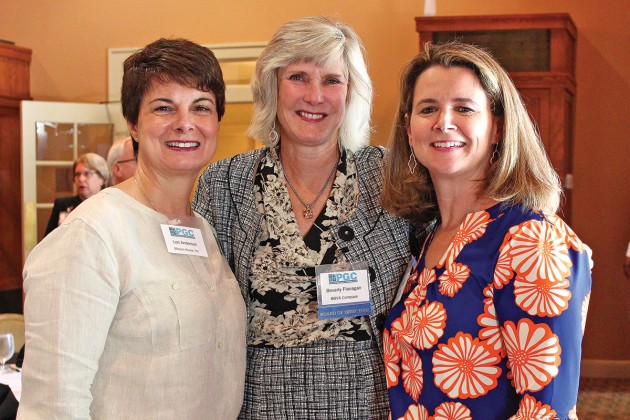
Lori Anderson, Mission House; Beverly Flanagan, BBVA Compass and president-elect; Jill Workman, St. Jude Children’s Research Hospital
KAREN RIELEY
PUBLISHED IN JUNE 2018 ISSUE OF THE RESIDENT NEWS –https://residentnews.net/2018/06/01/council-celebrates-planned-giving-love-for-mankind/

The Planned Giving Council of Northeast Florida is celebrating 25 years of working together to help nonprofits enrich the community. And here’s the little known secret they want to make public – everyone can be a philanthropist.

The word “philanthropist” often conjures up images of the wealthy, like Warren Buffet and Melinda and Bill Gates, making million-dollar gifts that change the world. But, historically the word has a humbler and more personal meaning. The origin of the word “philanthropy” is Greek and means “love for mankind.”

“Any one of us can be a philanthropist by being a strategic giver,” said Cliff Evans, outgoing president. “Philanthropic giving addresses our highest concerns – our mortality, our families and our legacy after we’re gone. It helps us answer the ultimate question of why each of us is here – what difference do we want to make?”

So, what are planned gifts among other forms of giving? That’s the question the local Planned Giving Council demystifies for its members, the organizations they serve, and those in the community who may consider helping nonprofit organizations.

Twenty-five years ago a group of people all working in some area of planned giving – estate and tax planning, financial planning and charitable giving – came together to discuss how they could support each other in their efforts to guide donors in making decisions that meet the donors’ personal and charitable interests. The group was led by Denis Plumb, who was responsible at the time for planned giving efforts to support the Diocese of St. Augustine for The Catholic Church of North Florida. Members represented the insurance, legal, banking and nonprofit sectors.

Those involved in planned giving efforts for their nonprofits saw their role as working as advocates or stewards for individuals as they worked with their accountants, financial planners and attorneys to plan what would happen to funds they may accumulate throughout their lives. Planned gifts, more than any other type of giving, are based on trust in the people advising the donor on how to make the gift and in the organization to which they are making the gift, because they are gifts based on money the donor has or will accumulate throughout life and beyond the donor’s life.

“We wanted to learn the technical side of planned giving,” Plumb said. “You can’t be sitting in front of a donor and say ‘I’ll get back to you’ because you don’t understand how planned gifts work and then expect the donor to trust you.”

A group of planned giving officers, lawyers, estate planning professionals, financial advisers, trust officers and consultants all working together might seem unlikely. After all, they are all looking for someone to “buy” their product over the competition’s.

“The donor pool in Jacksonville at the high income level is small, and we’re all working with pretty much the same donors,” Plumb acknowledged. “But that’s the very reason we’re not in competition. We understand that donors are individuals and have their own interests and passions, so it only makes sense to work together for the good of each individual donor.”

The council is also a good way for planned giving people to educate attorneys and insurance people. “A bequest in a will is the easiest planned gift,” Plumb said. “Our hope is that an attorney will understand planned gifts enough to at least ask clients if they would like to leave something in their will for their church or other organizations that they care about.”

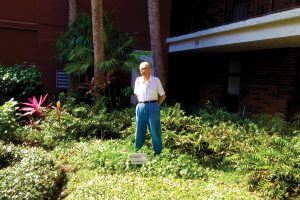
Grady Parker in his garden at his condominium complex

Such was the case when attorneys from Fisher, Tousey, Leas and Ball helped Grady and Becky Parker set up a $2 million bequest to The Community Foundation as an unrestricted gift, with the proviso that 20 percent be used to improve the quality of life for senior citizens, especially those facing financial hardships. When Becky passed away, Grady accelerated the plan by funding half the gift they had intended to leave in their will.

A quarter of a century later, the local Planned Giving Council has enjoyed a year of celebration for what it has achieved for its membership and for local donors and nonprofits. During its end-of-year meeting on May 10, at San Jose Country Club, members reflected on what the organization means to them.

“It is a good professional education experience and a great networking opportunity,” said Jill Workman with St. Jude Children’s Research Hospital.

“We don’t have a formal planned giving program yet, so this helps me figure out how I can begin to add this to my list of ways to engage donors in our work,” said Lori Anderson, executive director, Mission House at the Beaches.

The council came full circle in its 25th year under the leadership of Evans, who is the planned giving officer for the Diocese of St. Augustine, just as Plumb was when she formed the local Planned Giving Council. Evans was recognized for his efforts by Christine Bell, CTFA, AEP, trust officer, Cypress Trust Company, during the May 10 luncheon. Bell was one of the original founding members of the council 25 years ago.

Sharon Clark, director, individual engagement, United Way of Northeast Florida, is the incoming president. “I hope we can be even more proactive in offering planned giving information and support to our community in the future,” she said.

“Without a planned giving initiative, organizations miss the opportunity to create a sustainable revenue stream for the future,” Clark said. “Both organizations’ and donors’ lives are changed by giving dollars that last in perpetuity.”

Ideas being considered are a speaker’s bureau that community organizations can tap for information, increased efforts with the Estate Planning Council, Association of Fundraising Professionals and Nonprofit Center of Northeast Florida and presenting the 9th Annual Planned Giving Symposium for the professional development of their members.

“This is a very philanthropic, caring community and very faith-based,” Evans said. “We hope that readers of The Resident will be willing to ask themselves how they’d like to be remembered, not only by their families, but also by their community and the causes they care the most about so that they can make provisions to take care of them.”

Planned Giving Council 2018-19 officers are Sharon Clark, president; Beverly Flanagan, president elect; Cliff Evans, past president; Ken Thompson, treasurer; and John Zell, secretary.

Any organizations or individuals wishing to learn more about the Planned Giving Council of Northeast Florida are encouraged to visit their website, http://www.pgcnefl.org, or call Belinda Robinson, council administrator, (904) 887-3843, administrator@pgcnefl.org.

New basketball club positive addition to neighborhood

BY KAREN RIELEY
PUBLISHED IN DECEMBER 2017 ISSUE OF THE RESIDENT NEWS – http://residentnews.net/2017/12/04/new-basketball-club-positive-addition-neighborhood/

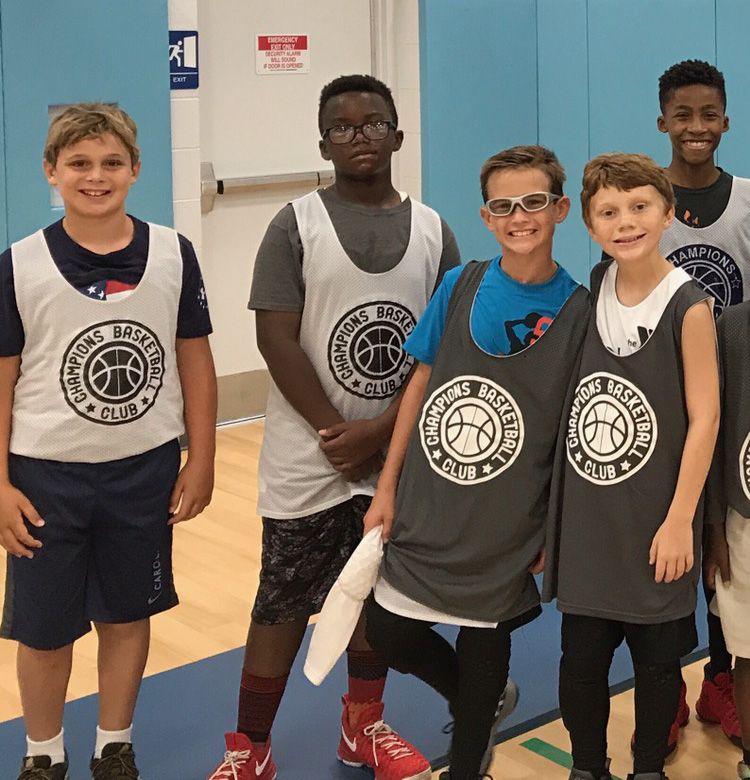
Champions Basketball Club’s newest location at Hendricks Avenue Baptist Church in San Marco is a very positive addition to the community, according to parents whose children are enrolled in the club.

Led by Coach Phillip Hobbs, founder of Champions Basketball Club and head boys basketball coach for St. Johns Country Day School, the club focuses on helping girl and boy athletes of all ages who want to develop into more complete players.

“Phillip is full of energy, positivity and enthusiasm,” said Emery Noles, a Miramar resident. Her son, Grady, 9, started last summer in the club’s Ortega location. “It is great to have the club in our own neighborhood instead of having to drive back and forth to Ortega.”

For Noles, the club’s newest location brings back memories. Her dad, James Abercrombie, coached Hendricks Avenue Baptist Church’s basketball program for 10 years. While her father passed away three years ago, Noles’ mother, Mildred Bishop Abercrombie, still lives in San Marco.

Noles’ brother, Trey Abercrombie, a San Jose resident, played on the HAB team in the 1970s. She remembers her brother had friends from all socioeconomic levels, and they often came to her house to hang out. “I love it when people from all walks of life can come together and enjoy each other,” Noles said. “The kids in the program were not just from San Marco.”

And, while the gym at HAB and the Champions Basketball Club are new, that tradition of engaging all kids who are interested in the program continues on.

“We had gotten requests to open a club in the San Marco area,” Hobbs said. “We chose HAB because it is centrally located.”

Hobbs recalls that the church’s pastor, Rev. Dr. Kyle Reese responded enthusiastically when he approached him about using the church’s gym for the club. Reese’s three children, Peyton, Hannah and Wyatt, attended St. Johns Country Day School. Hannah trained under Hobbs while she was there, and Peyton currently plays for Hobbs.

“I think Champions Basketball builds on the foundation laid by Jim Abercrombie and others,” Reese said. “We are a place for all children to learn and appreciate the game of basketball. The more we open our doors the more faithful we are to our founders.”

Hobbs develops an individualized game plan for each club participant. “My goal is to have kids achieve success on and off court, with basketball as the conduit to becoming successful as adults,” Hobbs said.

Mandarin resident Brian Pargman, director of admissions for St. Johns Country Day School, said his 9-year-old son, Brady, has continued to improve his basketball skills under Coach Hobbs’ direction.

“Coach not only reinforces the fundamentals of basketball, but he also delves deeper into every aspect of the game,” said Pargman.

Former Beauclerc resident Rob Lambert, a realtor with Keller Williams, was referred to Hobbs by another coach who was moving out of town. His 14-year-old son, Gabriel, had a couple of injuries in middle school, and Lambert was looking for someone to help Gabriel get back in shape, build confidence and improve skills.

“Phil did a fantastic job of developing an individualized training program for Gabriel right after Labor Day,” Lambert said. Gabriel just made the JV team at Bishop Kenny High School.

“We plan to have Gabriel continue with Coach Hobbs throughout high school, even though we now live in Mandarin,” said Lambert.

Noles believes her father would be very pleased that a basketball program continues at HAB. In a video filmed about the church’s history, Abercrombie shared his philosophy as coach.

“My hope is that the church will continue to take care of its youth and the youth in the community and send them on their way,” he said in the video. His described his style of coaching as “low pressure” because he wanted “to teach the kids how to enjoy sports.”

Hobbs wants to provide the “D-1 experience,” the best academic and athletic support possible to create Division 1 players. To date, about 12 girls and 24 boys participate in the club. While most are from the San Marco/San Jose area, some travel from other communities throughout the city.

He plans to open additional clubs on the Southside off Baymeadows and near the St. Johns Town Center, depending on parent interest.

“I hope these locations will be a reality by the first of the year,” Hobbs said.

The club offers executive training, in addition to training kids of all ages, at all skill levels. Parents can sign their child up throughout the year by visiting championsbasketball.website.siplay.com/ or contacting CoachPhobbs@championsBC.com, (904) 479-6620.

Jacksonville sixth Florida city to establish Holocaust museum

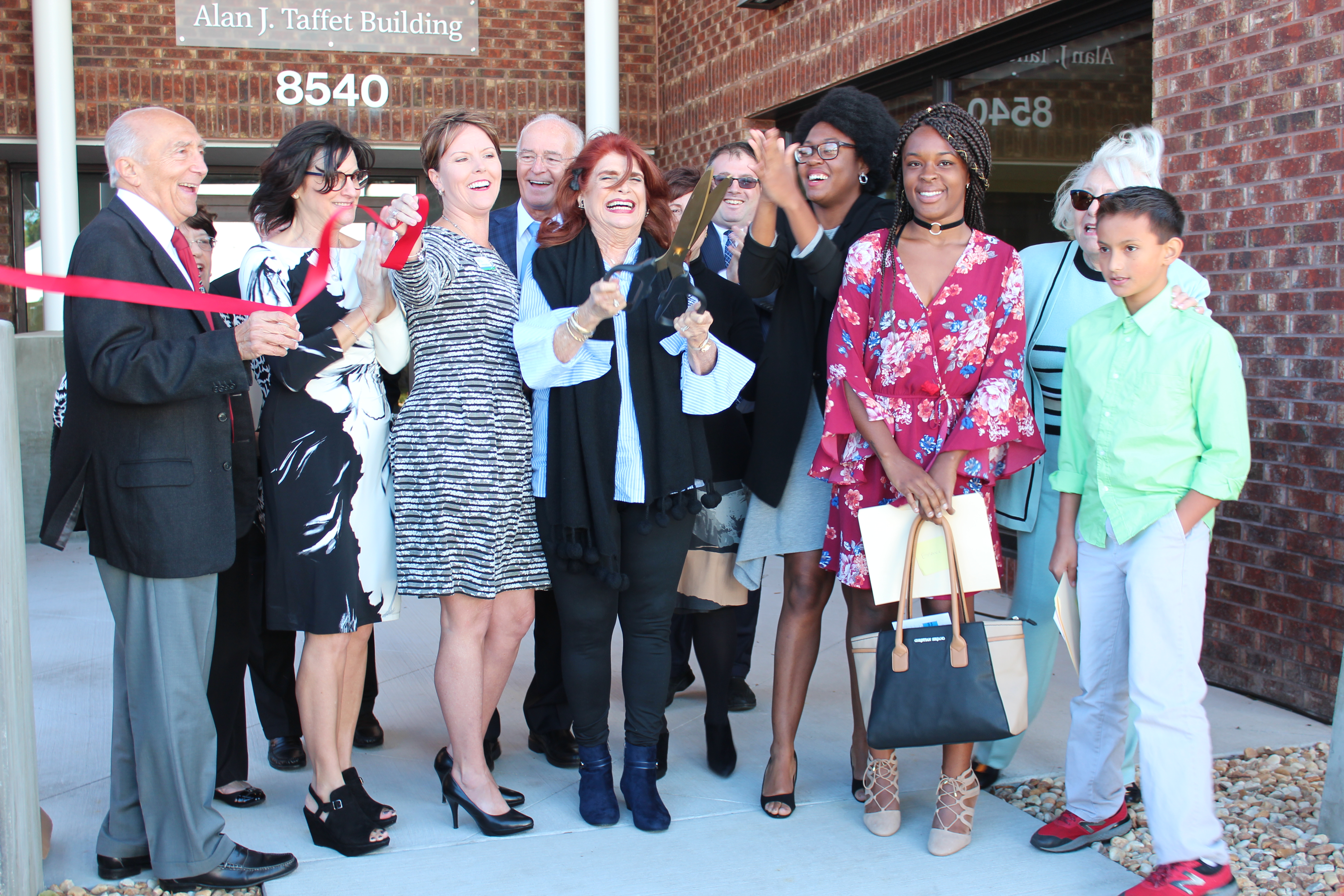
The official ribbon-cutting was done by Laurie DuBow, Lori Leach, Colleen Rodriquez, Ben Frisch, Ina Taffet, Rabbi Yaakov Fisch, Kalilah Jamall, staff assistant, Office of U.S. Senator Bill Nelson, Essence McKinney, a child in JFCS’s foster care services, JFCS volunteer Eunice Zisser, and Matthew Villeareal, a student in JFCS’s Achievers for Life program.
BY KAREN RIELEY
PUBLISHED IN DECEMBER 2017 ISSUE OF THE RESIDENT NEWS – http://residentnews.net/2017/12/05/jacksonville-sixth-florida-city-establish-holocaust-museum/

In spite of blustery winds, more than 150 gathered under a large tent Oct. 29 to celebrate the grand opening of the 30,000-square-foot Alan J. Taffet Building and the centennial of Jewish Family & Community Services.

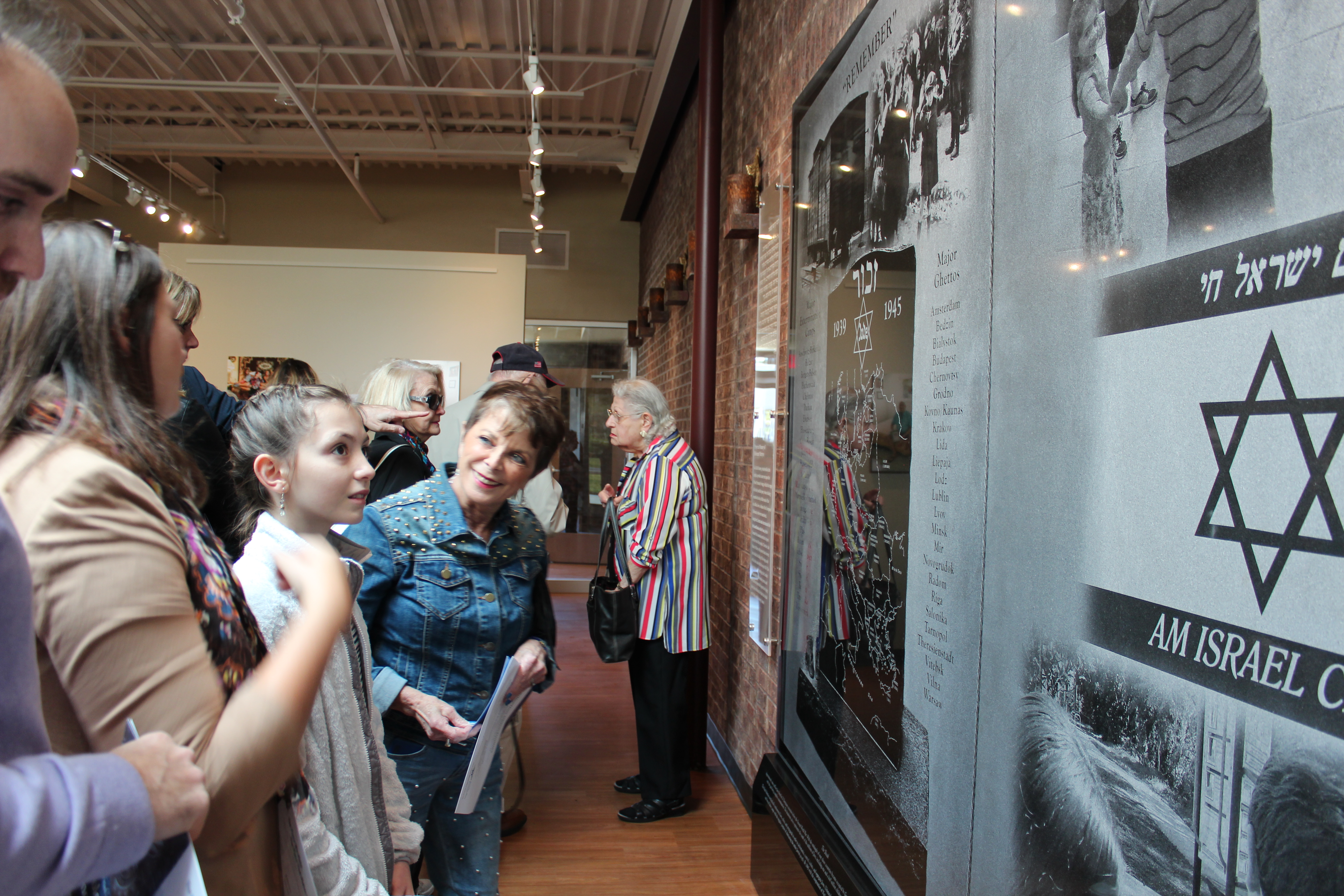
The ceremony included a ribbon cutting and tours of the new building, which houses the Frisch Family Holocaust Memorial Gallery, the only Holocaust memorial between Atlanta and Miami. After speeches, a diverse group of community members, from a foster care child to a Holocaust survivor, added mementos to a time capsule to represent the nonprofit’s main areas of service.

Speaking during the dedication, Alan Taffet’s widow, Ina, shared how proud she is with every caring deed in his life. “He is not dead but he is alive in this building,” she said.

Ben Frisch followed her words by noting the importance of including the Frisch Family Holocaust Memorial Gallery in the new headquarters.

“The [Holocaust] should never have happened and never be forgotten,” he said. “We will continue to give our support for many years to come as our family’s remembrance of Lilo and Harry Frisch, both of whom were Holocaust survivors.”

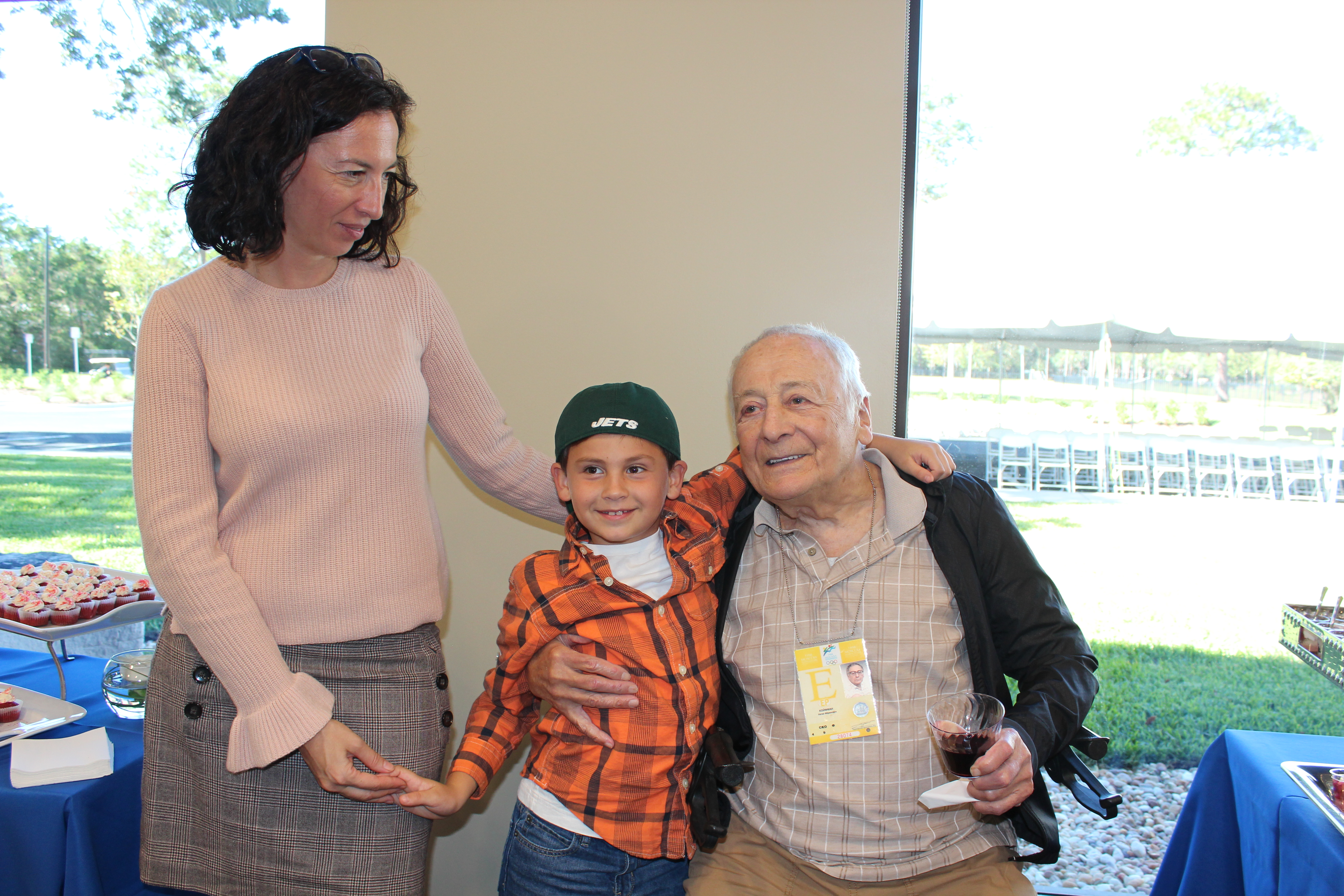
Irina Spinella, with her father, Holocaust survivor Nathan Koifman and her son, Ken. Koifman was born in Odessa, Ukraine in 1931. His family moved to Moscow, Russia. Then the war broke out and, in 1941, Koifman and his mother became one of the many families who evacuated to Uzbekistan by train. In 1943, they moved back to Moscow where his family worked in the military factories until the end of the war. “The Holocaust memorial will be a way to make sure future generations understand what we went through,” daughter Irina translated his Russian to English.

Laurie DuBow, lead volunteer and donor for JFCS’s “The Place We Make … The Place That Makes Us” capital campaign, challenged guests to remember what event, conversation or person first stimulated them to give back.

“I distinctly remember my mother saying that there is always something you can give to those in need, and when you do, it benefits you as well as them,” he said.

Mary Edwards, vice president of fund development on the JFCS board of directors, reported the campaign has nearly raised more than $5.3 million towards the $6 million goal. Funds raised will also renovate JFCS’s old offices on DuPont Station Court, which will be renamed the Allison Stein Robbin Building and  house the new Max Block Food Pantry.

“I am committed to raising the funds necessary to construct and furnish this building and renovate the original offices so that they are mortgage- and debt-free,” DuBow said.

JFCS, founded in 1917, has expanded beyond assisting people in need with food and emergency shelter to a wide variety of community services including adoption services, child welfare, counseling, emergency financial assistance, senior support and dropout prevention.

“People always say, ‘I had no idea that your agency did all this,’” said Colleen Rodriguez, JFCS executive director.

Although JFCS is guided by Jewish values, the agency serves the entire First Coast community. “What most people don’t know is that 80 percent of the people we serve are not Jewish,” she said.

Rodriguez noted that efficiency and wrap-around support were most important as they designed their new building, with the help of Tom Duke Architect, PA, and Matt Taylor, executive vice president, and Jon Witty, senior field supervisor, The Angelo Group general contractor.

The Alan J. Taffet Building, 8540 Baycenter Road, will serve as JFCS’s new headquarters. Other Florida cities which have museums, memorials or education centers about the Holocaust include St. Petersburg, Miami, Dania Beach, Maitland and Naples.

Five Tips for Handling Negative Social Media Comments

Infographic vector created by Freepik

When an implication arises that your company may have done something wrong, you can assume that at least for the foreseeable future, the news media will produce stories about the situation. Dealing with traditional media – TV and newspapers primarily – is an important function of public relations. Equally important, however, is dealing with social media. Access to social media gives individuals the opportunity to easily and broadly express opinions to what they hear in the media.

As PR practitioners, we should expect that some of these comments will not be positive. Competitors and disgruntled customers, vendors and former employees may use social media as their opportunity to get back at our company or further their own interests.

Your company needs to have a united response to comments, whether the responses are positive or negative, right or wrong. The company’s ability to come out of this critical time strong and capable of continuing to provide its products or services will be affected by its leaders’ and, in fact, all levels of employees’ ability to come to common agreement about how negative comments will be handled. Consider these five ways to handle negative social media comments:

  1. Deciding whether to respond to a negative comment about our business depends greatly on where the comment appeared and how many of our current and potential customers are likely to be influenced by the comment. For example, negative comments on a news medium’s Facebook page generally fade away quickly, because most people don’t read them to begin with and because current news stories are quickly replaced by more and more news. Monitoring whether any of those negative comments are shared out is important, however, because once they appear on a personal Facebook page, friends of that page will read the comment and respond to it and/or share it out to their friends. People do have a tendency to distrust or question what appears in the media; on the other hand, they tend to trust and are influenced heavily by their friends’ opinions.
  2. Often, it is best to simply keep our cool and not respond to negative comments. Responding just keeps the comment string alive and, in reality, if someone is still disgruntled even after our business has tried to rectify the situation, there is little we can do to change the person’s mind. If we feel we need to respond, we should state the facts of the case without placing any blame on the other person (even if it was their fault).
  3. If we read a negative comment that we feel may be justified, we should respond by giving the person an opportunity to communicate offline with us, to see if we can rectify the situation. If we are able to come to a positive resolution, we may ask the person to post a positive comment about how the company worked to resolve the issue.
  4. We do need to respond – politely and has succinctly as possible – to correct misinformation in a comment; for example, a misconception that we no longer offer a service that, in fact, we still do. If the incorrect information about how bad our company is continues to be spread, we may need to consider lawsuit for slander, libel or defamation of character.
  5. Any response we make should come from one person in the company to ensure that we have a unified message. Make sure all employees know that if they read a negative comment anywhere, they should email this designated person with a link to where to find the comment. The designated person will need to make the decision whether and how to respond.

The strength of a company never shows stronger than during a crisis. Be very careful , in asking employees to support the company by monitoring but not engaging in social media comments, that you are telling them the truth about the situation that has caused the crisis as you best know it at the time. This is a watershed moment when your company can either emerge stronger by working together or in chaos if your employees feel they have been kept in the dark or told lies. Continue to give them reasons to be proud of the company for which they work, even in the face of negativity.

What really matters

It is time to step back. Time to take a careful look at where I’m going in the next few years. Time to figure out how to cherish every minute. Time, while there’s still time.

Three years ago, everything changed. There was before my husband turned 60 and then it was the year he turned 60. How can crossing the threshold from one decade into the next make such a difference?

I think all of us thought I’d be the one with health problems. My family heritage is not one of long years of living. My mother died when she had just turned 51, which was the exact age when her own mother died, both from breast cancer. My father died four years after my mother, and the doctors never knew exactly why. I have to surmise it was from a broken heart.

My husband had never had health problems. He has always been doggedly optimistic. He always believes in the best in those he loves. He is loyal. He is generally happy. Or, at least he was. Then, his health deteriorated suddenly, unexpectedly and inexplicably. That has tested him almost to the point of breaking. And, watching him struggle has tested me almost to the point of breaking.

The hardest part has been that not only his health, but almost everything in our lives has changed in just three short years. Our jobs, the place we call home, our pattern of living, our plans for the future – all changed in the past three years. Not all of the changes have been bad, but the unexpectedness of the changes and the rate of change has been unsettling, to say the least.

And the fear factor is overwhelming at times. I wasn’t prepared to imagine life without my husband – not yet. Well, of course, I probably was never prepared to live without him, but I guess I thought there would be a logical transition from our early years together to raising children to empty nesting to getting old together. But, he has outpaced me. I’ve watched him age so quickly in the past three years.

I’m trying to hang on to the idea of us still being vibrant and making plans for the future, but I think it is an illusion. I hope not, but I don’t want to lie to myself either, because I’ll miss cherishing each moment we have, I fear, if I pretend that nothing is wrong. I try to be strong for him, and then I’m afraid that I’m negating his own justifiable fears.

I think it is time for me to try to figure out this new world we’re in and find out what matters most to me now. Time with my husband matters a lot. Time with my daughter matters to me. Books matter to me. Trying to write matters to me. Two times in my past are my fondest memories and brought me the most joy, so maybe I can recreate them.

My most favorite work project was the restoration of The Florida Theatre. I felt I was part of something very important, very worth doing, and I loved the outcome of the work. I take personal pride that the theater is still in operation today. Maybe I could volunteer as an usher there.

And, I loved the five or so years I spent singing in the Jacksonville Symphony chorus. I felt as if I were part of something so much larger than just me, and yet I was an instrumental part of the whole. It was a way I could exercise a natural talent that I had without feeling the stress of performing solo. Maybe I should audition and see if I can perform again.

I thought I wanted to teach, and I have for three semesters since earning my master’s degree in English in August 2014. I do enjoy it, but the local universities don’t seem to want to keep me regularly employed, so I am frustrated. I can’t determine yet if this is a viable career path for me.

I realize it is the beginning of a new year, and I so feel compelled to figure some things out. Maybe it is a passing compulsion, but I think not. Taking control of things I can, when there is so much that I can’t control, seems important to do.