The Classic Bar Cabinet offers exquisite entertaining

My third First Coast Magazine story has hit the streets! You can read about the classic bar cabinet as an essential piece for entertaining made famous first by David C. Rockola in the “Front Door” section of the December issue.

BarCabinetBkgd
Lisa McVie would be glad to show you this original, black, 1930s Rock-Ola bar cabinet with a red interior that houses alcohol, glassware and barware alike. The Rock-Ola label is carved into the back. The furniture is displayed in her space at Avonlea Antiques & Design Gallery on Philips Highway.

Here is the my original article as submitted to the magazine. It was shortened by editors to meet space requirements.

Thirteen years after Jay Gatsby’s fateful summer of 1922 in The Great Gatsby, David C. Rockola, inventor of the RMC jukebox, filed a patent for a “new, original and ornamental design for a Bar Cabinet,” that would have knocked the stylish dress socks off Gatsby. Lisa McVie would be glad to show you this original, black, 1930s Rock-Ola bar cabinet with a red interior that houses alcohol, glassware and barware alike. The Rock-Ola label is carved into the back. The furniture is displayed in her space at Avonlea Antiques & Design Gallery on Philips Highway.

Rockola, who changed his name to Rock-Ola, because so many people mispronounced it without the hyphen, went on to make many styles of bar cabinets, scales, parking meters, pinball machines and furniture. He was best known, however, for his coin-operated jukeboxes.

Some blame the decline of cocktails and highballs on Prohibition. Despite the law that made alcoholic beverages illegal, cocktails were still consumed in speakeasies. However, the quality of liquor available during Prohibition was much worse, because focus shifted from quality aging to ease of producing liquor illicitly. Honey, fruit juices and other flavorings served to mask the foul taste of the inferior liquors. Sweet cocktails were easier to drink quickly and disguised the presence of liquor, an important consideration when the establishment might be raided at any moment. Cocktails that were popular in the 1960s, 70s and 80s lost their elegant status once they were prepared with sugary pre-made mixes that skimped on quality.

But today, craft cocktails focus on fresh juices and ingredients, and their status has been revived. With the craft cocktail revolution in the last decade, sophisticated bars as discreet as speakeasies are making a comeback as well. As with Gatsby in the 20s, the ad men of, well, “Mad Men” in the 60s and the women of “Sex in The City” in the 90s, it’s not just about drinking; it’s about the ritual, the exquisite lifestyle and the desire to treat guests special, especially during the holidays.

“Would you like something from the bar – a gin Martini, Mint Julep, Manhattan, Old-Fashioned, perhaps a Sidecar, Stinger or Rusty Nail? Why, certainly, I have all the makings right here.” <Clink> Here’s to your holidays being the most special ever.

Living centerpieces feature coastal plants

IMG_1531
Philip takes advantage of a backyard filled with native landscaping and large pots filled with native plants to create his living centerpieces. I snapped a photo of some of the more interesting plants.

My second article for First Coast Magazine is in the Front Door section of its August issue! Read about “Living Centerpieces.”

I may try making my own for our next dinner party. Philip and Chris were fun to interview, and their work is creative and exciting. I enjoyed watching Philip spontaneously gather native plants from the backyard and experiment with shapes, colors, textures and sizes. He used jars and vases he had around the house and grouped them together with plants in them and around them. Chris is about to graduate from the University of North Florida, my most recent alma mater, with a degree in finance. He plans to continue working with Philip in Rockstar Gardens.

You can read my original version of the story here.

Create a succulent centerpiece for your dining room table. Sounds more interesting and natural than the usual vase of cut greenhouse flowers, but where to begin? Philip Standifer, owner of Rockstar Gardens, makes the whole experience a freeing process, and you feel better about your connection with the plant world, to boot.

There are only a couple of rules to remember. Placement, space and scale are important. Use natural, native and arid plants that don’t need or want water because they’ll last longer.

Beyond that, anything goes. Throw a handful or two of crushed, recycled glass pieces into some interesting glassware or vases, start placing a variety of native plants in the bottom paying attention to varying heights and complementary colors (Standifer prefers a palette of greens, gold, purples and reds), add some interesting plants – shoestring acacia with long, willowy leaves, bamboo cuffs and palm boots – around the glassware and voila! You have created a conversation-starting centerpiece.

Where do you find the materials? You may find them at some local garden shops, and Rockstar Gardens can recommend other shops. You can go roaming and try to find the native plants you want, what Standifer calls “wild harvesting” or “foraging.” Just make sure you aren’t doing so on protected land or private land without permission.

Preferably, you have thought ahead about your love of entertaining by incorporating native landscaping into your yard – good for the environment and always available, free of charge, once you’ve paid the initial cost of planting.

Supplies

Setting the stage:

  • Crushed, recycled glass pieces
  • Various sizes of glassware, pitchers and vases
  • A small tool (knife or tweezer, perhaps) to manipulate the plants in the glassware

The props:

  • Reindeer moss – not actually a moss, but instead a light-colored, fruticose lichen
  • Chartreuse moss – a type of reindeer moss with a beautiful golden green color
  • Echeveria – rosettes ranging in size with colors from white to orange to pink to red
  • Retro succulent – rosettes of pale green foliage stippled in creamy white, with coral-fringed leaf edges.
  • Purple coneflower – showy, easily grown garden plant
  • Shoestring acacia – evergreen with weepy branches
  • Agave
  • Lavender
  • Palm boots and bamboo cuffs – remnant wooden bases
  • Bamboo cuffs
  • Spanish moss
  • Pelican feather – Standifer promises that no bird was hurt in the design of this centerpiece!

centerpieces1

About Philip L. Standifer:

Philip L. Standifer exudes free spirit, creativity and passion for all things in nature. He is a freelance horticulturist and garden designer, combining “aesthetic manipulation,” as he calls it, with his knowledge of plant behavior, the result of a bachelor’s degree in ornamental landscape horticulture from Auburn University, Alabama. Rockstar Gardens is his growing business.

Standifer moved to Fernandina Beach 11 summers ago after working in landscape and garden shops in Atlanta and then Savannah. A network of friends helps him reach his horticulture goals. Chris Igou, a University of North Florida finance major, handles Rockstar Gardens’ finances and is a co-designer. Carolyn Carr, who was a marketer and is now a consultant for Coca-Cola helps Standifer with the marketing of his business. And Gogo Ferguson, with her unique nature jewelry inspired by Cumberland Island flora and fauna that she transforms into wearable art, is his muse.

“Cumberland Island is a true virgin study – no pollution, largely unspoiled and some of it private property in which I can forage,” Standifer said.

Standifer plans to open a shop that will include native plants and a clothing line, offer tours and launch a lecture series. For now, you can view some of his designs and ask questions by visiting http://www.rockstargardens.com.


Standing on the Shoulders

I want to take the opportunity to thank the members of my Advancement Team, especially Tom Strother, who was the LSS communications director, and others who worked with us during the years of the food bank’s rapid growth, for their extraordinary and exemplary work. Their efforts paved the way to enable the LSS Second Harvest food bank to grow from 6 million pounds distributed and $400,000 raised in 2004-05 to nearly 23 million pounds and more than $2.5 million raised in 2012-13.

It was an once-in-a-lifetime opportunity to have been a part of herculean efforts to improve the quality of life for people who are struggling in our community. The momentum of our collective efforts from 2004 to 2013 will enable Feeding Northeast Florida to eventually surpass 23 million pounds of food distributed and head toward the 40 million pound goal established by LSS.

The team rose admirably to the challenge of educating the community about why people may be hungry and inspiring the community to take an active role in solving the issue. We were fortunate to work with fantastic community partners – private foundations; major corporations; city, county and state government leaders; and thousands of individual donors and volunteers – who put their money to work to help us achieve great goals from which Feeding Northeast Florida is now benefiting.

In the way of the circle of life, the mantle for distributing large amounts of recovered food has moved on from LSS, and, since then, LSS can take credit for identifying and helping Farm Share fill another gap in service in our community – gleaning and distributing fresh food straight from Florida’s fields, which had not been accomplished on a large scale in Jacksonville before. In addition, LSS, with the help of its Lutheran network, has turned its focus to food and nutrition programs that get services directly to people in need.

Those of us who served on the LSS Advancement Team during this tremendous growth have moved on as well, to take our hard-earned knowledge of how to engage people to other sectors of our city. In the end, LSS has fulfilled its primary objective to serve and care for people in need and continues in its quest to fill gaps in services needed to help these people. We are all better for LSS’s work. We all stand on the shoulders of those who have put their hearts, souls and talents to work for others.

Forever Blue

My favorite color is blue; no, not “Forever Blue,” which was the name of an almost neon version of turquoise blue eye shadow that the girl in high school, who said she was my friend but tried to steal my boyfriend, wore. Thankfully, “Forever Blue” was retired after the 70s fashion craze passed.

I am irresistibly attracted to cobalt blue – a deep, true, arresting color. It is peaceful and yet always in motion. Blue is the river that runs through my city, a river that is widest when it splits the downtown and the city in half flowing rapidly north to the ocean. The tops of its constantly bobbing waves catch in the sun and glisten like diamonds.

Blue is the wide skies above accentuated by fluffy white clouds always in motion and changing shape. The river and the sky seem full of hope and free my soul. I remember my awe when I first saw that sky and river. I had never seen so much water or a sky so big and uninterrupted by mountains.

Blue is the beautiful glass bowls in the museum art gallery, mixed in swirls of golden yellow and white and begging to become part of my growing collection of glass objets d’art.

The Bluest Eye by Toni Morrison is one of my favorite books that I read in my English graduate studies. I related so strongly to Pecola, because I, too, felt like I didn’t belong when I was growing up, though my story might have to be titled The Most Perfect Family.

I have blue eyes, inevitably, because both of my parents had blue eyes. My husband also has blue eyes; of course, my daughter does, too. What I didn’t have were idyllic, iconic June and Ward Cleaver parents, like the parents who it seemed that every other child who lived in the nearby town where I went to school had.

None of the children on the country road where I lived had the 50s definition of a perfect family either. All of the families were struggling financially with husbands working blue collar jobs or farming their own land. Most parents had done well to finish high school and almost none had gone to, much less completed college. They were the products of local farmers and small business owners, not college professors as almost all of my town schoolmates’ parents were.

Except for me, the neighborhood children mostly stayed with their “own kind,” not mingling socially with the town kids. It was my mother’s unrealistically high standards for her first child, her daughter, that placed me, at least during the school year, in that seemingly perfect university town world where I didn’t belong.

When summer came, I had no easy transportation or invitations, for that matter, to visit town classmates, so I rejoined by neighborhood friends. They always took me back, so readily and friendly that I was grown and attending a high school reunion before I realized that some of them resented the way I seemed to ignore them once school started. I didn’t mean to ignore them. I was just trying to keep pace and not embarrass myself.

Blue has saved and comforted me many times. Blue is a deceptive color, full of hidden meaning and secret yearnings. It doesn’t demand attention like red, yellow and lime green. It sits quietly, thinking deeply, dreaming broadly and yearning for the day when it can run alongside yellows and greens or immerse itself in red and become a royal purple that others admire.

I survived the lie of my perfectness as a child; but, it took me years to accept my imperfections. In truth, I’m still not there. I am proud of one accomplishment in my life. At least my daughter loves herself and knows the joy of appreciating life as it is, not constantly plagued by nagging worries of what life “should” be. I knew she would be OK, more adjusted than I am, when she chose “Starry, Starry Nights” as the theme for her wedding. Van Gogh’s blue sky was wild with swirls of stars, as was our beautiful, delightfully different daughter the night of her wedding. Her happiness is enough for me.

Try to Forget – a novel in progress

Chapter 1 – Where is love?

“The desire to go home that is a desire to be whole, to know where you are, to be the point of intersection of all the lines drawn through all the stars, to be the constellation-maker and the center of the world, that center called love.” – Rebecca Solnit

 Janet was back again finally to the place where she grew up.  A run-down, paint-peeling wood house with a rusted metal roof on a forgotten street that started out as a dirt road between two towns.  A scrappy plot of land that had little attention paid to it with a backyard that was nothing more than a sewage field.  A place of dashed dreams where two adults existed, rather than lived, from day to day with little to no confidence that they would ever escape.

Janet hadn’t seen it in years, hadn’t wanted to after first her mother and then her father died. She used to do an annual drive-by when her husband and she would visit his family at the holidays, but the house and land looked worse each year until at last it looked completely abandoned. Seeing it in that state just made her depressed, so she stopped visiting it.

The house probably should have been sold as land to a developer or business after her parents died. But her brother and she couldn’t bring themselves to do it. Instead, they sold it to a couple who had grown up with them in the neighborhood and wanted to move out of the trailer in which they’d lived for too long. It was affordable, because the house needed a lot of work, and the husband was handy. Her hope that the couple would fix the house up and give it renewed life was short-lived, however. She supposed that the work was just too overwhelming and expensive. She found out that the couple moved out and into his parents’ home down the road after his mother died. They didn’t sell her home place, though, because they couldn’t afford to pay someone to tear it down, but they wanted the land for gardening, so it sat decaying, sagging and sinking into the earth as the vegetation tried to hide its hideousness by growing over it.

She stepped onto the concrete block sidewalk that her father had laid from the gravel and dirt driveway to the front door nearly 50 years ago. The day he laid the sidewalk was not one she would ever forget.

Her mother was mowing the front yard, while her dad was doggedly trying to lay the concrete blocks in straight rows. She was five years old and bored. She decided that she would go visit her friend who lived in the farmhouse next door. They had a long, graveled driveway that led back to the house and barns that were set far back from the road, but she had walked there before to play with him and visit the farm animals. She called out to her mom to tell her where she was going, and she was so excited about her great idea that she didn’t notice that her mother didn’t acknowledge her or give her permission.

She stayed a long time playing until it became dusk. Later, when she recalled the incident, she realized she didn’t really have a plan. Her mother hadn’t told her when she should return, so she just kept playing, until her friend’s grandparents, with whom he lived in the farmhouse, finally must have called her parents to see when and how she was supposed to go home. She had worn out her welcome.

When her father arrived at her friend’s front door, he grabbed her hand and quickly walked her down the long driveway, never saying a word but frowning all the way. As they neared the end of the driveway, she could see her mother and neighbors lining the street by the mailbox in front of her house. Her mother was crying and the neighbors were comforting her. What had happened?

The swat that her mother gave her as her father led her by the lineup was her first clue that she was the source of the concern. Her second clue was that her father led her straight to her bedroom and left her there as he firmly shut the door. The clincher was when her mother entered her room, wiping the tears from her eyes, but holding a fly swatter.

It turned out that, despite the fact that she had told her mother she was leaving, her mother hadn’t heard her and couldn’t find her once she finished mowing. They had looked for her for hours. The fly swatter was used to teach her the lesson that you should never worry your mother.

Her trip down memory lane left her at the front porch, which looked none too stable. Not willing to risk falling through, she turned to her right instead and walked over to the window that looked into her old bedroom. She peered in, hoping that there were no snakes in the grown up bushes and grass around the house. It was an unbelievably small room, not like she remembered it. Her dad built the two-bedroom addition to the house after her brother was born. Before that all three of them her mother, father and she – slept in the one bedroom that the house had – she in her crib and her parents in the one double bed. She was three and a half years old when her brother was born.

The two bedrooms that her dad built were the largest rooms in the house, and she remembered her room as huge. Looking at it now, she couldn’t imagine how the room held a full-size bed with a headboard that had shelves and drawers in it, two built-in bookshelves on either side of the bed, a desk, dresser and double closet. Plus, she had her Barbie doll’s house, Barbie’s car and Barbie’s whole family and friends, along with a dozen trolls and moon goons of various sizes and a full stable of plastic horses, all with their own real estate on the floor.

Now, the room was empty, except, strangely, for a child’s rocking chair sitting in the very center of the room. It looked so forlorn that she nearly cried. Why would someone take everything out of the house except for this one chair? Did a child who lived in this house die? Maybe the house was waiting for another child to sit in the chair and live there. She felt as if part of her soul was still in this sad, little house that was getting more desolate and desperate by the minute.

As compromised as life in that house was, she did have some fond memories. Family picnics in the front yard with her dad grilling, cousins playing, uncles jawing about the old days and jobs, aunts bringing their signature dishes, the men taking turns cranking the wooden-barreled ice cream churn, everyone eating watermelon, corn-the-cob, potato salad and macaroni salad made with vegetables from their gardens. Playing house under the trees in the back yard that was so deep that she thought no one knew she was there. Picking cherries off their cherry tree, when she was lucky enough to get them before the birds did. Setting up a kid’s table, chair and a lamp in her closet so she could read and work in there hidden away from the rest of the family. Practicing on the piano that her grandfather had bought for her when she was ten. Christmas Eve when she would try to catch Santa delivering presents and Christmas Day when she found rows and rows of presents that only Santa could have brought, because certainly her parents did not have the money. Taking care of her little sister, born late in her parents’ lives and so much younger than she that she seemed more like a daughter than a sister.

The good memories were overshadowed, however, by the slow death of the house, a death that had begun long before her mother got sick and died. The house seemed to be giving in to the bad memories. Whatever love had been shared there seemed to have abandoned the premises. Now that the façade of her family was gone, maybe what was left was the truth. She knew that her parents had loved their children and each other and that her mom, at least, wanted to make sure she had what she needed to become successful in life, but she wasn’t sure that her parents had been happy. She knew there were many times when she had not been happy.

She wanted to have the house torn down now, even if she had to spend her own money. But, she did worry about her decision. Who would she be, once the physical center of her family’s world no longer existed? The step seemed more final somehow than even her parents’ death.

What a mood she was in, she thought angrily to herself. But then again, after the past few years of frustration and loss, probably the last thing she should have done was come back to her hometown.

Chapter 2 – Lost Love

Turns out that 60 isn’t the new 40, at least not from her perspective. The year Janet’s husband turned 60 everything changed for both of them. Dan had always been healthy and active and handy. He was doggedly positive and determined to stay young forever – a self-described beach bum on the weekends and a hardworking business leader during the week. Work hard and play hard was a motto he embraced.

Then, Janet began to notice that he tired easily. He became dizzy if he exerted himself. Eventually and alarmingly quickly, he got to the point where he couldn’t walk across the room without sitting down to catch his breath. That’s when she was finally able to convince him to visit his doctor.

“Your white blood cell count is unusually high, it seems,” his doc said. “I’m going to refer you to an oncologist.” Oncologist. The kind of doctor that evokes fear, dread and shock. This can’t be good, Janet thought. Dan reassured her and told her that it was probably nothing. But, while Dan was the optimist, Janet was the realist with a good sense of the mood in situations, and she didn’t believe Dan’s reassurances. She was scared.

And, turned out she had reason to be. It was cancer, a blood cancer that has no complete cure. Dan was diagnosed in the fall and started chemotherapy before the end of the year. He responded well to the chemotherapy and was declared in remission by six months later. His oncologist was thrilled. He thought Dan had at least 3-5 years before the cancer would come back and have to be treated. And, he felt positive that advancements in treating this type of cancer would mean a long-term way to keep the cancer under control. Janet and Dan almost felt normal again and began to dream of retirement soon with lots of time to be together, travel and relax.

Their optimism got shot down just a little over a year later. The cancerous cells started their insidious growth. Just like before, Dan tired quicker and quicker doing just normal tasks like trying to help with vacuuming the house. Then, he became dizzy if he stood up too quickly. When he almost passed out while trying to put up the Christmas tree, they knew the truth without even hearing the doctor’s report.

What they didn’t expect to hear was that the cancer had spread beyond just his blood system. The doctor reassured them that she would aggressively treat the cancer with chemotherapy and radiation, but she didn’t sugarcoat the chance of success. After an agonizing year of fighting and enduring harsh treatments, Dan died.

Janet was barely able to survive that year herself. She worried about him constantly, and six months before he died, she took leave from her work to be with him. She was so exhausted and drained that she didn’t even really mourn. Truthfully, she couldn’t feel anything much in that year after his death. There was so much to be settled financially and in terms of their physical assets – his vintage car, their vacation home, all of the stuff they had accumulated in their 40 years of marriage – which gave her the excuses she needed to avoid dealing with her feelings.

Yet, somehow in the course of that first year without Dan, the first year she had not had him in her life in 40 years, she began to define herself as a person who lives alone. She didn’t think of herself as single, but she did begin to come to grips with the fact that she had to figure out how to do everything on her own.

Dan and she had lived apart for work reasons before in their marriage, and they sometimes traveled separately for personal reasons, so being alone wasn’t new to her. But, in those cases, she always knew she’d be with Dan again soon. Now, she had to accept that he was never coming home again.

She wished so much that he was here to help her make the decision about whether to buy back the home where she grew up so that she could tear it down and then sell the land. This was either a smart financial idea or a totally romantic and stupid idea, and she didn’t think she was objective enough to decide which it really was. Janet had always trusted Dan’s decision-making ability over anyone else’s. Now she was on her own.

She wandered back to her car and gave the house another long look before turning the car around and heading back into town. She was staying with Dan’s mother for the time being, and she had promised to be back in time for dinner, which always was served promptly at five o’clock.

Chapter 3 – First Love

Emerging from a year of numbness, Janet realized that part of her healing process needed to include visiting Ann, who was Dan’s mother. Dan’s father had died five years before and, even though she was now 90, his mother still lived in the house Dan had grown up in. Janet had largely avoided Ann’s phone calls during the past year, because they only served to depress her further. But she knew she had to connect with Ann at least one more time. Otherwise, she would not feel good about trying to move on with her life.

She had known it wouldn’t be easy, because Ann seemed to like hanging onto the past and dwelling on memories. Every time Ann had called Janet in the past year, she started the conversation with, “How are you doing?” in her forlorn, little voice and then immediately started crying. All they seemed to be able to talk about was Dan – how could this happen, no one in their family had ever had this disease, why couldn’t the doctors do more, why did he die so young, maybe she hadn’t prayed hard enough for him to be healed or hadn’t been a good enough person, how lonely Janet must be, we must remember that we are married for life and so of course we can’t remarry, how hard it is to go places without a partner, and so on. Each call set her back emotionally and even drained her physically.

She knew she needed to walk away from the negative, but she also felt obligated to at least try in person to move Ann past her son’s death. So, here she was in her hometown one more time. The visit had not been easy, but she had made some progress with his mom. She had even gotten her to laugh about some of their shared memories and made some tentative plans for Janet to drive up the next spring, pick up Ann and drive the full length of the Blue Ridge Parkway. They would create new memories that acknowledged and, at the same time, honored Dan’s absence, because Janet and Dan had loved the Parkway, hiking, photographing and picnicking along many miles of it through the years.

Janet at last felt at peace about leaving his mom the next day to return to her home in Florida. And yet, she woke up this morning with a nagging sense that she still needed to do one more thing before leaving, because, frankly, she didn’t see herself returning again to spend time in the sleepy little burg.

The feeling that she was forgetting something bugged her all through the breakfast Ann had fixed her. She was so distracted that she didn’t hear Ann ask her if she wanted more eggs and only Ann’s pointed, fake cough broke through Janet’s worrying to catch her attention.

“As I said, Janet, would you like some more scrambled eggs? You know I hate having food left over,” Ann said.

“Everything was delicious, as always, but I couldn’t eat another bite,” Janet replied, thinking to herself that Ann had prepared the meal as if she thought Dan and Dan’s father both were still alive and eating with them. Dan’s father had an insatiable appetite and was the self-appointed official finisher of every bowl or plate of food served during a meal, so Ann had not had to deal with leftovers until he died. Janet was not going to be able or willing to fill those size 12 shoes, though.

“You seem distracted this morning,” Ann pointed out. “Are you worrying about the drive home tomorrow?”

“No, I’ve made that drive many times before, so I’m sure I’ll be fine,” Janet said. “I’ll want to get an early start tomorrow, though, so don’t fix me a big breakfast, please. Just a bagel and a mug of coffee to go would be fine.

But, you’re right. I am distracted today, and I don’t really know why. I guess it is hitting me that I’m leaving tomorrow, and I feel like I need to do or see one more thing. I think maybe I’ll take a drive around town and visit some old haunts. Maybe that’s what I need,” Janet confessed.

“Well, I have to clean up the kitchen from breakfast, but after I finish that I could go with you,” Ann said. “There are a lot of new things to see in this little town – new buildings on the university campus, new housing developments – that I could show you.”

“I appreciate your offer, but I think I need to do this alone. Besides it is the old things, not new things, that are calling me, and my history with this town isn’t the same as yours,” Janet pointed out.

“Well, I guess I understand that,” Ann said. “You go on and visit your town, while I straighten up. When you get back, we’ll have time to visit this afternoon. Oh, by the way, didn’t you date a boy named George before Dan and you started dating in high school.”

Startled by the sudden change in conversation and the name she hadn’t heard in so long, Janet’s hand jumped involuntarily and nearly turned over her juice glass. Her reaction wasn’t lost on Ann.

“Yes, I dated him for about a year,” she admitted once she got herself under control again.

“I thought so. Well, I keep forgetting to tell you that he’s in ICU at the hospital here in town. He’s not expected to live this time.”

“What do you mean by this time,” Janet said. “He’s been in the hospital before? Why? What’s wrong with him?” She was shocked. She hadn’t heard anything about George for many years, since their 15th high school reunion more than 20 years ago, and then he was fine, much heavier than the beanpole he had been in high school, but happy and obviously glad to see her, as she was him.

“He has cirrhosis. Evidently they won’t put him on the list for a liver transplant, because he’s an alcoholic. Sad life he’s led – three wives have left him, his children won’t have anything to do with him. I’m just glad my boys turned out to be the fine men they did. His parents must be devastated to know that he’s going to die from his own careless actions. At least my son died from something he didn’t bring on himself.”

Janet bristled at the degrading tone in Ann’s voice. “Well, alcoholism is a disease, too. I should get going so that I can make sure to get back before dinner.”

As she carried her dishes back to the kitchen, she knew what one of the trips she needed to make today was.

Chapter 4 – Love Recalled

Janet had known George because he was in the same grade as she was, but she had never thought about dating him. He hadn’t yet dated girls, and she didn’t think he was interested in her. But he was a good friend with the boy that her best girlfriend, Tracey, at the time was dating, and they both ran track. Janet often went to meets with Tracey to cheer for her boyfriend.

Tracey got the bright idea that Janet should date George, so that they could double-date with Tracey and John, and, as usual, what Tracey wanted she got. Janet went on the double-date to make her happy, but she had little reason to believe a relationship between George and her was going to take. She was surprised to discover, however, that George was funny and more interesting than she had observed as he sat in the back homeroom, playing tricks on others and acting goofy with his friends.

Truth was that he wasn’t in any of her classes other than homeroom, because she was on an advanced track, and he was in regular classes only. By evening’s end, she wondered why, because he seemed smart and quick on his feet. Maybe he was just coasting by, rather than pushing himself to excel. At any rate, he was raised in her esteem greatly on that first date. And, he was much cuter once she got to know him, especially when he was telling jokes and laughing, and he had wonderful manners. He opened her car door and held the door to her run-down little house when he took her home.

She must have made an okay impression herself, because he began asking her out regularly.

George’s family was strange in its own way, too, His dad was well known in the town because he ran the local hardware store so everybody knew George senior. But, when Janet would go over to his house sometimes after school, she never met George’s mother even though she knew she was there. George always said that his mother didn’t feel well and that she had a headache, so she was upstairs resting.

Janet found out, however, that the rumor mill said his mother was an alcoholic. She didn’t have a headache. She was upstairs sleeping off a hangover.

Somehow that endeared George to her even more, maybe because his family was imperfect like hers, in its own way. George and Janet became a steady item. He even took her one night to the dinner theater in the nearby city, a big trip and a big expense for a kid his age, and gave her at a signet ring, as a sign that they were going steady.

She loved the ring and loved being able to say she had a steady boyfriend, but the relationship didn’t last. In retrospect, they were both too young, and she was too insecure. After a year they had a big argument, because Janet didn’t think he was paying enough attention to her. George didn’t like being hemmed in so that was that.

The breakup never officially happened. George just quit coming around. One Friday evening, she was waiting as usual for him to arrive, standing at the kitchen window where she could his car come down the road to her house. He was late as usual but he was even later than usual. She stood at that window for probably an hour and he never showed up, never called, never acknowledged her again at school. She was so hurt and embarrassed that she never asked why he stood her up. It was the first time that she realized that someone you love and who you think loves you can still hurt you very badly.


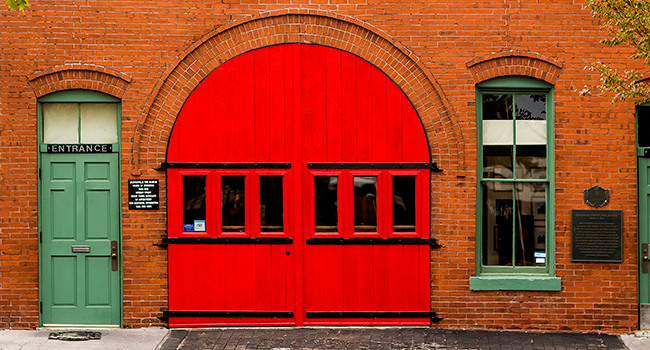
Jacksonville’s Fire Station No. 3 reborn again

January 2015 First Coast Magazine

My most recently published writing may be found in the January 2015 issue of First Coast Magazine. This relatively new magazine is beautifully designed and always features interesting information about the northeast Florida community. I’m so excited to have been asked to write for the publication.

You can also read the story here:

Like the fabled phoenix in Egyptian mythology that was consumed by fire, only later to rise renewed from its ashes, Fire Station No.3 has been reborn – and more than once. It originally opened in 1886 on East Bay Street in downtown Jacksonville and was rebuilt after burning nearly to the ground in Jacksonville’s Great Fire of 1901. The station, which now houses the Jacksonville Fire Museum at 1406 Gator Bowl Blvd., in Metropolitan Park, is a tribute to Jacksonville’s trials by fire.

When it opened in 1886, it was known as the Duval Hose Company, the city’s only African-American company, that remained so until 1906. The company eventually became part of Fire Station No.3. All that remained of the station after the Great Fire was the east wall of the station. The station’s horse-drawn fire truck was destroyed as well.

Bricks salvaged from buildings destroyed by the fire were used to rebuild the north, south and west walls of the new firehouse that was built at 12 Catherine Street. Ten months after the Great Fire, the new Fire Station 3 was opened. A new 1902 LaFrance Steam Engine arrived to replace the horse-drawn one. That has been restored, and sits gleaming in the Jacksonville Fire Museum.

Station No.3 remained a working fire station until 1920, when the Jacksonville Fire Department shop facilities moved in and remained until 1952. From 1952-73, the station was used only as a storage facility for the Jacksonville Fire Department.

Jacksonville Fire Lieutenant Paul Galloway and Engineer Wayne Doolittle, with the assistance of the Jacksonville Historical and Cultural Conservation Commission and the Jacksonville Mayor’s Office, successfully got Fire Station No.3 placed on the National Registry of Historical Monuments in 1973.

According to curator Wyatt Taylor, the building became a museum in 1982 and was moved to its current location in 1994. The exterior of the building is a testament to its history, with the east wall a different shade of brick from the other walls, standing strong as a link to our founding firehouses.

The building looks forward to yet another rebirth. Funds are needed to address structural issues and for the museum’s operation costs.

“The museum was originally run by firefighters to honor firefighters,” Wyatt says. “Now we want to turn it into a functioning museum that has the ability to document and care properly for the items it continues to collect to educate future generations about Jacksonville’s firefighters.”

For more information on how you can get involved visit the Jacksonville Fire Museum.

firehouse

Above all else, be ethical and loyal

I am proud of and take seriously my accreditation and certification by national organizations that represent my two areas of professional expertise – fund-raising and public relations – as a Certified Fund-Raising Executive (CFRE) through the Association of Fundraising Professionals (AFP) and Accredited in Public Relations (APR) through the Public Relations Society of America (PRSA). These two organizations adhere to the highest standards of behavior in representing donors’ wishes and in representing organizations to the general public through the media. I firmly and unequivocally believe in the importance of honesty, transparency and concern for the greater good, first, because it is the right thing, and secondly, because I know that once an individual or an organizations loses the trust of the people it represents and needs to help it do its work, it has lost the ability to ever be as effective in fulfilling its mission as it could have been.

This stuff is important. Here’s what AFP requires of its members:

Member Obligations

1.  Members shall not engage in activities that harm the members’ organizations, clients or profession.

2.  Members shall not engage in activities that conflict with their fiduciary, ethical and legal obligations to their organizations, clients or profession.

3.  Members shall effectively disclose all potential and actual conflicts of interest; such disclosure does not preclude or imply ethical impropriety.

4.  Members shall not exploit any relationship with a donor, prospect, volunteer, client or employee for the benefit of the members or the members’ organizations.

5.  Members shall comply with all applicable local, state, provincial and federal civil and criminal laws.

6.  Members recognize their individual boundaries of competence and are forthcoming and truthful about their professional experience and qualifications and will represent their achievements accurately and without exaggeration.

7.  Members shall present and supply products and/or services honestly and without misrepresentation and will clearly identify the details of those products, such as availability of the products and/or services and other factors that may affect the suitability of the products and/or services for donors, clients or nonprofit organizations.

8.  Members shall establish the nature and purpose of any contractual relationship at the outset and will be responsive and available to organizations and their employing organizations before, during and after any sale of materials and/or services.  Members will comply with all fair and reasonable obligations created by the contract.

9.  Members shall refrain from knowingly infringing the intellectual property rights of other parties at all times.  Members shall address and rectify any inadvertent infringement that may occur.

10.  Members shall protect the confidentiality of all privileged information relating to the provider/client relationships.

11.  Members shall refrain from any activity designed to disparage competitors untruthfully.

Makes sense, doesn’t it? And yet, there are those who think these obligations don’t apply to them and that the end result justifies taking any means they use to get there, as long as they are trying to help people.

Here’s PRSA’s Code of Ethics:

ADVOCACY

We serve the public interest by acting as responsible advocates for those we represent. We provide a voice in the marketplace of ideas, facts, and viewpoints to aid informed public debate.

HONESTY

We adhere to the highest standards of accuracy and truth in advancing the interests of those we represent and in communicating with the public.

EXPERTISE

We acquire and responsibly use specialized knowledge and experience. We advance the profession through continued professional development, research, and education. We build mutual understanding, credibility, and relationships among a wide array of institutions and audiences.

INDEPENDENCE

We provide objective counsel to those we represent. We are accountable for our actions.

LOYALTY

We are faithful to those we represent, while honoring our obligation to serve the public interest.

FAIRNESS

We deal fairly with clients, employers, competitors, peers, vendors, the media, and the general public. We respect all opinions and support the right of free expression.

Seems straightforward, right? Honesty, accuracy, loyalty, faithful to those we represent and to those for whom we work – just plain do-the-right-thing stuff. And yet, some people become so puffed up with themselves, determined to make a name for themselves, sure they are smarter than everyone else that they conveniently forget ethics.

For those starting out in these professions, please remember this. First, do no harm. Guard your reputation and that of the organization you represent fiercely. Don’t let stars get in your eyes. Remember who is really important, i.e. those your organization is serving in keeping with its mission.

Those of us who are entrusted with fund-raising and public relations efforts hold our organization’s reputation in our hands. This is serious stuff.

Not for Sissies

You’ve heard the saying, “Getting old is not for sissies.” Well, it is a cute saying, but it really doesn’t describe the maturation process very well. Truth is, as a baby boomer, you can’t afford to get old – literally or figuratively.

Maybe you could in the world our parents lived in, but today, if you allow yourself or you allow others to think of you as old, you’re forgotten and irrelevant. And, if you’re irrelevant, you are at risk. You’re more likely to live longer, but with much less, which means that your quality of life will suffer.

Frankly, our parents didn’t prepare us for this reality … at least mine didn’t. First of all, they died early – my mother just before her 51st birthday and my father at 63 – so I never had a chance to see what life would be like for them at my age and beyond. Secondly, they and others like them seemed to have embraced the concept that they would just work until they could receive full social security benefits and then slide into peaceful retirement. They didn’t feel the need to stay current by learning about computers and technology such as smartphones, GPS, Googling and the Internet. They believed they could continue living their lives the way they always had and let the rest of the world move on. And, mostly, they were right in their assumptions, because at retirement age not much more was expected of them than to take care of their health so that they could stay in their homes as long as possible. They weren’t even expected to manage their finances; they could turn to their children to help them with that.

We baby boomers seem to have higher expectations for ourselves, as well as others of us. I can’t speak for everyone, of course, but I don’t want to give up, sit in a rocker on the front porch, and let younger people take care of me. I’m not ready to concede that younger people are smarter, quicker, and more effective than I am at doing those things I’ve done for at least four decades.

I’ll admit that the seemingly daily barrage of new software, new media, and new ways of connecting with people is daunting, but I haven’t given in yet. I’m trying to add new ways of communicating on a regular basis and, trust me, the computer doesn’t blow up when I make a mistake. One of the best things I’ve been able to do is lead a PR Writing Lab class at the University of North Florida this fall semester. The professor for the online part of the course, who is a full-time professor at UNF, has been very supportive of my efforts. She reminds me regularly that, in truth, the students in my class understand the social media less or maybe only slightly better than I do and that I’m the PR expert who can teach them about the real world. Trying to navigate the new ways to communicate to target audiences with the students has encouraged me to keep learning and exploring for my own purposes, like this blog.

I have to acknowledge that my daughter often shakes her head over what I don’t understand about technology; however, she is always patient to explain the 21st century to me. Mostly, I feel pretty comfortable that I am still in the game. I do wonder how employers view me. I suspect they think that I am too close to retirement and too “out of it” to be useful to them for long.

What they forget is that when they hire someone young, they may get the newest, freshest talent, but they also get someone who doesn’t know workplace politics and how to navigate them to be successful, someone who wants to run things and doesn’t understand the concept of “paying their dues,” and someone who will leave them in five years or less, just after the company has had to expend professional development funds to get the inexperienced worker up to speed.

That’s the long and the short of it, then. The struggle to be relevant occurs at the beginning and the end of careers, it seems. Enjoy being in the middle of your career and extend it as long as you can or as long as you want to be working. Start making plans now for what you want to do after you leave “regular” work, unless that rocking chair really was your goal.

Setting on a new path

As Neale Donald Walsch’s writes in his book, Conversations with God: An Uncommon Dialogue: “the deepest secret is that life is not a process of discovery, but a process of creation” (Walsch, 20). This truth has been brought home for me in this latest transition in my life. After 10 years of working for Lutheran Social Services, I have moved on.

It was the right time to leave for a variety of reasons, and I have no regrets. I left feeling proud of the work I had done in raising awareness and funds for the agency. I know this is a good thing for me, because it is giving me the chance to take a fresh look at what I want to do in the future. If I had continued on at LSS, I would have worked for the next six years or so and then “retired.”

But fate intervened and new things have been set into motion. Perhaps I should have known that I was not meant to just comfortably move into retirement. Maybe the first sign was my decision to get a master’s degree in English. It took me four years, one course each semester, to do it, but I finally graduated this past summer. I loved (almost) every minute of the experience. It probably was the reason I stayed at LSS as long as I did. I like new challenges; I like starting up projects and building programs, and so I tend to get bored after about five years into a job. The intellectual stimulation of graduate school kept me going. It was a wonderful excuse to read, read, read … and write and engage in discourse; in other words, I was able to be the total nerd I love to be and in the company of other admitted and unapologetic nerds to boot!

So now what? TBD, but for now I’m entertaining lots of ideas, and I have one contract that will begin on Nov. 4 and take me through the end of 2014. Lutheran Services Florida has asked me to develop a PR plan for the agency. I will travel to its headquarters in Tampa and to its other offices throughout the state as needed to learn about its programs and goals. The agency wants to increase private fundraising and knows that it must first raise awareness of and involvement in the agency. I’m looking forward to putting what I’ve learned about promoting social service agencies to work for LSF.

I’m also continuing as an adjunct professor for a PR Writing lab at the University of North Florida. I’m currently in the middle of the Fall Semester and am signed up to teach Spring Semester as well. I enjoy being on the other side of the desk at my new alma mater, and I’m hoping there will be more opportunities to teach as time goes on.

Certainly, I am in the process of creating and being recreated. Life is good.